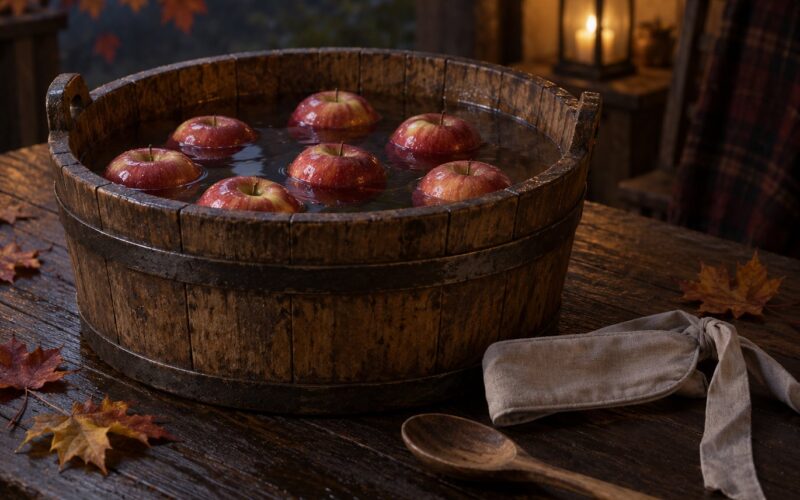
Samhain did not rename itself Halloween. The Gaelic festival marked a seasonal boundary in Ireland and Scotland around November 1, while Halloween began as a Christian observance of All Hallows’ Eve in England and became a broad North American celebration after Irish and Scottish migration. The two share a date, a handful of customs and a very long overlap. That overlap is the honest answer to how samhain turned into halloween.
Table of Contents
- Did Samhain Turn Into Halloween?
- What Was Samhain, and When Did It Begin?
- Samhain in the four-season cycle
- Myth check: did ancient Celts light bonfires to ward off spirits?
- How Samhain and the American Halloween Became Connected
- how samhain turned into halloween through immigration and symbolism
- Which Samhain Customs Survived in Halloween?
- Why Did Pumpkins, Skeletons, and Witches Become Halloween Symbols?
- How Did Commercial Halloween Shape the Modern Holiday?
- Are Samhain and Halloween the Same Holiday Today?
- Frequently Asked Questions
- What does Samhain actually mean?
- Is Samhain the same as Halloween?
- Did the ancient Celts really believe Samhain opened the gates to the dead?
- Why is Halloween observed on October 31?
- Did Irish immigrants bring pumpkins and trick-or-treating to the United States?
- What to Take Away About Samhain and Halloween
Did Samhain Turn Into Halloween?
The short answer is no, not in the sense most people mean when they say the holiday changed its name. Samhain was a Gaelic seasonal marker tied to the end of harvest, the beginning of winter, and the memory of the dead. Halloween was an English Christian observance of All Hallows’ Eve that later travelled to North America and was reshaped by Irish and Scottish immigrants, then by newspapers, candy makers, costume factories and haunted-house operators.
Both landed on late October, and customs bled across the border for centuries. That overlap is real. But the tidy story that one festival simply became the other is a version assembled largely by nineteenth-century folklorists, not a documented handover.
The historian Lisa Bitel makes that argument bluntly: the line running from ancient Samhain to modern Halloween was drawn by scholars such as John Rhys and James Frazer, and the holiday we actually celebrate owes more to English religious practice, a medieval pope and American consumerism than to ancient Ireland. She is worth reading even if you disagree with her, because it explains why the festival kept shifting while everyone insisted it was staying the same.
What Was Samhain, and When Did It Begin?
Samhain is pronounced SAH-win in modern Irish, roughly SOH-win or SOW-in in English. The name comes from Old Irish and is usually rendered as summer’s end, referring to the close of the harvest season. One long-standing alternative reading connects the word to a root meaning summit or conception, which would suit a new year beginning at a turning point rather than at a fixed calendar date.
Samhain in the four-season cycle
Samhain made sense because it sat inside a four-part year. The Gaelic calendar divided the year at seasonal thresholds, and each threshold got a festival:
- Imbolc, around February 1, marking the first signs of spring and the return of light.
- Beltane, around May 1, the beginning of summer, associated with fertility, livestock and bonfires.
- Lughnasadh, around August 1, the harvest festival that most closely resembles Thanksgiving in function.
- Samhain, around November 1, the end of harvest and the start of the dark half of the year.
So Samhain was not a spooky festival in the modern sense. It was the deadline after which the light half of the year was over, which in an agricultural society was a serious matter involving livestock, contracts, land tenure and the boundary between the living and the dead.
Myth check: did ancient Celts light bonfires to ward off spirits?
Bonfires are certain. Large seasonal fires were lit across Europe at the end of harvest, and many were lit around Samhain. The popular image of Druids burning sacrificed animals on a giant pyre while priests wore antler headdresses comes largely from Roman writers describing their enemies, and from nineteenth-century antiquarians and occultists building a pre-Christian drama around it.
Archaeologists have found animal bones at Irish sites that support some form of seasonal slaughter, possibly to bring livestock through winter or to thin herds. Whether that happened at a single pan-Celtic festival is another matter, and no ancient Celtic text survives that describes the ritual. Historians treat Samhain as real, important and frustratingly undocumented.
One more piece of evidence worth knowing about: Neolithic builders in Ireland aligned several large passage tombs toward significant solar events on the winter solstice and around the equinoxes. That suggests the island’s farmers were already reading solar cycles off the sky long before any festival called Samhain was written down.
How Samhain and the American Halloween Became Connected
The connection between the Gaelic seasonal marker and the American secular party night runs through several layers of society rather than one event. Understanding how samhain turned into halloween is easier as a comparison between two traditions that shared a date and borrowed heavily from each other.
| Feature | Samhain | Halloween |
|---|---|---|
| Origin | Gaelic seasonal festival of Ireland and Scotland | English Christian observance of All Hallows’ Eve, reshaped in North America |
| Calendar position | Around November 1, between Lughnasadh and the winter solstice | October 31, fixed to the eve of All Saints’ Day |
| Core meaning | End of harvest, start of winter, memory of the dead | Play, mischief, costuming and treats |
| Typical customs | Bonfires, feasting, hospitality, remembrance of ancestors | Trick-or-treating, costumes, pumpkins, parties, decorated houses |
| Modern observance | Irish, Scottish, Welsh, Manx and Cornish communities plus diaspora gatherings | Mainly secular in the United States and Canada, widely commercial |
| Relationship | Shares the date and a few customs; not identical in meaning | Shares the date and a few customs; not identical in meaning |
Notice the middle two rows. Samhain is about season and memory, while Halloween is about play. That gap is why the two can sit on the same weekend without being the same thing.
how samhain turned into halloween through immigration and symbolism
There was never one handover. What follows is the sequence most historians and folklorists accept, with the rough edges left in.
- Roman overlap, first century CE. After Rome conquered Gaul and Britain, existing harvest and death observances mixed with Roman festivals. Parentalia, a nine-day commemoration of the dead in late September and early October, and Feralia in February both dealt with the dead; Pomona’s feast in October marked fruit and orchards. Christian writers later treated these as deliberate replacements for Samhain, though the evidence for the festival as described in nineteenth-century accounts does not match the period well.
- Christian adoption, seventh and eighth centuries. The church built a feast of all saints into its calendar and moved observances of the dead to early November, when a harvest of grain had to be brought in before winter. Popular tradition credits Boniface IV in the seventh century and Gregory III in the eighth; the sources are thin, but a universal saints’ feast in this period is well attested. Two feasts sat close together: All Saints’ Day on November 1 and All Souls’ Day on November 2. The night before the first became All Hallows’ Eve. That is where the word comes from, halow meaning holy, with the final e dropped when English shortened it to Halloween.
- Reformation suppression, sixteenth and seventeenth centuries. English monarchs on the Protestant side treated saint’s day observances as papist, and bonfire processions marking All Saints’ Day were suppressed. Many local customs survived quietly, though, and some migrated to dates with better cover, including the November 5 bonfire celebrations of Guy Fawkes Night with masks and effigies.
- A nineteenth-century revival, on paper. Romantic-era writers, folklorists and antiquarians documented rural customs with great enthusiasm and often organised them around Samhain as an ancient national festival. Burns wrote about Halloween divination, Victorian readers courted with apple peel and burning nuts, and printers sold illustrated sheets of masks and costumes. Much of the well-behaved spooky Halloween people remember comes from this period rather than from ancient Ireland.
- Mass migration, 1840s to 1920s. The Irish potato famine pushed more than a million people to North America in a few years, and Irish and Scottish migration continued for decades. Customs travelled with them: door-to-door begging for food, called souling in parts of England, guising in Scotland, and the singing and calling that kept neighbours in contact through the dark season. American children adopted these habits even where their own families had no connection to the old country.
- American commercial invention, 1920s onward. Cheap paper masks, press coverage, party culture, packaged candy, factory costumes and later television advertising turned a set of borrowed customs into a national industry. This is the stage most people skip when they tell the origin story, and it is arguably the one that shaped the holiday people actually celebrate.
Halloween did not replace Samhain, and Halloween did not erase it. They have run in parallel for a very long time, borrowing from each other and from Roman, Christian and English sources along the way.
Which Samhain Customs Survived in Halloween?
Some customs have credible continuity, some have been revived, and some were invented later and then given an ancient pedigree. Sorting them out is worthwhile.
Fire. The bonfire has the strongest claim to continuity. End-of-harvest fires lit across northern Europe served to clear ground, burn surplus and warm the household, and seasonal fires appear in the Irish record. Modern Halloween fires in Ireland, and the bonfires that still anchor Samhain nights, sit in a genuinely old practice even when their exact ritual meaning is lost.
Food and hospitality. Feasting at the end of harvest is common to almost every culture that works the land. The specific Samhain foods served today, barmbrack and colcannon, share that older logic even when the recipes are modern.
Masks and hiding faces. Whether or not ancient celebrators dressed up to slip past wandering spirits, masking was certainly practiced in Britain and Ireland by the early modern period. Mumming plays in England and guising in Scotland combined disguise, performance and a collection of food or money. That is the direct ancestor of Halloween costume, and probably of Guy Fawkes masks too.
Divination. Apple peeling, mirror scrying, burning nuts and sorting pairs of objects appear in Victorian accounts of Halloween courtship rituals. These are documented, but they belong to the eighteenth and nineteenth centuries rather than to antiquity.
Door-to-door rounds. Souling and guising involved neighbours visiting neighbours, asking for food or performing for it. Modern trick-or-treating is a descendant of this, but with a crucial difference: the treats are given by adults to children, and the threat of tricks is a joke rather than a serious obligation.
Carved vegetables. The jack-o’-lantern is often sold as the most authentically Samhain symbol. It is really a relatively late, largely English and Irish folk invention that became American only after pumpkins were introduced to the frontier.
Things that look ancient and are not: candy corn, themed costume aisles, inflatable ghosts, professional haunted houses and the widely repeated story of Druid priests offering souls. None of that belongs to the ancient record.
Why Did Pumpkins, Skeletons, and Witches Become Halloween Symbols?

Each of the three central images of Halloween arrived from a different direction, and none of them came straight from ancient Ireland.
Pumpkins. The carved lantern at Halloween started with turnips, rutabegas and beets, which Irish and Scottish households hollowed out to hold a flame or a candle. The familiar Stingy Jack story, in which a drunken blacksmith is refused a light by a Devil and later gets a coal in a carved-out turnip so he can light his way home, was collected in Ireland and printed in the eighteenth century. The switch to pumpkins came in North America, where pumpkin was abundant, cheap, and cut like a pie, and by the later nineteenth century American carvings had displaced the turnip.
Skeletons and graveyards. The skeleton is essentially a European graveyard and death-culture image, built from charnel houses, the medieval Dance of Death, tomb effigies and Victorian mourning photography. The Irish famine, in which more than a million people died in a few years and mass graves became familiar sights in the decades that followed, gave those images a new and grim weight in America. The skull-and-candles look of modern Halloween comes from that nineteenth- and twentieth-century print and mourning culture, not from Gaelic practice.
Witches. This is the one most often claimed and least supported. Witches barely exist in recorded ancient Irish religion; the figure that people imagine as ancient Celtic druidess or wise woman is a much later European type. The witch image on Halloween came out of the witch persecutions and panics of the late medieval and early modern centuries, especially across Scotland and England, and out of folklore collections that treated a frightening old woman as shorthand for danger. Readers looking for accuracy should treat modern witch iconography as a late, English and Scottish invention.
| Symbol | Earlier source | When it became a Halloween fixture |
|---|---|---|
| Bonfire | Northern European end-of-harvest fires | Antiquity, reinforced through folk revival |
| Carved turnip or rutabaga | Irish and Scottish household lantern | Eighteenth- and nineteenth-century folklore |
| Jack-o’-lantern in pumpkin | North American pumpkin carving | Nineteenth century in the United States |
| Skeleton and skull | European charnel houses, Dance of Death, Victorian mourning | Nineteenth-century print culture |
| Witch | Early modern European witch persecutions and folklore | Eighteenth- and nineteenth-century collections |
| Costume and mask | Scottish guising, English mumming, Guy Fawkes processions | Early modern Britain, mass-produced in the 1950s |
| Trick-or-treating | Souling and guising door-to-door rounds | Widely attested in American newspapers in the 1920s |
Read that table as a pattern rather than a list of surprises. Halloween’s iconography is a pile-up of autumn, death and disguise traditions from several countries, filtered through printers, then through factories.
How Did Commercial Halloween Shape the Modern Holiday?
The holiday most families experience today is largely a twentieth-century American business product, assembled around customs that were already in place.
Newspapers spread word of party invitations and neighborhood rounds through the 1910s and 1920s, and the phrase trick-or-treat appears in American print in that decade. Cheap Halloween goods arrived with the postwar baby boom: paper masks and costumes sold in grocery aisles, novelty candy in small bags, pumpkin kits for parents who had never carved one. By the 1970s, supermarkets carried aisles of themed decorations, and the trick-or-treating window was becoming something parents negotiated.
Film cemented the mood. Horror pictures from the 1970s onward gave Halloween a visual vocabulary of masked killers and haunted houses that no traditional festival ever had. Television advertising turned specific products into rituals, and later the internet spread themed Halloween ideas globally within days.
Themed attractions grew alongside: haunted houses at state fairs, immersive Halloween events in cities, and seasonal restaurant menus. In 2026, the commercial layer is so dominant that the old customs are usually presented as content for it, which is exactly the reversal of how the holiday began.
Are Samhain and Halloween the Same Holiday Today?
No, and the distinction matters more now than it ever did. Samhain is still a living observance in Ireland, Scotland, Wales, the Isle of Man, Cornwall and among diaspora communities, where it tends to be marked with bonfires, feasts, gatherings and remembrance of the dead rather than with costumes.
Halloween developed as a broader and largely secular North American celebration, more playful than solemn, and heavily commercial. Their calendars overlap, and many families now do both: a Samhain gathering at home, then trick-or-treating a day later. Neither tradition cancels the other.
Readers who want the older version usually find more in the Samhain side of the calendar, since the Halloween side has been thoroughly commercialised and inherited rather than designed. Readers who want costume, films and parties are not missing anything by calling it Halloween.
Frequently Asked Questions
What does Samhain actually mean?
Samhain comes from Old Irish and is usually translated as summer’s end, referring to the close of the harvest season. It is pronounced SAH-win in modern Irish. Some linguists tie the name to a root meaning summit or conception, which suits a new year beginning at a turning point rather than on a fixed date. Either way, the festival marked the boundary between summer and winter.
Is Samhain the same as Halloween?
They share a calendar date and a handful of customs, but they are different festivals. Samhain is a Gaelic seasonal marker about harvest, winter and the dead, still observed in Ireland, Scotland, Wales and diaspora communities. Halloween grew from the Christian All Hallows’ Eve and became a North American celebration built on costume, sweets and parties. Treating them as identical hides centuries of different meaning.
Did the ancient Celts really believe Samhain opened the gates to the dead?
The idea comes mostly from later folklore and medieval literature rather than ancient Celtic texts, very few of which survive. What early sources do show is that the dead were remembered at the turn of the season. Irish mythology has a realm of the dead that is more of a perpetual spring than a frightening underworld, and the popular image of Samhain as a night of monsters is largely a modern invention built on Victorian and Hollywood material.
Why is Halloween observed on October 31?
Halloween is short for All Hallows’ Eve, the evening before All Saints’ Day on November 1. The Christian calendar placed a feast of all saints, and later All Souls’ Day, at the beginning of November, close to where Samhain was already kept. Because the day before a saints’ feast was called All Hallows’ Eve, English speakers eventually shortened and anglicised the name until only Halloween was left.
Did Irish immigrants bring pumpkins and trick-or-treating to the United States?
Irish and Scottish immigrants brought door-to-door customs, guising, and the carved turnip lantern, but pumpkins were already growing in North America when they arrived. Americans adopted the local gourd quickly, and by the nineteenth century pumpkin carving had replaced the turnip. Trick-or-treating as a children’s round spread widely in American newspapers in the 1920s, so it is a blend of an immigrant custom and an American one.
What to Take Away About Samhain and Halloween
Samhain is a Gaelic seasonal festival about the end of harvest, the start of winter and the dead. Halloween is a Christian-derived observance that became an American celebration about costume, sweets and mischief. They sit on the same date and borrowed customs from each other, but neither one turned into the other.
If you want one first step, start checking claims against sources rather than against memory. Ask of any Halloween fact whether it appears in an Irish or Scottish record, an English religious text, a nineteenth-century folklorist’s collection, or an American newspaper from the 1920s. Most traditions land in one of those four buckets, and saying which one is what turns a fun fact into real history.