Mischief Night is the informal name for October 30, the night before Halloween, in parts of the United States and Britain. It is a tricks-only night: kids play anonymous pranks on neighbours and collect no candy. What mischief night was and why it faded is really a story about a neighbourhood agreement that quietly broke apart.
Table of Contents
- What Mischief Night Was and Why It Faded Away
- Where the October 30 Tradition Came From
- What Made Mischief Night So Memorable
- What Mischief Night Was in Practice: Rules Nobody Wrote Down
- The Many Names for October 30
- When the Mischief Turned Dangerous
- Why Mischief Night Faded Away: Five Drivers
- Where Mischief Night Survived
- Is Mischief Night Still a Thing?
- How to Keep the Spirit Without the Vandalism
- Frequently Asked Questions
- When is Mischief Night and what date is it?
- What are the regional names for October 30?
- Why did Mischief Night stop happening every year?
- What were the most memorable Mischief Night pranks?
- Is Mischief Night still celebrated anywhere?
- Do people trick or treat on October 30?
- The Takeaway
What Mischief Night Was and Why It Faded Away
The first half of that question is easy: October 30 was a licensed evening for harmless-ish vandalism, where a child could soap a window and expect to be soaped back later that same night. The second half takes longer.
The short version is that three things broke at once. Kids stopped being able to be anonymous at night in their own neighbourhoods. Parents stopped being willing to defend the night and started defending their property instead. And Halloween itself took over the treat economy so thoroughly that there was nothing left to motivate a kid to risk a driveway full of eggs for zero candy.
None of that happened because children stopped being mischievous. They didn’t. They moved the mischief.
Where the October 30 Tradition Came From
The name is not old in the way people assume. The earliest written mentions of a night of deliberate disorder around this date come from 1700s England, where sources including Atlas Obscura record “Lawless Hours” and “Lawless Days” — short windows around the harvest season when social rules were treated as suspended. Nobody was charged, nobody was watched, and everybody knew the rules.
Here is the odd part that most retellings skip. The English tradition was originally tied to May Day, not autumn. The window of lawlessness moved with the agricultural calendar as harvests shifted, and by the 1800s and 1900s it had settled into late October, tangled up with Guy Fawkes Night and Bonfire Night on November 5. Two unrelated British nights — one about disorder, one about gunpowder plots — ended up sharing the same month.
The Dictionary of Regional American English records how the name travelled. American communities adopted “Mischief Night” from that English material in the early 1900s, then localised it heavily. What arrived as folklore became, in the mid-century, a genuine American kid tradition.
One caution if you read around on this. A lot of sites claim the October 30 date comes from the 1752 switch from the Julian to the Gregorian calendar in England. It keeps getting repeated and I have never seen it traced to a primary source. Treat it as folklore about folklore.
What Made Mischief Night So Memorable
Strip away the eggshells and what you have is a pressure-release valve. For one night a year, a whole neighbourhood agreed, silently, to suspend the ordinary rules about other people’s property. That agreement is the tradition. The eggs were just the receipt.
It worked because it was reciprocal. Soap my window and I’ll soap yours. Egg the car and you owe me an egg back. That rule kept the whole thing a game between equals instead of a campaign against adults, which is exactly why the adults on the receiving end often remember it with a fondness that surprises younger listeners.
One r/GenX thread asking whether the night still exists opens with a memory that captures the geography perfectly: “It was huge when I was a kid. My parents were both teachers in the Philly suburbs so we had our driveway pelted with eggs. Sometimes our car.” That is the Philadelphia and New Jersey suburban core of the tradition, described from the receiving end.
What Mischief Night Was in Practice: Rules Nobody Wrote Down
Every mischief night had rules nobody wrote down, and breaking them was the fastest way to end your own reputation on the street.
- You played on the night, not before it. Some families remember October 29, some October 30, and plenty of it bled into Halloween itself. Disputes about the date were part of the folklore.
- Reciprocity was compulsory. Take a trick, owe a trick back before the night ended.
- Decorations counted as fair game. Almost every remembered driveway had a smashed pumpkin rather than a smashed window.
- Nothing that cost real money. Adults were being targeted for sport, not for a payout.
- You stayed on your own street. Straying into a neighbourhood where nobody knew you was how a prank turned into a police report.
The Many Names for October 30
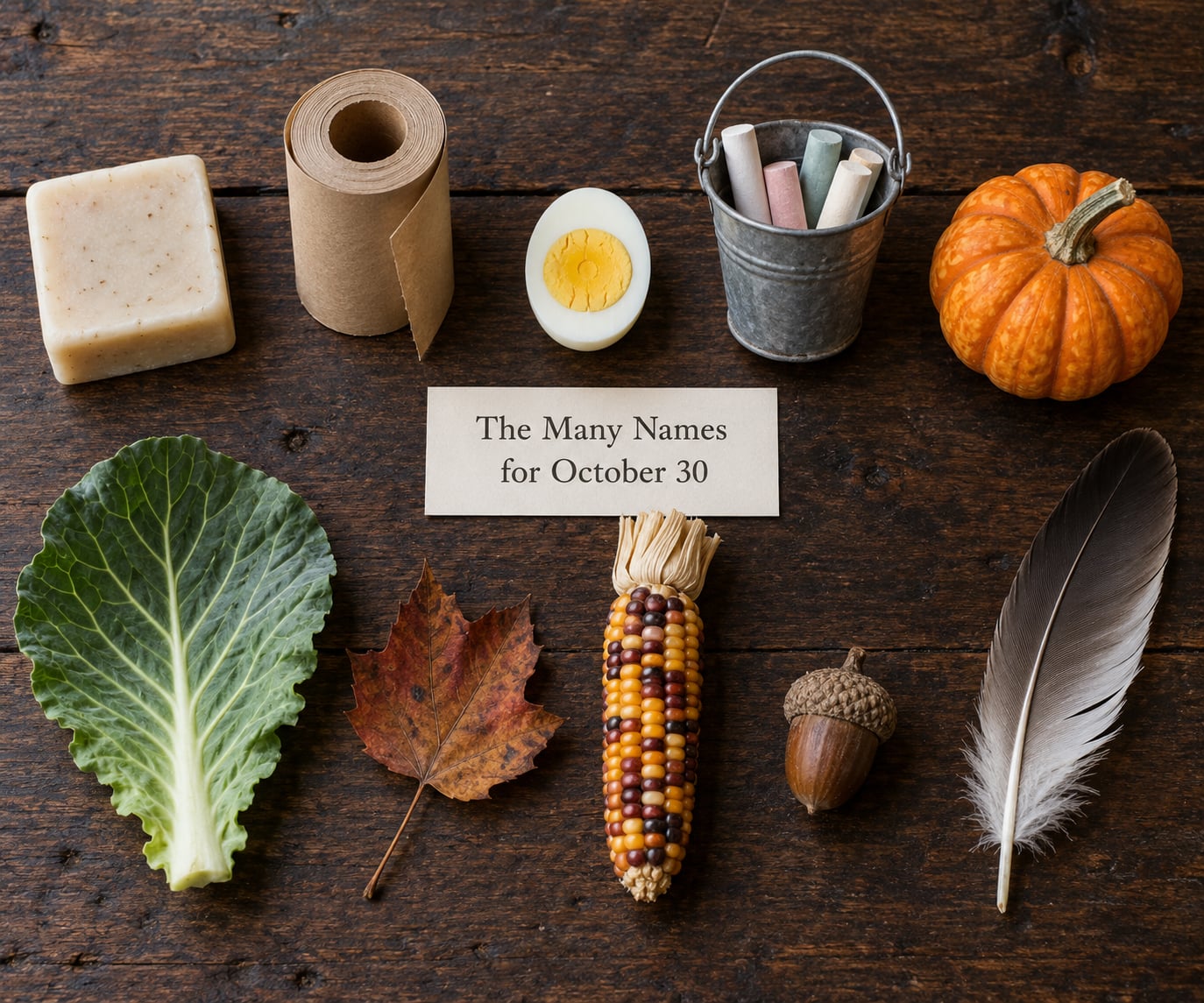
Almost nobody calls it Mischief Night, and that is not because the tradition was unknown. It is because the name is local. Here is the same night under the names it travels by, with the region each is most often reported in.
| Name | Most often reported in | Signature activity |
|---|---|---|
| Mischief Night | Mid-Atlantic, New England and the upper Midwest United States; also parts of northern England | General anonymous pranking: soap, chalk, eggs, no treats |
| Devil’s Night | Detroit, Michigan and Camden, New Jersey | Fire-setting and property damage; the most escalated version |
| Chalk Night | Texas and parts of the South | Chalk drawings on driveways and pavements |
| Corn Night | Midwestern United States | Corn-husking games and autumn field tricks |
| Cabbage Night | New England and parts of the Northeast | Eating cabbage as a dare, often folded into Halloween night itself |
| Beggar’s Night | Baltimore and wider Maryland | Kids in ragged clothes calling at doors the night before Halloween, sometimes for treats |
| Damage Night | American cities where vandalism ran hottest | An explicit, unromantic label for deliberate property damage |
| Gate Night | Derby, England | Slamming gates in the faces of trick-or-treaters |
| Goosey Night | Cornwall and neighbouring West Country villages | Wrangling geese out of their pens and penning other people’s birds |
| Fox Night | Parts of Britain, often Wales and border counties | Door-to-door rounds involving a fox, treated as fair game to torment |
Two more nights get confused with this one constantly. Guy Fawkes Night and Bonfire Night are November 5, a fortnight after Halloween, and they are about bonfires and fireworks, not pranks. Beggar’s Night is the one most easily mistaken for Mischief Night itself, because in some towns it involves going door to door — but it carries treats, which Mischief Night does not.
When the Mischief Turned Dangerous
Mischief Night did not fade gently. In a handful of cities it burned first, and the reaction to those fires is what killed the tradition far more than anybody losing interest.
Detroit is the clearest case. More than 800 fires were attributed to Halloween-period destruction during the 1984 season, a figure the Detroit Historical Society and later retellings both treat as the tipping point. The city responded with an annual Halloween curfew in 1986. That model spread, and by 1995 Detroit had rebranded the night as Angel’s Night, with volunteers out in force to keep kids off the streets.
Camden, New Jersey, went the other way in 1991, when roughly 160 fires were set over Halloween weekend in a city already under heavy scrutiny after years of urban decline. The name “Devil’s Night” had been drifting south from Detroit for decades, and after Camden the phrase started to mean arson rather than fun in much of the country.
In Britain the escalation was messier and legally quieter. What UK councils call anti-social behaviour and criminal damage covered egging and graffiti, and several supermarkets started age-restricting the sale of flour and eggs in the weeks before October 30. That single supermarket decision did more to flatten the tradition than any legal campaign, because you cannot egg a house without eggs.
Why Mischief Night Faded Away: Five Drivers
Here is the part almost nobody writing about the night bothers to explain. What mischief night was and why it faded is easier to see once you separate the causes from the aftershocks. Five things changed, and each one alone would have been survivable.
- The trick lost its anonymity. A prank only works when the victim does not know who did it. As children spent more of their evenings in supervised, structured, adult-organised activity, fewer of them were on their own street with no adults within earshot. The target got easier to find and the game got harder to play.
- The neighbourhood stopped trusting its own kids. As residential turnover rose and families moved at a pace that broke long-standing street friendships, the assumption that everyone on the block was somebody’s kid started to fail. Once that assumption fails, an egg is no longer a joke between neighbours. It is a stranger on your driveway at 10pm.
- Parents flipped from hosting to defending. The same adults who used to hand out treats and shrug off a soaped window now went out buying camouflage sheets and moving cars into the driveway. Forum accounts of the era describe exactly this reversal, and it is the single most quoted change in how the night felt from the grown-up side.
- Halloween absorbed the treat economy. October 31 won decisively. Costumes, candy, parties and school events all consolidated on the 31st, which left October 30 as the night with the risk and none of the reward. Kids are not stupid about incentives; a trick that pays no candy has to be worth doing for the joke alone, and that is a much smaller prize.
- Cleanup cost replaced fun. A smashed pumpkin is a joke. Egg yolk in the siding means a pressure washer, and a car interior full of egg means an interior detail. As family incomes and time got tighter, the price of being the prankster rose sharply, and local pressure to stop it rose with it.
Curfews and civil damage law were the tail of this, not the cause. Cities banned what the neighbourhood had already stopped tolerating.
Where Mischief Night Survived
“Faded” is not the same as gone, and the surviving pockets are worth mapping because they show which ingredient was doing the work.
New Jersey and the Philadelphia suburbs kept it longest in the United States, largely because the street geography favours it: dense enough for a group to move on foot, settled enough for parents to know which houses belonged to which families. Devil’s Night still gets used there, though now mostly as a warning rather than an invitation.
Northern England kept it, and kept it late. One r/NorthernEngland post puts it plainly: “In my small hometown on the North Yorkshire coast it was celebrated on the 30th of October, the evening before Halloween.” Alongside accounts from towns around Leeds, Liverpool and Huddersfield, that is a tradition alive well into the 2020s, and it survived for a simple reason. In smaller northern towns the kids doing the mischief still had to walk past those same families the next morning.
A thread on a Cincinnati history page makes a related point about naming: “Mischief Night and Trick Night pretty much define themselves.” Even where the night is gone, people still know exactly which date they mean.
Is Mischief Night Still a Thing?
Sometimes, in pockets, and mostly as a name people recognise rather than a night they plan. The honest answer is that the organised, street-wide version is essentially gone in most of the United States, still alive in parts of northern England, and alive in the United States mainly in New Jersey and the Philadelphia suburbs, where it survives with far less damage than it used to carry.
The date confusion is real and worth naming. People remember October 29, October 30, and a version that ran into Halloween night itself, and every one of those memories is somebody’s actual childhood. The night was never one fixed national event; it was a local agreement that happened to land near the end of October.
How to Keep the Spirit Without the Vandalism
If you grew up with it and want your kids to have something close, the honest advice is that the version worth keeping has nothing to do with property damage.
- Move it indoors. Prank calls between friends, a hidden rubber snake in a drawer, a fake spider in a lunchbox. All the tension, none of the cleaning.
- Run a prank-pumpkin contest. Decorate a neighbour’s pumpkin with stickers and glitter. Damage is zero, ownership is someone else’s, and it works exactly as well.
- Build a treasure hunt. The trick is still the trick; you just moved it from their driveway to your living room floor.
- Driveway chalk, on your own property. A chalk trail leading to the front door does more to a family’s night than anything on the classic list, and it survives rain.
- Keep the lights on and let them come to you. Defensive nightlights, a lit driveway and a visible car still work, but they are a defence, not a celebration.
Frequently Asked Questions
When is Mischief Night and what date is it?
Mischief Night is October 30, the evening before Halloween, and it is an informal rather than official date. Different communities celebrated on October 29, October 30, or let it run into Halloween itself, so people remember the date differently. It is not a public holiday, which is part of why there is no fixed schedule anywhere.
What are the regional names for October 30?
October 30 has many names depending on where you are. Mischief Night is the general American term, Devil’s Night is used in Detroit and Camden, New Jersey, Chalk Night in Texas, Corn Night in the Midwest and Beggar’s Night in Maryland. In Britain you get Gate Night in Derby, Goosey Night in Cornwall and Fox Night in Wales and border counties.
Why did Mischief Night stop happening every year?
What mischief night was and why it faded comes down to five things: the pranks lost their anonymity, neighbourhoods stopped trusting their own children, parents shifted from hosting to defending, Halloween on October 31 absorbed all the treats and left the tricks, and cleanup costs climbed. Cities added curfews afterwards, but the habit had already broken before the laws did.
What were the most memorable Mischief Night pranks?
The classic canon was soap on windows, eggs thrown at houses and cars, toilet paper on trees, chalk drawings on driveways and smashed pumpkins. Doorbell ditching and running away from answering doors were standard. One rule held it together: take a trick, owe a trick back before the night ended. The pranks people remember most are almost always pumpkin jobs.
Is Mischief Night still celebrated anywhere?
It survives in patches rather than as a national event. New Jersey and the Philadelphia suburbs kept it longest in the United States, and northern England towns, including places around Leeds, Liverpool and Huddersfield and a North Yorkshire coastal town, still celebrate it. Elsewhere it survives mainly as a name people recognise and tell stories about, rather than a night anybody organises.
Do people trick or treat on October 30?
Usually not. October 30 was traditionally a tricks-only night, and trick-or-treating settled firmly on October 31 as Halloween absorbed the tradition. The main exception is Beggar’s Night, used in Baltimore and wider Maryland, where children in ragged clothes called at doors the night before Halloween and were sometimes given food or small treats.
The Takeaway
Mischief Night was never about vandalism. It was a neighbourhood agreeing, for one night, that the rules could be loosened, and that agreement was the whole product. It faded in the places where strangers replaced familiar faces on the street, and it survived in the places where they did not.
If you want the first thing to do with that, it is this: check whether your own street still has the version where the neighbours know each other. Everything else about the night follows from that answer.