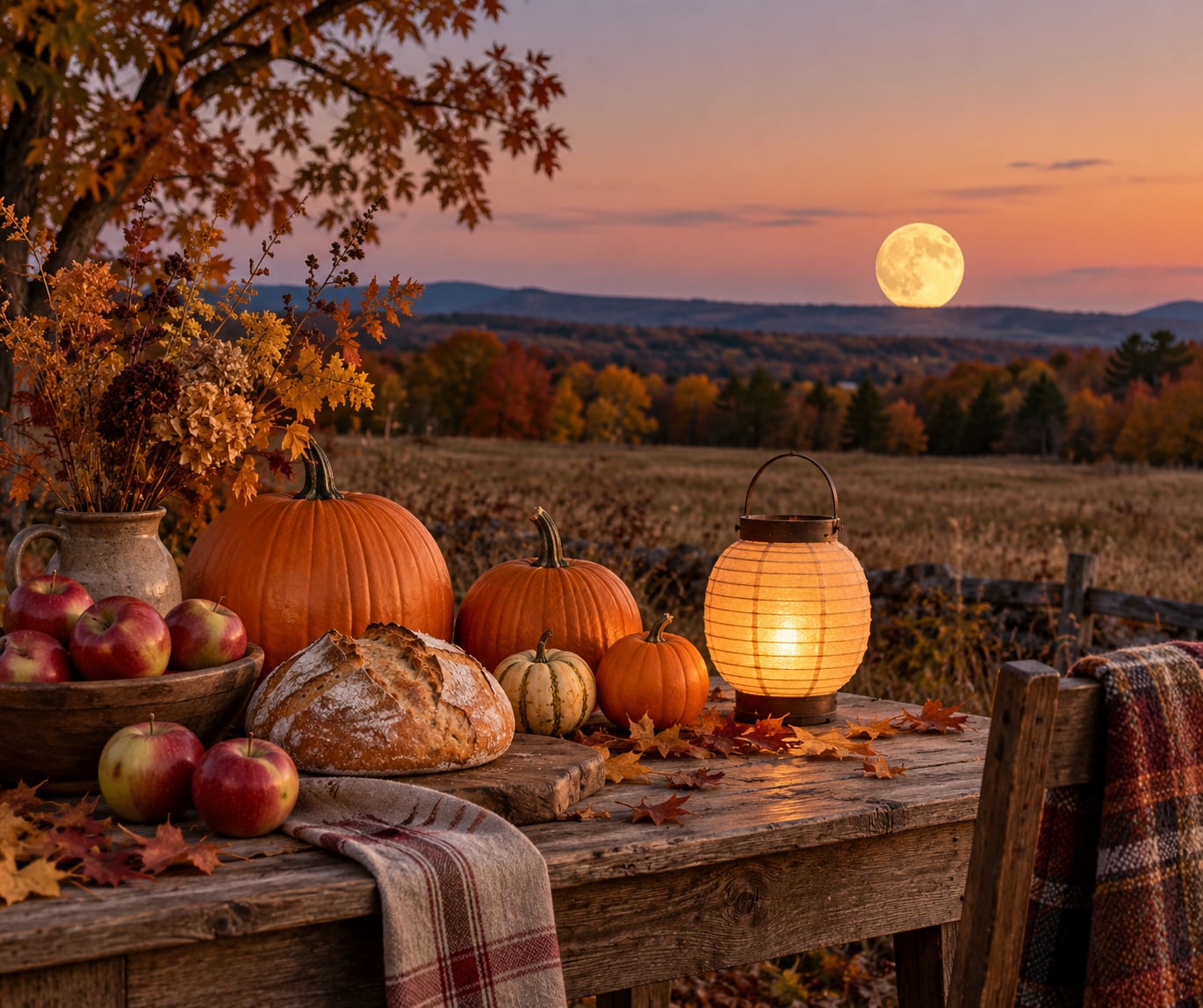
How harvest moon traditions relate to Halloween comes down to season and timing rather than a shared origin. The harvest moon is simply the full moon closest to the autumn equinox, the one that lit the last weeks of picking and threshing. Halloween sits at the end of that same harvest season, which is why the two keep showing up in the same imagery.
There is no solid evidence that the ancient festival underneath Halloween was a lunar celebration, though. The link is real in the calendar and mostly invented in the retelling, and telling those two things apart makes the whole tradition easier to enjoy.
Table of Contents
- What Is the Harvest Moon?
- How Harvest Moon Traditions Relate to Halloween
- How the Harvest Moon Differs from the Hunter’s Moon
- What Traditions Are Associated With the Harvest Moon?
- Why Does the Harvest Moon Sometimes Fall Near Halloween?
- What Is the Historical Connection Between Samhain and the Moon?
- How Do Folklore and Modern Halloween Blend the Two Traditions?
- How Can Readers Observe the Harvest Moon Today?
- Frequently Asked Questions
- Is the harvest moon always in September?
- Was Halloween historically celebrated on the harvest moon?
- What is the difference between the harvest moon and the hunter’s moon?
- Why do some names for September’s full moon come from Indigenous traditions?
- What can families do to celebrate the harvest moon?
- Conclusion
What Is the Harvest Moon?
The harvest moon is the full moon that falls closest to the September equinox, the day in late September when day and night are roughly equal. That single rule is the whole definition, and it is why the moon sometimes shows up in September and sometimes in early October.
Two naming traditions run in parallel. European farming calendars named moon phases after the work each one governed, so the moon lighting the grain harvest carried the harvest name. Separately, many Indigenous nations of what is now the northeastern United States used their own names tied to the seasonal round, and some of those names, like the Algonquin and Ponca term often rendered as “moon when they store food in caches,” describe exactly this storing-of-the-crop period.
Those names came from specific peoples with their own calendars, not from a single pan-Indigenous source, and they carry obligations of respectful attribution rather than being interchangeable decoration.
How Harvest Moon Traditions Relate to Halloween
The connection is agricultural first. A lunar calendar and a harvest calendar both track when crops come in, and both point at the same stretch of the year, so a moon that means “harvest finished” naturally ends up beside a festival that marks the season’s close. Everything else, the glowing skies, the thinning veil, the ominous low moon over a cemetery, layers on top of that coincidence.
Modern Halloween grew out of All Hallows’ Eve on November 1, and All Hallows’ Eve itself sits a full month after the harvest moon. That gap matters: the moon and the holiday are neighbors in the seasonal story, not the same night.
| Festival | When it falls | What it marks | Relationship to the moon |
|---|---|---|---|
| Harvest moon | September or early October | The end of the grain and produce harvest | Is the moon, named for the work it lit |
| Samhain | Oct 31 to Nov 1 in modern practice, historically a season rather than a fixed date | The Gaelic year turning from summer’s work to winter | Not a lunar festival in the surviving record |
| Halloween | Always October 31 | A modern mix of All Hallows’ Eve, autumn parties and borrowed folklore | Borrowed moon imagery, no moon required |
That table is the honest version of the story. Same season, different calendars, and a century of popular culture quietly blurring them together.
How the Harvest Moon Differs from the Hunter’s Moon
The hunter’s moon is simply the full moon that follows the harvest moon, and it takes its name from the hunting season that opens once the crops are in. When the harvest moon lands in early October, the hunter’s moon drifts toward late October and can land close to Halloween, which is where most of the spooky association comes from.
Older calendars named moons by the task of the season rather than by month, which is why the same October full moon gets called the harvest moon one year and the hunter’s moon another. Both names are used loosely in conversation and neither is wrong in practice.
What Traditions Are Associated With the Harvest Moon?
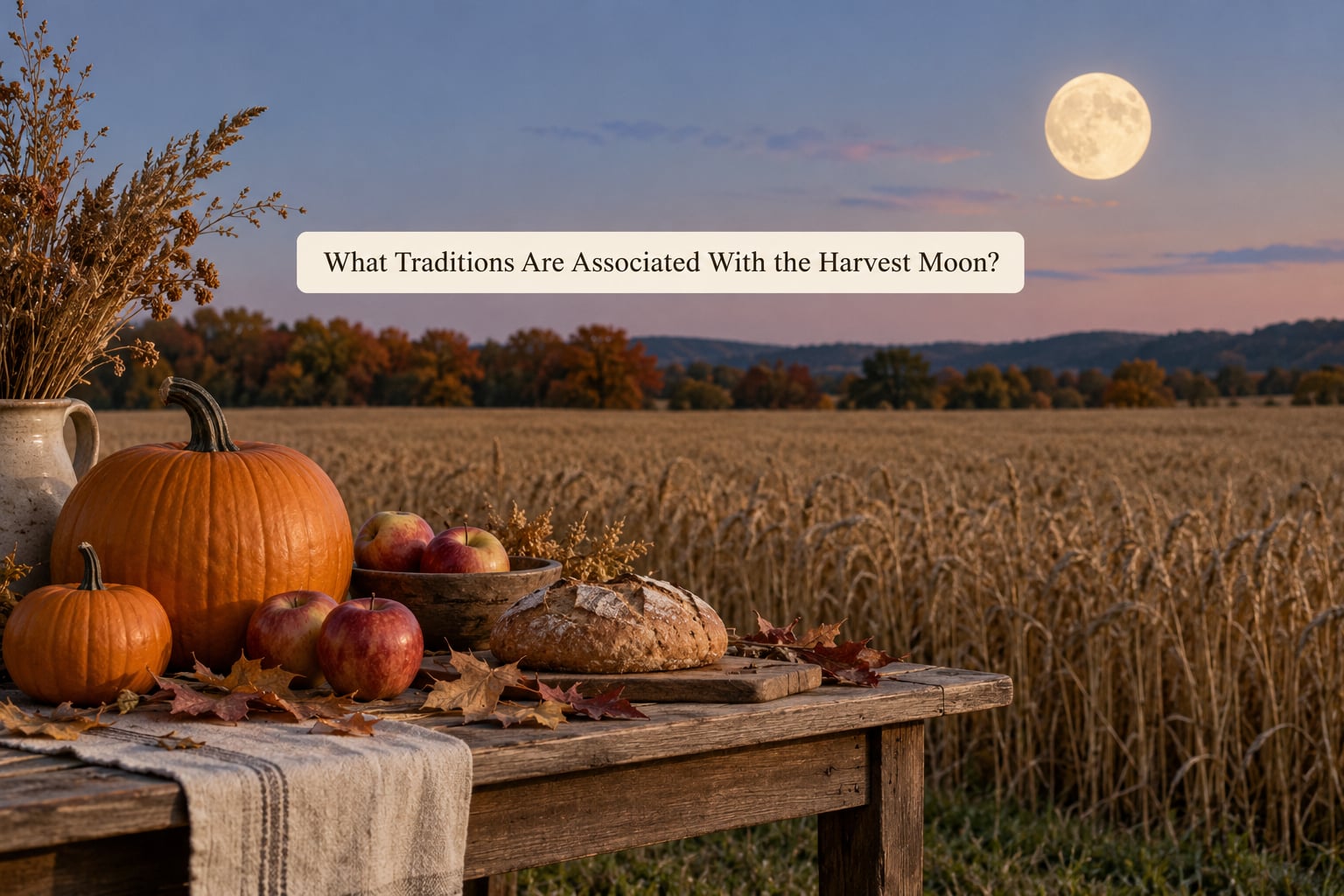
Moon watching is the one custom that shows up almost everywhere, and it needs nothing more than a clear evening and twenty minutes outside. People have watched this particular moon for thousands of years, first because it finished the work and then because it was simply beautiful.
Seasonal gatherings are the other common thread. Harvest suppers, late-season meals shared with neighbors, bread and apple dishes, cider and whatever the garden had left. The meal matters more than the date.
Storytelling and poetry run alongside it. Farmers in northern Europe told tales under this moon, and a long line of poems and songs treat it as the moment of reckoning for a season’s work. Reading a few lines of seasonal verse outdoors is a perfectly good way to spend the evening.
Some cultures add candles, ancestor remembrance and quiet offerings, others add community meals and bonfires. There is no single authentic harvest moon observance that every tradition agrees on, and any page claiming otherwise is selling you something.
Fire deserves a safety note if you plan one. Local burn rules and fire bans come first, and a backyard fire pit is a lot easier to handle than a field bonfire.
Why Does the Harvest Moon Sometimes Fall Near Halloween?
Because the moon cycle does not line up with the solar calendar, so the moon nearest the equinox can land in September or in October. The equinox drifts about six hours later each year, the lunar cycle runs roughly 29 and a half days, and those two drifting patterns together decide the month.
The practical result: the harvest moon is usually somewhere in the first three weeks of October or the last week of September, and it is never more than a couple of weeks from Halloween. It is not going to be sitting full over trick-or-treat night every year, and anybody promising you a full moon on October 31 is guessing.
The hunter’s moon is the one that drifts toward Halloween. Some years it lands within a few days of the 31st, and in the years when a second full moon falls in October, that second one sits right on the date. The Halloween blue moon of 2020 was that case, and it will not repeat for another long stretch of years.
What Is the Historical Connection Between Samhain and the Moon?
Samhain was a Gaelic festival marking the end of the harvest season, and it is often described as a fire festival where the boundary between the living and the dead was thought to thin. That much comes from early Irish literature and is repeated often enough that it is easy to treat as settled.
The moon is a different story. The surviving record does not show that the ancient Samhain observance was tied to a full moon, and historians who argue about how and when Samhain was dated reach for stars and tomb alignments rather than lunar phases. Some scholars have argued that the Pleiades rising at midnight in late October was the real marker, which is a star observation, not a moon one.
What happened instead is a slow retelling. As Samhain became widely observed outside Gaelic culture in the 20th century, it was folded into the wider autumn moon season, and practitioners started holding observances on the full moon nearest the autumn equinox instead of, or alongside, the fixed calendar date. Modern pagan practice generally calls that observance Mabon.
If you follow a tradition that keeps Samhain on a full moon cycle, that is a real and internally consistent choice. It is not proof that it is how the festival was originally kept, and pretending otherwise is the part worth skipping.
How Do Folklore and Modern Halloween Blend the Two Traditions?
The blending happened mostly through popular culture, and it happened fast. Gothic fiction and then horror film turned the full moon into a trigger for danger, which pushed the old werewolf and lycanthropy material out of its medieval European roots and into a much more dramatic shape that most people never see named in a folklore book.
Books and social media finished the job. Moonlit graveyards, lunar calendars on the fridge, crystals laid out on a harvest altar, and full moon party themes now arrive as one package every September, which is why so many seasonal posts contradict each other about dates.
Retail blends it too. Every autumn, harvest moon imagery sits next to pumpkins in the same display, and a great many of the decoration ideas people search for in the weeks before Halloween were built around a moon that had nothing to do with the festival until somebody decided it looked good together.
None of that is fake. It is just modern, and knowing which parts are inherited and which parts are aesthetic choices makes for a better night out the door.
How Can Readers Observe the Harvest Moon Today?
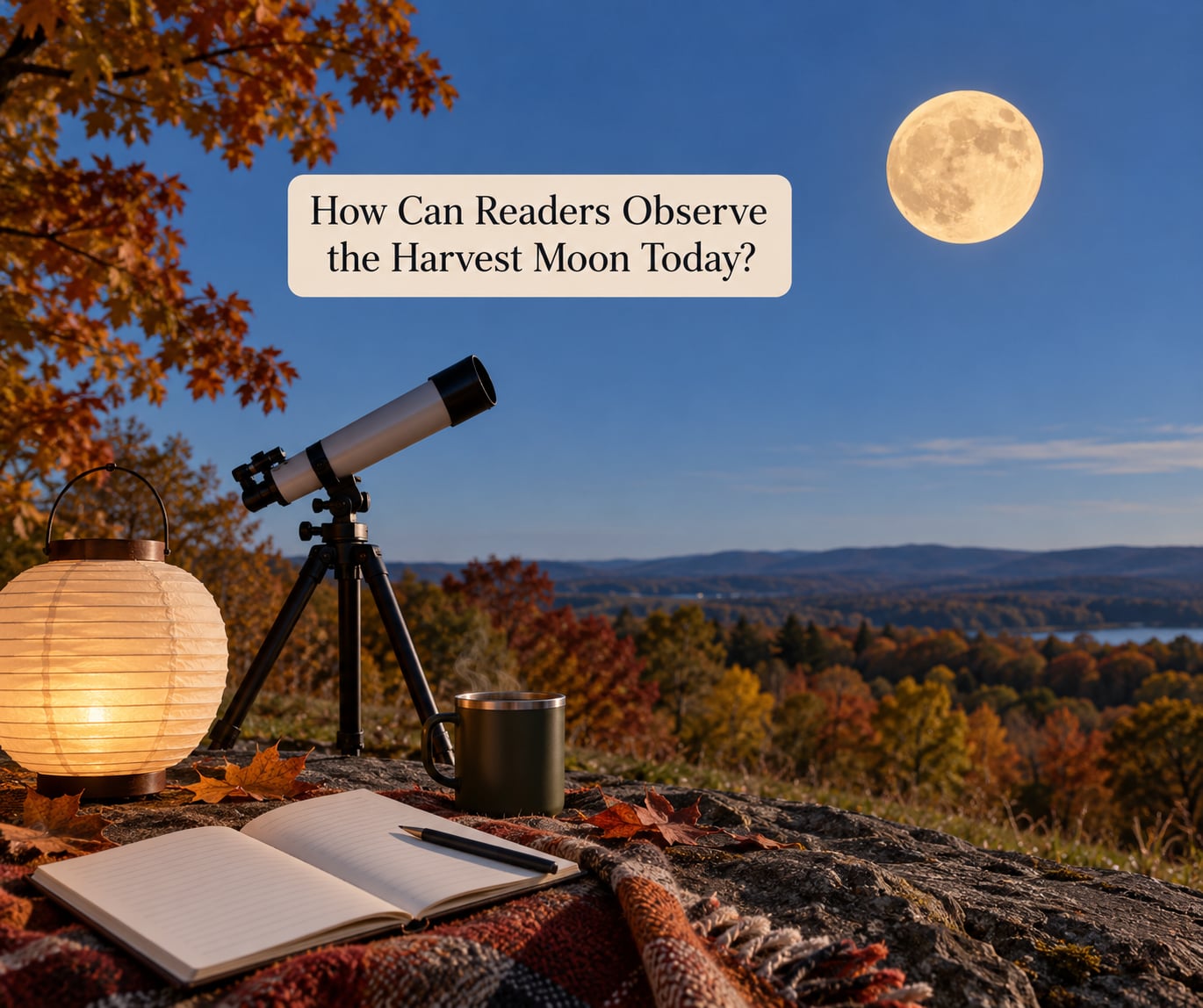
Start by finding the date and the moonrise time for your area, because the full moon is visible from sunset until roughly moonset and nothing else in the evening matters if you are standing in the dark at the wrong hour.
Then go outside about fifteen minutes after sunset, in a spot with a clear southern or southwestern view if you are in the northern hemisphere. You are looking for the bright disc low on the horizon, and it will look larger than you expect.
Bring something to do. Read a short poem, tell a seasonal story, have an autumn drink and a baked apple dish, or just sit quietly for ten minutes. Photography works well here too, since the low moon photographs nicely with an autumn foreground.
Keep it family friendly and keep expectations realistic. No ritual is required, and none of the historical detail above asks you to believe anything. Whether you treat the moon as a seasonal marker, a good excuse to be outside, or simply the reason the sky looks good in October is entirely your call.
Frequently Asked Questions
Is the harvest moon always in September?
No. The harvest moon is defined as the full moon closest to the September equinox, not as a September moon. Depending on the year it can fall in late September or in the first part of October, which is why seasonal posts that promise a September date are often wrong. If you want the real date this year, check an ephemeris or a lunar calendar rather than a decor blog.
Was Halloween historically celebrated on the harvest moon?
No evidence links them directly. The old Gaelic festival of Samhain marked the end of the harvest season, but the surviving record does not show it being tied to a specific lunar phase. Modern practice sometimes holds observances on the full moon nearest the equinox, called Mabon in some traditions, which is a modern choice layered onto an old season rather than an unbroken ancient custom.
What is the difference between the harvest moon and the hunter’s moon?
The harvest moon is the full moon closest to the autumn equinox. The hunter’s moon is the full moon immediately after it, named for the hunting season that opens once the harvest is done. Because the moon cycle drifts against the calendar, the two can swap months between years, so the same October full moon carries both names in different years. In practice, either name is fine.
Why do some names for September’s full moon come from Indigenous traditions?
Many Indigenous nations of the northeastern United States named lunar months after seasonal work, so a moon that means storing food in caches or finishing the harvest belongs to those calendars specifically. European settlers adopted some of those names, which is where modern popular naming partly comes from. These names belong to particular peoples with their own traditions and should be credited to them, not used as generic folklore.
What can families do to celebrate the harvest moon?
Keep it simple: find the moonrise time for your area, go outside about fifteen minutes after sunset, and look for the full moon low on the horizon. Add an autumn snack, read a seasonal poem, or tell a story before heading back in. Children especially like the horizon trick, where the moon looks enormous at first and then seems to shrink as it climbs. No special equipment or belief is required.
Conclusion
The harvest moon and Halloween share a season, an agricultural calendar and a lot of borrowed imagery, which is why they get talked about as one thing. Their origins are separate, and the moon-shaped parts of Halloween are largely a modern overlay that looks better than it has any right to.
Start by looking up this year’s moonrise time and pick one evening to actually stand outside and look at it. Everything else, the poetry, the food, the decorating, is optional.