Orange and black are Halloween’s colors because autumn gave people orange, the lengthening nights gave them black, and both meanings lined up with what the holiday was already about: harvest, fire, death, and the dark. Nothing in the old Celtic festival of Samhain dictated a color pair, so the truth is less tidy than the usual internet answer.
What happened instead is a slow layering. Orange arrived first as a seasonal fact and later as a symbol of bonfire light and carved pumpkins. Black arrived with night, mourning, and Victorian funeral dress. Then, over the twentieth century, party supply companies, candy wrappers and trick-or-treat imagery repeated the pair so often that it became the fastest visual shorthand for the whole season.
Today the pairing is so fixed that a bag of candy or a paper plate in those two colors gets picked out in a grocery aisle in 2026 before anyone reads a word on the package. Understanding where each color came from makes decorating and costume choices easier, though, because you can tell which parts are tradition and which parts are just good taste.
Table of Contents
- Why Orange and Black Are Halloween Colors?
- What Do Orange and Black Mean in Halloween?
- How Did Orange Become a Halloween Color?
- How Did Black Become a Halloween Color?
- Did Halloween Originally Use Orange and Black?
- What Role Did Victorian and European Traditions Play?
- How Did Popular Media Make Orange and Black Famous?
- Are Orange and Black the Only Halloween Colors?
- Orange: harvest, firelight, warmth, playful energy
- Black: night, death, mourning, the unknown
- Purple: magic, royalty, the occult
- Green: monsters, poison, the unnatural
- Red: danger, blood, fire
- White: skulls, ghosts, bones
- How Can You Use Orange and Black Without Making Halloween Look Generic?
- Frequently Asked Questions
- What are the two official colors of Halloween?
- Did the ancient Celts use orange and black at Samhain?
- What do the colors orange and black symbolize?
- What were jack-o’-lanterns originally made from?
- How did purple and green become Halloween colors?
- Can you celebrate Halloween without using orange and black?
- Conclusion
Why Orange and Black Are Halloween Colors?
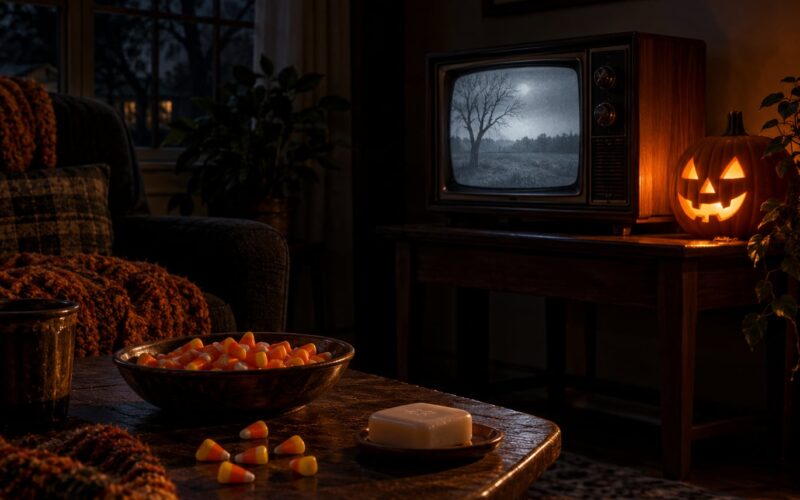
Two forces pushed these colors together: what the landscape looked like in late October, and what people wanted to feel on a night associated with the dead. Orange and black answer both at once, and they look good side by side.
The seasonal case is straightforward. Late October in the northern hemisphere means bare fields, cold nights, leafless trees, and long hours of darkness. What color there is left comes from firelight and ripe crops. What color there is not comes from everything going dark after dusk.
The symbolic case is about meaning rather than weather. Orange reads as warmth, abundance, and energy. Black reads as night, mystery, and death. Put together they say “harvest has ended and something is coming,” which is roughly the emotional pitch of Halloween in two colors and no words at all.
The commercial case is the one most people forget. Once manufacturers printed orange-and-black labels, cards, napkins and candy bags by the millions, the pair stopped being a choice and started being a default. By the mid-twentieth century you could not design a Halloween product without a reason to look wrong if you ignored it.
What Do Orange and Black Mean in Halloween?
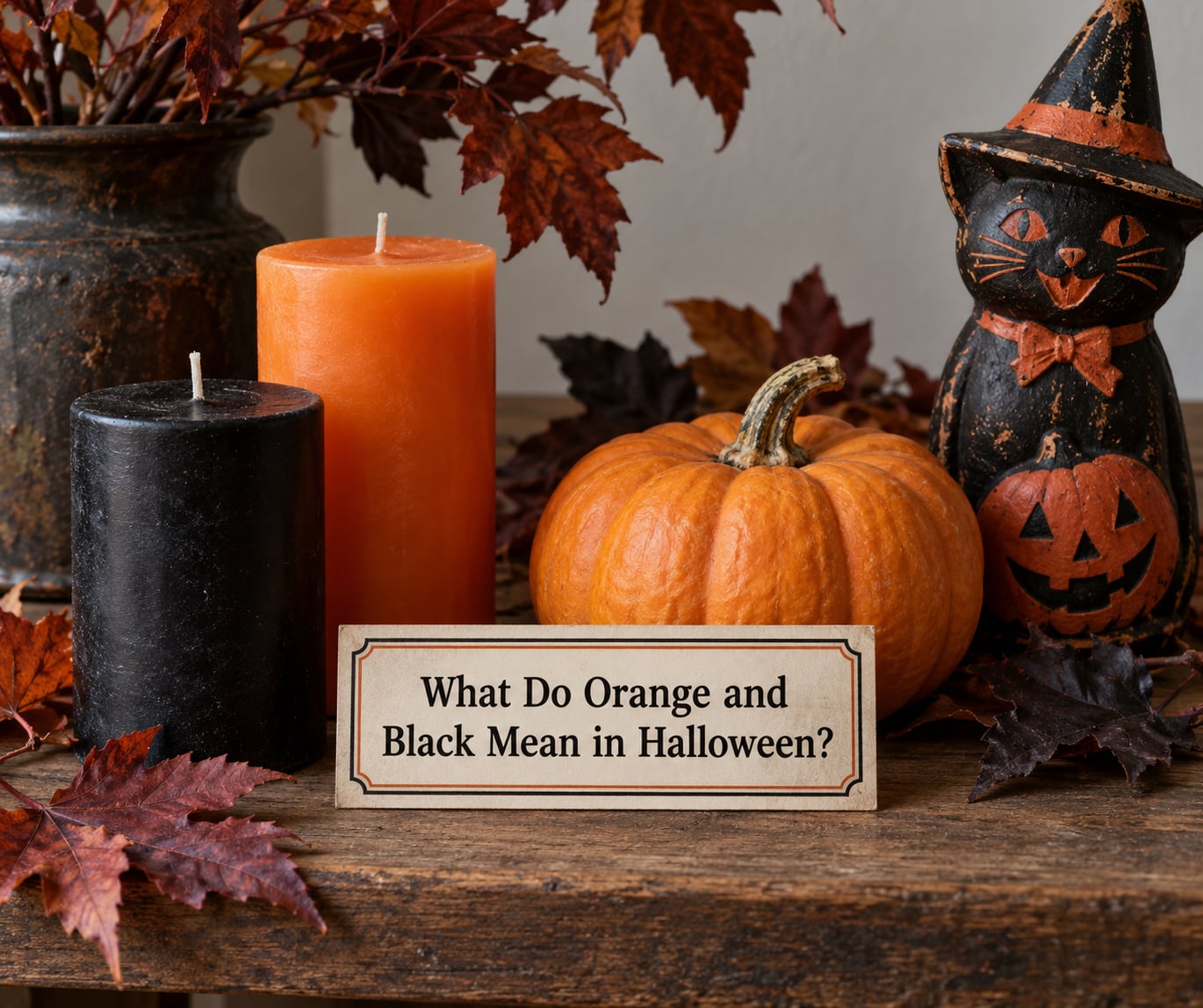
Broadly speaking, orange stands for the harvest, firelight, warmth, and the energy of a celebration, while black stands for darkness, night, death, mourning, and the unknown. Neither color has a fixed meaning that travels across cultures or centuries.
It is worth being precise about that, because a lot of “ancient symbolism” online is invention. Color meaning shifts by place and period. In Victorian England, black meant grief because people wore black for mourning. In a harvest celebration, orange meant ripe grain and pumpkins because orange things were everywhere in the field. Neither color was carrying a universal occult code.
What the pair does reliably is create a mood. Orange and black are opposites on the color wheel, so side by side they produce a sharp, high-contrast look that reads instantly at a distance, which is exactly what you want on a yard sign or a treat bag seen from the end of a street.
How Did Orange Become a Halloween Color?
Orange started as a description of the season rather than a symbol for it. In autumn, foliage turns orange, pumpkins ripen to that same shade, and hearth and bonfire light glows against the dark. Anyone living in that climate saw the color constantly for weeks.
Samhain, the Gaelic festival that falls near the end of October, is better known in the surviving sources for fire than for color. Communities gathered around bonfires, and later accounts describe the flames as lighting the faces of the dead and driving spirits away. That fire is where the orange glow, literally, comes from.
Harvest food reinforced it too. Anything baked or roasted that month came out of the oven that same hue, from bread to squash to apples, and no one had to be taught the association. When Irish and Scottish immigrants carried their October customs into North America in the 1840s, they brought the bonfires and the food traditions with them.
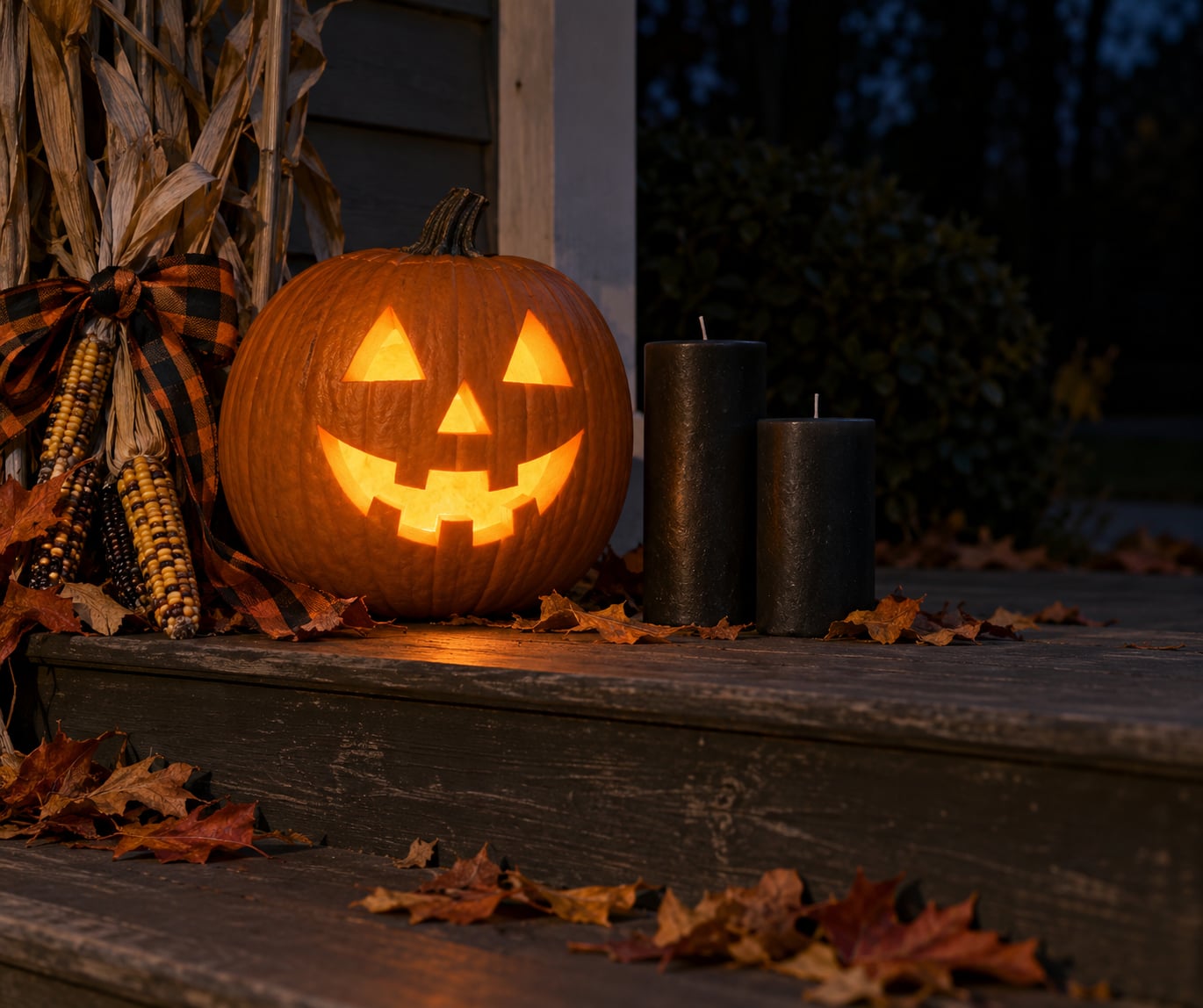
The pumpkin then sharpened the connection. Native American squash existed in the region, but the large cultivated pumpkin used today is a New World crop, and it became the Halloween lantern once North Americans swapped it in for the carved turnips and potatoes used in Ireland. A big orange object glowing on a porch settled the symbolism faster than any poster could.
How Did Black Become a Halloween Color?
Black has two separate sources, and they arrive at different moments. The older one is astronomical and practical: this is the time of year with the longest nights, and Halloween sits right in the middle of it. The darker the sky, the more the holiday feels like it belongs to the night.
The newer source is mourning. From the nineteenth century on, Western families wore black for mourning, and death was a subject people handled through clothing, print and ritual rather than hiding. That gave black an established association with grief, respect for the dead, and solemnity well before Halloween had any fixed look.
By the early twentieth century, illustrators were putting together spooky scenes in ink and wash, and black did most of the heavy lifting there too. Shadow, silhouettes, night skies and empty graveyards all read as black. When that visual language met a festival about the dead, black stopped being a background and became the color of the holiday itself.
Worth separating clearly: Victorian mourning was a real, documented practice with rules about fabric and duration. The glossy Halloween version, black tissue paper and black-and-orange plastic, is a twentieth-century invention that borrowed that older gravity.
Did Halloween Originally Use Orange and Black?
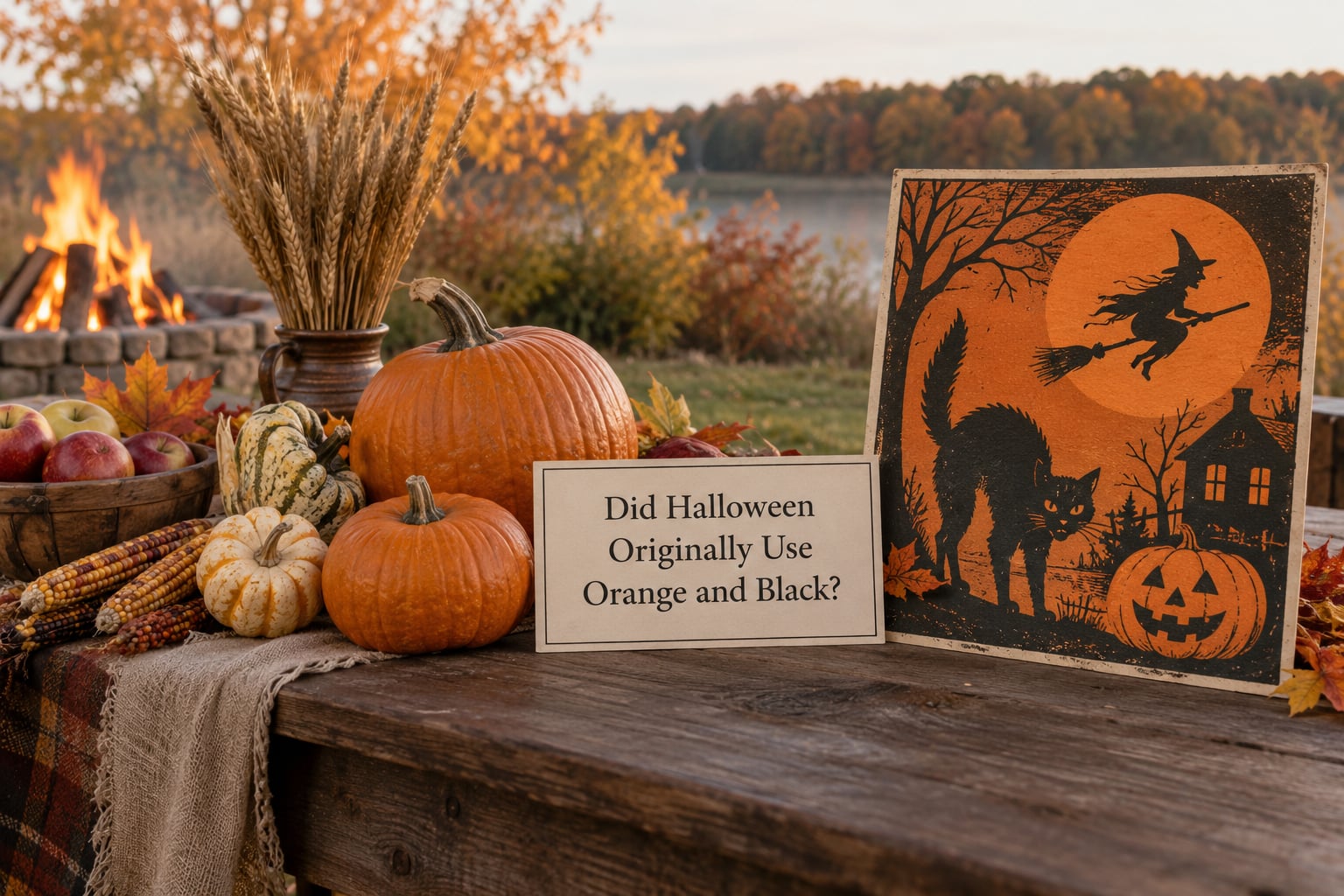
No. There is no good historical evidence that ancient Samhain used orange and black as a color scheme. What the early sources describe are bonfires, gatherings, food, the honoring of ancestors and the telling of stories about the dead. Colors of lanterns and clothing are mentioned only rarely, and never as a matching pair.
The reason the myth keeps circulating is that it sounds good. A tidy origin story about ancient Celts is more satisfying than a messy one about farmers and marketing departments, so it gets repeated until it feels like common knowledge.
What is documented is a sequence. Irish and Scottish immigrants brought October customs to North America in the 1840s. Lanterns were carved from turnips, rutabagas and potatoes there, and from pumpkins in North America. Nineteenth and early twentieth century Halloween imagery spread through postcards and newspapers, and the colors became more consistent over the following decades as printed material and party goods repeated them.
So the honest version is that the palette was assembled, not inherited. Every element is real, but they were drawn together much later than anyone claims.
What Role Did Victorian and European Traditions Play?
More than most explanations admit. The Gothic revival of the nineteenth century made spooky, medieval and supernatural themes fashionable in art and print, and Halloween rode that wave because it was already a convenient vehicle for them.
European folklore and illustration supplied a visual vocabulary: wraiths, witches, skulls, night skies and ruins. Drawn largely in black ink, that vocabulary handed the holiday its strongest visual asset, darkness, along with the props that work best against darkness.
European Halloween traditions crossed the Atlantic through migration rather than invention. What arrived in the 1840s and after included bonfires, carved root vegetables, apple games, and stories about the dead. Each of those had to be translated into materials available in the new country, and that translation is part of why the modern holiday looks the way it does.
Present this as a set of overlapping influences rather than one unbroken line of tradition. Historians generally caution against a clean chain from ancient Gael to modern porch, and the honest evidence is patchier than the confident telling.
How Did Popular Media Make Orange and Black Famous?
Repetition did the work, and the main thing spreading it was cheap printed color. Before the 1920s, Halloween imagery was largely drawn in ink or engraved, which means it came out gray or black and white. Color printing changed what a Halloween card could look like.
When vendors started printing paper goods in full color, orange and black were an obvious pairing: both inks were cheap and easy to print, the two are high contrast, and they matched what people actually saw outdoors that month. Postcards, party invitations, tissue paper, napkins, paper plates and treat bags all repeated them.
Candy packaging added a second push in the middle of the century. Brightly printed wrappers and boxes aimed at children used the Halloween palette to signal seasonal treats, so the colors turned up at the checkout counter as much as on the porch. Familiar brands leaning on the association made it more recognizable each year.
Film and television did the last stretch. Costumes, set dressing and props needed a look that read instantly as Halloween in a single shot, and nothing else held together as well. By the late twentieth century the palette was fully settled, and later retailers simply followed the expectation their customers already had.
Are Orange and Black the Only Halloween Colors?
They are the two most recognizable, but the wider Halloween palette runs wider than that. Here is how the main colors break down, what each one usually means, and where the association actually comes from.
Orange: harvest, firelight, warmth, playful energy
The source is autumn foliage, bonfire glow, pumpkins and roasted food. Modern use covers porch signs, candy wrappers, carved pumpkins and orange lighting.
Black: night, death, mourning, the unknown
The source is the long winter nights, Victorian mourning dress and ink illustration. Modern use covers backdrops, silhouettes, black tissue paper and most costumes.
Purple: magic, royalty, the occult
The source is Gothic revival art and Victorian mourning fabrics. Modern use is mostly an accent, for witches, invitations and lighting.
Green: monsters, poison, the unnatural
The source is older creature and potion imagery, plus later fantasy art. Modern use covers witch costumes, goblins and slime effects.
Red: danger, blood, fire
The source is older folklore illustrations and stage spectacle. Modern use shows up in devils, vampires and dramatic accents.
White: skulls, ghosts, bones
The source is grave imagery and Victorian mourning details. Modern use covers skeletons, sheets and monochrome decor.
It also helps to know that Halloween has no official colors at all. There is no committee, no brand standard, and no authority that assigns them. Orange and black are traditional because people use them repeatedly, not because anyone declared them. If you want a ranked list, orange and black come first in almost every informal survey of what people expect, with purple and green behind them. That ranking reflects familiarity rather than anything historical, and plenty of decorators ignore it without anybody objecting.
How Can You Use Orange and Black Without Making Halloween Look Generic?
The trick is to make one color dominant and the other a support rather than splitting them evenly everywhere. A black porch with orange lighting feels designed. Fifty-fifty stripes on every surface feels like a party supply bin.
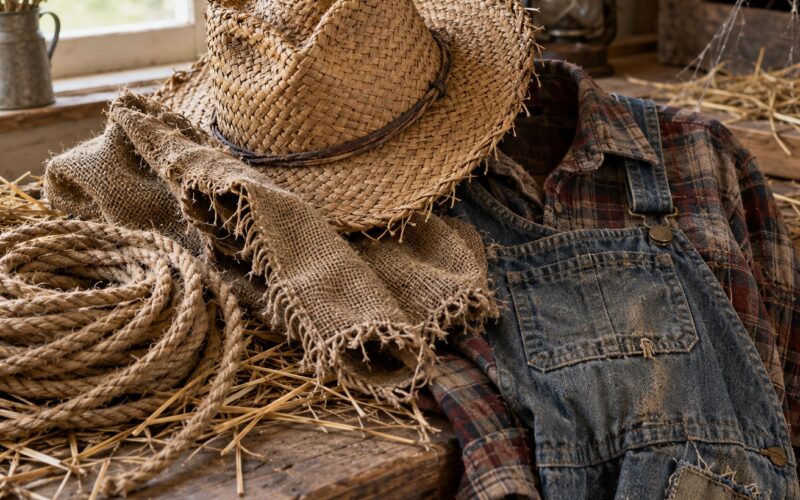
Vary the shade of orange. Burnt orange, rust and deep pumpkin tones look richer than the bright plastic orange, and they pair better with natural materials like burlap, wood, dried corn and real leaves. Those textures also fade less badly after a few weeks outdoors than glittery vinyl does.
Let light do some of the work. Orange bulbs in a dark setting read warmer and more atmospheric than painted orange objects in daylight. Black absorbs light rather than reflecting it, so your lighting choices matter more on black surfaces than on any other color.
Pick one accent color and commit to it in small doses. Deep purple against orange and black gives a Gothic feel, green introduces something poisonous and playful, and white keeps the scheme from getting heavy. One accent used consistently looks intentional; four accents look random.
Carry the colors into food and paper goods too. A black cake with orange frosting reads as Halloween without a single decoration, and small touches like orange napkins or black candle holders carry a theme through a party that top-heavy decorations would overwhelm.
For costumes, orange and black as a base leaves room for one strong detail. Adding a third bold color often weakens the read, but texture, makeup, and props do more work than extra color ever will.
Frequently Asked Questions
What are the two official colors of Halloween?
There are no official Halloween colors. No organization assigns or regulates them. Orange and black are traditional because they have been repeated in decoration, packaging and costumes for roughly a century, so people recognize them instantly. That is a habit, not a standard, which is also why black-and-white or muted Halloween decor is perfectly legitimate.
Did the ancient Celts use orange and black at Samhain?
There is no solid evidence they did. Early accounts of Samhain describe bonfires, gatherings, food and honoring the dead, rarely naming colors at all. Orange and black were assembled much later, from autumn landscapes and bonfire light, mourning customs and printed Halloween imagery. The pairing is a later construction that feels ancient.
What do the colors orange and black symbolize?
Orange is usually read as harvest, firelight, warmth and energy, which comes from autumn foliage, bonfires, pumpkins and roasted food. Black is read as darkness, night, death and mourning, which comes from long winter nights, Victorian mourning dress and ink-drawn spooky illustrations. Both are broad cultural associations rather than fixed symbols.
What were jack-o’-lanterns originally made from?
In Ireland and Scotland, lanterns were carved from turnips, rutabagas, potatoes and sometimes beets. Immigrants carried that custom to North America, where a single large pumpkin offered more surface to carve and a brighter glow. Over the twentieth century the pumpkin became the standard, and the orange lantern became shorthand for the whole holiday.
How did purple and green become Halloween colors?
Purple and green are later additions with their own origins. Purple fits Gothic revival art, Victorian mourning fabrics and royalty, which made it a natural fit for magic and the occult. Green came from older creature and potion imagery and later fantasy illustration. Both settled into the palette through twentieth century decoration and merchandising rather than ancient tradition.
Can you celebrate Halloween without using orange and black?
Yes, and plenty of people do. Black and white, muted bone and beige tones, or jewel colors like teal and deep plum all work when the shapes are seasonal. Skillful decorating is what sells the theme, not a specific pair of colors. Keep one or two clear spooky cues, such as candles, skulls or pumpkins, and the rest can follow your taste.
Conclusion
Orange and black became Halloween’s colors because autumn gave people one, the long nights gave them the other, and nineteenth and twentieth century print and merchandising repeated the pairing until it needed no explanation. Bonfire light, harvest food, mourning dress and carved pumpkins each supplied a piece of it.
Start with one dominant color, choose a shade rather than the brightest version, and add a single accent such as deep purple or white. That is enough to read as Halloween instantly, and it will look like a decision instead of a default.