Trick-or-treating manners stick when a child practices them in daylight, not when you recite them in the driveway at dusk. To teach kids Halloween manners for trick-or-treating, spend ten minutes a day for two weeks on three or four rules, run one five-minute role-play at home, and praise the exact behavior the moment you see it. On the night itself, keep it to a three-rule recap in the car.
It takes less time than most parents expect, and the whole thing can be done before the costumes come out of the closet. Nothing here needs a purchase or a special trip.
Table of Contents
- What You Need
- Step-by-Step: How to Teach Kids Halloween Manners
- How to teach kids Halloween manners before the first door
- Rehearse the routine at home
- Practice saying please and thank you
- Teach kids to wait their turn and share the sidewalk
- Show how to accept no gracefully
- Set boundaries around candy and homes
- Make safety part of good manners
- Common Mistakes
- Frequently Asked Questions
- At what age can kids trick-or-treat without an adult?
- What if my child is too shy to say trick or treat?
- My child refuses to say please or thank you. How do I teach it?
- How do I handle food allergies on Halloween night?
- What should we do after trick-or-treating?
- A Simple Plan for a Kinder Trick-or-Treating Night
What You Need
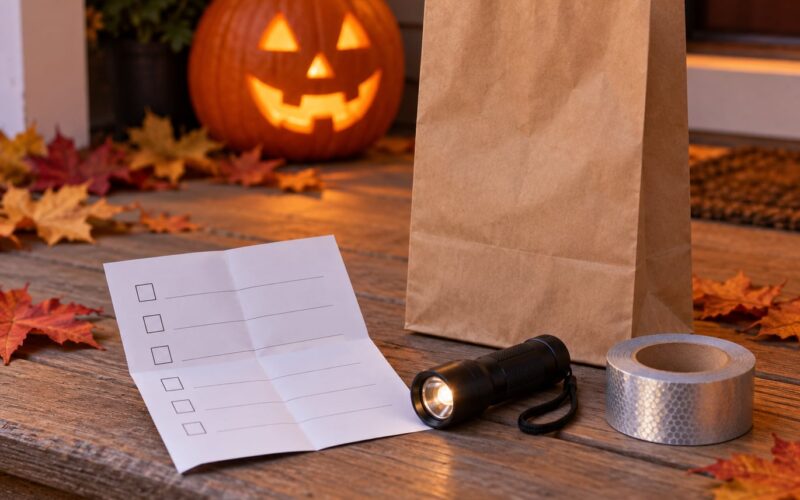
You need five things, and three of them are probably already in the house.
- A short rule card. Three or four rules written on one index card, in your child’s handwriting if they can manage it. Not a poster with eleven items on it.
- A costume they can move in. Check that they can walk up steps, see their feet, and breathe. Anything trailing behind them is a trip hazard before it’s a costume.
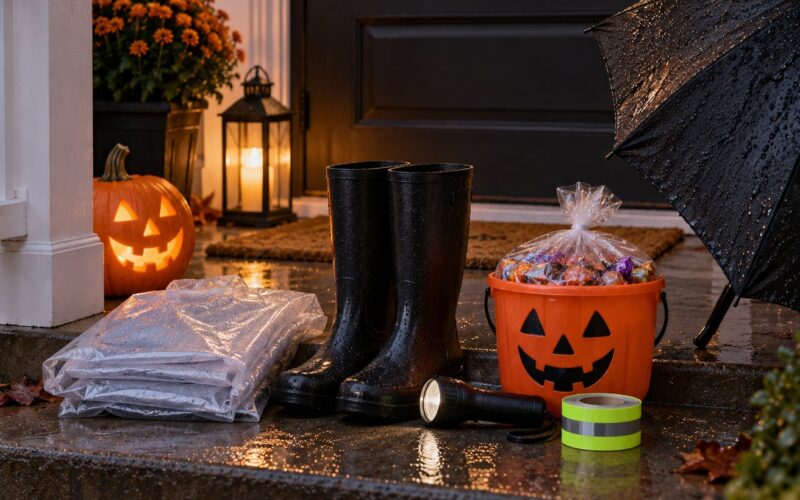
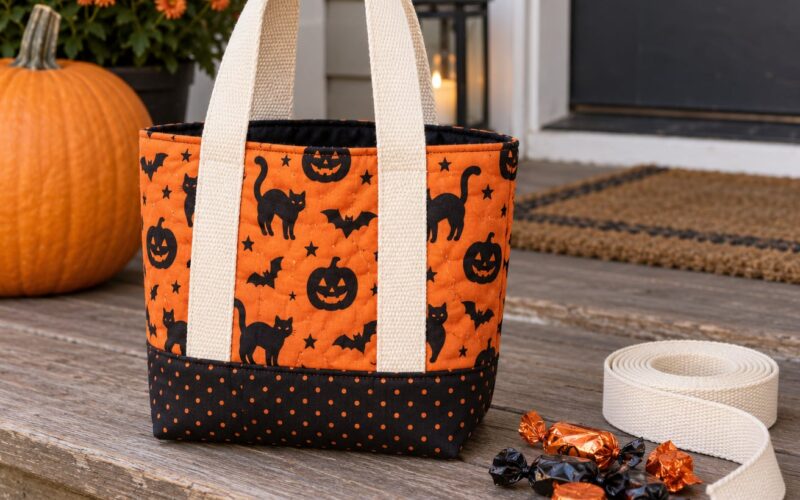
- A treat container. A basket or bag with a handle they can carry one-handed, plus a flashlight that clips to it or sits in a pocket.
- Visibility gear. Reflective tape on the costume, the bag, or both. Cheap tape does more for their safety than any accessory.
- A reward plan and a debrief. Decide now what a good night earns, and pencil in fifteen minutes after the walk for sorting the haul and talking about what went well.
If the card feels like the hard part, write it with them. A six-year-old who names the rules owns them better than one handed a list on October 31st.
Step-by-Step: How to Teach Kids Halloween Manners
Seven steps cover the whole job: set the rules early, rehearse the door routine, practice the words, work on waiting and sharing the sidewalk, show how to handle a no, set boundaries around candy and homes, and fold safety into the manners talk. Ten minutes daily across two weeks is plenty, and you will know it is working when your child repeats the rules back to you in the car.
How to teach kids Halloween manners before the first door
Start about ten days out. Long before costumes and sugar enter the conversation, ask your child what they think happens at a door when someone knocks. Most will describe shouting and running, which tells you exactly what to correct.
Then pick three or four rules, never more. A workable set: wait to be invited closer, say thank you, take one treat unless offered more, and stay with me. Write those on the card and leave it on the fridge.
Tell them the reason next to each rule, because kids who understand cooperate better than kids who just comply. Nobody is obligated to open their door on Halloween, so a polite knock is what makes the whole evening possible. The doors that do open tend to be the ones where the child waited and spoke.
Plan for the hard cases too. A tired four-year-old at door nine is not going to remember the script, and that is fine. Agree in advance that a thumbs-up, a wave, or a quiet nod counts as their greeting on the nights they cannot manage the words. Set a family stop time, somewhere around 8:30 to 9:00 pm, so nobody has to negotiate the curb at nine.
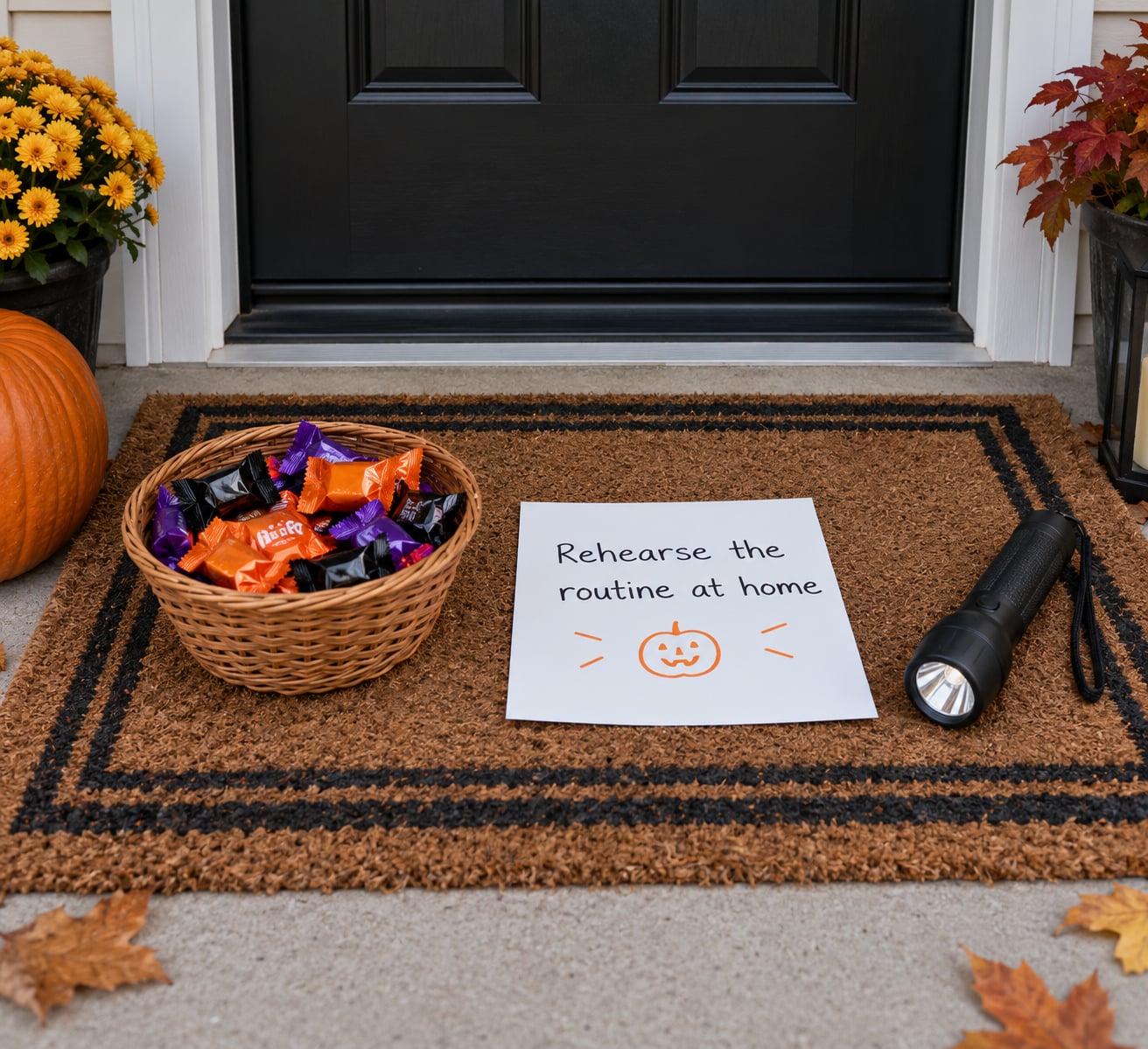
Rehearse the routine at home
Role-play is the single highest-value five minutes you will spend this month. You play the host at your own front door; your child knocks.
- Knock or ring exactly once, then step back so you are not standing on the mat.
- Wait until the door opens before saying anything. No shouting through a closed door.
- Say “Trick or treat,” then ask, “May I have one, please?”
- Take the treat that was offered, or one piece if a bowl is out. Do not reach in and choose.
- Say “Thank you,” say “Happy Halloween,” and move on.
- Walk to the next house. Do not look back at the door.
Run it three or four times, swapping who plays the host. Correct one thing per run rather than six, and let the last run be clean. A sibling makes an excellent host because they will hand over one piece and immediately hand over another if asked, which teaches the “unless offered more” part of the rule without you having to explain it.
Say the words the way you want to hear them. “Trick or treat” in a normal voice reads as polite; the same phrase shouted over a fence reads as a demand, and hosts hear the difference every time.
Practice saying please and thank you
Keep the phrases short enough that a tired child can manage them. “Trick or treat, please” and “thank you” cover nearly every door. “Have a Happy Halloween” is a nice bonus, not a requirement.
The part parents get stuck on is whether asking for a specific treat is rude. It is not asking that causes friction; asking for more after someone has said no is what does. Teach them to ask once, take the answer, and walk away smiling. If the bowl has fun-size chocolate bars and they want one, they can say so. If the answer is no, the rule they are learning is that a no ends the conversation.
Practice the thank-you when nothing was given, too. “Thanks for saying no, happy Halloween” sounds stiff to an adult, so a wave and a smile will do just as well and cost a child nothing.
Teach kids to wait their turn and share the sidewalk
Doors get crowded between 6 and 7 pm, and that is where manners break down. Practice the boring part: standing behind other children, waiting, no pushing and no cutting in, no running across a lawn to reach a porch first.
Add the sidewalk rule. Walk on the pavement beside the grown-up rather than in the street, keep to the side with the house, and cross only at corners. Practice this on an ordinary walk the week before so it stops feeling like a Halloween rule and starts feeling like the way we move outside.
On the night, an indoor voice near a porch does a lot of work. The door is ten feet away, and the neighbors can hear every doorbell jab. Tell them to press the button or knock once and wait rather than leaning on it.
Show how to accept no gracefully
This is the step most guides skip, and it is the one that decides whether your child is welcome at the next door. An empty bowl on the step, a host who says they are out of candy, a house with the lights off, a “no trick-or-treaters” sign, an adult who asks them to move along: all of these need a rehearsed response.
Teach the same short response every time. “Okay, thank you, happy Halloween,” then walk to the next house. Say the line together in rehearsal so it comes out automatically at door twenty, not just at door two.
Tell them plainly that skipping a dark house is not rudeness, it is reading the room. Lights off means the family is done for the night. A sign means skip the yard entirely. Practice that decision out loud while you walk: “That one is dark, so we walk past.” The walk-past rule is easier to obey when your child is the one naming the reason.
If a child is disappointed, let them be disappointed briefly and then move the group along. A short walk between houses usually resets the mood faster than a conversation on the doorstep does.
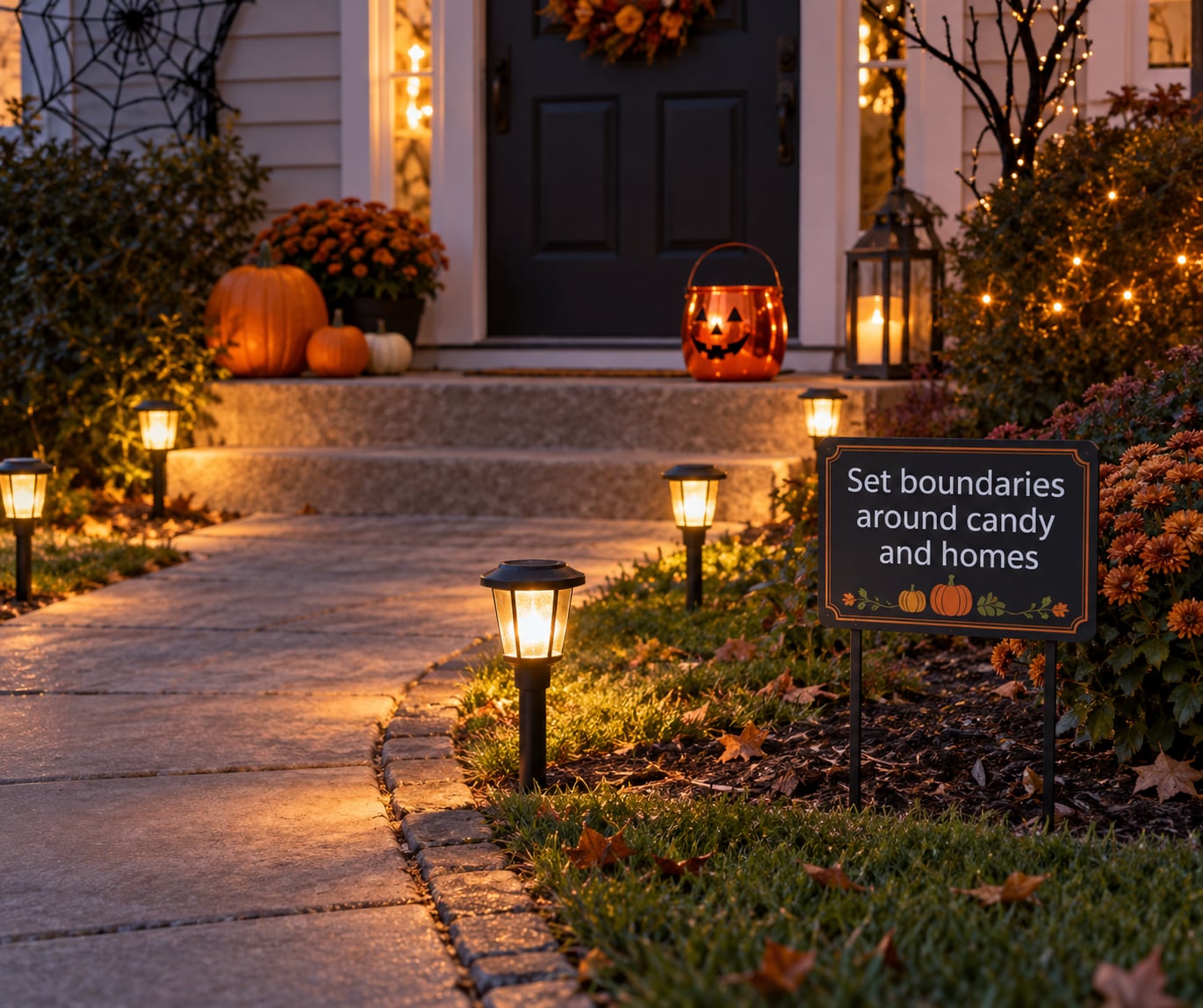
Set boundaries around candy and homes
Yards and porches belong to the people who live there. Teach that a house is not an open invitation: no walking through a yard unless a resident invites you in, no touching decorations, inflatables, or lawn ornaments, no cutting a corner through someone’s garden because it is faster.
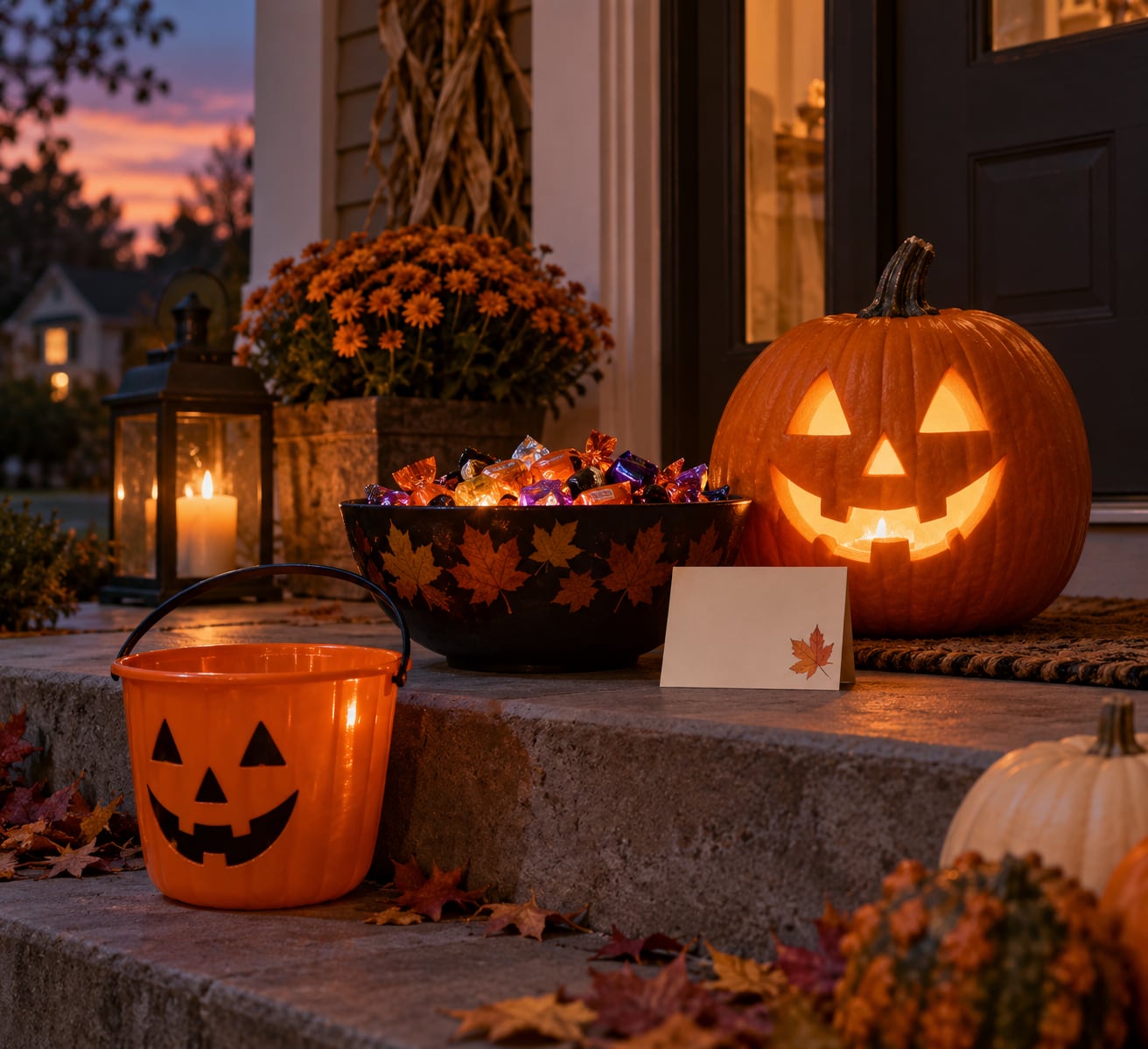
The candy rule needs a number attached to it, because “don’t be greedy” means nothing to a child. Teach one piece per house unless the host offers more, and take what is offered without asking for a second. Pre-bagging one treat per child avoids the scramble at the door, and the choosing-from-a-bowl version tends to make kids more appreciative, not less, since they get to pick.
Do not eat candy while trick-or-treating. Wrappers go in a pocket or bag and come home with you, and nothing gets eaten until an adult has looked through the haul. That covers everything from a choking hazard to a stranger handing over something unwrapped.
Make safety part of good manners
Courtesy and safety are the same lesson at this age. A polite child who stays with the adult, walks on the sidewalk, and keeps moving is a child drivers and homeowners can see and predict.
- Stay with your adult the whole time, and hold the flashlight or the bag on the side away from the road.
- Look left, right, left at every corner and every driveway, and cross at corners.
- Never take food, a ride, or anything else from an adult you do not know, even a friendly one.
- If someone touches you, blocks you, says something that scares you, or asks you to go somewhere else, walk to your adult and say so. You will always believe them.
- Say your family’s first name out loud if you get separated, and agree on one meeting spot in case you cannot find each other.
Run this list once in daylight before Halloween night. Then keep it short on the night: stay with me, look both ways, and tell me if anything feels wrong.
Common Mistakes
Most failed Halloween manners lessons fail for the same handful of reasons, and each one has a simple fix.
Giving a long lecture in the driveway. A ten-minute speech at 5:45 pm produces glazed eyes and nothing else. Fix: say three rules in the car on the way over, and let the role-play do the teaching during the day.
Rewarding pushiness. If begging, crowding, or grabbing more candy worked at the last house, expect a repeat. Fix: agree on one treat per house in advance and stick to it, even when the child protests.
Making a child apologize to an adult who is unsafe or unwelcome. Some grown-ups are rude to children on Halloween, and no manners lesson should require a child to keep being polite to someone who is frightening them. Fix: teach the child to say “thank you, happy Halloween” and leave. No handshakes, no staying, no apology for taking up their evening.
Forgetting allergy and food-safety rules. A nut allergy plus a mixed bowl is a real problem, and it is not something to sort out at the door. Fix: check the haul at home, put anything questionable aside, and have a safe treat of your own waiting in the car.
Expecting perfection. A four-year-old will forget the words. So will a nine-year-old on a sugar high. Fix: correct quietly and once, then let it go. You are shaping a habit, not running a disciplinary hearing.
Skipping the debrief. The night teaches whatever you review the next morning. Fix: set aside fifteen minutes to sort the haul together and ask what went well.
Frequently Asked Questions
At what age can kids trick-or-treat without an adult?
Most families keep children with an adult through about age 10 or 12, depending on the neighborhood and the child. Younger kids should stay within sight of a grown-up the whole time. Older kids and teens who walk independently still need a plan: a set finish time around 8:30 to 9:00 pm, a check-in point, and the rule that they do not enter any house or yard without a resident saying yes.
What if my child is too shy to say trick or treat?
Do not force the words and do not punish the silence. A wave, a nod, or a thumbs-up is a perfectly good greeting for a shy or non-verbal child. Practice a hand signal in advance so they have something ready, and let the parent say the words if the child cannot. Most hosts are far happier with a quiet child who waves than with one coached to shout on cue.
My child refuses to say please or thank you. How do I teach it?
Refusal is usually a skill gap, not defiance. Say the line for them out loud while you walk, so they hear the rhythm: please on the way in, thank you on the way out. Keep practicing at home for a week, and praise the one door where it went well instead of commenting on the doors where it did not.
How do I handle food allergies on Halloween night?
Carry your own safe treats and hand them out alongside any candy your child receives, so they can join in rather than stand out. Check every label before your child eats anything, and skip anything homemade, unwrapped, or unlabeled. Bring an antihistamine or epinephrine auto-injector if one has been prescribed, and check with your doctor before the season if you have not reviewed your plan.
What should we do after trick-or-treating?
Sort the haul together before anything gets eaten. Parents should inspect every piece, set aside anything damaged, homemade, or from an unknown source, and pull out allergens your child reacts to. Then decide how much gets eaten and when, keep the wrappers out of the car, and talk briefly about one thing that went well and one thing to practice next year.
A Simple Plan for a Kinder Trick-or-Treating Night
You do not need a training program. You need three things done consistently: three rules reviewed before you leave, one specific bit of politeness named out loud during the night, and one honest conversation the morning after.
Start tonight, not on October 31st. Write three rules on a card, role-play the door once a week, and on the night say them in the car rather than on the doorstep. A child who has practiced “may I have one, please” twice at home will manage it twelve times on a real street. If you are still not sure how to teach kids Halloween manners for trick or treating, that rehearsal is the part to start with.
That is the whole job. The kids who get invited back to the big decorated houses next year are usually the ones somebody bothered to rehearse with them first.