Most leftover Halloween candy has three good destinations: bake or melt it, hand it to someone who actually wants it, or store it for the holidays. Sorting the whole pile takes about ten minutes, the process is beginner-easy, and nothing needs expensive equipment.
The reason so much of it goes straight into the trash is that recipes online assume chocolate bars and quietly ignore everything else. Fun-size Skittles, gummies, Starburst, Jolly Ranchers, candy corn and peanut butter cups usually end up with nowhere to go, and an open bag starts losing freshness within a few weeks whether you use it or not.
Sort first, decide second. Once the pile is split into keep, share, use and discard, most of the leftover problem takes about an hour to solve.
Table of Contents
- What You Need
- Step-by-Step: What to Do with Leftover Halloween Candy
- 1. Check and Sort the Leftover Candy
- 2. Store the Candy Correctly
- 3. Turn It Into Easy Snacks and Recipes
- 4. Share, Decorate, or Gift the Remainder
- 5. Dispose of Leftovers Responsibly
- Common Mistakes
- Frequently Asked Questions
- How long does leftover Halloween candy last?
- Can you freeze leftover Halloween candy?
- What should I do with melted or sticky Halloween candy?
- How can I keep Halloween candy fresh in a bowl?
- Can I give leftover Halloween candy to children or neighbors?
- Can I give leftover Halloween candy to pets?
- Conclusion
What You Need
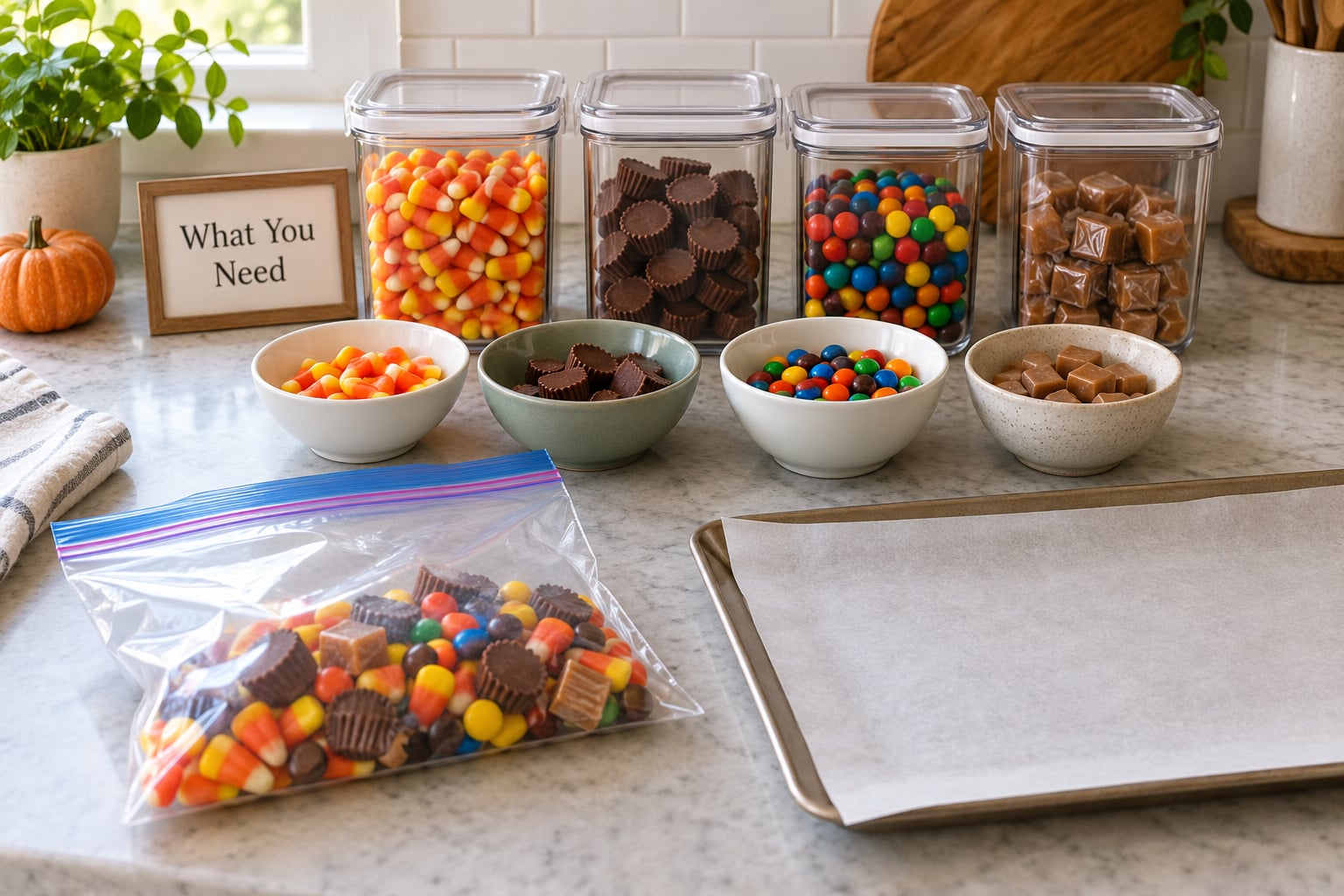
You almost certainly have enough of this already. Pull together whatever you have in the house before buying anything.
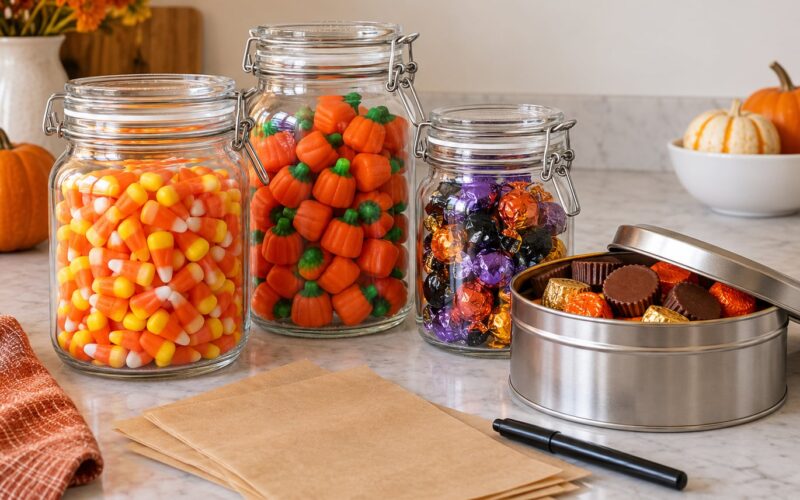
- Airtight containers in two sizes: one for bars and boxed candy, one for the loose stuff like Skittles, gummies and candy corn.
- A marker and masking tape or label stickers for dates and candy types. Every container gets a label, including the ones going into the freezer.
- Freezer bags or a sheet pan for the frozen stash. Freezing flat on a sheet pan first stops bars from freezing into one solid brick.
- Parchment paper or wax paper for bark, chocolate shells and anything you spread out to set.
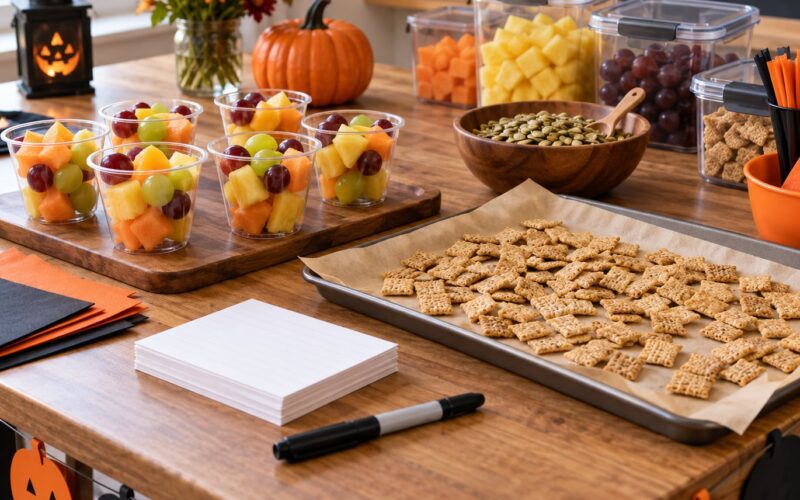
- Small bowls and a scoop or tongs for putting candy out later without hands going in.
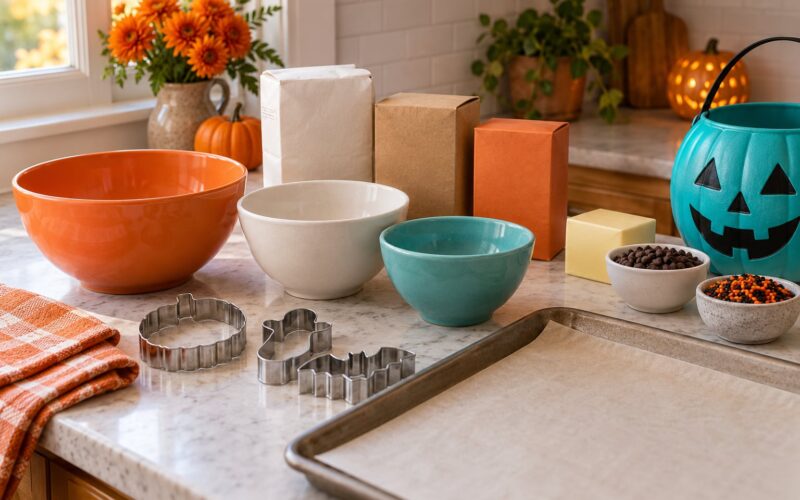
- A double boiler or a heat-safe bowl for melting chocolate, plus a baking sheet if you plan to bake.
- Clear bags, ribbon and a Sharpie for treat bags for teachers, coworkers or neighbors.
- A trash bin right next to your sorting spot so the discard pile leaves the counter in one trip.
Step-by-Step: What to Do with Leftover Halloween Candy
1. Check and Sort the Leftover Candy
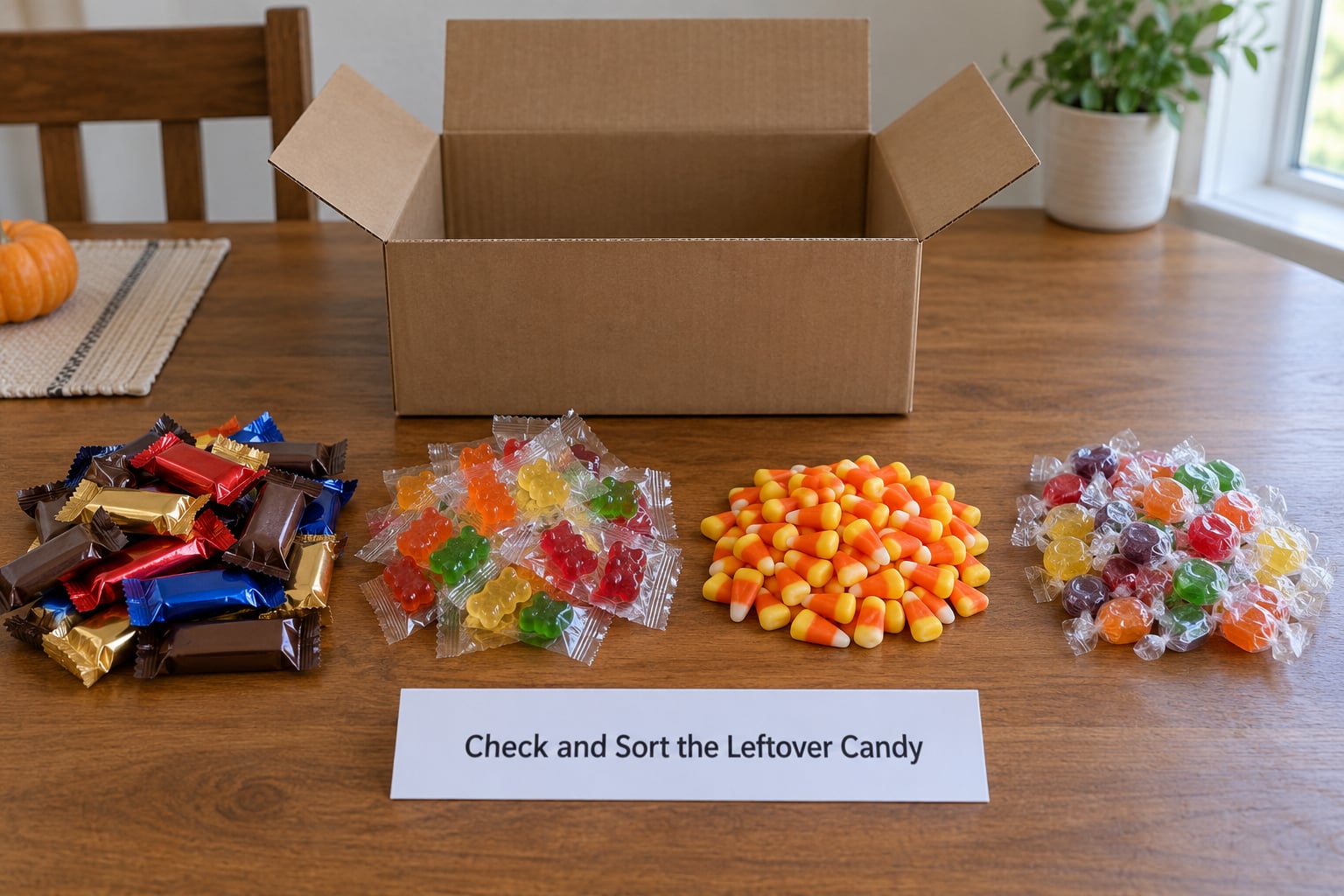
Spread everything on a sheet pan and look at each piece. Pull out anything crushed, torn, sticky from a summer car seat, melted and re-hardened, faded, or past its best-by date. One bad piece in a sealed bag is not a reason to throw the bag out, but a pile of loose candy that sat out for a week is.
Then sort what is left into four piles by type: chocolate bars, gummies and other soft chewy candy, hard candy, and novelty pieces. Keep those four piles separate for the rest of the process, because the type decides where the candy can go. Chocolate can be baked, melted or frozen. Hard candy works as a topping or a drink add-in but cracks in a hot oven. Gummies and candy corn go to snacking, baking as a folded-in mixin, or freezing.
Check labels as you go and note anything with peanuts, tree nuts, milk or gluten. That list matters later when you bag candy for a school or hand it to a classmate with a food allergy.
2. Store the Candy Correctly
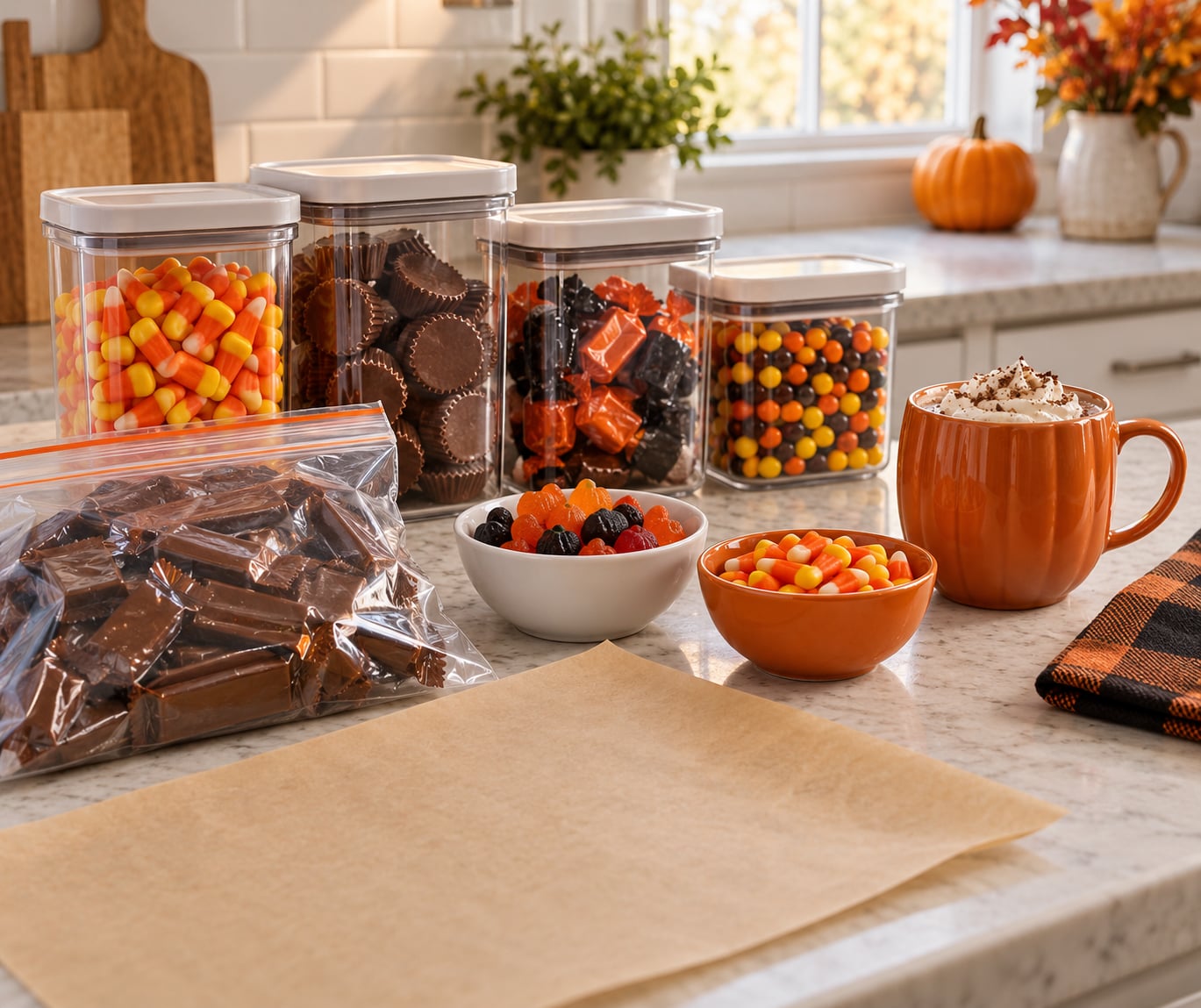
Move everything out of the serving bowls and into airtight containers the same day. Open candy sitting in a bowl picks up kitchen smells, and the warm indoor air of October and November is exactly what turns chocolate grey and dull.
Keep the sticky chewy candy in its own container, away from the chocolate. Gummies and Starburst hold odors strongly enough to affect a bar stored next to them, and separate containers take two minutes.
Label each container with the type and the date. Then choose storage by how long the pile will survive:
- Room temperature, airtight, out of direct sun for sealed boxed candy and unopened bags you will eat in the next month or two. A cool closet or a pantry is better than a counter.
- Freezer, flat in a single layer for anything you want to keep past December. Once firm, stand the bags upright in the freezer and write the date on each one.
- Freezer, loose on a tray then bagged for gummies and hard candy, which clump badly if you freeze them in a lump.
Take a bag out of the freezer and let it sit at room temperature for 10 to 15 minutes before opening. Opening frozen candy straight away puts condensation on the surface, and that is the soggy, spotty candy everyone complains about.
3. Turn It Into Easy Snacks and Recipes
Match the recipe to the pile instead of the other way around, and most of it comes together in under half an hour.
- Chocolate bark, about 15 minutes plus chilling. Melt 8 ounces of chocolate in a double boiler, pour it onto parchment, and scatter over chopped peanut butter cups, M&Ms, toffee bits and sprinkles. Set in the fridge for two hours, then snap into shards.
- Candy trail mix, 5 minutes. Equal parts Skittles, Gummy Bears, candy corn, salted pretzels and peanuts. Swap the peanuts for sunflower seeds or pretzel pieces to keep it nut-free, and check that the gummies do not contain wheat if that matters to your household.
- Cake-pop or ice-cream topping, 10 minutes. Roll soft candy like Starburst and gummy worms in sprinkles for cake pops, or set out bowls for an ice-cream sundae station where kids add their own.
- Hot cocoa add-ins, 5 minutes. Chop York Peppermint Patties or butterscotch candies small and stir them into hot cocoa after the milk, not before, so they soften instead of dissolving.
- Cookie dough with chopped bars, 25 minutes. Swap about half the chocolate chips for chopped Snickers, KitKat or Butterfinger pieces and bake at 350°F. Pull the trays 2 minutes early, because the candy keeps baking after it leaves the oven.
- Candy corn cookie bars, 30 minutes. Press a shortbread or sugar cookie crust into a pan, scatter candy corn over it, and cover with a thin cream cheese frosting.
A few honest warnings. Candy melts in a 350°F oven, so anything coated in chocolate or toffee goes on after the baking is done. Hard candies like Jolly Ranchers and Life Savers crack or turn bitter if baked, so crush them for a topping instead. Candy corn turns grainy in cookie dough, which is why it works better pressed on top. Heath and toffee pieces need to cool flat and re-harden before you cut them or they smear.
Peanut butter cups get mushy in batter, so use them as bark toppings or pressed-in crusts rather than folded into cookie dough.
4. Share, Decorate, or Gift the Remainder
A large share of the leftover problem is simply candy going to people who will happily take it. Bag it while the wrappers are still on and while the pile is sorted, before it turns into a heap in the back of a closet.
- Teachers and support staff. Five or six pieces in a clear bag with a sealed label. School allergy policies usually mean nothing homemade goes in, so stick to factory-sealed candy.
- Office candy dish. A sealed box on a desk empties fast and you never have to think about it again.
- Neighbors. Small bags left on porches with a note that you are clearing the stash.
- Party favors and activity prizes. For a December birthday party, a graduation or a classroom reward system, individually wrapped pieces work well as prizes because they last and they do not need refrigeration.
- Holiday decorating. Use hard candy, wrapped mini bars and peppermints to trim a gingerbread house, and one piece per day to fill a felt Advent calendar.
- Stocking stuffers. Mini candy bars and fun-size bags are the classic filler, and mini versions of a favorite full-size bar are what people remember.
On the giving side, unopened candy is the easiest donation to arrange. Food pantries, domestic violence shelters, youth programs, school drives and dentists running Halloween candy buy-back programs are the usual destinations, though most of them need a call first. Buy-back programs typically trade the candy for vouchers or a donation to a named charity, and they run for a couple of weeks in early November, so they are not a late-November option.
Know what recipients usually refuse. Loose candy with no wrapper, anything that has been opened, homemade treats, and candy that has been sitting in a hot car all get turned away, and food pantries are often turning away sugary items in general because the shelf space goes to proteins and grains. A sealed, dated, boxed donation is the one they can always place on a shelf.
5. Dispose of Leftovers Responsibly
Some candy has to go, and that is the right call. Anything that is spoiled, has visible mold, smells off, was handled by a sick person, or sat out on a warm porch for more than a day belongs in the trash. Same for candy you know a pet got into.
Do not put chocolate down the drain or a garbage disposal. It solidifies against the pipe and causes real clogs, and it is the most common way a Halloween candy pile becomes a plumbing bill. Check your local food-scrap guidance before binning anything edible, because rules differ by area and most programs exclude candy.
Do not return spoiled or opened candy to a communal candy bowl either. Once it has been handled and handled again by trick-or-treaters, no one can vouch for it, and the safest place for it is the bin.
Common Mistakes
Leaving candy in open serving bowls. Air, warmth and kitchen odors do the damage, and the pieces at the bottom are the first to be skipped. Fix: decant into airtight containers after the last trick-or-treater leaves, and put only a day’s worth back into the bowl.
Storing chocolate and wrapped candy in the same container. Gummies and fruit-flavored candy lend their smell to everything nearby, and the chocolate does not get it back. Fix: one container per type, labeled.
Forgetting to label anything. Two freezer bags of chopped candy with no dates turn into a guessing game in December. Fix: type and date on every container and bag before it goes away.
Assuming novelty candy is fine for pets. It is not. Chocolate is toxic to dogs, and xylitol in sugar-free gum and some baked treats is worse. Fix: keep every piece of Halloween candy, wrappers included, out of reach, and call a veterinarian if a dog eats any of it.
Freezing the wrong things. Marshmallows, cream-filled bars and anything with a whipped or custard filling come out mealy. Fix: freeze those for eating within a couple of weeks, and save the freezer for sealed bags, gummies, hard candy and baking stock.
Baking everything to use it up. Three weeks of brownies is not a plan. Fix: match the effort to the pile. Trail mix, bark and treat bags take minutes, and they are what clears a bag the fastest.
Assuming candy can be returned to the store after the holiday. Seasonal candy often sits outside the standard return window, and food items are frequently final sale. Check the store’s posted return policy before you drive across town with 40 bags in the car.
Frequently Asked Questions
How long does leftover Halloween candy last?
Unopened, factory-sealed bags keep for months past Halloween, often six to twelve months from the best-by date. Once opened, expect two to four weeks for gummies and hard candy and about a week for anything with a cream or custard filling, kept somewhere cool and dark. Freezing unopened bags in a single layer stretches both windows well past the holidays. When in doubt, read the date on the bag rather than guessing by type.
Can you freeze leftover Halloween candy?
Yes, and it is the best way to keep a stash for Thanksgiving and Christmas baking. Freeze unopened bags flat so they do not fuse into one block, then stand them upright once they are firm. Before opening a frozen bag, let it sit on the counter for 10 to 15 minutes so condensation does not form on the candy. Skip marshmallows and cream-filled bars, which turn mealy when thawed.
What should I do with melted or sticky Halloween candy?
Spread it on parchment, let it set, and break it into shards for bark or a cookie topping. For a smooth drizzle, warm a cup of the melted chocolate with a spoonful of butter or cream and stir until glossy. Sticky gummy residue usually means the bag was open too long, so move the rest into a sealed container. Discard anything that smells stale, has fuzz on it, or was within reach of a pet or an insect.
How can I keep Halloween candy fresh in a bowl?
Keep the bowl cool and out of direct sunlight, and cover it loosely with cellophane or a cake dome. Chocolate goes grey and dull when stored warm, and uncovered candy picks up kitchen smells within days. The better habit is to display only a day or two of candy at a time and keep the rest in airtight containers in a pantry or closet until you need to refill the bowl.
Can I give leftover Halloween candy to children or neighbors?
Unopened, factory-sealed candy is exactly what teachers, neighbors, office candy dishes and party favors expect, and it is the easiest thing to hand out. Keep the original wrappers, and read the label for peanuts, tree nuts, milk and gluten before giving it to a child with a known allergy. Label anything you bag for a school or office so parents can see the allergens without opening it.
Can I give leftover Halloween candy to pets?
No. Chocolate is toxic to dogs, and xylitol in sugar-free gum and some baked treats can be fatal, so novelty candy, gummies and candy wrappers all need to stay out of reach. If a dog eats a chocolate piece, call your veterinarian with the type, the amount and your dog’s weight instead of waiting to see whether symptoms appear.
Conclusion
Start at the table, not the pantry. Sort the pile into keep, share, use and discard, then pick one action based on whichever group is biggest: freeze the chocolate and hard candy flat today, bag the sealed candy for teachers and neighbors this week, or make one batch of bark or trail mix to clear the loose gummies and candy corn.
The candy will not sort itself, and the sorted version of this problem takes about an hour on a November evening.