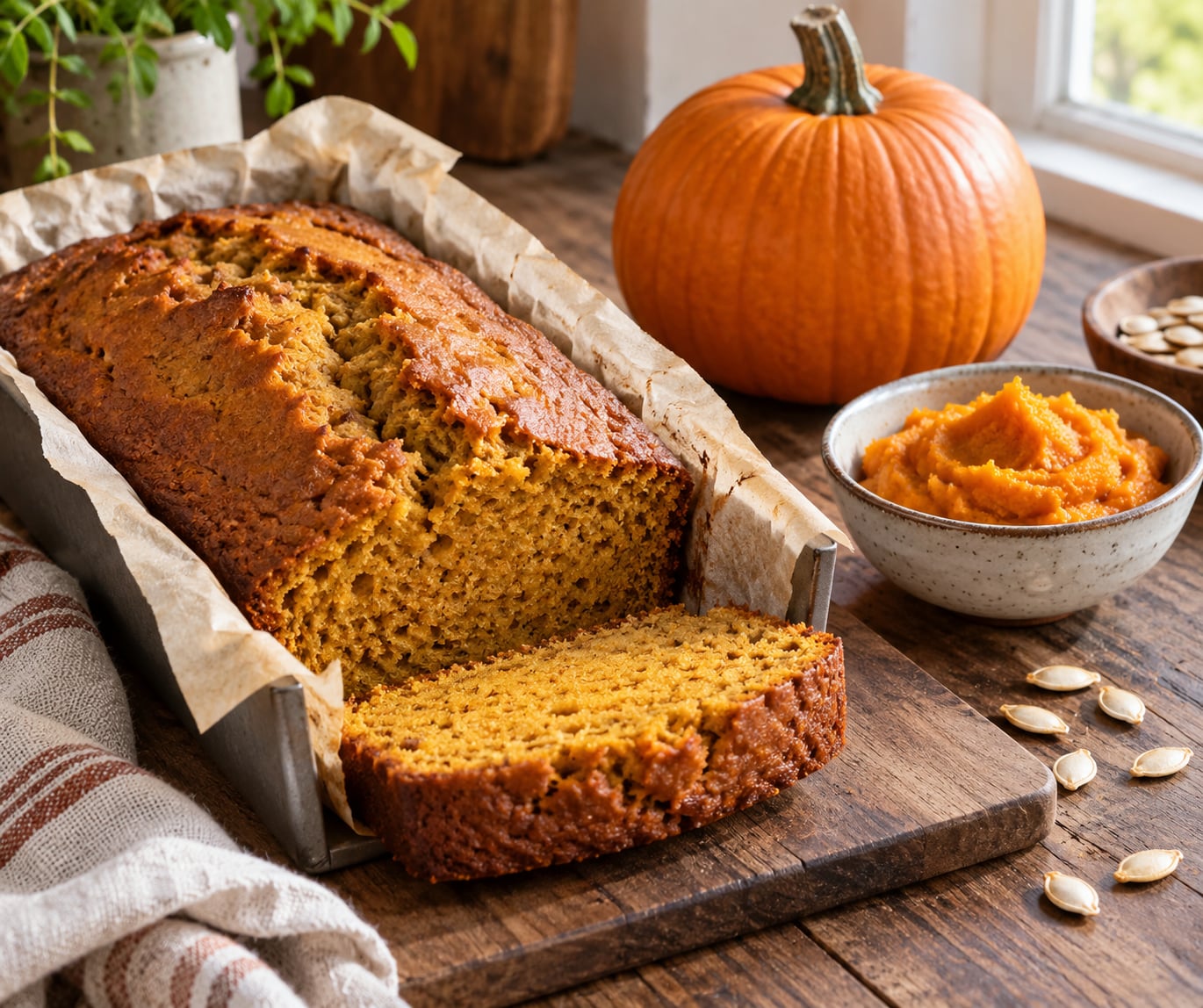
Pumpkin bread from a real pumpkin takes one extra step most recipes skip: you roast a sweet pie pumpkin until the flesh is tender, mash it, blot off the extra liquid, and use about 1 3/4 cups where a can of puree would go. Bake at 350°F for 55 to 70 minutes, then cool the loaf completely before you slice it.
That extra step is also where most first attempts go wrong. Fresh pumpkin is roughly 90 percent water, and canned puree sits closer to 85, so an unadjusted swap is the number one reason a from-scratch loaf comes out gummy in the middle or never quite finishes baking.
I make this every October, usually after the pie pumpkins pile up faster than I can bake with them. The whole job takes about 70 minutes of hands-on work plus an hour of baking, and it is the single most requested thing I make with the extras.
If you want the short version, the method is: 400°F roast, mash, blot, measure, 350°F bake. Everything else on this page is the detail that stops a wet pumpkin from ruining the loaf.
Table of Contents
- How to Make Pumpkin Bread from a Real Pumpkin: What You Need
- Step-by-Step
- 1. Preheat the oven and prepare the loaf pan
- 2. How to Make Pumpkin Bread from a Real Pumpkin: Roast and Puree
- 3. Mix the dry ingredients
- 4. Mix the wet ingredients
- 5. Combine the batter without overmixing
- 6. Bake and check for doneness
- 7. Cool before slicing
- Common Mistakes
- How to Store and Freeze Fresh Pumpkin Bread
- Frequently Asked Questions
- Can I use a real carving pumpkin in pumpkin bread?
- How much fresh pumpkin puree do I need for one loaf?
- How do I know when pumpkin bread made with real pumpkin is done baking?
- How should I store pumpkin bread made with fresh pumpkin?
- Why is my pumpkin bread gummy in the middle?
- Can I make this fresh pumpkin bread as muffins?
- Conclusion
How to Make Pumpkin Bread from a Real Pumpkin: What You Need
You need very little equipment: a 9-by-5-inch loaf pan, a baking sheet for the pumpkin halves, a knife, a fork or potato masher, and either a fine sieve or a few sheets of cheesecloth.
The pumpkin matters more than anything else on the list. A sugar pie pumpkin or pie pumpkin is dense, sweet and dry. A carving pumpkin is mostly water and stringy flesh, and it will push your loaf toward a puddle unless you strain it twice.
Here is what one 9-by-5-inch loaf takes.
- 1 small sugar pie pumpkin, about 2 pounds (900 g) whole, which yields roughly 2 cups of puree
- 1 3/4 cups (425 g) mashed roasted pumpkin, weighed after you blot it
- 1 1/2 cups (190 g) all-purpose flour
- 1 teaspoon baking soda
- 1 teaspoon ground cinnamon
- 1/2 teaspoon ground ginger
- 1/2 teaspoon ground cloves
- 1/2 teaspoon ground nutmeg
- 1/2 teaspoon salt
- 1/2 cup (115 g) unsalted butter, melted and cooled
- 1 cup (200 g) granulated sugar
- 1/2 cup (100 g) light brown sugar
- 2 large eggs, at room temperature
- 1 teaspoon vanilla extract
- 2 tablespoons water or milk, and only if your puree looks loose
- 3/4 cup chopped walnuts or pecans, plus a handful of chocolate chips, optional
Weigh the puree if you have a scale. It is the fastest way to tell a correct 1 3/4 cups from a wet 2 cups that was loosely spooned into the bowl.
One 15-ounce can of puree equals about 1 3/4 to 2 cups mashed. So if you are converting a favorite recipe that calls for one or two cans, use a little under 2 cups of your own puree per can and you will be close to the intended texture.
Step-by-Step
1. Preheat the oven and prepare the loaf pan
Set the oven to 350°F (177°C) and put the loaf pan inside while it heats. Line it with parchment paper, leaving a strip over the long edges, or grease it well with butter.
Greasing matters more here than in a plain cake. The batter carries melted butter, eggs and about 1 3/4 cups of wet vegetable puree, and any of that sticking to bare metal means you will be chiseling bread out of the pan with a knife.
While the oven heats, cut the pumpkin in half from stem to base and scoop out the seeds and stringy pulp. Scrape the inside with a spoon to get it as clean as you reasonably can.
2. How to Make Pumpkin Bread from a Real Pumpkin: Roast and Puree
Set the halves cut-side down on a lined baking sheet and roast at 400°F (204°C) for 35 to 45 minutes, until a sharp knife slides into the thickest part of the flesh with no resistance.
Roasting skin-on and cut-side down is what gives you the deep, almost caramel flavor that makes this bread taste different from the canned version. The skin loosens and lifts off the cooked flesh in sheets once it has cooled for a few minutes.
The visual cue is soft edges and collapsed flesh. If the piece still holds a sharp wedge shape when you nudge it, give it another 10 minutes.
Scoop the flesh into a bowl and mash with a fork. A blender works too, but it breaks the cell walls and aerates the puree, so blend in short pulses and then let it sit so the bubbles settle.
A 2-pound pie pumpkin gives about 2 cups of puree. A smaller 1.5-pound one gives closer to 1 1/2 cups, and a large 4-pound one can give 3 cups or more.
Now deal with the water. Spread the puree on a plate or in a shallow dish, blot the surface with paper towels, and repeat until the towels barely dampen. For very wet puree, set it in a sieve lined with cheesecloth over a bowl and let it drain for 30 minutes.
Weigh it. You want 1 3/4 cups, or about 425 g. Anything looser than thick oatmeal means you should skip the added water or milk in the batter.
3. Mix the dry ingredients
Whisk the flour, baking soda, salt, cinnamon, ginger, cloves and nutmeg in a medium bowl until the spices are evenly dispersed and no streaks of flour sit at the bottom.
Measuring the spices separately instead of using a pre-mixed pumpkin pie spice is worth the extra thirty seconds. Blended pie spice is usually heavier on cinnamon, and a bread made with fresh pumpkin benefits from a more balanced four-spice ratio.
Keep this bowl dry and separate. You will fold it into the wet ingredients later, and any spice that lands directly in hot melted butter scorches and turns bitter.
4. Mix the wet ingredients
In a second bowl, whisk the cooled melted butter, granulated sugar and brown sugar until the sugars dissolve into the fat. Beat in the eggs one at a time, then the vanilla, then the mashed pumpkin.
Everything going in here should be close to room temperature. Cold eggs and hot pumpkin drop the melted butter into pale clumps, and those clumps stay as buttery pockets instead of spreading through the batter.
Set the butter out with the rest of the ingredients, or cool the melted butter on the counter for ten minutes, stirring once. Do not microwave it back to liquid.
5. Combine the batter without overmixing
Pour the dry ingredients into the wet ones and stir with a spoon or spatula until no dry flour is visible. Fifteen to twenty strokes is usually plenty.
The finished batter looks thick, slightly streaky and matte, closer to soft cookie dough than to cake batter. If you are using the water or milk, stir it in only now, and only because the puree needed it.
Fold in the walnuts, pecans or chocolate chips at the end. Vigorous mixing develops gluten, and gluten in a quick bread baked for an hour gives you a dense, tight crumb you cannot slice.
6. Bake and check for doneness
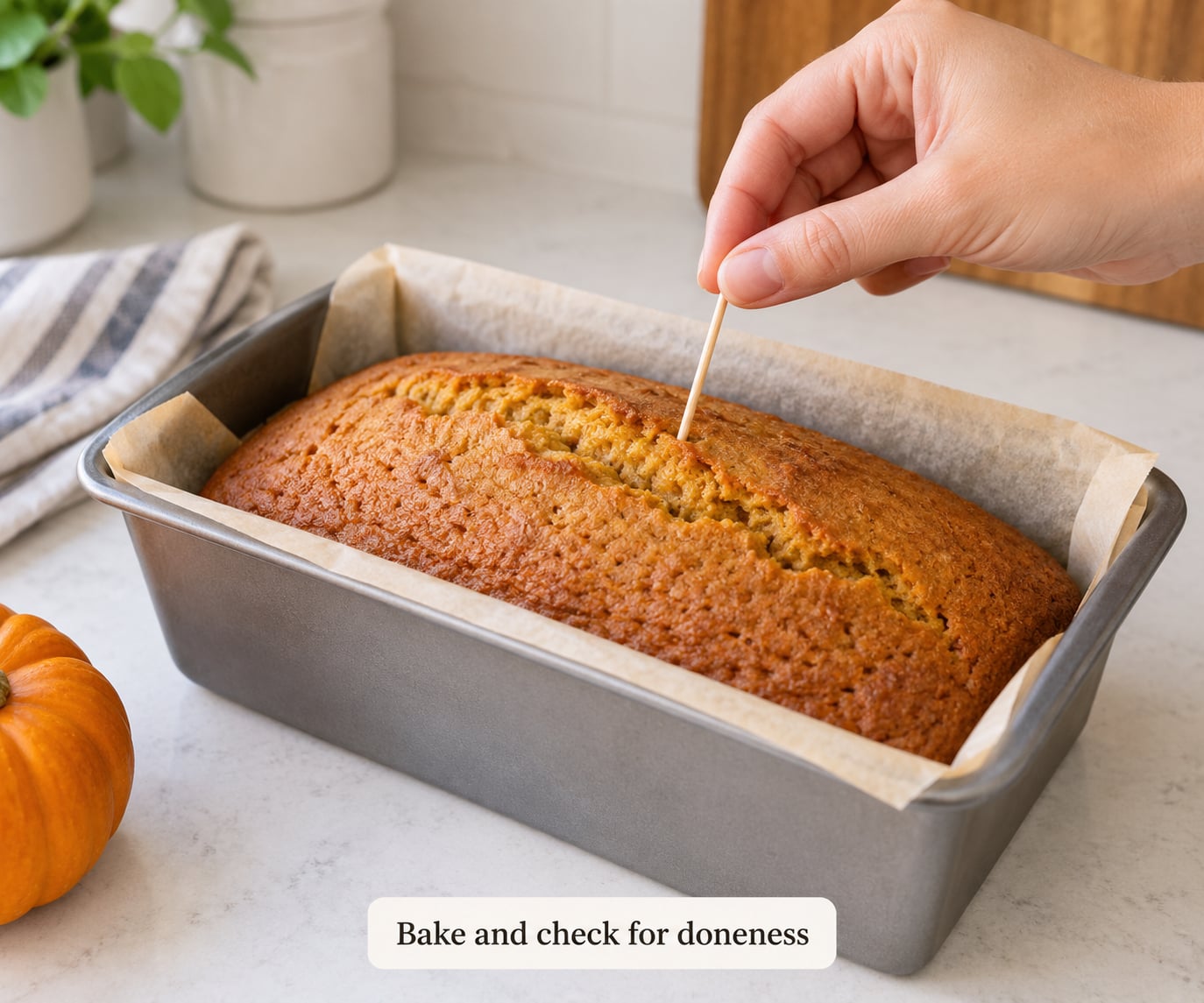
Scrape the batter into the prepared pan and smooth the top. Bake at 350°F (177°C) for 55 to 70 minutes, starting to test at 55 minutes.
Insert a toothpick into the thickest part of the loaf. You want to pull it out with a few moist crumbs clinging. Wet batter on the toothpick means more time, and bare clean toothpick for several minutes in a row can mean over-baked.
That damp middle when you cut it open is the classic fresh-pumpkin failure, so the crumbs test matters more here than with a canned-puree recipe. Fresh puree pushes the bake time out by ten minutes or so compared with the can.
A crack across the top that follows the shape of the pan is normal. A deep split that runs the full length usually means the oven ran hot.
7. Cool before slicing
Let the loaf rest in the pan for 10 to 15 minutes, then turn it onto a wire rack using the parchment strips. Cool completely, about 2 hours, before slicing.
Slicing a warm loaf compresses the crumb into a gummy, sticky texture that has nothing to do with your pumpkin. It is still hot enough to seem under-baked even when it is perfectly done.
The finished crumb should be orange-tinted, even and tender, with no wet ring near the bottom.
Common Mistakes
Most disappointing pumpkin loaves trace back to the same handful of problems, and nearly all of them are decided before the batter hits the pan.
Using a carving pumpkin. The flesh is thin, watery and stringy, and it bakes up with a fibrous, weedy flavor. If a carving pumpkin is all you have, roast it and push the puree through a sieve twice, then expect to lose half your yield. Pie pumpkin is the answer.
Not pureeing the flesh all the way. Chunks of roasted pumpkin left in the batter bake as wet pockets, especially in the center where heat arrives last. Mash with a fork until the texture is uniform, or push it through a food mill.
Skipping the blot. This is the one that produces the gummy center. Fresh puree that looks fine in the bowl releases its water in the oven. Blot on paper towels, or drain through cheesecloth, before you measure.
Adding liquid you did not need. Many recipes written for canned puree include a splash of water or milk for the batter to drink up. Fresh puree already brings its own water, so skip it unless your weighed puree is thinner than thick oatmeal.
Overmixing. Pumpkin bread is a quick bread, not a cake. A stand mixer on medium for three minutes can turn a tender loaf into a brick. Stir until the dry flour disappears, then stop.
Using a too-small pan. A 9-by-5-inch loaf pan holds about 6 cups of batter. If you bake this batter in an 8-by-4-inch pan it will dome over the rim, and the middle will cook before the edges set.
Pulling it too early. If the loaf is still hot and springy, give it another 5 to 10 minutes. The internal temperature at the center should sit close to 200°F (93°C) when the crumb is fully set.
How to Store and Freeze Fresh Pumpkin Bread
Fresh-pumpkin bread has the same shelf life as any quick bread. Cool it fully, then wrap it tightly in plastic wrap or a sealed bag.
At room temperature, wrapped, it stays good for up to three days. If your kitchen runs warm or you keep the heat on, move it to the refrigerator, where it holds for about a week.
For freezing, wrap the whole cooled loaf in two layers of plastic wrap plus a layer of foil, or slide it into a freezer bag. It keeps for up to three months. Slices freeze just as well and thaw faster, so if you only eat one slice at a time, cut first.
Thaw it wrapped on the counter for a few hours, or overnight in the refrigerator. A slice that needs warming goes into a toaster, not the microwave, so the crust stays crisp instead of going soft.
Extra puree freezes too. Portion it into a cup at a time, leave headspace, and freeze bag-flat so you can snap off what you need. Thaw it in the refrigerator overnight and blot it again before using.
Frequently Asked Questions
Can I use a real carving pumpkin in pumpkin bread?
You can, but expect a thinner, less sweet loaf. Carving pumpkin flesh is watery and stringy, so roast it, sieve the puree twice, and expect to lose roughly half your yield. Blot the puree well before measuring, skip any water the recipe adds, and check the loaf 10 minutes earlier than the recipe states.
How much fresh pumpkin puree do I need for one loaf?
For a standard 9-by-5-inch loaf, use 1 3/4 cups, about 425 g, of mashed roasted pumpkin. A 15-ounce can of puree equals roughly 1 3/4 to 2 cups, so a little under 2 cups of your own puree replaces one can. Weighing the puree after blotting is the most reliable way to know you have enough.
How do I know when pumpkin bread made with real pumpkin is done baking?
Test with a toothpick from 55 minutes onward at 350°F. Pull it out and look for a few moist crumbs, not wet batter. Fresh puree carries more water than canned, so the loaf often needs 10 extra minutes. The center should reach about 200°F, and a clean toothpick every time for several minutes means it has gone past done.
How should I store pumpkin bread made with fresh pumpkin?
Cool the loaf completely, then wrap it tightly. Wrapped at room temperature it stays good for up to three days, or about a week in the refrigerator if your kitchen is warm. For longer storage, freeze the whole wrapped loaf or individual slices for up to three months and thaw them in the refrigerator overnight.
Why is my pumpkin bread gummy in the middle?
Almost always one of three things: the puree was too wet, the pan was too small for the batter, or the loaf was cut while still warm. Fresh pumpkin is around 90 percent water, so blot it or strain it through cheesecloth before measuring. If the batter looks loose after mixing, leave out the recipe water or milk entirely.
Can I make this fresh pumpkin bread as muffins?
Yes. Fill a standard 12-cup muffin tin two-thirds full and bake at 350°F for 18 to 22 minutes, starting to check at 18. The same batter makes 6 to 8 cupcakes or one bundt cake baked about 45 minutes. Do not overfill muffin cups, because pumpkin batter rises slowly and splits over the top if the pan is too full.
Conclusion
Start with the pumpkin, not the batter. Roast a sugar pie pumpkin cut-side down at 400°F until a knife slides through without resistance, mash the flesh, blot or strain the puree, and weigh out 1 3/4 cups for your loaf.
From there, skip the added water if the puree looks loose, stir the batter only until the dry flour disappears, and bake at 350°F until a toothpick comes out with moist crumbs rather than wet batter. Let the loaf cool completely on a wire rack before the first slice, and the crumb will be the tender, even texture that makes fresh pumpkin worth the extra step.