Learning how to make mulled cider on the stove takes about 50 minutes start to finish, and the whole job is temperature control. You warm apple cider with whole cinnamon sticks, cloves, allspice berries, star anise and orange, then hold it at a bare simmer, just below bubbling, for 30 to 60 minutes. Never let it hit a rolling boil. It works in any heavy saucepan, and the finished drink is warm, spiced and slightly sweet.
I am the person who burns the bottom of the pot if nobody watches it, so the cues below are the ones I actually use: watch the surface, not the clock, and taste from the second at 20 minutes. More detail on timing and pot size sits further down.
Table of Contents
- What You Need
- Step-by-Step: How to Make Mulled Cider on the Stove
- 1. Choose the Pot and Gather the Ingredients
- 2. Warm the Cider with the Aromatics
- 3. Simmer Without Boiling
- 4. Sweeten and Finish the Cider
- Common Mistakes
- Frequently Asked Questions
- How long should mulled cider simmer on the stove?
- Should I cover the pot while making mulled cider?
- Can I make mulled cider without alcohol?
- What spices go best in stovetop mulled cider?
- How do I keep mulled cider from tasting too sweet?
- Can I make mulled cider ahead of time?
- Conclusion
What You Need
This baseline is one half gallon of cider, which serves six to eight people. Every quantity below is measured rather than estimated, because a mulling blend with no numbers is the single biggest reason home batches come out weak or scorched.
- 8 cups (about half gallon) unfiltered apple cider
- 1 medium orange, cut into thin rounds or peeled in wide strips
- 4 cinnamon sticks
- 10 whole cloves
- 10 allspice berries
- 2 star anise (optional, but they are the signature aroma)
- 4 black peppercorns (optional, adds gentle warmth rather than heat)
- 4 thin slices fresh ginger (optional)
- 1/4 cup brown sugar or maple syrup (optional, and often not needed)
- 2 tablespoons brandy, dark rum, or bourbon, added per serving
Use whole spices, not ground. Ground cinnamon and clove release fast, cloud the drink, and settle as grit in the bottom of the mug. Whole pieces keep the batch clean and let you fish them out at the end.
For scaling, multiply everything by two for a full gallon in a 4-quart pot. Anything larger than a gallon needs a stockpot, and the heat dial moves up, so stir more often and top the pot up with a splash of plain cider if it has been going for hours.
Step-by-Step: How to Make Mulled Cider on the Stove
1. Choose the Pot and Gather the Ingredients
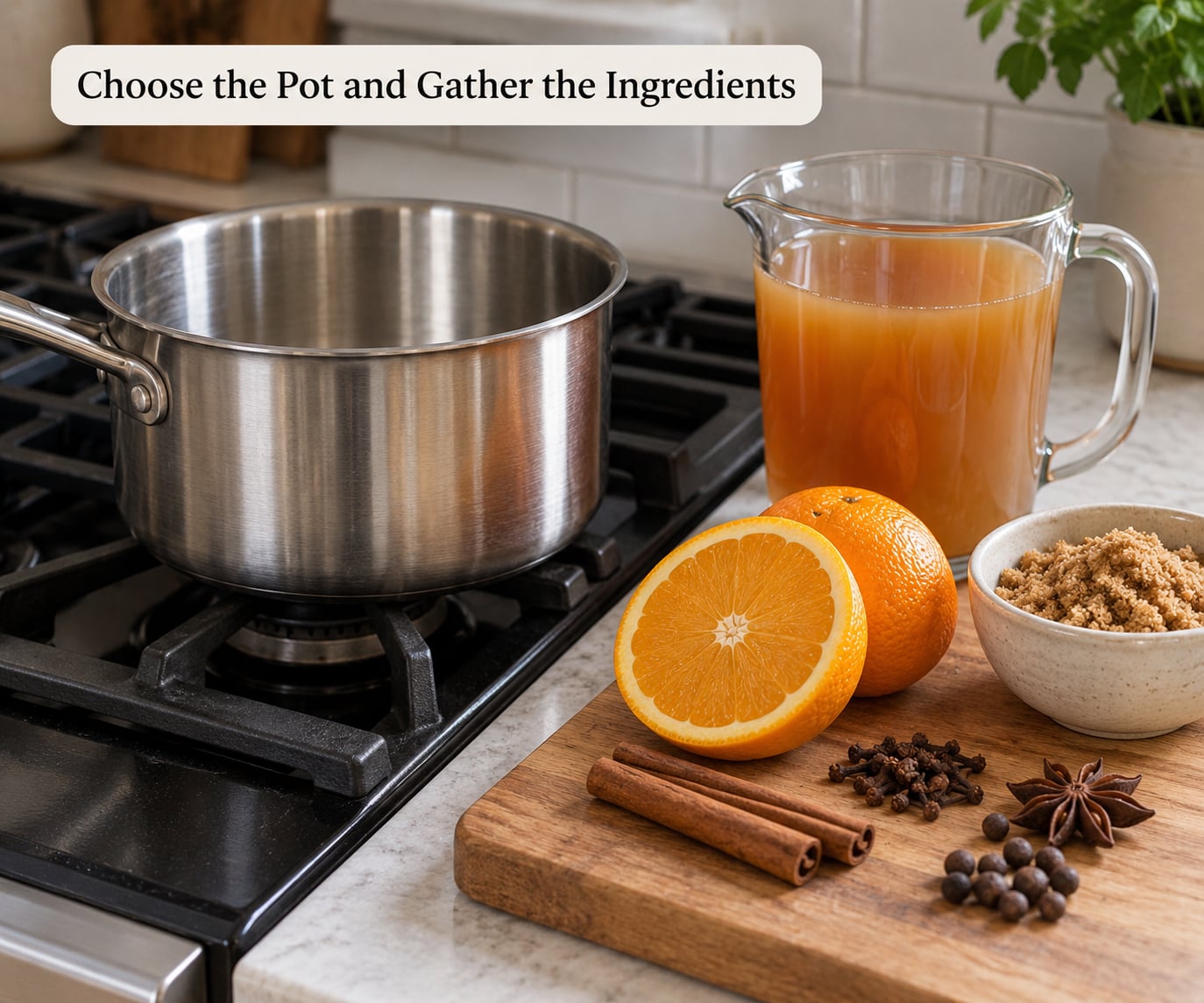
A 3-quart saucepan handles a half-gallon batch comfortably, because you want headroom above the liquid line. Pull everything out of the cupboard first: spices, orange, sweetener. Adding spices one at a time mid-cook is how batches end up unbalanced.
2. Warm the Cider with the Aromatics
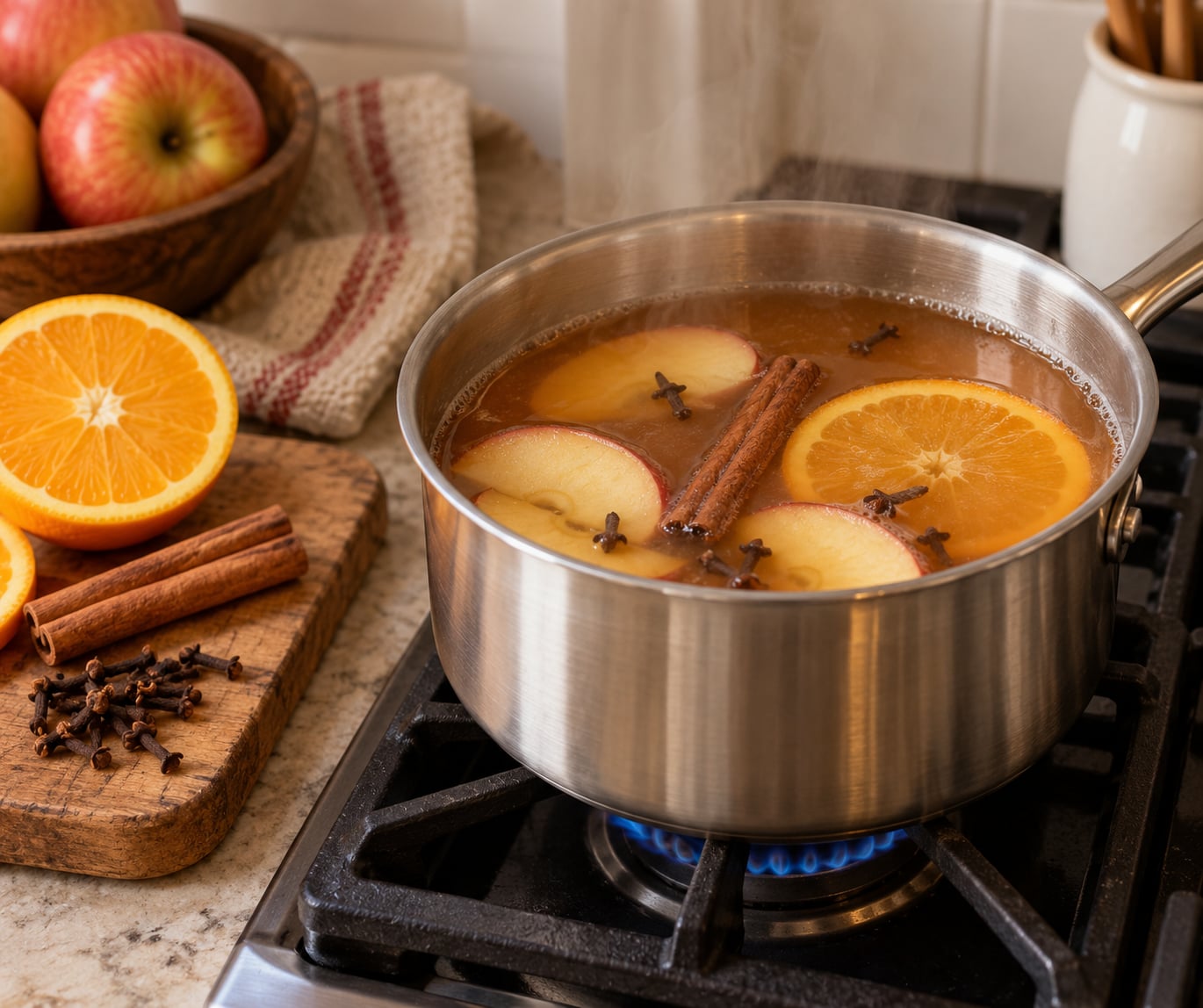
Put the cider, whole spices, and orange in the pot together, set it on medium-high, and stir once. Watch for the first shimmer of steam, roughly 8 to 12 minutes, then drop the heat to low.
If you toast the spices first, do it in a dry pan for about 60 seconds before they go into the liquid. They will smell twice as fragrant, which is the whole point. Most people skip this and the drink still turns out fine.
3. Simmer Without Boiling
Hold the pot at a bare simmer for 30 minutes, then taste. Thirty minutes gives clear cinnamon and orange; an hour pushes toward a spiced-cider taste that some people love and others find too extracty. Past an hour, treat the extra time as a decision, not an accident.
- 4 cups of cider: 2-quart saucepan, 25 to 30 minutes, serves 4
- 8 cups of cider: 3-quart saucepan, 30 to 45 minutes, serves 6 to 8
- 16 cups of cider: 4-quart Dutch oven, 45 to 60 minutes, serves 14 to 16
You will know it is ready by smell first. The kitchen should smell like a holiday candle, the surface should show small bubbles around the edge rather than across the middle, and a spoon should leave a warm trail for a second before closing.
4. Sweeten and Finish the Cider
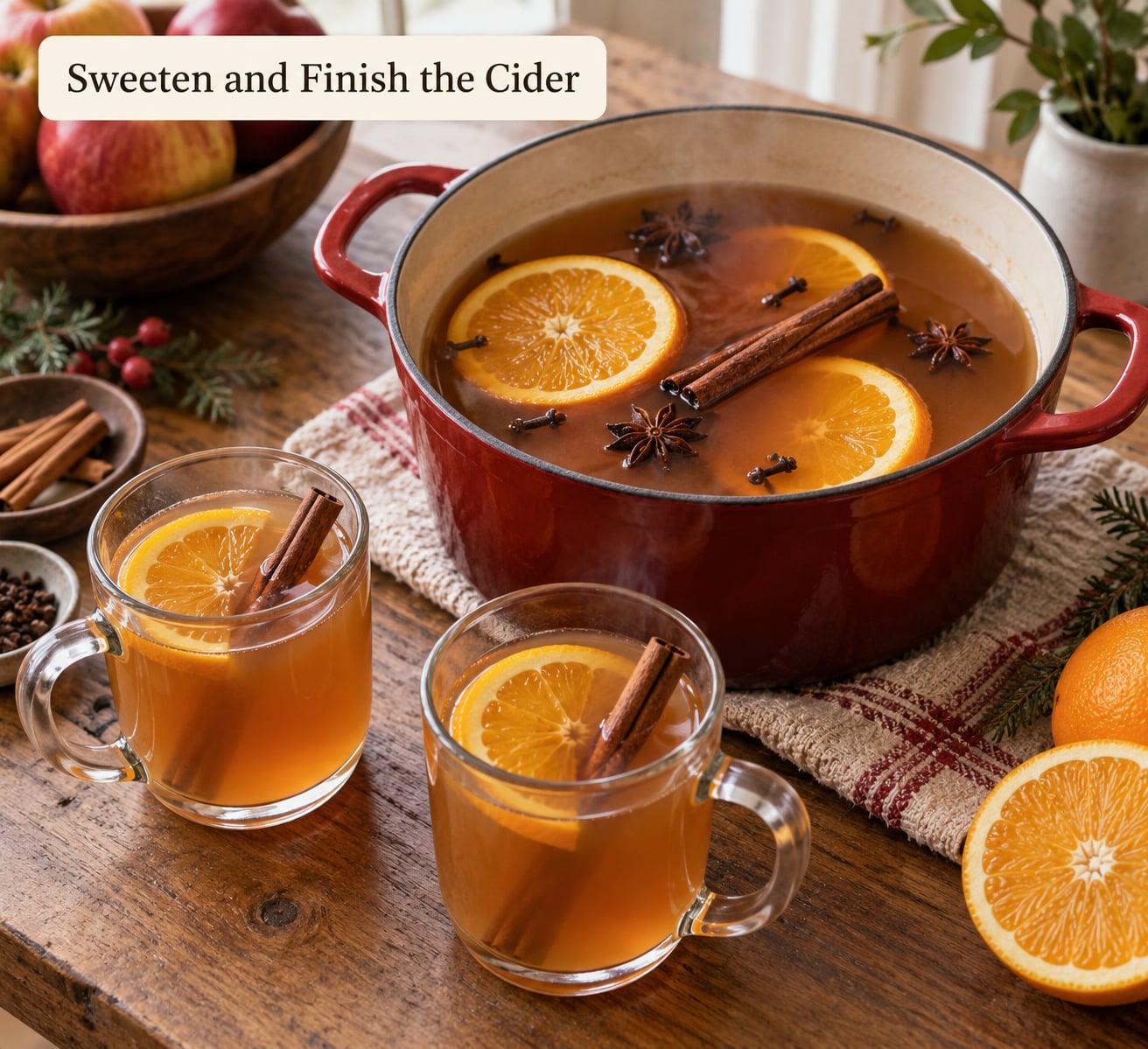
Taste before you add anything. Commercial cider varies a lot in sweetness, and a half gallon of unfiltered cider is often sweet enough on its own. If it needs help, stir in one tablespoon of maple syrup or brown sugar at a time, off the heat, and taste again.
Strain through a fine sieve into a serving pot or pitcher, and pull out the orange rounds if they have gone soft and bitter. Add the rum, brandy, or bourbon at the table, one mug at a time. Never boil the batch after the alcohol goes in; the alcohol cooks off and the flavor turns harsh.
Common Mistakes
Too sweet. Dilute it. Stir in equal parts of plain unfiltered cider, cold or warm, until it tastes right. A squeeze of lemon also works, in about one tablespoon per quart, because acid reads as less sweet to the palate. Next time, leave the brown sugar out and start with half the maple syrup you planned.
Bitter or over-spiced. That is almost always whole spices left in too long, or ground spice used by mistake. Add cider a cup at a time and stir, tasting each time. Bitterness in a hot drink reads sharper than it does cold, so taste in small sips.
Bland. Toast the spices longer next time, extend the simmer by 15 minutes, or add another cinnamon stick. Bland cider usually means the surface never got hot enough to move, not that the spice list was wrong.
Scorched at the bottom. The heat was too high. Lift the pot onto a cold burner or trivet for a minute to stop the cooking, then pour off the liquid carefully and leave the burnt layer behind. A scorched batch cannot be rescued, which is exactly why low and slow matters.
Cloudy or full of sediment. Expected with unfiltered cider and ground spice. The sediment is apple pulp, and it settles; pour gently down one side of the mug so it stays in the pot.
Fruit added too early. Orange and apple slices sink, break down, and can turn the cider muddy and faintly bitter. Simmer citrus for flavor if you like, but hold back fresh slices and cranberries for the garnish so they stay bright.
For storage, cool the cider within two hours, strain out the spices, and refrigerate in a covered container for up to three or four days. Reheat gently on low until steaming, and stir in any sweetener at that stage so it dissolves.
Keeping it warm for a party works too. Set the strained cider in a small pot or a heat-safe cauldron over a tealight or on the lowest burner, stir it every 20 minutes, and expect to dilute with a little more plain cider if the top reduces.
Frequently Asked Questions
How long should mulled cider simmer on the stove?
Simmer stovetop mulled cider at a bare simmer for 30 to 60 minutes. Start tasting at 30 minutes and stop when the kitchen smells like orange and cinnamon and the surface shows small edge bubbles. Longer simmers give a stronger, more medicinal spice note, so a second pot of plain cider on the side lets guests adjust.
Should I cover the pot while making mulled cider?
Leave it uncovered. A lid traps steam, raises the temperature inside the pot, and pushes the cider toward a boil, which is exactly what you want to avoid. If your burner runs hot and the surface gets busy, set the lid on ajar for the last 15 minutes to slow the reduction without holding in steam.
Can I make mulled cider without alcohol?
Yes, and most recipes never include it. Skip the rum or brandy entirely and the drink is fully kid-friendly. For a brighter, less sugary version, swap one cup of the cider for cranberry juice or white grape juice in the last ten minutes. Hold the alcohol back for adults rather than trying to remove it later.
What spices go best in stovetop mulled cider?
Cinnamon sticks, whole cloves and allspice berries are the base, with two star anise as the signature note. For a half gallon, that means four cinnamon sticks, ten cloves and ten allspice berries. Star anise, ginger and black peppercorns are additions, not requirements. Ground spice is the one thing to avoid, since it clouds the drink.
How do I keep mulled cider from tasting too sweet?
Leave the added sugar out and taste the cider before sweetening, because store-bought unfiltered cider is often sweet on its own. If a batch is already too sweet, dilute it with equal parts plain cider and add a tablespoon of lemon juice per quart. Cinnamon also sharpens sweetness, so another stick and a shorter simmer helps too.
Can I make mulled cider ahead of time?
Yes, and the flavor is often better the next day. Simmer it, strain out the spices, cool within two hours, and refrigerate in a covered container for up to three or four days. Reheat low and slow until steaming, and taste for sweetness before serving since the fruit flavors soften overnight.
Conclusion
Start with half a gallon of unfiltered cider, four cinnamon sticks, ten cloves, ten allspice berries and one orange in a saucepan. Bring it just under a simmer, hold it there for 30 minutes, and taste before you add anything sweet. Strain out the solids, ladle it into mugs, and keep the rum at the table.