Learning how to plan a Halloween party for a small apartment comes down to three things: a guest limit you actually hold to, a room layout that keeps walkways open, and atmosphere built with light rather than furniture. Most small-space parties that feel cramped aren’t short on effort, they’re short on floor area.
The whole plan takes about three to four weeks and roughly four hours on the day itself. Bigger isn’t better here. A 400-square-foot studio that hosts ten people with a clear path to the bathroom will feel better than a 600-square-foot one-bedroom where twenty people are stacked in the living room.
Table of Contents
- What You Need
- How to Plan a Halloween Party for a Small Apartment: Step-by-Step
- How to plan a Halloween party for a small apartment: choose a theme and guest limit
- 1. Map the room and protect the walkways
- 2. Plan a simple Halloween menu
- 3. Decorate for atmosphere without taking over
- 4. Add music, activities, and a short plan for the evening
- Common Mistakes
- Frequently Asked Questions
- How many people can I invite to a Halloween party in a small apartment?
- What is a good Halloween theme for a small apartment?
- How can I decorate an apartment for Halloween without making it feel cramped?
- What food works best for a small Halloween party?
- How late should a Halloween party in an apartment end?
- How can I make a small Halloween party feel more festive?
- Start With the Guest Count
What You Need
Before you text anyone, gather these. Ten minutes of prep here saves the entire evening.
- A hard guest number. Write it down, then invite ten percent more than you think you can hold, because some will bail. For most studios that means 10 to 14 people total including the host.
- Your floor plan. Measure the main room and note every door swing, hallway width, and outlet location. You can’t light a room you’ve never measured.
- A theme in one sentence. “Haunted 1980s movie marathon” is workable. “Halloween” is not.
- A food and drink plan on paper. Decide what arrives hot, what is make-ahead, and what guests grab themselves so you stay out of the kitchen.
- Lighting. Two or three strings of battery-operated lights, a set of flameless candles, and one way to dim your existing overheads.
- Music. A playlist built before the party, not one you assemble while eight people are waiting in your hallway.
- Safety items. A first aid kit, a flashlight, a roll of painter’s tape, and a wet cloth for spills you will have.
- Cleanup supplies. Trash bags, a stack of paper towels, a plastic tablecloth, and a laundry basket for the coats.
- A budget line. Split it into decor, food, drinks, and disposables before you shop, so impulse Halloween aisle purchases stay contained.
How to Plan a Halloween Party for a Small Apartment: Step-by-Step
This is the order I’d actually work in. Each step feeds the next, and skipping ahead usually means redoing furniture twice.
How to plan a Halloween party for a small apartment: choose a theme and guest limit
Start with capacity, not theme. A reasonable planning range is roughly one guest per 40 square feet of usable gathering space, so a 300-square-foot studio tops out around eight seated and standing guests, and a 500-square-foot one-bedroom handles closer to 12 to 15.
Those are comfort numbers, not legal limits. Your lease and building rules govern the maximum, and many buildings cap gatherings outright or require written notice for anything past a certain headcount. Read yours before you pick a date.
Theme follows size. Concepts that need furniture or floor area, like a sit-down dinner or a haunted house walk-through, fight you in a small space. Themes that live on light and sound do not: a film marathon, a costume-only party, a murder mystery with printed clue cards, or a decades theme where the outfit does the decorating.
Set expectations on the invitation. Tell people the party runs two and a half hours, that the address is a walk-up or has a buzzer code, and whether costumes are encouraged or expected. Hosts who leave that vague get people arriving at three different times in outfits that range from pajamas to full blood makeup.
1. Map the room and protect the walkways
Sketch the room on paper before you move anything. Mark the front door, the bathroom door, the kitchen, the windows, and the path between them. That path is your most valuable square footage and it stays empty all night.
Then assign zones:
- Entry zone. Coats, bags, and shoes go here, ideally in a laundry basket or a closed hamper, so nothing lands in a walkway or on the only spare chair.
- Food zone. Buffets need a table, not a counter. Clearing a surface for a party takes ten minutes and saves the kitchen.
- Activity zone. Whatever you’re doing needs a defined footprint so people aren’t standing in the food line to watch.
- Seating zone. More than two extra chairs is a mistake in a small room. Guests will perch on surfaces anyway, and open floor beats a packed arrangement.
- Bathroom queue zone. Nothing, ever. Leave the hallway to the bathroom completely clear.
Walk the route yourself once with a full glass in hand. If you can’t get from the door to the kitchen to the bathroom without turning sideways, something is in the way.
Push any activity that needs more room outdoors or to a common area: a building courtyard, a rooftop deck, a nearby park, or a friend’s larger apartment. Costumes travel well to a second location and it’s an easy fallback if your group grows.
2. Plan a simple Halloween menu
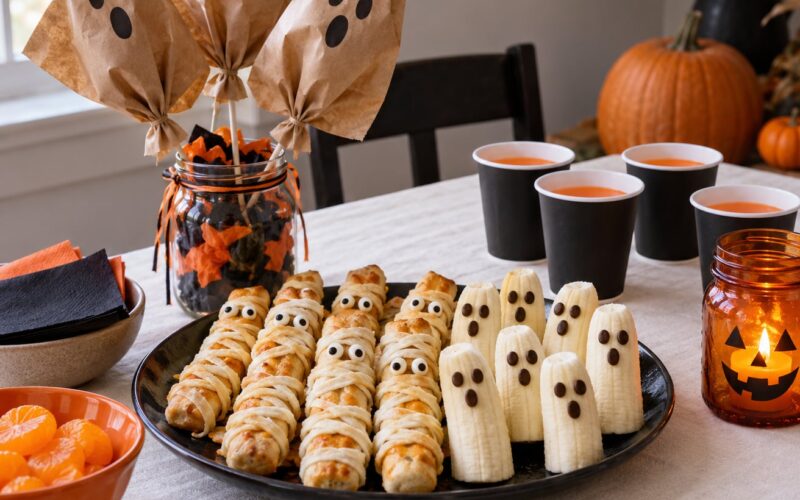
Small kitchens can’t run a big menu. Pick one substantial dish, three or four make-ahead items, and something guests can serve themselves. That keeps you talking to people instead of scrubbing a pan.
Reliable make-ahead choices include a chili or soup that simmers on the stove, a tray of roasted vegetables, a cheese and charcuterie board built on a baking sheet, deviled eggs, and a sheet-pan of sausages. One hot dish plus a grazing board covers most of it.
Handle dietary needs on the invitation rather than at the door. Ask about allergies when you send it, and put a small card on the food table listing what’s in each dish. Chocolate, nuts, and dairy show up constantly in Halloween treats and nobody wants to guess.
Pour drinks into a self-serve station on a separate surface from the food. A drink dispenser or a big punch bowl handles a batch of mocktails and one cocktail without you playing bartender all night. If you’re serving alcohol, plan alcohol-free options with the same care, not as an afterthought.
Watch ventilation while you’re at it. A hot oven plus a crowded room plus fog effects will make a small apartment stuffy fast. Crack a window before guests arrive rather than after someone complains, and skip fog machines entirely unless you have a plan for airflow.
3. Decorate for atmosphere without taking over
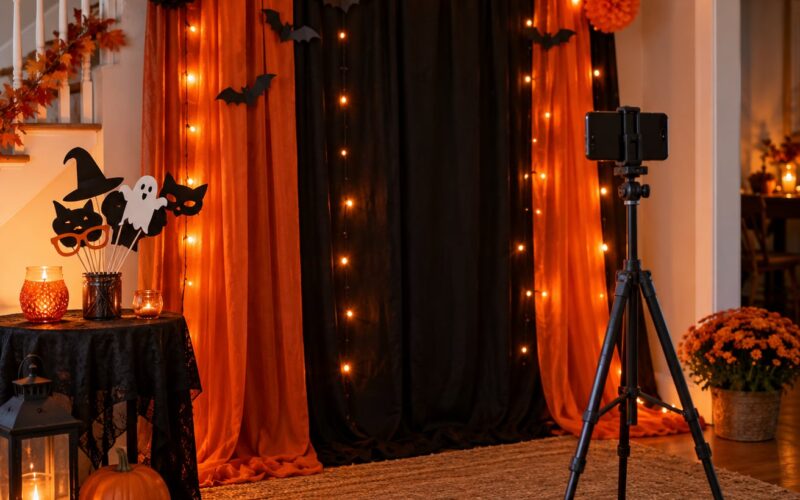
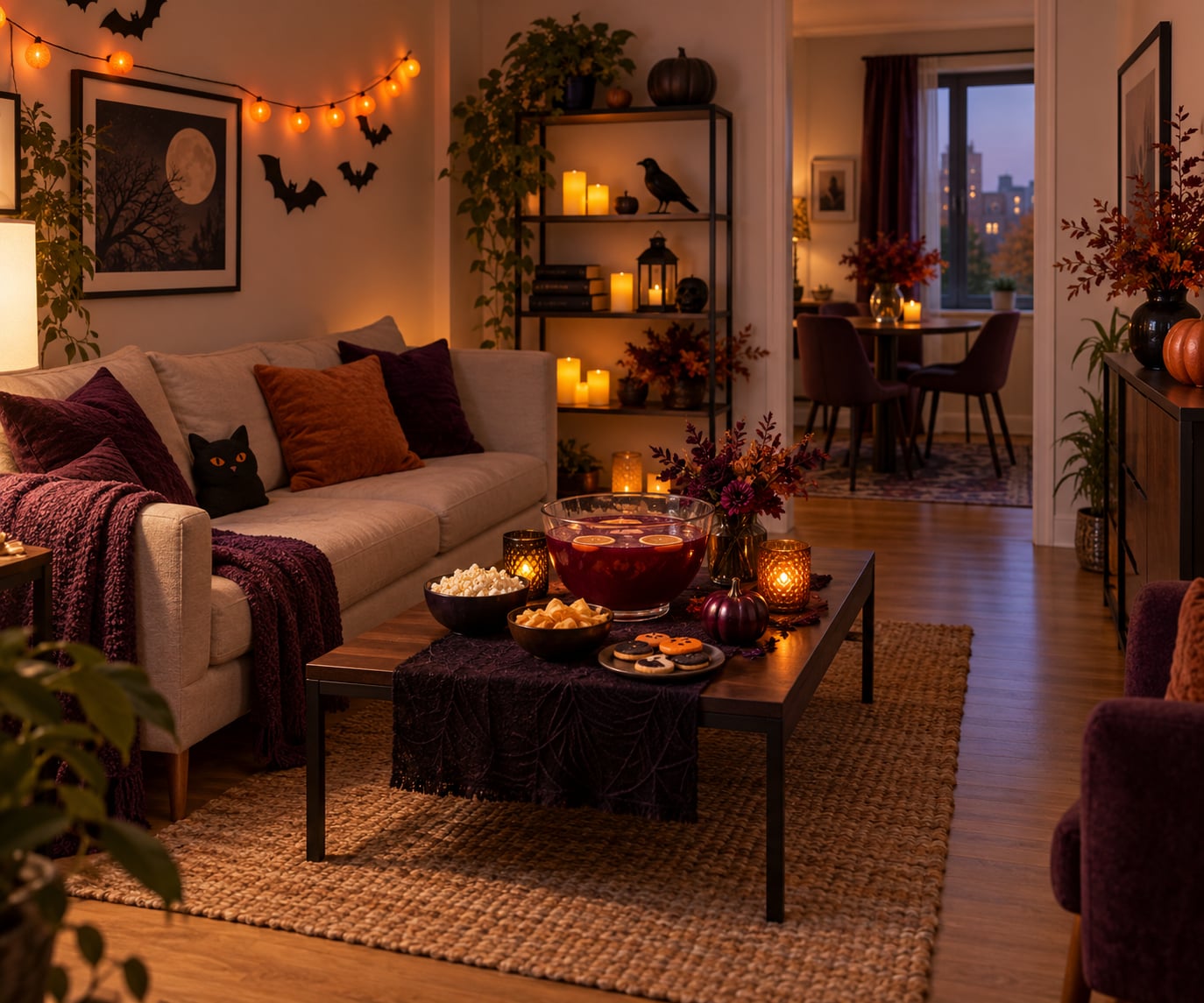
In a small apartment, lighting does the work that furniture can’t. Turn off the ceiling fixture, plug in two or three warm strings, and the same room reads as a completely different place.
Flameless candles give you the flicker without the open flame, which matters in a space with curtains, paper decorations, and a room full of costumes. Battery-operated pumpkins and jars filled with glow sticks work the same way, and glow sticks are cheaper and last the whole night.
For hanging things, stay renter-friendly. Removable adhesive strips, poster putty, tension rods, and over-the-door hooks all come down cleanly at the end. Nothing goes into drywall, and nothing sticks to paint you can’t touch up. If your deposit is on the line, treat that as a hard rule, not a preference.
Go vertical. Ceiling-hung decor uses air instead of floor, which is the one dimension small apartments have plenty of. Think hanging ghosts, suspended cobwebs in the corners, or a strand of lights over the food table. Keep them high enough that nobody walks into one.
Pick three focal pieces and stop. A covered coffee table, a decorated entry door, and one lit corner reads more deliberate than a dozen small props competing for attention in six hundred square feet.
A practical trick: put the biggest piece of decor where it can be seen from the doorway, and put nothing tall in the middle of the room. Eyes go to the open space, which makes the room feel larger.
4. Add music, activities, and a short plan for the evening
Pick one activity, not five. In a small room, competing activities split attention and floor space. Good options that need almost no room: a murder mystery with printed clues, a costume contest with a card for guests to fill out, a horror film with the lights low, or a playlist of short spooky clips between the main feature.
Skip anything that sends people running around. Ball games, dartboards, and anything involving a doorbell-dashed relay work in a house and end badly in an apartment.
Write the evening out in rough blocks. Most people need very little structure beyond knowing when food appears.
- Two hours before: Set up zones, test lighting and sound, chill drinks, put out the food that’s not hot.
- Thirty minutes before: Start the cooking, light the candles, start the playlist at low volume, check the bathroom.
- Arrival window: Guest list to a single door, coats into the basket, welcome drink in hand within a minute.
- First hour: Let people settle and eat. This is when the costume contest fits naturally.
- Middle: Run your one activity, or start the film if that’s your theme.
- Last 30 minutes: Announce the end time so nobody is surprised. Put out coffee or a late-night snack.
On noise, the practical move is a head start. A quick note or text to your neighbors before the party, mentioning the date and the end time, prevents most complaints better than apologizing afterward. Keep the volume where you can hear a normal conversation at the far wall without raising your voice, and move the speaker away from shared walls rather than just turning it down.
If you have a roommate, settle guest numbers and cleanup duties before invitations go out, not during. Bathroom queue rules matter too; if your bathroom is off the main room, mention it once at the start so people aren’t waiting in the hallway.
On pets, put their food, water, litter, and a bed in a closed room or a crate before the first guest arrives. Keep chocolate, candy, and alcohol out of reach, since all three are toxic to dogs and cats, and give them a space to retreat to that’s genuinely away from the noise.
Common Mistakes
Inviting too many people. Fix: pick your number, then send eight invitations for six to eight people. A short guest list that you defend beats a long one you apologize for at 11pm.
Treating every room the same. Fix: designate one room as the party zone and make the rest of the apartment off-limits. Closing a bedroom door does more for your evening than any decoration.
Blocking exits and hallways. Fix: walk the path from door to kitchen to bathroom before guests arrive and again once everyone has settled. A chair in a hallway is the single most common complaint-triggering mistake.
Using open flames. Fix: use flameless candles everywhere, including on a table next to paper bats. In a small space with curtains and costume fabric, there is no upside to a real candle.
Skipping food labels. Fix: a small index card on the food table listing the main allergens in each dish. It takes five minutes and it removes an awkward moment.
Playing music too loudly. Fix: position speakers away from shared walls, keep a conversational volume as your ceiling, and stop the music noticeably earlier than you want to. Nobody ever complained a party ended at 10:30 when it was supposed to end at midnight.
Planning nothing for cleanup. Fix: a plastic tablecloth you can gather into one bag, trash cans pre-lined in every zone, and a laundry basket by the door for coats. With about fifteen people, cleanup is twenty minutes if you’ve set it up and an hour if you haven’t.
Storing decorations without a plan. Fix: decide before you buy where things live. A bin under the bed, a vacuum bag for bulky fabric decor, and a single over-door hook organizer for small pieces covers most of a year’s worth without a closet.
Forgetting the room after. Fix: block the last thirty minutes of the night for breakdown, then again the next morning for washing linens and resetting furniture. Doing it all at midnight while tired is how broken decor happens.
Frequently Asked Questions
How many people can I invite to a Halloween party in a small apartment?
Plan for roughly one guest per 40 square feet of usable gathering space. That puts a 300-square-foot studio near 8 guests and a 500-square-foot one-bedroom around 12 to 15. These are comfort numbers, not rules. Check your lease and building policy for the actual limit, and invite about 10 percent more than you want since some guests cancel last minute.
What is a good Halloween theme for a small apartment?
Pick a theme that lives on light, sound, and costume rather than furniture. Film marathon, decades night, a murder mystery with printed clues, and a costume contest all work because they need floor space only for a rug and a chair. Skip anything requiring a long dining table, a dance floor, or a walk-through haunted house, since those ideas fail in compact living.
How can I decorate an apartment for Halloween without making it feel cramped?
Use vertical space and light. Hang cobwebs and ghosts from the ceiling, run warm string lights along one wall, and turn off the overhead fixture so the room reads warmer and larger. Choose three focal pieces and stop, place the biggest one where it is visible from the doorway, and leave the center of the room completely open. Fewer, larger items always make a small room feel bigger.
What food works best for a small Halloween party?
Choose one substantial dish plus several make-ahead items so you are not cooking while guests arrive. A simmering chili, a sheet-pan of roasted vegetables, a cheese and charcuterie board, and deviled eggs cover a group of ten with almost no kitchen work at serving time. Set up a self-serve drink station on a separate surface, and label dishes for allergens.
How late should a Halloween party in an apartment end?
Most apartment hosts plan a two to three hour window and tell guests the end time in the invitation. That sets expectations, keeps the neighbors on your side, and leaves you enough energy for cleanup. Ten or eleven is typical for an evening party, while trick-or-treat timing usually pulls things earlier. Announce the last thirty minutes so nobody leaves surprised.
How can I make a small Halloween party feel more festive?
Layer light, sound, and food. Warm string lights plus flameless candles change the mood of a room more than decorations do. A themed playlist started before guests arrive sets the tone. Themed food and drinks, a costume prompt in the invitation, and a short planned activity like a costume card or a murder mystery add the festive feel without needing more room.
Start With the Guest Count
If you only do one thing from this guide, decide your number first and write it down. Everything else in how to plan a Halloween party for a small apartment gets easier once the headcount is honest and the hallway stays clear.
From there, pull the lights down, move one table to the wall, and let guests do the rest. Small rooms look their best when they are a little bit underfilled.