A good horror movie marathon night comes down to four decisions made before anyone arrives: pick a theme, build a lineup that fits the hours you actually have, set up and test the room, then agree on a few rules so the evening runs itself. Plan two to six hours of film depending on your group, and it works for six people or for one.
The part hosts get wrong is saving the setup for the night of. Nothing kills a marathon faster than a title that quietly left your streaming service in the middle of October, or a soundbar cutting out during the third act. Get those two things sorted a day ahead and the rest is atmosphere and snacks.
Table of Contents
- What You Need
- Step-by-Step: How to Host a Horror Movie Marathon Night
- Choose a Theme and Set the Movie Count
- Build a Marathon Lineup With Variety
- Send Invitations and Set Expectations
- Create a Movie-Night Atmosphere
- Plan Snacks, Drinks, and Breaks
- Run the Marathon Without Constant Hosting
- End With a Themed Final Activity
- Common Mistakes and Easy Fixes
- Tips for a Memorable Horror Marathon
- Frequently Asked Questions
- How many movies should I put in a horror movie marathon?
- How long should a horror movie marathon be?
- What are the rules of marathon night?
- What snacks should I serve at a horror movie marathon?
- How do I pick movies a mixed group will all enjoy?
- What do I do if a movie will not play during the marathon?
- Conclusion
What You Need
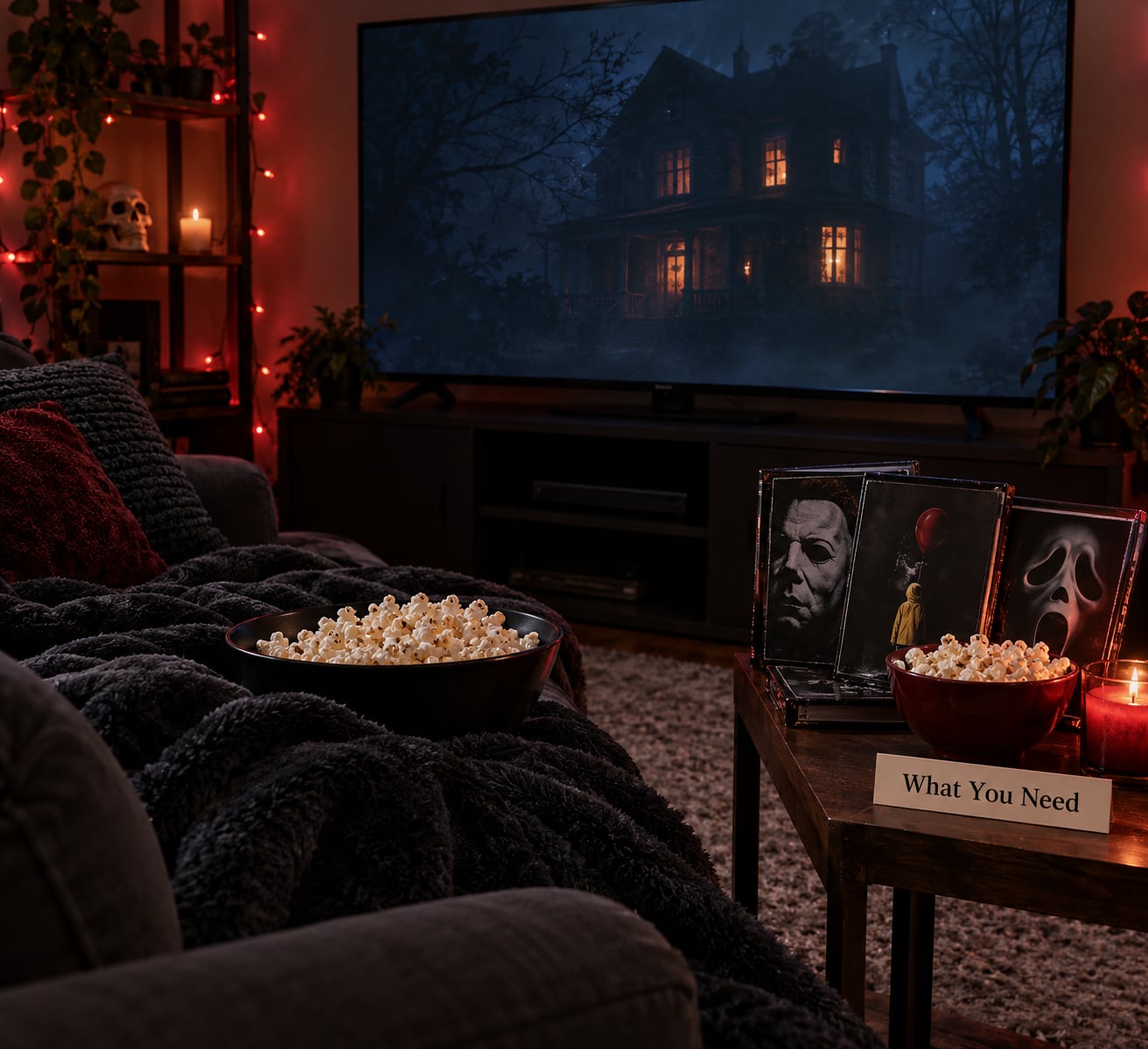
You need fewer things than the decor blogs suggest. Chips, dips and popcorn genuinely are enough, as the horror community keeps reminding hosts who over-produce the night. The real essentials are practical.
- A confirmed lineup. Every title, its runtime, and where you can watch it, written down somewhere guests can see.
- A viewing device that works. A television, a projector on a blank wall or a proper screen, plus the cable and adapter your source needs.
- Sound. A soundbar or surround setup beats built-in television speakers by a mile for atmosphere.
- Comfortable seating for everyone who is coming. Couch, floor cushions, bean bags, and one blanket per person who wants one.
- Blackout capability. Curtains that close fully, or at least a way to kill streetlight glare.
- Snacks and drinks that need no attention. Bowls, not plates. A drink everyone can pour for themselves.
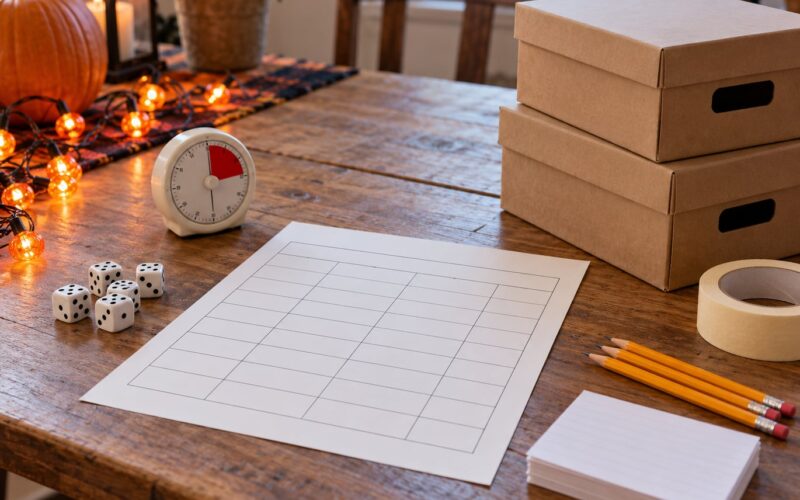
- A written schedule. Start time, film order, and break points, printed or pasted in the group chat.
- One backup source for every film. A second service, a download, or a disc.
Add a group chat for the plan and a small notebook of ideas if you want guests to contribute titles. That is the full kit. Skip anything that exists purely to look impressive on a table.
Step-by-Step: How to Host a Horror Movie Marathon Night
The process runs from two weeks out to the closing credits. Most hosts spend an evening on the plan and an hour on the room.
Choose a Theme and Set the Movie Count
A theme is what keeps the group chat from stalling. Without one, six people suggest twelve films and you lose an hour before the projector warms up. With one, arguments get shorter because everyone is arguing inside the same frame.
Classic slashers, psychological horror, monster films, folk horror, camp horror, or a single director’s back catalogue all work. Pick the one your group will actually argue about, then set the count against real hours.
| Night length | Films | How the hours go |
|---|---|---|
| 4 hours | 2 films | Two films plus a 15-minute break and a short settling-in period |
| 6 hours | 3 films | Three films with one mid-marathon break |
| 8 hours | 4 films | Four films with two breaks, finishing around midnight |
| 12 hours | 6 to 7 films | Six or seven shorter films with breaks between every one |
Do the runtime math before you commit. Take the runtimes of the films you want, add roughly 10 minutes of settling and snack time between each, then subtract from your window. A six-hour night with three ninety-minute films leaves nothing for the parts where people actually talk.
Build a Marathon Lineup With Variety
Variety is the whole job. Three slashers in a row becomes wallpaper by film two, and the room goes quiet exactly when you need it awake.
Alternate sub-genres rather than stacking them: a supernatural film, then a slasher, then something psychological. Mix runtimes too, and put your shortest or most talked-about film in the middle rather than the slot where attention fades.
Label scare level honestly, on a simple one-to-five scale, so guests can pick their own seat in the lineup. Guests who know what is coming rarely leave early, and nobody feels ambushed. A group chat message listing each title, runtime and content level settles most of the anxiety before the night starts.
Let guests contribute, but bound it. Ask for two submissions each, then you make the final call. Without a cap, you end up with a lineup of eight five-hour-plus films that nobody voted for as a set.
Send Invitations and Set Expectations
One message, sent at least a week ahead, saves you an entire night of logistics. Include the date, start time, location, theme, and every film title with its runtime.
Also state three things plainly: the dress code if you have one, whether food is provided or guests should bring something, and the expected finish time. Guests who know the marathon ends at 1 AM plan their own evening accordingly and rarely feel ambushed at midnight.
Ask for dietary restrictions in the same message, before you shop. It is the least glamorous part of the invite and the one that prevents somebody eating crackers in a dark room for four hours.
Create a Movie-Night Atmosphere
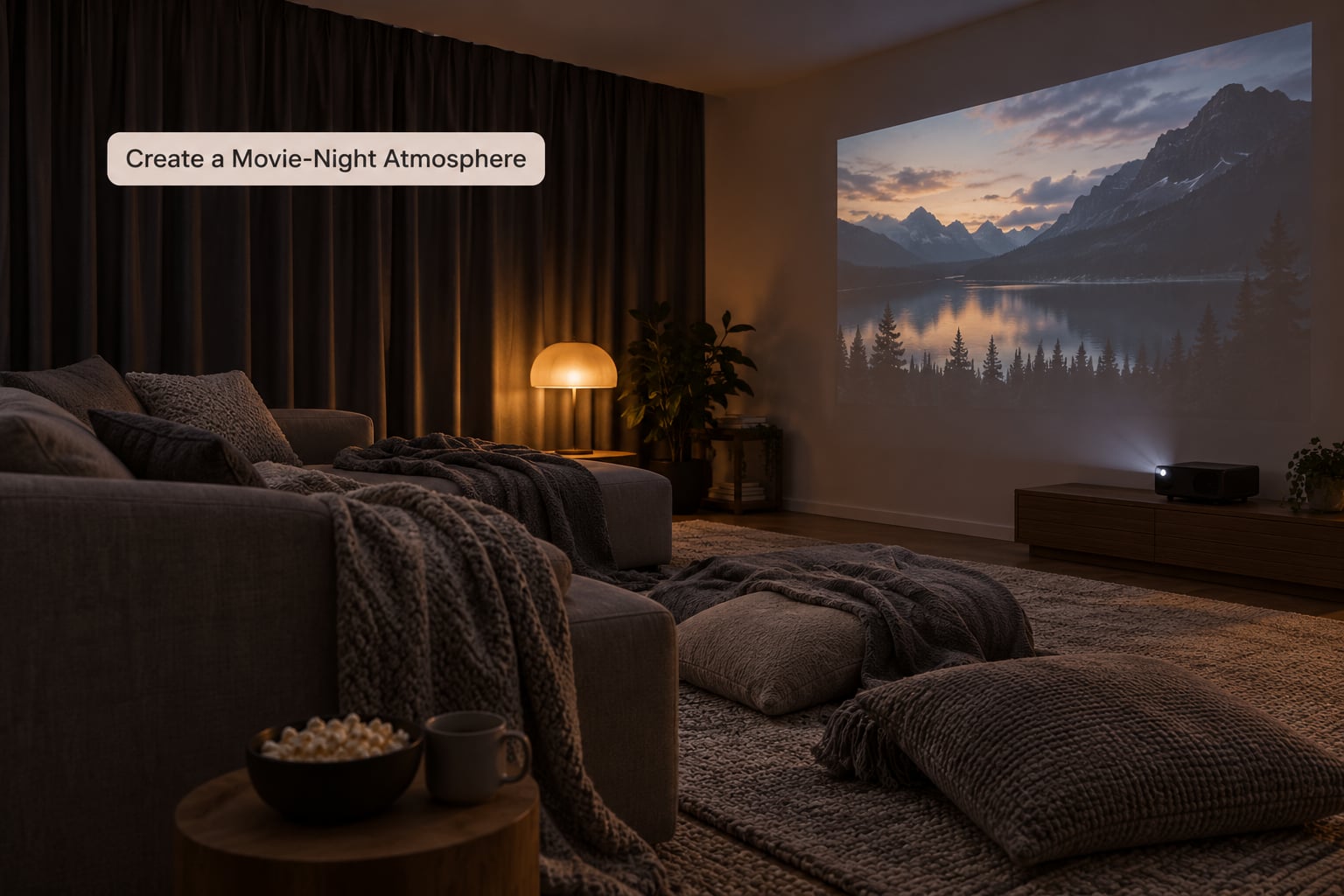
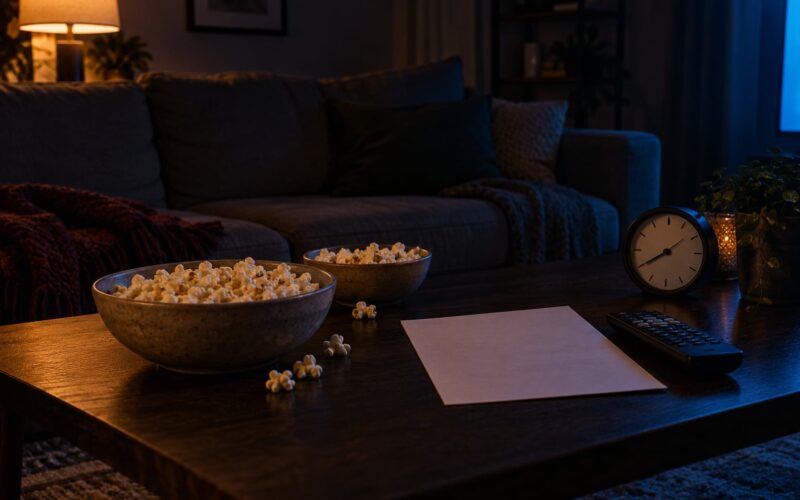
The trick is dim, never dark. A room lit only by the screen turns a horror night into an eye-straining night, and nobody enjoys a film they cannot quite see.
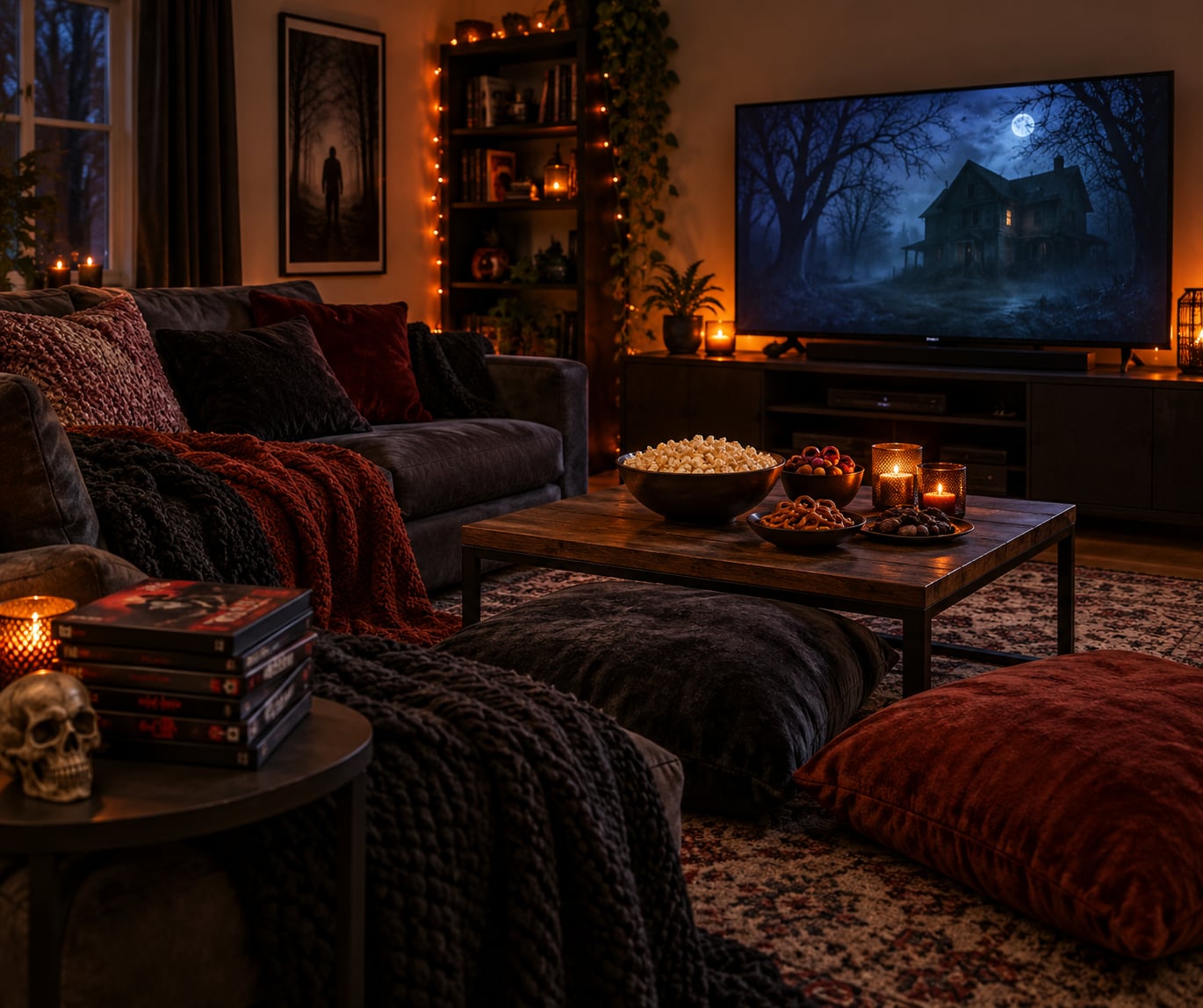
Close the curtains, then put one warm light source behind the seating area. A single amber lamp or a strand of orange string lights gives the room depth and stops people from checking their phones, because they cannot see the screen anyway.
Keep the screen the brightest thing in the room. If you are using a projector, aim it at a plain wall rather than anything textured, and test the image from the back row before guests sit down. Seating shape matters too: leave a clear path to the door and the bathroom so nobody has to squeeze past a row of screaming people.
Temperature is the detail people forget. Horror nights run warm once the heating, the crowd and three hours of action are all working together. Turn the thermostat down a few degrees an hour before the first film and nobody will notice until they are comfortable.
Plan Snacks, Drinks, and Breaks
Serve food that survives sitting out for six hours without attention. Popcorn in a big bowl with toppings set out in small dishes beats anything that needs a plate and a fork. Dips, nachos, chips, and one sweet thing cover most of a marathon.
Have at least one no-cook option in the mix. Trail mix, chocolate, and a bowl of salted popcorn keep eating to about thirty seconds of prep, which is the difference between a host who enjoys the night and one who spends it in the kitchen.
For drinks, pick something guests can pour themselves. A themed label and a cauldron-style bowl are enough theatre for the effort involved. Skip anything with dry ice unless you know the ventilation, and label anything caffeinated, because past midnight that is the real hazard.
Prep most of it a day or two ahead. Chopping, portioning and chilling happens off the clock; the night of is for popping corn and setting bowls out.
Schedule your breaks explicitly rather than waiting for someone to ask. Ten minutes every two films is enough. A planned break means everyone gets up, refills, uses the bathroom and comes back. An unplanned one means two people disappear during the best scene.
Run the Marathon Without Constant Hosting
Your job after the first film starts is announcements and transitions. Everything else can happen without you.
Put the schedule somewhere visible so you are not calling out times. Keep a short announcement list ready: the next title, the break after it, and the finish time. That is all you need to say.
Expect three interruptions and plan for them. Somebody needs a bathroom mid-film, somebody’s phone dies, and somebody will try to negotiate a title swap in the final twenty minutes. Agree in advance that once a film starts, it finishes, which turns a potentially awkward moment into a rule everyone already accepted.
Handle technical problems with a backup rather than a troubleshooting session. If a title will not play, switch to the source you prepared and keep moving. Debugging in front of seven people is the fastest way to lose the room.
If a guest needs to head out early, walk them out properly. Late nights mean tired, dark drives, and a guest who fell asleep through three films is not paying close attention to the road home.
End With a Themed Final Activity
Do not let the night trail off with someone checking the time. Two minutes of structure at the end makes the evening feel finished rather than abandoned.
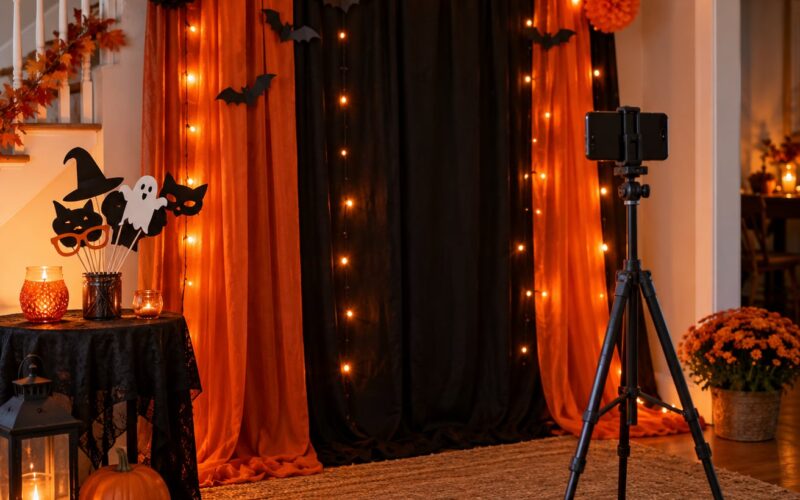
A quick vote for the best film of the night works every time, and it doubles as a clean way to pick the next month’s theme. Monster trivia, a short trailer preview of the next title, or a group photo in the same lighting as the opener are all cheap and memorable.
End with something warm. Hot cider, coffee, or a playlist that plays while people gather their coats gives the night a landing instead of an abrupt stop.
Common Mistakes and Easy Fixes
Too many films. Six planned titles in an eight-hour window always becomes five and a bad mood. Count runtimes with breaks and cut one. The last film should be the one you are proudest of, not the one you happened to add last.
Poor audio. Built-in television speakers flatten every jump scare. Test the sound from the farthest seat, at night, with something louder than dialogue.
Weak food planning. A host who runs out of snacks at film three loses the room’s energy for the rest of the night. Prepare more volume than seems sensible, since people eat more when seated in the dark for hours.
No content warnings. Surprise a guest with extreme gore at midnight and you will not get an apology out of it. Label every title’s intensity in advance.
Skipping breaks. Without intermissions, attention crashes and nobody enjoys the final act. Ten minutes between films is the fix.
Overcrowding the room. Cramming ten people into a space built for six makes everyone watch a small screen with someone’s elbow in their view. Cap attendance at what the seating actually supports, or move the film to a larger room.
No backup source. This is the most common failure and the easiest to prevent. For each film, confirm a second option, and download anything you can ahead of time so a service change does not end the night.
Tips for a Memorable Horror Marathon
Test the whole chain a day ahead: source, display, sound, and cables. Streaming libraries rotate constantly, so check where each title lives right before the night rather than trusting an old listicle, and never plan a lineup that depends on a title you cannot confirm this week.
Label your snack bowls. In a dark room, guests will absolutely put their hands in the wrong bowl, and switching the labels takes two minutes.
Share the schedule in the group chat the morning of the night. People plan their evening around it, and nobody has to interrupt the film to ask what is playing next.
Give people five minutes of discussion after each film. It converts a passive watch into a conversation, and it is the main reason people remember a marathon rather than simply attending one.
Choose a theme that works for committed horror fans and casual moviegoers in the same room. Camp horror and folk horror bridge the gap well, and a themed dress code that says optional, never required, helps newcomers settle in without pressure.
Frequently Asked Questions
How many movies should I put in a horror movie marathon?
Count your hours first, then fill them. A four-hour night fits two films, six hours fits three, eight hours fits four, and a twelve-hour all-nighter fits six or seven shorter titles. Add about ten minutes between each film for snacks and bathroom breaks before you commit to a count.
How long should a horror movie marathon be?
Three to four films over six to eight hours is the sweet spot for most home groups. Longer nights work well when the group is adult and committed, but attention dips hard past the third film, so schedule your shortest or most energetic title late. Two films is plenty when guests include kids or people with early mornings.
What are the rules of marathon night?
Five rules cover almost every gathering: guests may submit titles before the night, the host makes the final call, no title swaps once a film starts, phones stay down during each film, and credits always play. Announce them with the invitation so nobody has to negotiate mid-screening.
What snacks should I serve at a horror movie marathon?
Serve things that survive hours at room temperature without much attention: popcorn with toppings set out in bowls, chips with dips, nachos, and one sweet option. Have at least one no-cook item such as trail mix or chocolate so hungry guests can serve themselves. Prep it a day or two ahead and skip anything that needs last-minute plating.
How do I pick movies a mixed group will all enjoy?
Mix sub-genres rather than stacking them, alternate runtimes, and label each title’s intensity on a one-to-five scale so guests can self-select. Put the most accessible film first and the one people already know well in the late slot, when the room is tired. Ask for two submissions per guest, then choose the set yourself.
What do I do if a movie will not play during the marathon?
Switch immediately to the backup source you prepared rather than troubleshooting in front of the group. Download or confirm a second location for every film beforehand, since streaming libraries rotate titles often. If nothing works, keep the energy with a five-minute break and move to the next title on the schedule.
Conclusion
Start with the theme, because everything else hangs off it. Then lock the lineup against your real hours and confirm where each film lives. Finally, test the display, sound and backups a day ahead. Get those three right and the rest of the night is atmosphere, snacks and people arguing about the best film.