Roast them at 350°F (175°C) for 18 to 25 minutes, and they turn golden and crisp every time. The secret isn’t a hotter oven or a fancier spice blend. It’s getting the seeds completely dry, spacing them in a single layer, and pulling them at the right moment instead of trusting the clock alone. Most chewy seeds I’ve pulled from a pan were a moisture problem, not a temperature one.
Total time is about 35 minutes of work plus 20 minutes in the oven, and the whole thing is beginner-friendly. The optional salted-water soak adds 10 minutes and buys you a noticeably harder shell. If you’re carving a jack-o’-lantern this month, this doubles as a reason not to toss the seeds in the compost.
Table of Contents
- What You Need
- How to Roast Pumpkin Seeds So They Come Out Crispy: Step-by-Step
- How to Prepare Pumpkin Seeds for Roasting
- How to Season Pumpkin Seeds Before Roasting
- How Long to Roast Pumpkin Seeds at 350°F
- How to Tell When Pumpkin Seeds Are Crispy
- How to Roast Pumpkin Seeds in an Air Fryer
- How to Store Roasted Pumpkin Seeds So They Stay Crunchy
- Common Mistakes
- Frequently Asked Questions
- Do pumpkin seeds need to be dried before roasting?
- Can I roast raw pepitas instead of seeds from a pumpkin?
- Why are my pumpkin seeds chewy instead of crispy?
- Should I peel pumpkin seeds before roasting them?
- How do I keep pumpkin seeds from burning in the oven?
- How long do roasted pumpkin seeds stay crispy?
- Conclusion
What You Need
None of this is special equipment. A rimmed baking sheet and your oven will do most of the work.
- Pumpkin seeds from a fresh pumpkin you carved or cooked, or raw pepitas from the grocery store. One cup of raw seeds yields roughly one cup roasted.
- A rimmed baking sheet, half sheet size is ideal. Parchment paper or a silicone mat keeps seeds from welding themselves to the metal.
- A tablespoon of oil per cup of seeds. Olive oil gives a nutty, savory note; neutral oil like avocado lets the seasoning lead.
- Kosher salt or flaky sea salt, plus whatever else you want to season with.
- A paper towel or clean kitchen towel for drying the seeds after rinsing.
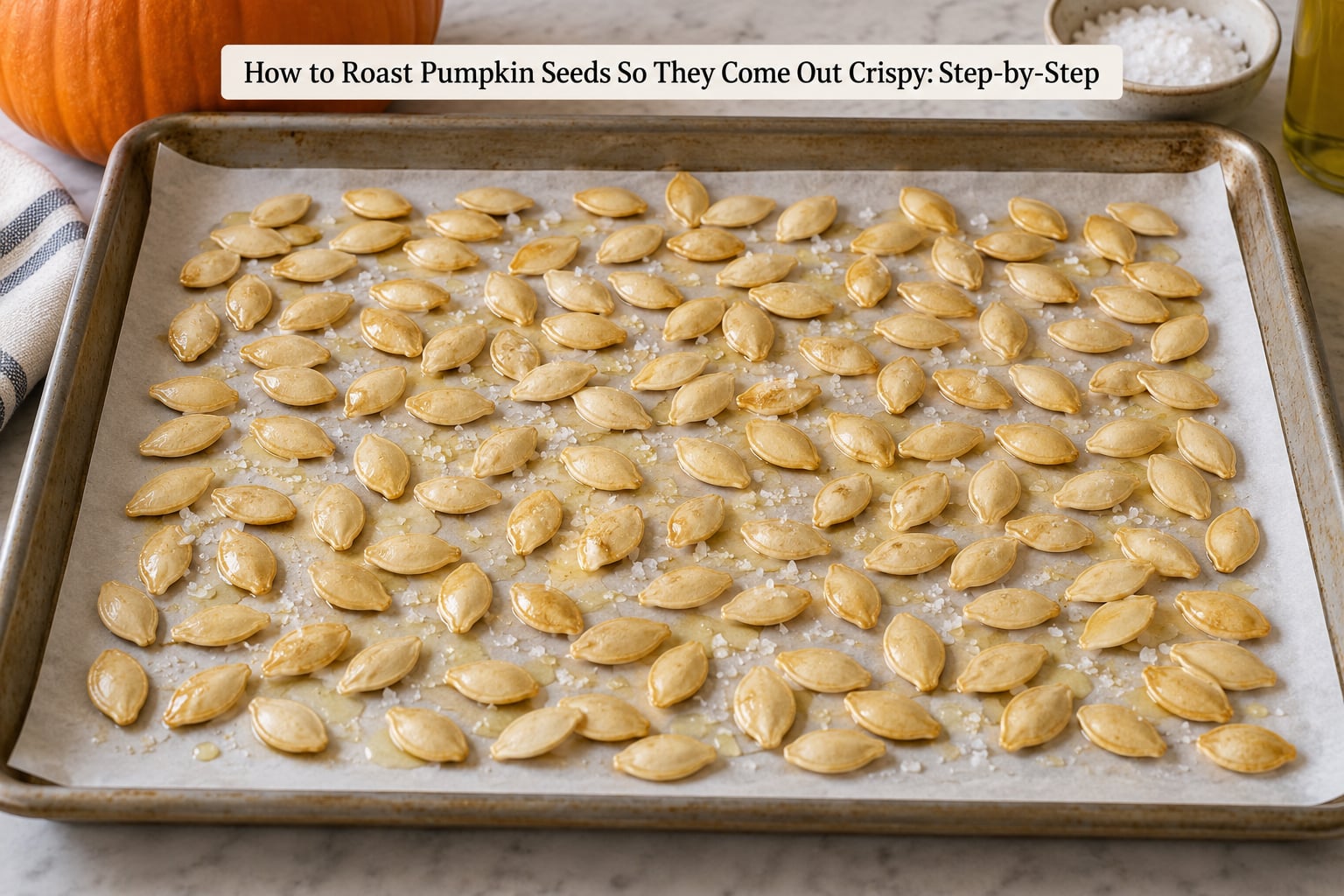
Two things matter more than the rest of the list. Seeds have to be spread in a single uncrowded layer, because touching seeds steam each other instead of drying out. And your oven needs to be fully preheated, because seeds going into a still-reheating oven absorb heat unevenly and end up chewy in the middle.
How to Roast Pumpkin Seeds So They Come Out Crispy: Step-by-Step
How to Prepare Pumpkin Seeds for Roasting
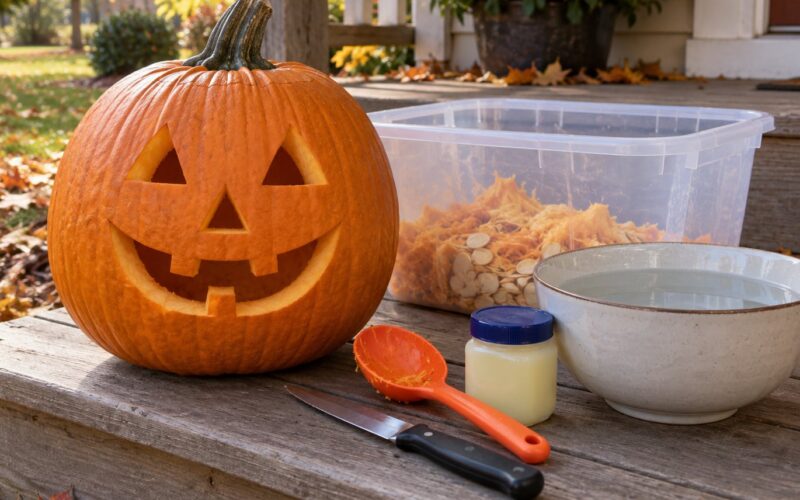
Scoop the seeds out with a large spoon, then pick or squeeze off the stringy pulp clinging to them. Washing the seeds in a colander under cool water gets the last of it off, and yes, you should rinse them. Everyone worries that rinsing washes away nutrition, but what you’re removing is pumpkin flesh, not the seed itself.
Now dry them, and this is the step people skip. Spread the seeds on a clean towel and roll them around, then let them sit uncovered for 30 to 60 minutes. If you’re impatient, a salad spinner followed by 10 minutes on the towel gets most of the way there.
Wet seeds put into a hot oven release water as steam, and steam is the enemy of crisp. A seed that still holds surface water will feel slightly leathery no matter how long you bake it.
How to Season Pumpkin Seeds Before Roasting
Toss the dried seeds with oil and salt before they go in the oven. Seasoning applied at this stage sticks to the seed and to the oil film, which is what gives you an evenly coated snack rather than a pan of salted seeds sitting in bare patches.
Use about 1 tablespoon of oil and 1 teaspoon of kosher salt per cup of raw seeds. Then pick a direction:
- Pumpkin spice sugar for a Halloween party tray: 2 tablespoons sugar, 1 teaspoon cinnamon, half a teaspoon nutmeg, tiny pinch of cloves.
- Rosemary sea salt for a grown-up bowl: 1 teaspoon finely chopped rosemary, flaky salt, and a few cracks of black pepper.
- Smoky paprika and cumin for a savory snack bowl: 2 teaspoons smoked paprika, 1 teaspoon cumin, half a teaspoon garlic powder.
- Chili-lime for a heat-seeking crowd: 1 teaspoon chili powder, the zest of one lime, a pinch of salt, lime juice added after roasting so it doesn’t go bitter.
One caution from the people who actually make these repeatedly: seeds go from golden to burnt in well under two minutes at the end of a roast. Once the timer gets close, watch the pan instead of walking away.
How Long to Roast Pumpkin Seeds at 350°F
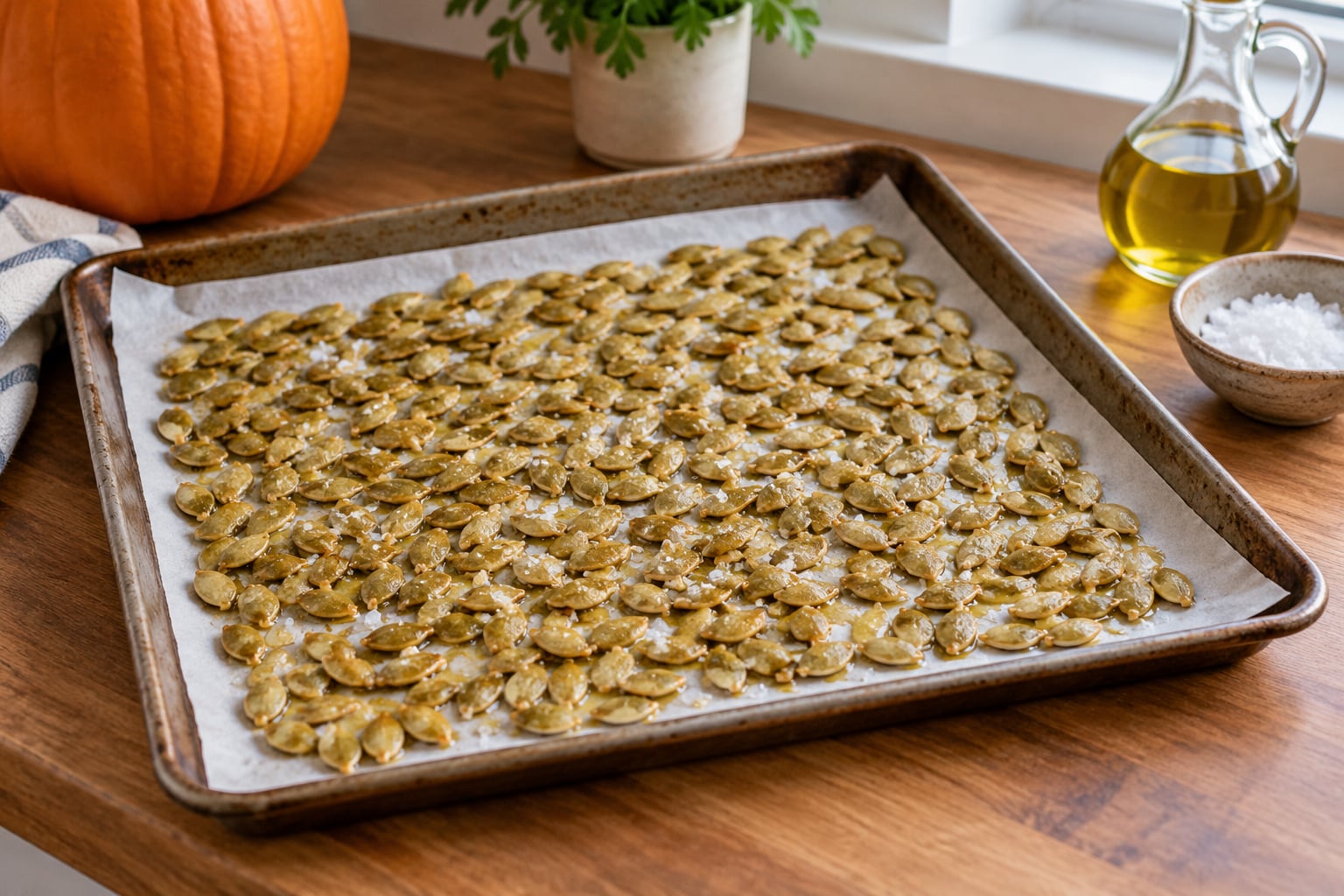
Preheat the oven to 350°F (175°C) and set the rack in the middle. Spread the seasoned seeds on the lined sheet in a single layer, then roast for 18 to 25 minutes, stirring or shaking the pan once at the halfway mark.
Hulled seeds with their shells intact sit at the longer end of that range. Shelled pepitas have no shell to dry out, so they usually finish in 8 to 12 minutes and need a closer eye. Pepitas also brown faster because nothing shields them, so check them early.
For an extra-crisp shell, the step that keeps showing up in cooking forums as the real difference: boil the dried seeds in salted water for 10 to 20 minutes, drain, dry them again thoroughly, then oil and roast. The soak softens the hull so it crisps instead of staying leathery. Cooks argue about the exact time anywhere from 10 minutes to half an hour, and the honest answer is that 10 to 20 minutes is where most people land, with a doneness cue instead of a rigid number: the seed should still have a little give but no longer feel completely raw.
How to Tell When Pumpkin Seeds Are Crispy
Reach for your hearing and your nose before the timer. A seed that is done makes a hollow, dry rattle when you shake the pan close to your ear, and the kitchen should smell distinctly nutty rather than faintly warm.
Color tells you less than you’d think. Look for dry-looking surfaces and edges that have gone a shade past pale gold, but many perfectly crisp seeds are only a medium tan. The single best test is to pull one seed, drop it on a cool plate, wait about 30 seconds for it to stop being hot, and bite it. If it snaps cleanly, the rest of the pan is there.
Test three seeds from different corners of the sheet, not one from the middle, since edge seeds brown first. If the edges are going dark while the center is still pale, move the sheet to the lower rack or tent it loosely with foil and give it another few minutes.
Seeds keep crisping as they cool, so pulling them a minute or two early usually lands better than pulling them a minute late. Let them cool on the pan for 10 to 15 minutes before moving them to a bowl.
How to Roast Pumpkin Seeds in an Air Fryer
The air fryer gets asked about constantly and almost nobody on the first page of results answers, so here it is: 350°F for 8 to 10 minutes, shaking the basket every 3 minutes. A single layer is non-negotiable, and because the fan and element are close together, air-fried seeds go from done to acrid fast. Start checking at 7 minutes.
How to Store Roasted Pumpkin Seeds So They Stay Crunchy
Cool them completely first. Warm seeds trapped in a closed jar go soft within a few days, which is the most common storage complaint from home cooks.
Once cold, store them airtight at room temperature and use them within a week or two. A slice of dry bread tucked into the jar absorbs any residual moisture and keeps the seeds snapping longer. Skip the fridge unless your kitchen runs warm, because refrigeration pulls in condensation that softens the hulls.
For longer storage, freeze them in a sealed bag and let them come to room temperature in the closed bag before opening, so condensation forms on the outside instead of on your seeds. Yes, pumpkin seeds can go rancid, and it tastes like old nuts: a sharp, dusty smell means the oil has oxidized, and those seeds belong in the bin.
Common Mistakes
Almost every chewy batch traces back to one of six things. Here’s what goes wrong and what to change.
Roasting damp seeds. This is the big one. Water turns to steam in the oven, and the seeds poach instead of roasting. Fix: an extra 30 to 60 minutes of air-drying after rinsing, then toss with oil only when the seeds feel dry to the touch.
Crowding the pan. A heaped sheet of seeds traps its own moisture and steams the bottom layer. It also means uneven browning, with the outer seeds burning before the middle ones dry. Fix: two trays instead of one thick one, and rotate the sheets halfway through.
Mixing seed sizes and varieties on one pan. A carving pumpkin’s thick-hulled seeds and a pie pumpkin’s thinner ones have wildly different roast times. Fix: sort by size, or roast the tough batch longer and take it out first.
Forgetting to stir. Hot spots in a home oven brown the seeds nearest the element and leave the rest pale and soft. Fix: shake the pan once at the halfway mark, and always use the middle rack.
Seasoning too late. Sprinkling salt and spices on seeds after roasting gives you a salty top layer and bare patches underneath. Fix: coat with oil and seasoning before the seeds hit the heat.
Leaving the pan during the final minutes. Seeds that smell nutty for four minutes can smell burnt thirty seconds later. Fix: start watching the pan at 15 minutes and rely on the rattle and aroma test rather than the timer.
| Symptom | Likely cause | Fix |
|---|---|---|
| Chewy in the middle, looks done outside | Seeds were still damp inside | Air-dry an extra hour before roasting; cut the largest seeds in half |
| Soft, pale, slightly gummy layer | Pan overcrowded, seeds steamed | Use a second sheet and keep everything in one layer |
| Burnt edges, chewy centers | Too close to the element | Middle rack, 325°F (165°C) instead of 350°F, add 5 to 8 minutes |
| Bland with no crunch at all | Pulled too early, tested while hot | Cool a test seed fully before biting it, roast 3 to 5 minutes longer |
| Bitter, not nutty | Roasted past golden into dark brown | Pull at medium tan, and cool before storing |
| Very salty with bare spots | Salt sprinkled after roasting | Toss with measured salt and oil before roasting |
One method deserves a mention because it currently ranks at the top of the search results and works well: dry-toasting with no oil at all, at 250 to 300°F for about 20 minutes, with salt applied beforehand. It gives a clean, pure pumpkin flavor, and it never gets greasy. Oil-roasting at 350°F gives you faster, more even browning and better adhesion for heavy seasoning. Both work, and you can use each one depending on what you’re serving.
And use the seeds you’ve got. Seeds from a jack-o’-lantern are thicker and will take the full 25 minutes, while seeds from a pie pumpkin are smaller and crisp up sooner. Seeds from carving pumpkins often have slightly more moisture in them, so give them a longer dry-down than you think they need.
Frequently Asked Questions
Do pumpkin seeds need to be dried before roasting?
Yes, and this is the step that decides whether they turn out crispy. Any surface or internal moisture turns to steam in a hot oven, and the seeds steam rather than roast, leaving them leathery in the middle. After rinsing, dry them on a kitchen towel for 30 to 60 minutes, or run them through a salad spinner and give them 10 minutes on the towel. They should feel dry and slightly rough before you add oil.
Can I roast raw pepitas instead of seeds from a pumpkin?
Raw pepitas work well and need less effort. There is no pulp to remove and no shell to dry, so you can go straight to drying, oiling, and roasting. Because nothing shields them, they brown faster and usually finish in 8 to 12 minutes at 350°F instead of 18 to 25. Watch them closely, since they go from golden to bitter quickly.
Why are my pumpkin seeds chewy instead of crispy?
Chewy seeds are nearly always a moisture, crowding, or heat problem rather than a temperature problem. Most often the seeds were rinsed and roasted before they dried out, or they were piled thickly enough to steam each other. Move them to a single uncrowded layer, let them air-dry for an hour first, and roast at 350°F on the middle rack. Test one cooled seed before you pull the pan.
Should I peel pumpkin seeds before roasting them?
You do not have to peel them, and most people eat the whole seed including the thin shell once it crisps. If you want just the seed inside, buy raw pepitas or dry the hulled seeds and roast them separately, since they need far less time. Peeling seeds by hand after roasting is fiddly; the easiest route to a smooth, easy chew is starting with shelled pepitas.
How do I keep pumpkin seeds from burning in the oven?
Use the middle rack rather than the one nearest the element, and keep the seeds in a single layer so nothing sits against the hot metal longer than the rest. Stir or shake the pan once at the halfway mark. Start checking at 15 minutes and pull when the seeds rattle dry, smell nutty, and are medium tan. Remember they keep crisping as they cool, so early is safer than late.
How long do roasted pumpkin seeds stay crispy?
Stored airtight at room temperature in a cool kitchen, roasted seeds stay crisp for one to two weeks. Cool them completely on the pan before jarring them, since warm seeds trapped in a closed container turn soft within days. A slice of dry bread in the jar soaks up residual moisture and extends that. For longer storage, freeze them and let them warm up in the closed bag before opening.
Conclusion
Start with the drying, not the oven. Give your seeds a full hour uncovered after rinsing, spread them in one uncrowded layer, and roast at 350°F until they rattle and smell nutty, usually 18 to 25 minutes. Then let them cool completely on the pan before you jar or serve them, and they’ll stay crisp for the whole party tray.