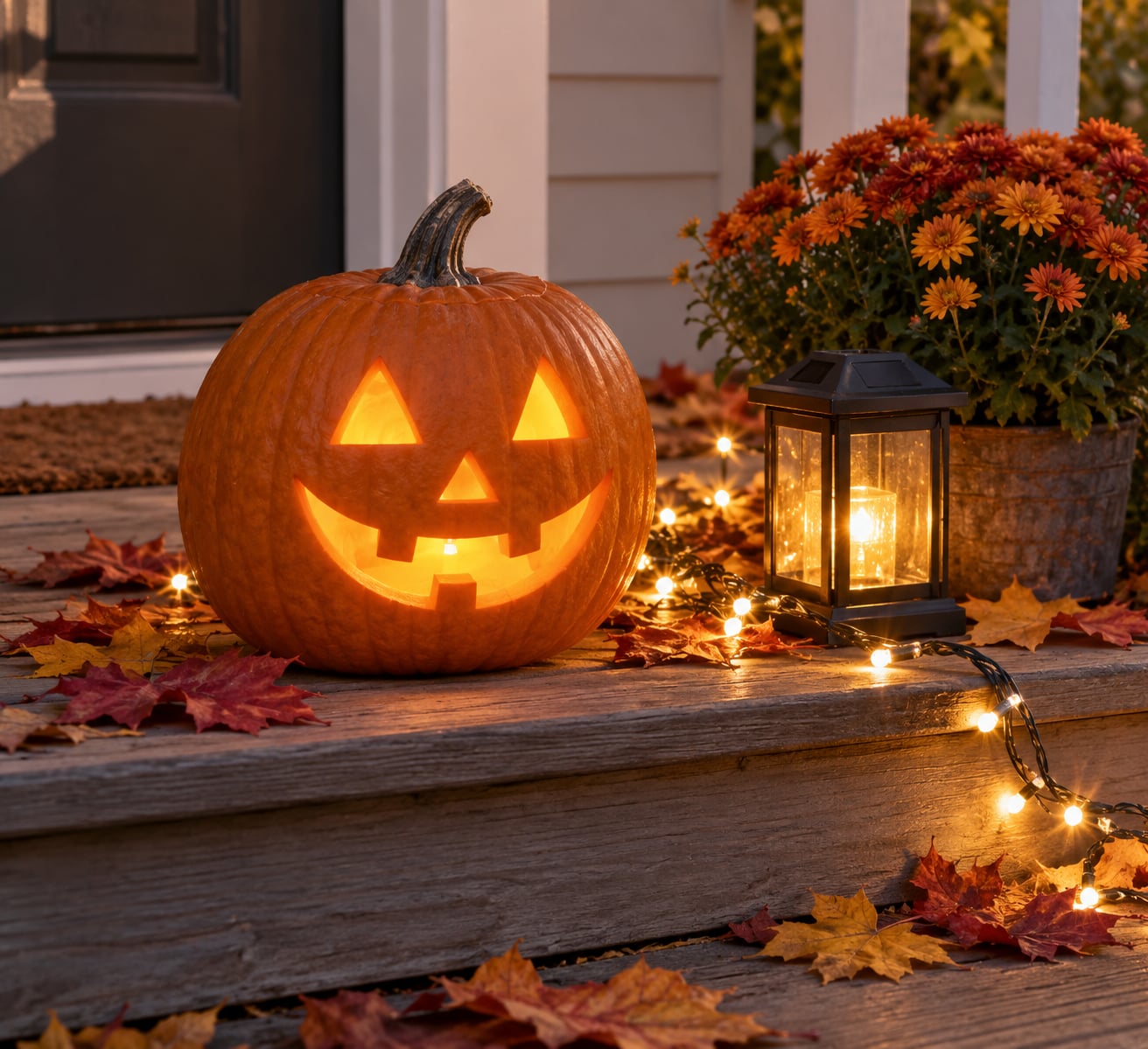
The fastest way to light a jack o lantern without a real candle is a battery-operated LED tea light: switch it on, set it on the pumpkin floor, put the lid back on, and you have the same backlit glow with no flame, no wax and no burnt smell. Mini string lights give you a brighter, more decorative result, and a rechargeable or solar light is the pick when you want the display to run all night without a switch.
Each takes about a minute per pumpkin. The part that trips people up is not the light itself but the brightness and the hardware, so I will cover both, along with what to do when the glow is so strong the carved face stops reading.
A traditional jack-o’-lantern is lit from inside by a flame, usually a votive or a tealight. Swap that flame for any small battery-powered light source and the shadow effect on the pumpkin walls is identical, because what you see is light passing outward through the carved openings.
Table of Contents
- What You Need
- Step-by-Step: How to Light a Jack o Lantern Without a Real Candle
- Use a Battery-Powered LED Tea Light
- Install Battery-Operated LED String Lights
- Try a Glow Stick or Chemical Light Stick
- Use a Suitable Rechargeable or Smart Light
- Common Mistakes
- Frequently Asked Questions
- What is the best way to light a jack-o-lantern without a flame?
- Can I use LED lights inside a real pumpkin?
- Will LED lights make a jack-o-lantern look too bright?
- How long do battery-powered pumpkin lights last?
- Are glow sticks safe to use in a jack-o-lantern?
- Conclusion
What You Need
The core list is short, and most of it you probably already own.
- A carved pumpkin, plastic prop, or small fruit pumpkin. Real gourds, the cheap plastic jack-o’-lanterns sold in bulk at craft stores, and mandarins or clementines all work the same way.
- A battery-operated LED tea light or flameless candle. This is the one supply you cannot substitute with a household candle.
- Fresh batteries or a freshly charged light. Optional, but it saves the disappointment of a pumpkin that dies an hour into trick-or-treat.
- A small flashlight or your phone. Optional, for lighting the interior while you fit the hardware.
- A screwdriver or exacto knife. Only needed for plastic props, where you cut a small cross in the base so the light can push up from underneath.
- A dime or a small square of foil. Optional, and this is the fix for the single most common complaint about LED lighting.
- Bread bag or a sheet of parchment. Optional, for carrying a cut pumpkin from the kitchen to the porch without a soggy bottom.
Step-by-Step: How to Light a Jack o Lantern Without a Real Candle
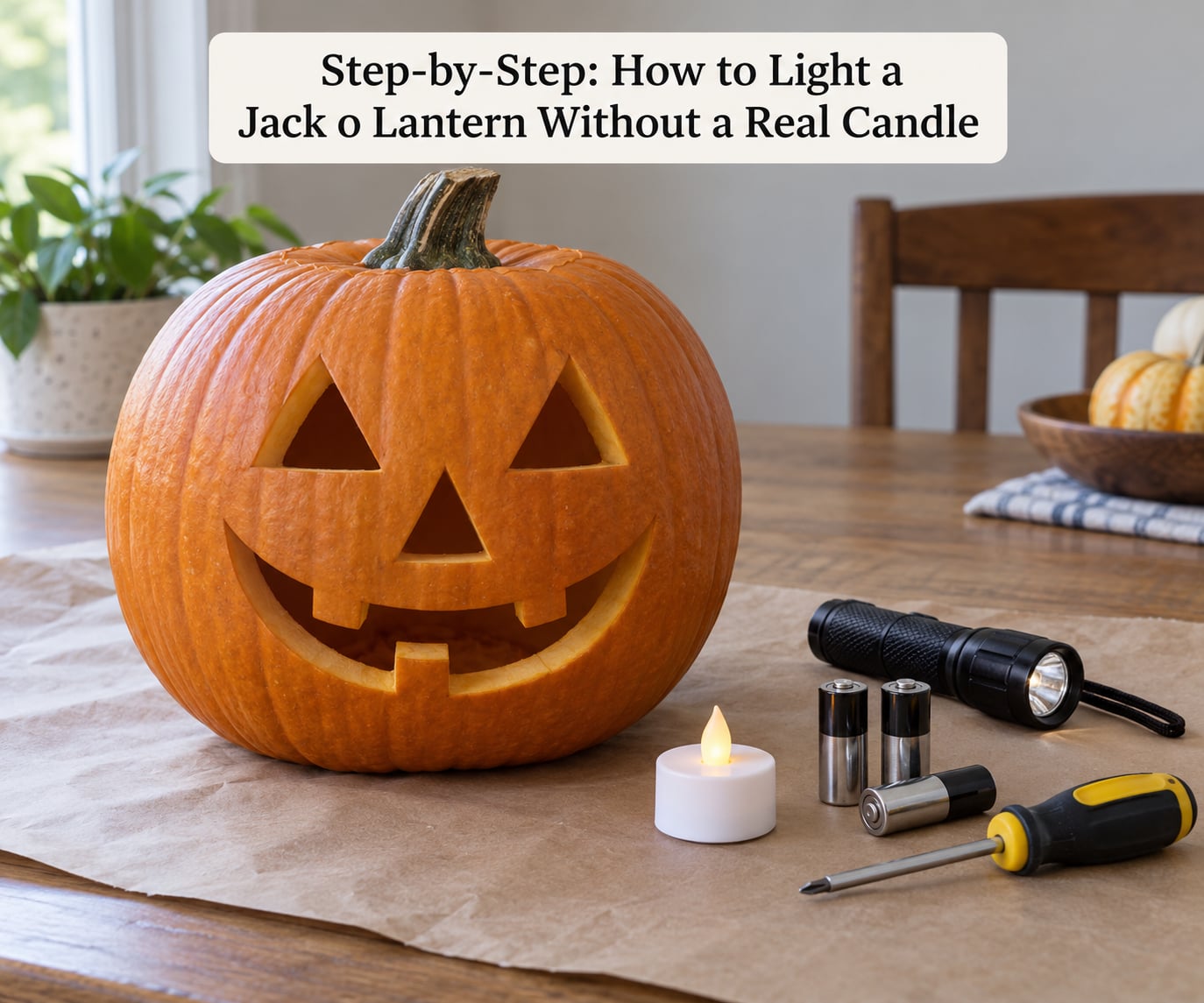
Whichever light source you pick, the installation follows the same rhythm: prep the pumpkin so it is dry and stable, position the light low and centered, close it up, then test the glow from several angles before you walk away.
Test from where your guests will actually stand. Most bad lighting jobs are only obvious from the sidewalk, not from the porch, where you were kneeling over the pumpkin with the light in your hand.
Use a Battery-Powered LED Tea Light
A battery tea light is the simplest all-in-one method, and it is what I reach for first every year. Flip the switch on the bottom, seat the light flat on the pumpkin floor with the LED centered under the lid opening, and snap the plastic lid back on so the hardware stays below the glow line.
Two lights in one large pumpkin beats one. Put a second tea light a few inches away and slightly behind the first, and the shadow pattern from the face reads twice as deep.
Then test the brightness. If the carved features wash out, lay a dime over the LED before you put the lid on, or cut a small square of foil with a hole for the light to shine through. Warm-white bulbs also look more like a flame than cool white ones, which read as a headlight.
Tea lights stay cool to the touch, survive being knocked by a gust of wind, and work the same in a plastic prop as in a real gourd.
Install Battery-Operated LED String Lights
String lights are the choice when you want a brighter, more layered glow, especially on a big pumpkin that will sit far from the walkway. A short string of warm-white micro lights does the job better than a long one because you want the wire mostly hidden, not filling the cavity.
Wrap the wire in a loose circle around the inside wall, about an inch above the floor, rather than draping it across the mouth of the pumpkin. That keeps the lights out of the sightline through the carved eyes.
Leave the battery pack reachable. Slide it down beside the stem at the back, or wedge it under a fold of the pumpkin wall, but never seal it inside a bag or wrap it in plastic where you will not find it in October.
Wires should never be pinched hard between the shell and the lid. A crushed wire that still works today is the kind of failure that shows up as a dark pumpkin halfway through the night.
Fewer bulbs give a softer face. If the glow flattens the carving, pull two or three bulbs out of the run rather than covering the whole string.
Try a Glow Stick or Chemical Light Stick
A glow stick is the no-batteries, no-charging route, and it is genuinely good for a kids’ craft table or a batch of mini clementine pumpkins. Snap the inner glass tube inside the plastic shell, shake it for about fifteen seconds, and the glow ramps up over the next few minutes.
Expect a steady light for roughly six to eight hours in a normal room, dimming gradually. A fresh one is bright, which means it can flatten the carving the same way an LED does, so start with an older stick or two if the face matters to you.
Wear gloves or wash your hands after bending it. The liquid inside is a mild irritant, and little hands plus a snapping glow stick is a combination I would rather not supervise on a porch step.
Discard spent sticks in the trash, not on the walkway where a dog finds one interesting. Wrap the broken tube in tape before binning it.
Use a Suitable Rechargeable or Smart Light
Rechargeable lights are the answer for displays that come up more than once: a big yard setup, a haunted house scene, or a porch that needs to be on for eight hours of trick-or-treat without anyone thinking about a switch.
Look for a unit with a built-in timer, a remote, or a photocell that switches on at dusk. The photocell version is the least fussy, since it needs no attention at all after you set it up.
Check the rating before it goes outside. A light marked for indoor use only will not survive a damp October night, and a low-voltage plug-in arrangement must use outdoor-rated cable and a weather-protected connection, never an indoor extension lead.
Keep every plug and connector off the walkway, where it becomes a trip hazard the moment the crowd arrives. Test the whole run an hour before guests arrive, not while you are greeting them.
Common Mistakes
Placing the light too high. A light near the lid washes the face into a flat oval. Set it low on the floor, centered, so the carving casts long shadows outward.
Too much brightness. Bright LEDs are the reason some flameless pumpkins look like they are lit by a flashlight. A dime over the bulb, a foil mask, fewer bulbs, or warm-white bulbs all bring the drama back.
Wrong colour temperature. Cool white reads as an office light. Warm white, or an amber bulb if you can find one, sits closer to candlelight.
Visible hardware. A wire crossing the mouth of the pumpkin or a battery pack pressed against the side ruins the illusion. Route it around the back and hide the pack under the stem.
Loose fittings. If the light tips over inside, the pumpkin goes dark on one side. Sit it flat, or wedge it with a folded paper towel so it cannot slide.
Dead or tired batteries. Dim output usually means tired batteries rather than a bad bulb. Swap the cells before you start blaming the light source.
Heat. Never substitute a hot bulb, a halogen torch, or anything that gets warm enough to dry out the pumpkin wall and crack it. Flameless means cool, all night.
A few habits keep the display safe and the pumpkin intact. Keep the top off or loose so no heat can build up, set the pumpkin on a stable surface away from dry leaves and straw, and remember that a carved pumpkin in a warm room collapses faster than one on a cold porch step.
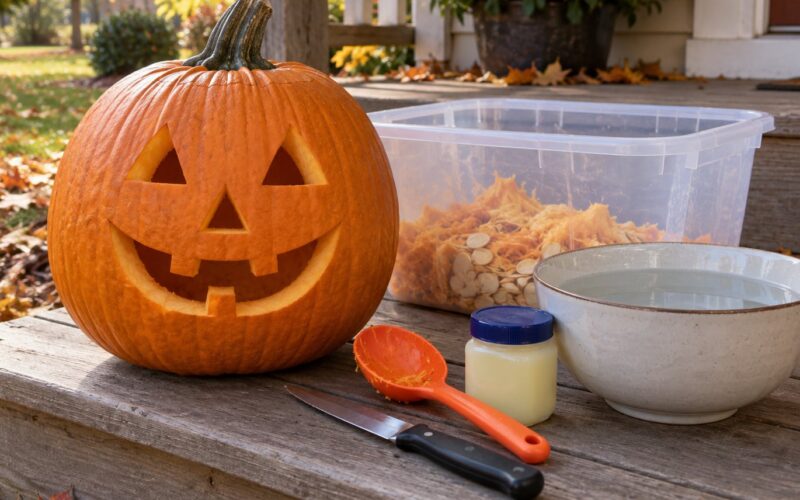
Cut a lid, scoop the seeds, and blot the inside dry with a paper towel rather than washing it. Dry walls mean less condensation and a longer night of glow.
Frequently Asked Questions
What is the best way to light a jack-o-lantern without a flame?
A battery-operated LED tea light is the best all-round option. It costs nothing to run, needs no wiring, stays cool in wind, and fits inside a real pumpkin, a plastic prop or a clementine. Set it on the pumpkin floor, centered and low, then snap the lid back on. Move up to string lights if you want a brighter, more decorative glow.
Can I use LED lights inside a real pumpkin?
Yes. LED lighting is safe inside a real carved pumpkin because it produces almost no heat, unlike a flame or a hot bulb. Keep the lid off or loose so nothing warms up inside, and place the light on the pumpkin floor rather than against the wall, where it could bruise the flesh. Fresh LEDs also mean the same light works again next Halloween.
Will LED lights make a jack-o-lantern look too bright?
They can, especially cool-white bulbs, which flatten the carving into a flat oval glow. Warm-white bulbs read much closer to candlelight. If it still looks harsh, lay a dime over the LED before replacing the lid, cut a small foil mask with a hole in it, or pull a couple of bulbs out of a string of lights until the shadows come back.
How long do battery-powered pumpkin lights last?
Most battery tea lights give around 20 hours of light on a fresh set of coin cells, which easily covers a full night of trick-or-treat and then some. Mini string lights vary more, since runtime depends on bulb count, so budget five to eight hours for a busy run. Solar and rechargeable lights last as long as their charge does, which is why they suit multi-night displays.
Are glow sticks safe to use in a jack-o-lantern?
Chemical light sticks are safe to place inside a pumpkin because they emit no flame and no meaningful heat. The liquid inside is a mild skin and eye irritant, so keep them away from small children and pets, and never let a pet chew one. Snap and shake the stick indoors, wait a few minutes for the glow to peak, then place it in the pumpkin and bin it after the night.
Conclusion
Start with a battery-operated LED tea light. It is the shortest path to the glow you actually wanted, it takes about a minute, and it survives kids, pets, wind and a display that stays up for days.
Move up to warm-white string lights when the pumpkin is large or sits at the end of a walkway and needs to be seen from the street. Choose a rechargeable, solar, or smart light only when you want scheduling, a photocell, or several nights of use without thinking about it.
Either way, install it low and centered, hide the hardware at the back, and check the brightness from the sidewalk before you call it done.