How to plan a Halloween party for kids on a budget comes down to one number and one rule. For ten children, budget about 45 dollars total, and put roughly three quarters of it into food and goody bags. Decorations, games and invitations should cost next to nothing, because they can be made from things you already own.
A budget Halloween party is simply a kids’ party where the whole spend — decor, food, activities, goody bags and costumes — stays at five dollars or less per child. That cap is what makes the planning easy: you stop negotiating with yourself at the register and start deciding what actually matters.
This guide walks through the whole sequence, from setting the guest list to the final night-before check, with the ages and timing that keep a group of children happy without exhausting whoever is hosting. Most families can do the prep in two evenings spread over three weeks.
Table of Contents
- What You Need
- Step-by-Step: How to Plan a Halloween Party for Kids on a Budget
- Set the Party Budget and Guest List
- Choose a Simple Halloween Theme
- Make Low-Cost Decorations
- Plan Kid-Friendly Food and Drinks
- Choose Games and Activities
- Ages 2 to 4
- Ages 5 to 8
- Ages 9 to 12
- Prepare for Safety and Small Emergencies
- Make Favors and Send Thank-You Notes
- Test the Plan One Day Before
- Common Mistakes
- Decorating the whole house
- Buying too much food
- Planning too many activities
- Forgetting allergy information
- Inviting too many children
- Assuming costumes are required
- Frequently Asked Questions
- How much should I spend on a kids’ Halloween party?
- How many kids should I invite to a budget Halloween party?
- What is an easy Halloween menu for kids?
- What decorations are cheapest for a kids’ Halloween party?
- Do children need costumes for a Halloween party?
- How can I keep a kids’ party safe without spending a lot?
What You Need
You need five categories of supplies: something to decorate with, a snack and drink setup, three or four activities, small favors, and a written guest list with allergy notes. Every one of them has a cheap substitute, and most come out of a kitchen drawer or a dollar-store seasonal bin.
- Decoration materials. Black and orange plastic tablecloths, paper grocery bags, string, paper plates, tape, markers and old jam jars. Skip banners, themed centerpieces and pre-made hanging décor, which are built to be discarded after one evening.
- Food equipment. One serving platter, one bowl, one baking sheet, and a few trays so nothing needs a hot holding dish. Use foil or parchment instead of fancy platters.
- Safety items. A first-aid kit with an ice pack, bandages and any medicine your own children use, plus battery tea lights instead of real candles. Write your address and a parent’s phone number on a card for every adult present.
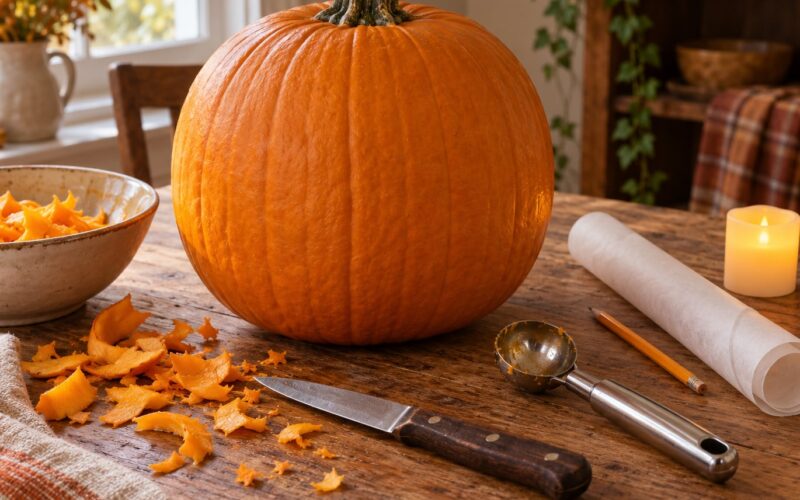
- Activity materials. Paper plates for games, painter’s tape, washable markers, construction paper, cookie cutters and a plastic sheet or old sheet to protect the floor. Dollar-store cookie cutters in October shapes are the single cheapest win of the season.
- Planning tools. A budget written in a notes app, a guest list with allergy notes beside each name, and a clock-face note for the party timeline.
Here is what those categories usually cost for a party of ten, which is the number most parents land on:
| Category | What it covers | Typical cost in dollars |
|---|---|---|
| Decorations | Tablecloths, bags, string, jars, lights | 8 |
| Food and drinks | Snacks, one savory, one sweet, juice, water | 22 |
| Games and craft supplies | Cookie cutters, paper plates, tape, markers | 4 |
| Goody bags | Five small items per child, bags included | 10 |
| Invitations and printing | Free printables or a group text | 0 |
| Total | About 4.50 per child | 44 |
Step-by-Step: How to Plan a Halloween Party for Kids on a Budget
Set the Party Budget and Guest List
Write your total figure down first, before you pick a date or a theme, then split it into the five categories above. The moment the number exists, the shopping stops being a series of small yeses.
Next, count your children. Ten to twelve kids is the comfortable number for a home party: enough for two teams in a game, few enough that one adult can keep eyes on everyone. Fifteen or more turns a living room into a crowd and pushes you toward the noise and spill problems that make hosts dread the event.
Decide how long the party runs before you plan anything else. Preschoolers do well with 60 to 75 minutes, elementary-age children with 90 minutes, and tweens with two hours. Shorter is not a compromise — parents who host the party themselves consistently say the fear of a budget party is far worse than the reality once it is over.
Split your list into essential and optional. Food, drink, one activity, goody bags and a way to get children home safely are essential. Decorations beyond the table, printed invitations, costumes and a second activity are optional, and those are the four places families usually overspend.
You will know this step is finished when you can say, out loud, the total, the number of children and the end time. Put all three in a note you can see from the kitchen.
Choose a Simple Halloween Theme
Pick one theme you can build from paper, fabric and things in a pantry, then repeat it in the invitation, the table and the labels on the food. A single theme carried through three places looks more intentional than three half-done themes.
Themes that work cheaply: monsters, where every element is a shape with googly eyes; a potion bar, where the decor is labeled jars and paper straws; a graveyard, which needs black paper silhouettes and a flashlight; or a plain autumn party with pumpkins and apples and no Halloween imagery at all.
Match the theme to the age group. Preschool children do best with pumpkins, animals and gentle ghosts, and are genuinely frightened by realistic props, skeletons with faces and anything with a strobing light. Tweens get more mileage out of a bit of theatrical weirdness than toddlers do.
How to know the theme is right: you can describe it in one sentence, and every element on your list can be made or found for under a dollar. If the theme requires a costume the whole group has to buy, pick a different one.
Make Low-Cost Decorations
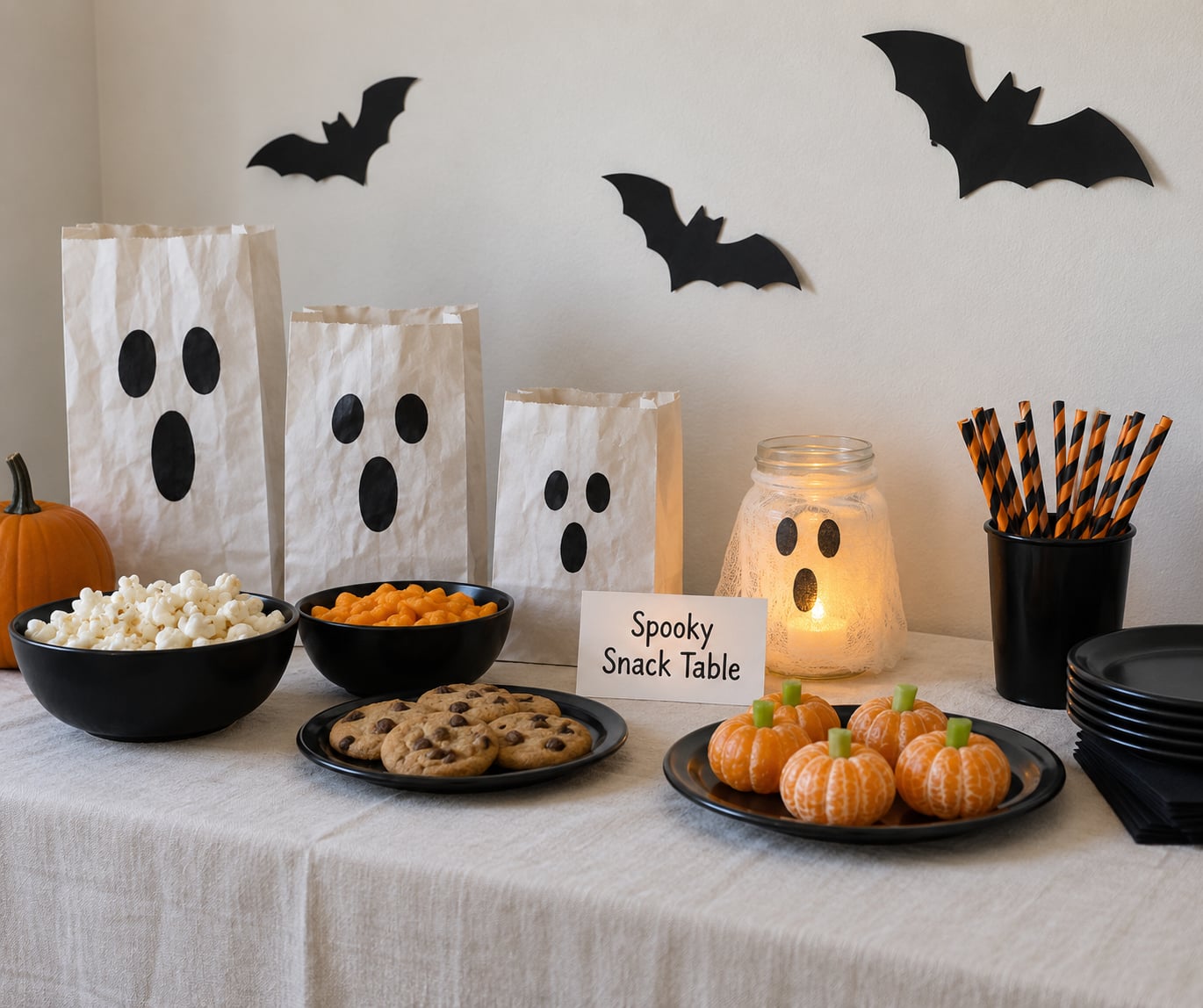
Decorate one table, one wall and the walkway, and leave the rest of the house alone. A focused setup reads as intentional in a way that a half-decorated whole house never does.
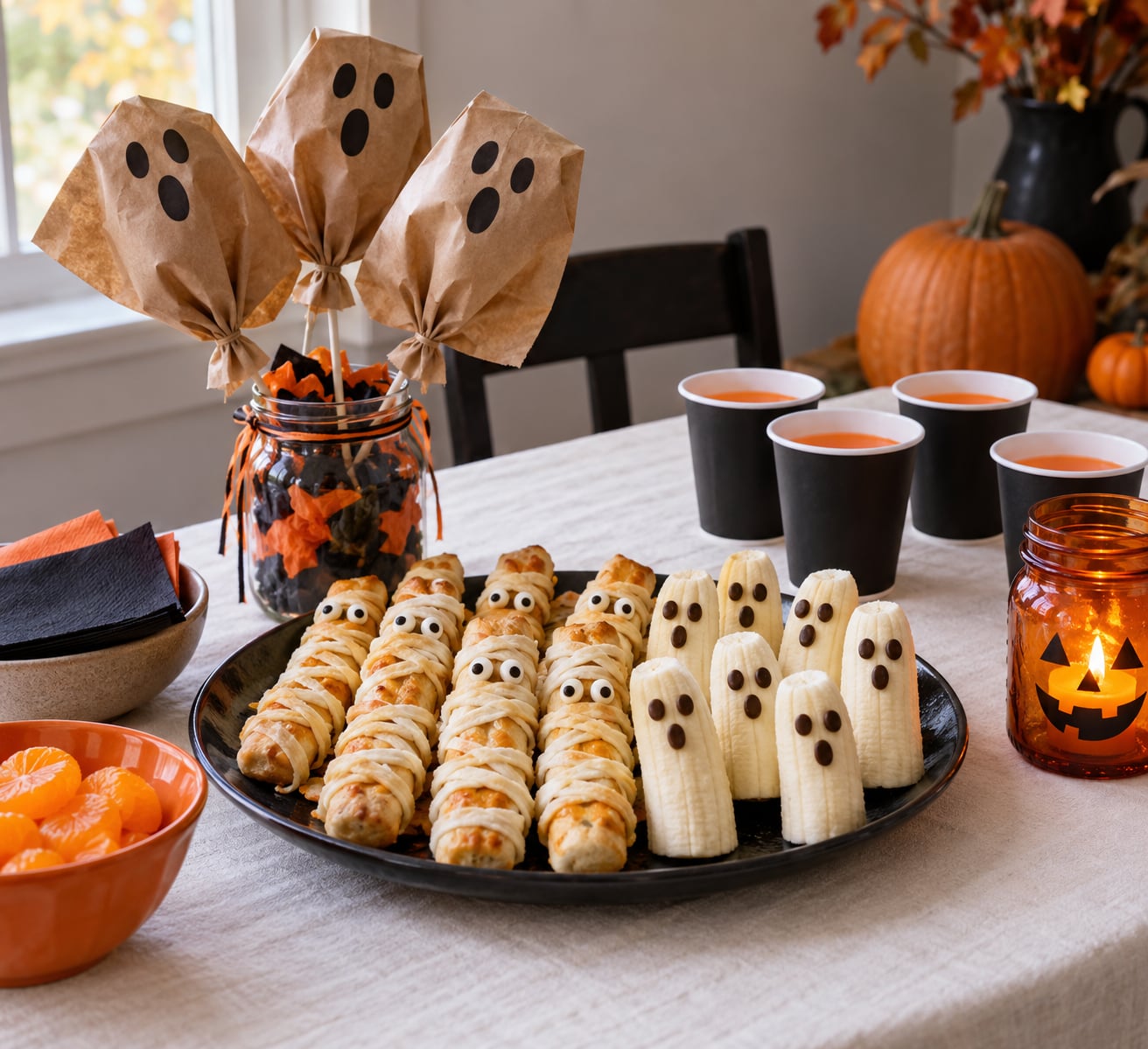
- Bag ghosts. Brown paper grocery bags go upside down on sticks or dowels. Draw one face per bag so they are not identical.
- Jar lanterns. Old jam or pickle jars, painted or wrapped in black paper with a face cut out, holding a battery tea light. Skip candles entirely around children.
- Paper bats. Fold a square of black paper in half, cut the shape once, and unfold a whole colony in a few minutes.
- String spiderwebs. Cotton batting or yarn stretched over doorways and furniture corners. A little goes a long way.
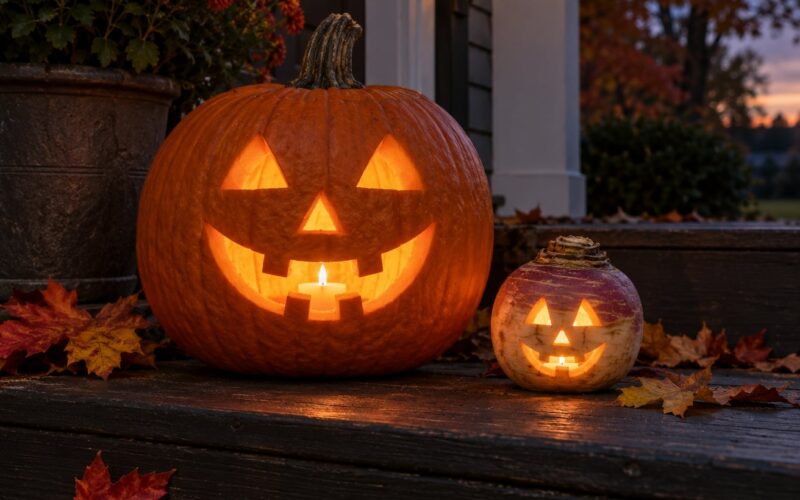
- Pumpkins. Use small pumpkins as-is with no carving, set them along the walkway with a battery light inside a cut face.
- Lighting. One lamp in the corner turned low does more for atmosphere than anything you can buy, and it costs nothing.
What to skip: plastic spiders glued to every surface, themed plates and cups, printed banners, and anything that needs a glue gun. Those four items account for most of the difference between a 20 dollar party and a 90 dollar one.
Plan Kid-Friendly Food and Drinks
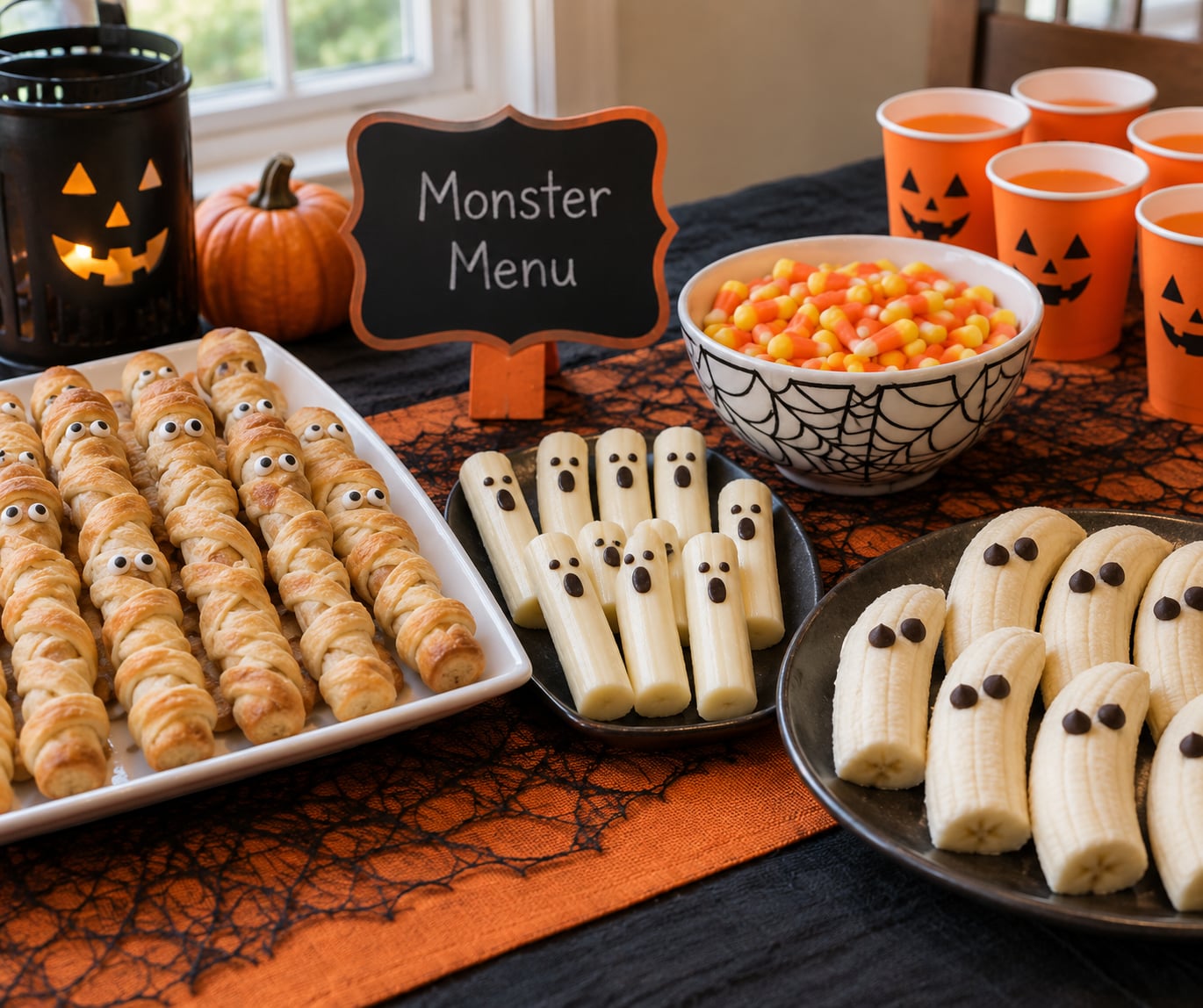
Serve three things, not a meal: one savory, one fruit or vegetable, and one sweet, plus water and one punch. Children at a party graze rather than eat, and three items get touched more than a full spread would.
- Savory. Mummy breadsticks made with a dab of cream cheese and pretzel strips, or plain buttered crackers cut with an October cookie cutter.
- Fruit. Banana halves with chocolate chip eyes, clementines with a green stem, or a melon ball with a wedge of rind for a pumpkin.
- Sweet. Store-bought Halloween cookies cut into shapes, or popcorn made orange with food coloring and stirred with gummy worms.
- Drinks. Water in a jug with sliced citrus, and one punch. Skip anything with carbonation; spilled soda on a carpet ends the party faster than anything else.
For quantity, plan roughly three small servings per child for savory and fruit, and four or five small pieces of sweet, plus extra of whatever always gets finished first in your house. Buying too much is the most common waste, and leftovers from a party usually do not get eaten.
Use a group text or a free printable for invitations and put the end time in the message itself. Nobody needs a printed card with a party store monster on it.
Choose Games and Activities
Pick three activities and hold them in reserve. A planned sequence of four games with one backup beats a pile of options, because the backup is the one that saves you at minute 40.
Ages 2 to 4
- Beanbag toss. Paper plates on the floor, one beanbag each. No reading required.
- Treasure hunt. Hide small wrapped treats around one room before anyone arrives.
- Dress-up photo corner. An old sheet over two chairs with whatever costume pieces you own.
Ages 5 to 8
- Pin the tail on the ghost. A printed ghost on paper, tape, and fabric scraps.
- Mummy race. Teams wrap a teammate in toilet paper against the clock.
- Halloween bingo. One free printable, one card per child, one small prize.
Ages 9 to 12
- Scary sound charades. One player acts out a Halloween word, no talking.
- Craft station. Make a slime potion or a paper haunted house. Keep it seated and contained.
- Costume contest. Categories like funniest, scariest and best homemade. Cheap trophies are paper crowns.
Mixed ages are the hard case, and parents ask about it constantly. Pick the treasure hunt, the beanbag toss and the craft station, since all three work from toddler to preteen, and let the older children take turns leading.
Prepare for Safety and Small Emergencies
Safety planning on a budget costs nothing and takes one page. Write it out, put it on the counter, and every adult in the room knows their job before the first child arrives.
- Supervision. Aim for roughly one adult per six to eight children, and keep one adult with the group rather than drifting off to clean up. Pediatric guidance is consistent on this point: young children need an attentive adult within sight and reach.
- Choking hazards. Keep whole grapes, hard candy, uncut hot dogs, popcorn and small loose pieces off the table for children under four. Cut round fruits in quarters lengthwise.
- Food allergies. Put ingredient notes beside each dish, not just on your own list. Ask parents directly and repeat the question once more the week of the party.
- Flames and heat. Use battery tea lights, keep the punch away from any warm light, and move hot pans out of reach before guests arrive.
- Lost child. Agree one signal, usually an adult saying a specific phrase, and everyone moves to the door. Assign one adult to the door for the whole party so it is never unstaffed.
- Minor injury. Ice pack, bandages, children’s pain reliever if your own children use it, and two charged phones. Know the nearest urgent care in advance.
- Food handling. Keep cold items on ice, hot items above 140 degrees F, and refrigerate or discard perishables within two hours.
This is general planning guidance rather than medical advice. If a child has a diagnosed allergy, condition or medication needs, ask that child’s own doctor and make sure the responsible adult has what they need on the day.
Make Favors and Send Thank-You Notes
The cheapest goody bag is five small items in a paper bag: one sweet treat, one small toy from the dollar-store bin, one sticker sheet, one piece of candy, and one Halloween eraser or toy figure. That runs about a dollar per child and it is the part of the party children remember most.
Skip the themed goody bag kits. They cost several dollars each, arrive with filler items in them, and the filler is what ends up on the floor.
Thank-you notes are optional and should stay free. A group photo printed at home, or a paper note passed around with the bags on the way out, takes five minutes and costs nothing.
Test the Plan One Day Before
The night before, run the party in your head once and check the physical setup. This is the step that prevents almost every problem that actually happens.
- Confirm your guest count with a final message and update the food quantities.
- Buy or pull out every non-food item so nothing is discovered missing on party day.
- Make the two items that keep well, like popcorn balls or a frosted dip, and refrigerate them.
- Cut the fruit and store it covered in the refrigerator, not on the counter.
- Assemble goody bags in a row on the table so grabbing them takes seconds during cleanup.
- Charge two phones and put one at the door.
- Set out the first-aid kit and the allergy list beside the snack table.
- Charge the playlist and download it, since a streaming queue is not something to depend on.
You are ready when the only thing left to do on party day is put food out and unlock the door.
Common Mistakes
Most budget Halloween parties go wrong in the same six ways, and every one of them is cheap to fix in advance.
Decorating the whole house
Spreading a small budget across a whole house makes every room look thin. Fix: pick one table, one wall and one doorway, and spend nothing on the rest. Fix for next year too, since anything you make is stored in a bin and reused.
Buying too much food
Leftovers from a party mostly do not get eaten. Fix: three items instead of a full menu, and count three small servings per child plus four or five sweet pieces. Freeze anything you save for yourself the same night.
Planning too many activities
A six-game schedule guarantees a queue and a squabble. Fix: three planned activities, one held in reserve, and a time limit of about eight minutes each.
Forgetting allergy information
The mistake that matters most is assuming you know. Fix: ask parents twice, write ingredient notes beside each dish, and put one adult in charge of the food table who knows exactly what is in it.
Inviting too many children
More kids feels generous and turns supervision into crowd control. Fix: ten to twelve at a home, and keep the list short enough that you can recite it without checking.
Assuming costumes are required
Costumes are a second unbudgeted cost that gets forgotten because the party itself is the budgeted event. Fix: make costumes optional, let children wear regular clothes, and put a costume-making table on the activity list instead.
Two habits cover most of the rest. Do the cleanup math first — a party served on paper plates with no carpet in the room takes ten minutes — and buy nothing you cannot use again next October, because the second year is where a budget party actually starts to feel free.
Frequently Asked Questions
How much should I spend on a kids’ Halloween party?
Most families land between 30 and 60 dollars for a whole at-home party, which works out to four or five dollars per child in a group of ten. Food and goody bags take about three quarters of that. Decorations, games and invitations can cost almost nothing once you build them from household items and free printables. Write the total down before you buy anything.
How many kids should I invite to a budget Halloween party?
Ten to twelve children is the comfortable number for a home party, enough for two teams in a game and few enough that one adult can keep an eye on everyone. Fewer than six feels thin, and more than fifteen turns your living room into a crowd. If you are hosting a larger group, ask parents to stay for the first hour.
What is an easy Halloween menu for kids?
Serve three things: one savory, one fruit or vegetable, one sweet. Mummy breadsticks, string cheese ghosts and banana halves with chocolate chip eyes do the work with almost no cooking. Put out one bowl of dry snacks, one platter and one dessert plate instead of a full meal, and skip carbonated drinks, which cost money and end up on the carpet.
What decorations are cheapest for a kids’ Halloween party?
Paper grocery bags printed as ghosts, plastic tablecloths in black or orange, string for spiderwebs and old jam jars holding a battery tea light will cover most of a room for under ten dollars. Skip themed plates, banners and packaged centerpieces, which are designed to be thrown away after a single use.
Do children need costumes for a Halloween party?
No. Many families skip costumes entirely and let children wear whatever clothes or dress-up pieces they already own. If costumes matter to your child, make costume building the activity: plain white shirts, washable markers, safety scissors and a box of leftover fabric become the entertainment and the memory of the afternoon.
How can I keep a kids’ party safe without spending a lot?
Keep one adult per six to eight children in the room, put hard candy and small loose pieces out of reach of anyone under four, use battery tea lights instead of candles, and label every dish with its ingredients. A first-aid kit, an ice pack and two charged phones at the table cover most of what actually happens.
Start tonight, not next week. Write the total, the number of children and the end time in one note, then do nothing else until you have a theme you can build from a grocery bag and a cookie cutter. Everything in this guide follows from that first decision, and if you are planning a party for 2026, you have more than enough time to do it the slow way.