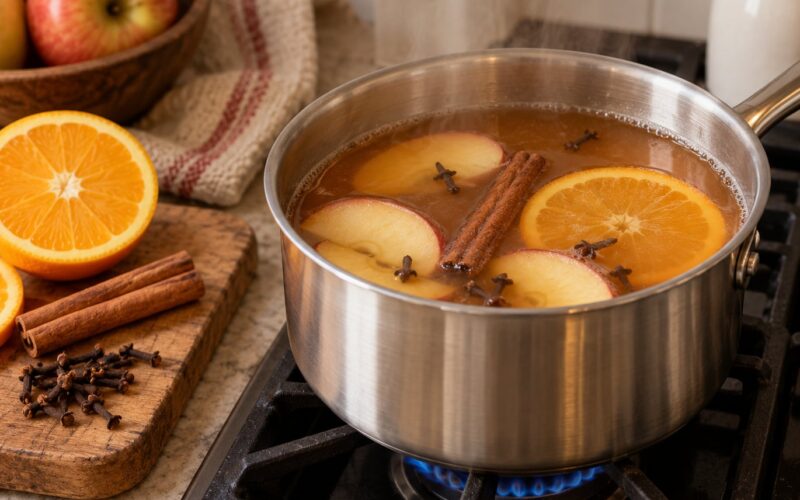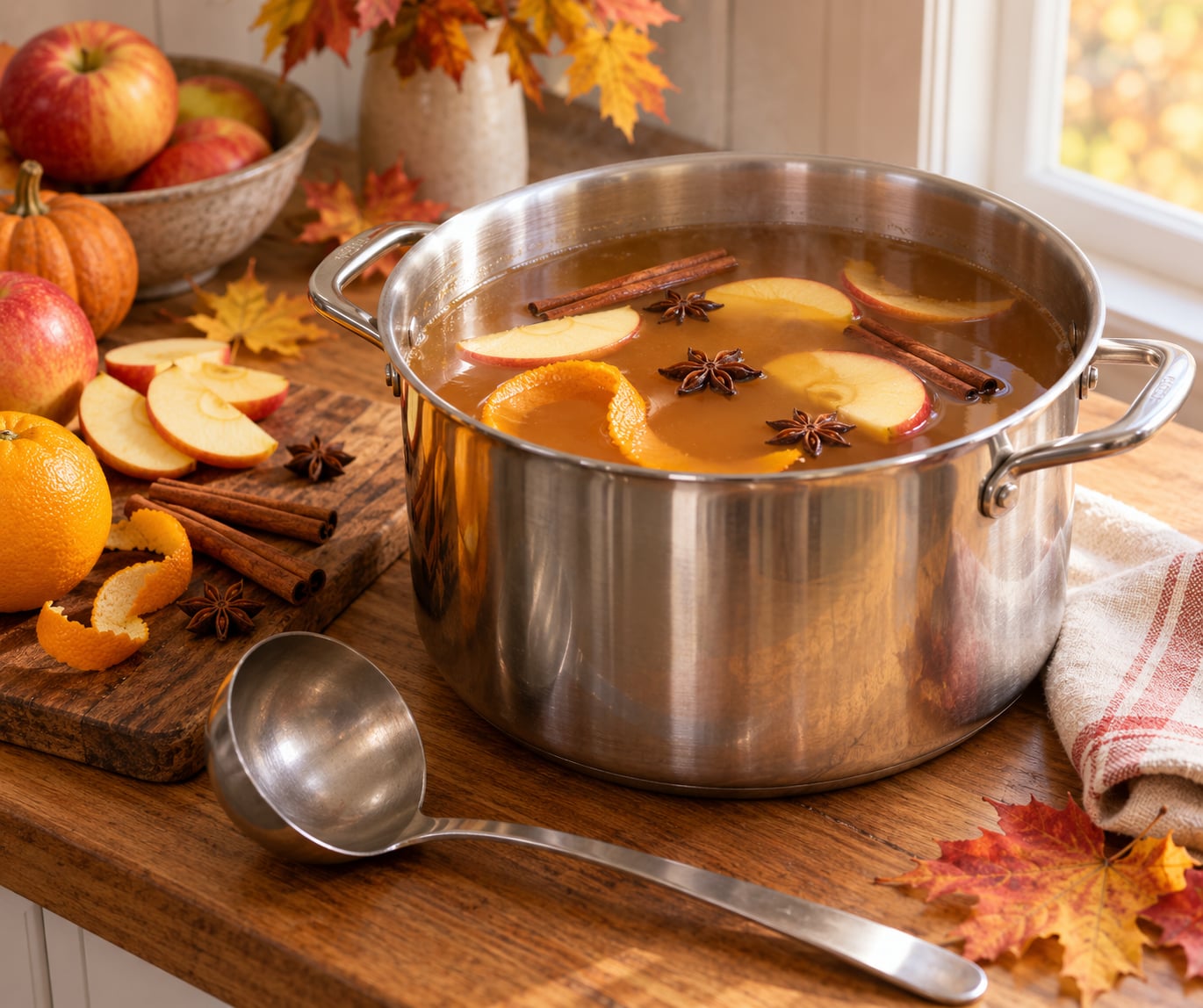
To make hot apple cider, warm 12 cups of apple cider with maple syrup and whole mulling spices on low heat for 10 to 15 minutes. Do not boil it. The gentle heat pulls the aroma out of cinnamon, cloves and citrus peel while the drink simmers, and that is what makes a fall party batch taste like more than warm juice.
This base recipe serves 8 to 10 people, takes about five minutes to assemble, and scales up cleanly for a slow cooker or an Instant Pot. It is the same drink people call mulled cider or spiced cider, so if you have seen three different names for one pot of apples and spices, you are not confused, they are the same thing.
Table of Contents
- What You Need
- The base batch, roughly 8 to 10 servings
- Equipment that actually matters
- Sweetener swaps for a 12-cup batch
- Substitutions that work
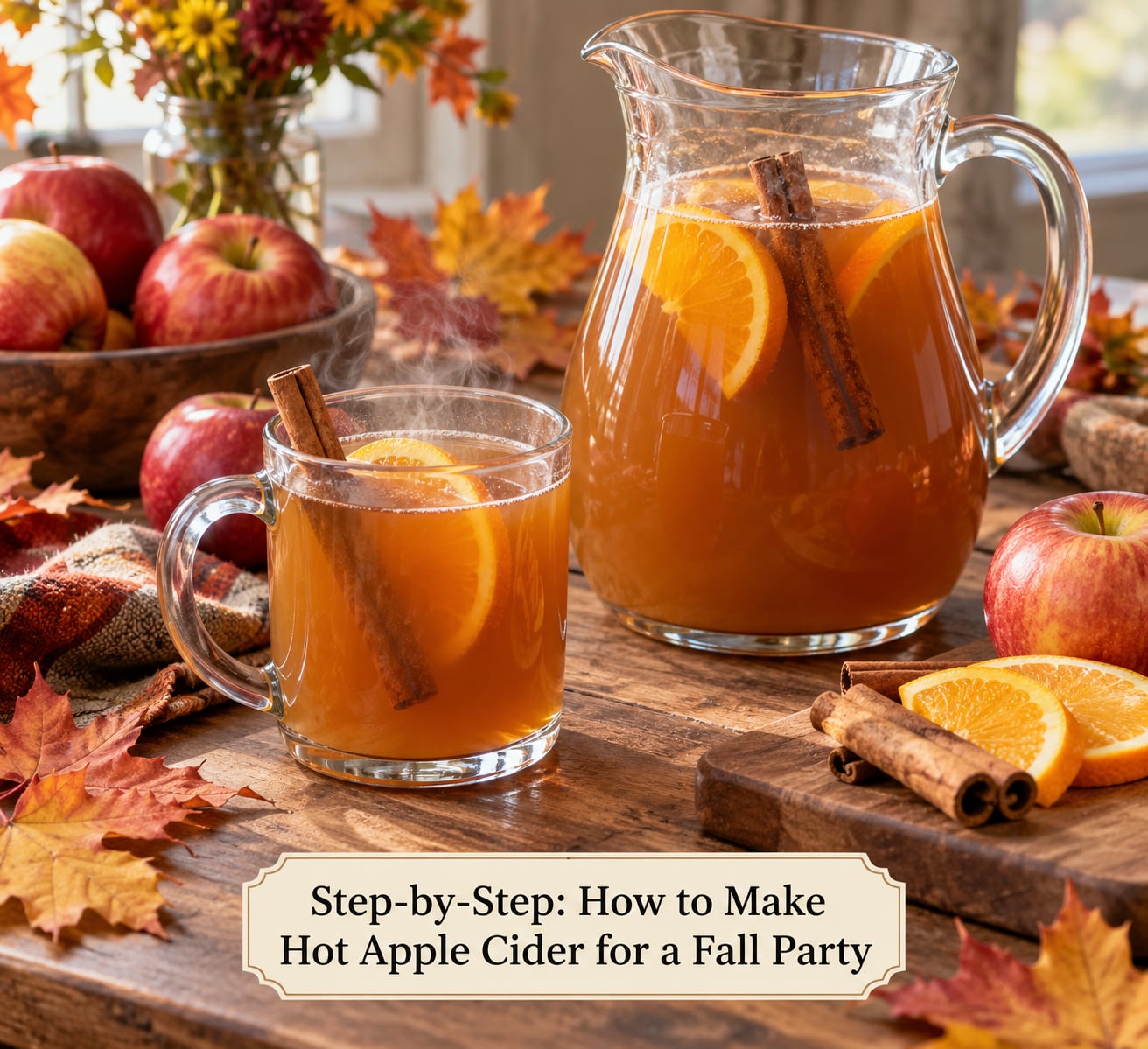
- Step-by-Step: How to Make Hot Apple Cider for a Fall Party
- Choose the Base
- Add the Fall Spices
- Simmer and Finish
- Serve It at the Party
- Common Mistakes
- Frequently Asked Questions
- Can I make hot apple cider without cinnamon?
- What is the best apple juice or cider for hot apple cider?
- How long should hot apple cider simmer?
- Can I make hot apple cider ahead of time?
- How do I keep hot apple cider warm for a party?
- Can I use apple concentrate instead of apple juice?
- Conclusion
What You Need
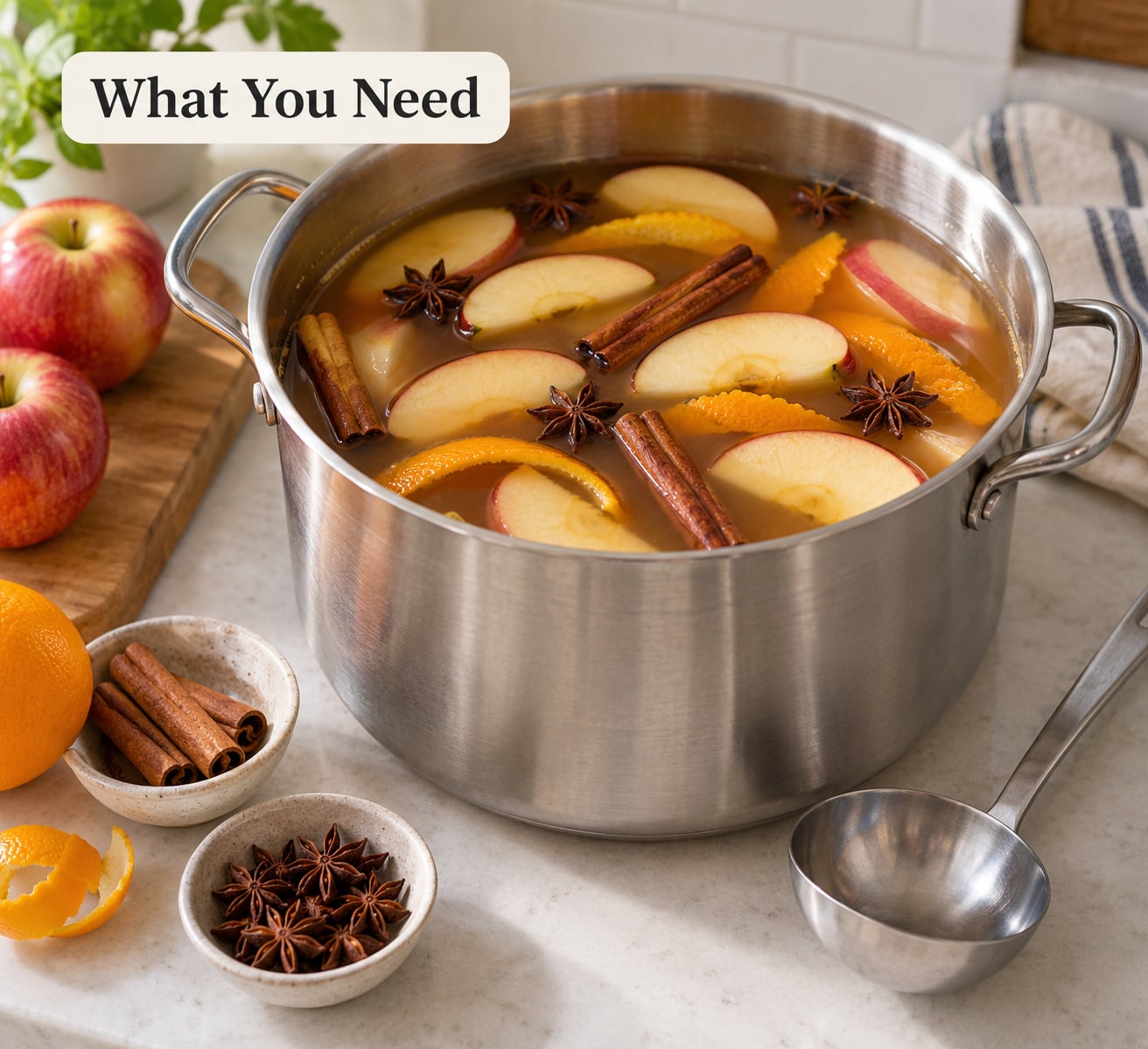
Everything here comes from a normal grocery run plus one piece of equipment you probably own already. Buy the cider and the spices the day before or two days before and store them cold; only the last fifteen minutes involve heat.
The base batch, roughly 8 to 10 servings
- 12 cups (about 1.5 quarts) unsweetened or lightly sweetened apple cider
- 1/2 cup pure maple syrup, or 3/4 cup light brown sugar packed, or 1/2 cup honey
- 2 tablespoons apple juice concentrate, blended in for a deeper apple flavor
- 4 cinnamon sticks
- 12 whole cloves
- 8 whole allspice berries
- 2 star anise
- 1 orange, cut into wide peel strips
- 1 lemon, zest only
- 1 tablespoon fresh ginger, thinly sliced
- 6 black peppercorns
- 1/4 teaspoon ground nutmeg, stirred in off the heat
- A small pinch of fine salt
A 12-cup batch lands at about three quarts of finished cider, which covers 8 to 10 people at six ounces each. That is the right size for a casual fall get-together, a game night, or a Halloween evening where drinks come and go in waves rather than all at once.
Equipment that actually matters
You need a heavy pot with a lid for the stovetop method, a ladle with a handle long enough to keep your arm away from steam, and something to strain into. That is the whole list. A 6-quart pot gives you room to stir without the cider climbing the sides, which is the number one cause of boil-overs in my kitchen.
If you are serving a crowd, a 6-quart or 8-quart slow cooker does the entire job, including keeping the batch warm for hours. An Instant Pot works too, though you need less liquid because less evaporates under pressure.
Sweetener swaps for a 12-cup batch
| Sweetener | Amount | Result |
|---|---|---|
| Pure maple syrup | 1/2 cup | Clean maple note, slightly less sweet per spoon than sugar |
| Light brown sugar | 3/4 cup packed | Molasses flavor, the classic autumn cider taste |
| Honey | 1/2 cup | Floral and light; mild caramel after a long steep |
| Maple plus brown sugar | 1/4 cup each | Roundest option when you have guests with opinions |
| No sweetener | 0 | Sharp and apple-forward; add a squeeze of lemon if it flattens out |
Cider varies a lot between brands, and that is why the syrup is a starting point rather than a rule. Taste a cup of the raw cider first, then decide. Farm-style cider that is tart and slightly fizzy needs more sweetener than pasteurized grocery cider, which is already sweet enough on its own.
Substitutions that work
Cloudy apple juice works in place of cider and costs less, though you will lose some of the depth. Apple juice concentrate thinned with water is the opposite trade, so do not add undiluted concentrate to the pot unless you want syrup. Frozen juice concentrate, thawed, is an easy way to keep a batch from tasting thin.
Skip a spice and nothing collapses. Cinnamon is the one worth keeping. Orange peel can swap for a second lemon, or for a wide strip of grapefruit peel if you want the batch to taste less sweet. Star anise has no real substitute, and one is plenty, because two turn the pot soapy. Ground spices work, and you add them at the very end, because ground cinnamon and nutmeg go bitter fast.
Step-by-Step: How to Make Hot Apple Cider for a Fall Party
Choose the Base
Measure 12 cups of cider into your pot before you turn on any heat. Tasting it cold at this point is the step people skip, and it is the step that decides whether your batch lands right.
Whisk in the maple syrup or brown sugar with about a cup of cold cider first, then stir that slurry back into the pot. Dissolving sweetener in cold liquid keeps it from settling into a sticky layer on the bottom, which scorches before the cider even reaches temperature. Add the apple juice concentrate and the pinch of salt at the same time.
What you are looking for before heat goes on is a cold blend with no graininess at the bottom and no visible sweetener streaks. It will taste flat and thin, and that is exactly right. Flavor builds in the next step, not before it.
Add the Fall Spices
Now comes the aromatic layer, and this is where hot apple cider separates itself from plain warm juice. Tie the whole spices into a small square of cheesecloth if you want an easy removal later, or drop them straight in if you plan to strain the whole batch through a fine-meshed sieve before serving.
Whole spices for a 12-cup batch:
| Spice | Amount | Flavor note | Remove before serving? |
|---|---|---|---|
| Cinnamon sticks | 4 | Warm and woody, the backbone | Yes |
| Whole cloves | 12 | Intense, slightly numbing; bitter if steeped long | Yes, always |
| Allspice berries | 8 | Round, clove-like, mellow | Yes |
| Star anise | 2 | Licorice sweetness, festive smell | Yes |
| Orange peel | 1 whole peel in strips | Bright citrus lift | Yes |
| Lemon zest | 1 lemon | Sharper citrus, cuts sweetness | Yes |
| Ginger slices | 1 tablespoon | Warm heat in the background | Yes, or leave for a milder batch |
| Peppercorns | 6 | Subtle floral bite, surprise favorite | Yes |
| Ground nutmeg | 1/4 teaspoon | Nutty finish | No, stirred in off the heat |
Cinnamon, cloves and orange peel go in at the start of the simmer because they need time to give something up. Ground nutmeg and any powdered spice go in at the end, off the heat, because ground particles have already released everything they have and will keep turning bitter if they cook.
Aromatics only come out when liquid moves around them. If you want a deeper batch on the stovetop, give the pot one or two very gentle stirs at the two-minute mark instead of leaving it alone.
Simmer and Finish
Bring the pot to temperature over medium heat, then drop the burner to low. You are aiming for a gentle simmer: steam rising, a bubble or two breaking the surface every few seconds, and no rolling movement. That lands you under 212 degrees Fahrenheit, which is the temperature at which cider starts tasting cooked.
Give the batch 10 to 15 minutes. Taste at the 10-minute mark with a clean spoon, and if you can taste the cloves without straining, you are close. Strain through a fine-meshed sieve into a pitcher or your slow cooker, fish out any whole spices that slipped through, and stir in the nutmeg.
Taste again and correct in this order. Too sharp means a squeeze of lemon or a splash more maple. Too sweet means a splash of unsweet cider or water, no sugar reduction. Too thin means a 10-minute uncovered simmer with the lid off, which thickens without adding syrupiness. Too thick means warm cider and water, mixed while warm.
| Method | Time | Setting | Best batch | Difficulty |
|---|---|---|---|---|
| Stovetop | 10-15 minutes | Low, just below a boil | Up to 12 cups | Easy |
| Slow cooker | 3-4 hours | Low | 12-24 cups | Easiest |
| Slow cooker, faster | 1.5-2 hours | High, then drop to warm | 12 cups | Easy |
| Instant Pot | 20 minutes | High pressure, natural release | 6-8 cups | Easy |
| Overnight cold steep | 8-12 hours | Refrigerator, no heat | Any size | No cooking |
The overnight cold steep is the one to know about for a party. Put the cider, sweetener and whole spices in a lidded container in the fridge overnight and stir it in the morning. The flavor is cleaner and spicier than anything you can get in fifteen minutes, and it costs you nothing but counter space the night before.
For a slow cooker, fill no more than two-thirds of the insert and never heat the crockpot insert on a stovetop. For an Instant Pot, drop the liquid by a cup because pressure cooking sends off steam you would rather keep in the pot.
Serve It at the Party
Plan six to eight ounces per guest for a two to three hour party, which is about three quarters of a cup per person. Twenty guests means roughly two gallons, and a fifteen percent buffer on top of that saves you from running dry at nine o’clock.
| Guests | Finished cider needed | Cider to buy | Vessel |
|---|---|---|---|
| 6 | About 3 quarts | 1 half-gallon jug | 3-quart pot |
| 10 | About 5 quarts | 2 half-gallon jugs | 6-quart pot or 4-quart crockpot |
| 20 | About 2 gallons | 3 gallons to be safe | 8-quart crockpot or two 6-quart pots |
| 40 | About 4 gallons | 5 gallons | Two 8-quart crockpots, start them in sequence |
To keep the batch hot, choose one of four setups. A slow cooker on its warm or low setting is the workhorse and will hold a batch for hours. A thermal carafe keeps a filled pitcher hot for roughly two to three hours and is the cleanest option for a table. A warming tray works, though it dries the surface if you leave it on too long. Pre-warmed mugs help more than people expect, because a cold mug drops the temperature of everything you pour into it.
Whatever you use, do not bring the cider back to a boil to refresh it. Hold it at steaming, ladle out what the room needs, and refill. Reheating repeatedly flattens the aroma and concentrates the sweetness at the bottom of the pot.
Set up a small garnish station and people will serve themselves without dripping: thin apple slices, orange wheels, cinnamon sticks, fresh cranberries, and a shallow bowl of cinnamon sugar for mug rims. A wooden tray with a few jars looks better than a plastic bin, and it takes two minutes.
For the food, keep it simple. Sweet pairings are cider donuts, apple cake and cinnamon biscuits. Savory pairings are cheddar and brie with crackers, roasted pecans, and candied nuts. For a crowd with kids, popcorn, apple slices and small sandwiches work, and you serve the non-alcoholic batch in the same pitchers as everyone else rather than treating it as the second choice.
Add alcohol at the ladle, not in the pot. Bourbon, whiskey, spiced rum, brandy and dry white wine all pair well with apple, and one to two ounces per serving is plenty. Pouring it into the simmering pot cooks most of it off, and adding it to a big batch an hour ahead leaves it unevenly mixed.
Common Mistakes
The cider tastes burned. The pot boiled, or the sweetener sat on the bottom too long. Once cider scorches it does not recover, so start over. Next time dissolve the sweetener in cold cider first, keep the burner on low the entire time, and stir every few minutes.
It is far too sweet. You added maple syrup to cider that was already sweet. Add a cup of plain unsweet cider and taste again. You cannot take sugar back out of a pot, which is why the cold taste test at the start is worth the thirty seconds it takes.
It tastes thin and watery. You used apple juice instead of cider, or you boiled it down too far and nothing was left to thicken. Fix thinness with an uncovered low simmer for ten minutes. Cider has no starch and no thickener, so reduction is the only lever, and a syrupy result means you went too far.
It tastes bitter or soapy. Too many cloves, or the cloves sat in there too long. Ground spices and whole cloves are the usual culprits. Strain out every whole spice and let the batch cool, then cover it with more unsweet cider to dilute.
It tastes flat with no spice character. You added spices to cold cider and served it without enough time. Heat is what releases the oils, so a ten-minute gentle simmer is not optional. For the next batch, cold-steep overnight in the fridge and reheat gently.
It looks cloudy or pulpy. You strained too late, or you pressed pulp through the sieve. Pour through a fine-meshed sieve and leave it alone. A little sediment at the bottom of the pitcher is fine, since apple cider is not a clear liquid.
A few habits fix most of the rest. Tie whole spices in cheesecloth instead of fishing for them with a spoon at a party. Measure spices by counting rather than guessing, because a tablespoon of ground cloves is a completely different thing than six whole ones. Make the batch a day ahead, refrigerate it covered, and reheat to steaming rather than boiling. Expect slightly softer aroma from a reheated batch, which is a small price for a party that runs on schedule.
On food safety, refrigerate cider within two hours of serving, and use it within about four days. Skip unpasteurized fresh cider for a party with small children running around; fresh cider can have a strong laxative effect, and regulations on it vary by state. Set the crockpot on a stable surface away from the reach of kids, and keep the hot liquid station at one end of the table with a clear ladle and a towel under it.
Frequently Asked Questions
Can I make hot apple cider without cinnamon?
Yes, and the drink is still good, just less like a holiday movie. Cinnamon is the most recognizable note, so if you leave it out, lean harder on the orange peel, cloves and ginger to build aroma. Use the same amounts for everything else, keep the ten to fifteen minute simmer, and the result tastes more like warm spiced apple than mulled cider.
What is the best apple juice or cider for hot apple cider?
Any unsweetened or lightly sweetened apple cider works. Fresh-pressed unfiltered cider tastes the most complex, and pasteurized grocery cider is more consistent when you are making twenty-plus servings. Cloudy apple juice is an acceptable cheaper swap and will taste a little flatter. Taste the cider cold before adding sweetener, since brands vary widely.
How long should hot apple cider simmer?
Ten to fifteen minutes on the stovetop over low heat, keeping it just below a boil. That is long enough for the cinnamon, cloves and citrus peel to give up their oils without scorching the drink. A slow cooker on low takes three to four hours, high takes one and a half to two, and an Instant Pot takes about twenty minutes.
Can I make hot apple cider ahead of time?
Yes, and for a party it is the smarter plan. Simmer the batch a day ahead, cool it, cover it and refrigerate. Reheat gently to steaming the day of the party, never to a boil, so the aroma stays intact. You can also cold-steep the cider and spices in the refrigerator overnight and warm it later for an even cleaner spiced flavor.
How do I keep hot apple cider warm for a party?
Use a slow cooker on its warm or low setting, a thermal carafe, or a warming tray, and pre-warm your mugs. Plan on six to eight ounces per guest, so twenty people need about two gallons with a buffer. Never bring the batch back to a boil to refresh it, and remove the whole spices before serving so nobody fishes them out of their cup.
Can I use apple concentrate instead of apple juice?
You can, with care. Undiluted apple juice concentrate is a syrup, and using it straight will make your cider cloying. Add two tablespoons of thawed concentrate to a twelve-cup batch for extra apple depth, or thin full-strength concentrate with equal parts water before it goes in the pot. Adjust the maple syrup down when you use it, since concentrate is already sweet.
Conclusion
Start with the base: 12 cups of cider, maple syrup, and whole cinnamon, cloves, allspice, star anise, orange peel and ginger. Simmer it gently for 10 to 15 minutes, strain out the whole spices, then taste and adjust the sweetness before anything else goes in. That single step separates good cider from the flat, sweet stuff that sits in a pot all night.
From there it is just hosting. Pick your vessel, use six to eight ounces per guest, hold the batch at steaming rather than boiling, and put the alcohol at the ladle so both lanes of guests get a good glass. Tweak the spice amounts each season as you go and the recipe keeps working.