If you have wondered how to make black pasta look creepy, the answer is simpler than most recipes make it sound. A genuinely jet-black base, a pale garnish that makes the darkness read as a design choice, and one or two props that say Halloween out loud. Cook the pasta, tint it while it is still wet and glossy, then plate it on something dark and finish with white cheese, red sauce and green herbs. Most disappointing Halloween pasta fails at the saucing, not the coloring.
Table of Contents
- What You Need
- Step-by-Step: How to Make Black Pasta Look Creepy
- Choose a Coloring Method to Make Black Pasta Look Creepy
- Cook the Pasta Until It Is Firm and Shiny
- Color and Sauce the Pasta
- Add Contrasting Spooky Details
- Plate and Serve It for Maximum Creepy Impact
- Common Mistakes
- Frequently Asked Questions
- How can I make regular pasta black without food coloring?
- What is the best way to color cooked pasta black?
- Does squid ink make pasta taste fishy?
- Should I add black food coloring before or after cooking the pasta?
- How do I keep black pasta from turning grey or watery?
- What toppings look best on black pasta for Halloween?
- Conclusion
What You Need
The nice thing about this dish is that the shopping list is short, and half of it is optional.
- Pasta: spaghetti or linguine, because long strands take sauce and color evenly and twirl into a tall nest. Short shapes like penne work too, but they read as a side dish rather than a centerpiece.
- A blackening agent: squid or cuttlefish ink, food-grade activated charcoal, black gel food coloring, or a naturally dark sauce such as black sesame or black garlic paste.
- A sauce: a dark one keeps the look intact. Brown butter with sage, a squid ink aioli, or a slow-reduced squid ink and garlic sauce all hold their color.
- Contrast garnish: shaved parmesan or pecorino, mozzarella pearls, red tomato or berry sauce, flat-leaf parsley or chives, halved black olives.
- Props: button mushrooms for carving skulls, small meatballs for eyeballs, and edible blood made from corn syrup and beet or berry juice.
- Tools: a wide pot, a spider or slotted spoon, a mug or small bowl for twirling, and a wide shallow matte plate.
You do not need activated charcoal, a piping bag, or a food processor. If you are making this for kids, drop the props and keep the contrast garnish; that alone does most of the work.
Step-by-Step: How to Make Black Pasta Look Creepy
Choose a Coloring Method to Make Black Pasta Look Creepy
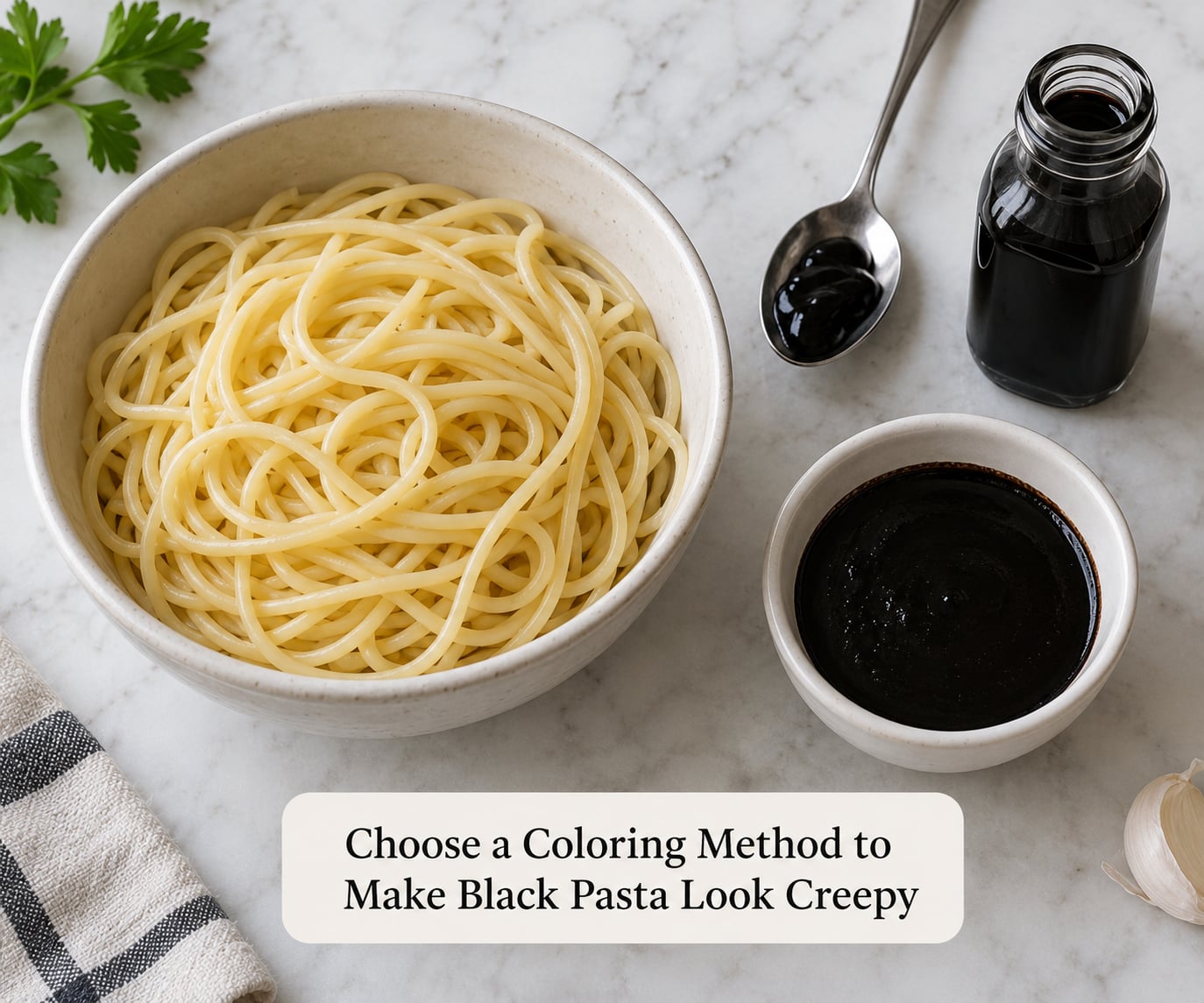
There are four ways to get from beige pasta to black pasta, and they differ more in flavor than in color.
| Method | Color payoff | Flavor impact | Best for |
|---|---|---|---|
| Squid or cuttlefish ink | True black, glossy, holds up in a photo | Slightly briny, savory, adds umami | Adult parties and anyone who wants the real thing |
| Food-grade activated charcoal | Matte, deep black | Neutral to faintly earthy | A vegan or shellfish-free table |
| Black gel food coloring | Deep black with a small amount of liquid | None | Kids, and the cheapest reliable route |
| Black sesame or black garlic paste | Charcoal grey rather than black | Nutty or sweet and garlicky | A subtler, more elegant spooky dinner |
For most Halloween hosts, a sachet or small bottle of squid ink is the simplest reliable option. One packet colors a batch of water or sauce without fighting you, and the briny note reads as intentional rather than odd. Gel coloring is the best backup if nobody in the room eats shellfish; a single dropper in a cup of pasta water goes further than you would expect, but add it a little at a time because gel stains and is hard to undo.
Activated charcoal is the sleeper option. A quarter teaspoon per serving colors water jet black with no flavor and no seafood. Just buy food-grade, labeled for consumption, and skip it for small children, where it is generally advised against.
Cook the Pasta Until It Is Firm and Shiny
Undercook it by a full minute and the noodles stay firm enough to hold their shape when you tint and twirl them. Drain one minute earlier than the package says and save a mug of the cloudy pasta water before you drain; that starchy water is what will glue the sauce to the pasta instead of letting it slide off.
How do you know it worked? Lift a strand with tongs. It should hold its curve without snapping, and the surface should look slick, not dusty. If the strands are soft and splitting, they will turn to paste once you start stirring in color.
Color and Sauce the Pasta
Put the drained pasta back in the warm pot for one minute. Add the coloring a spoonful at a time, tossing constantly, then add a splash of the reserved pasta water to loosen and emulsify. A thick, glossy sauce distributes through the strands far more evenly than a thin one, and gloss is half of what makes the dish look wet-dark instead of dry-black.
Do not dump a whole sachet in and stir once. That gives you an uneven bowl with grey streaks and one inky clump, and it is the single most common way this dish goes wrong. Add in thirds, tossing to coat each time, and stop once the color reaches the darkness of wet asphalt rather than pure printer ink.
Add Contrasting Spooky Details
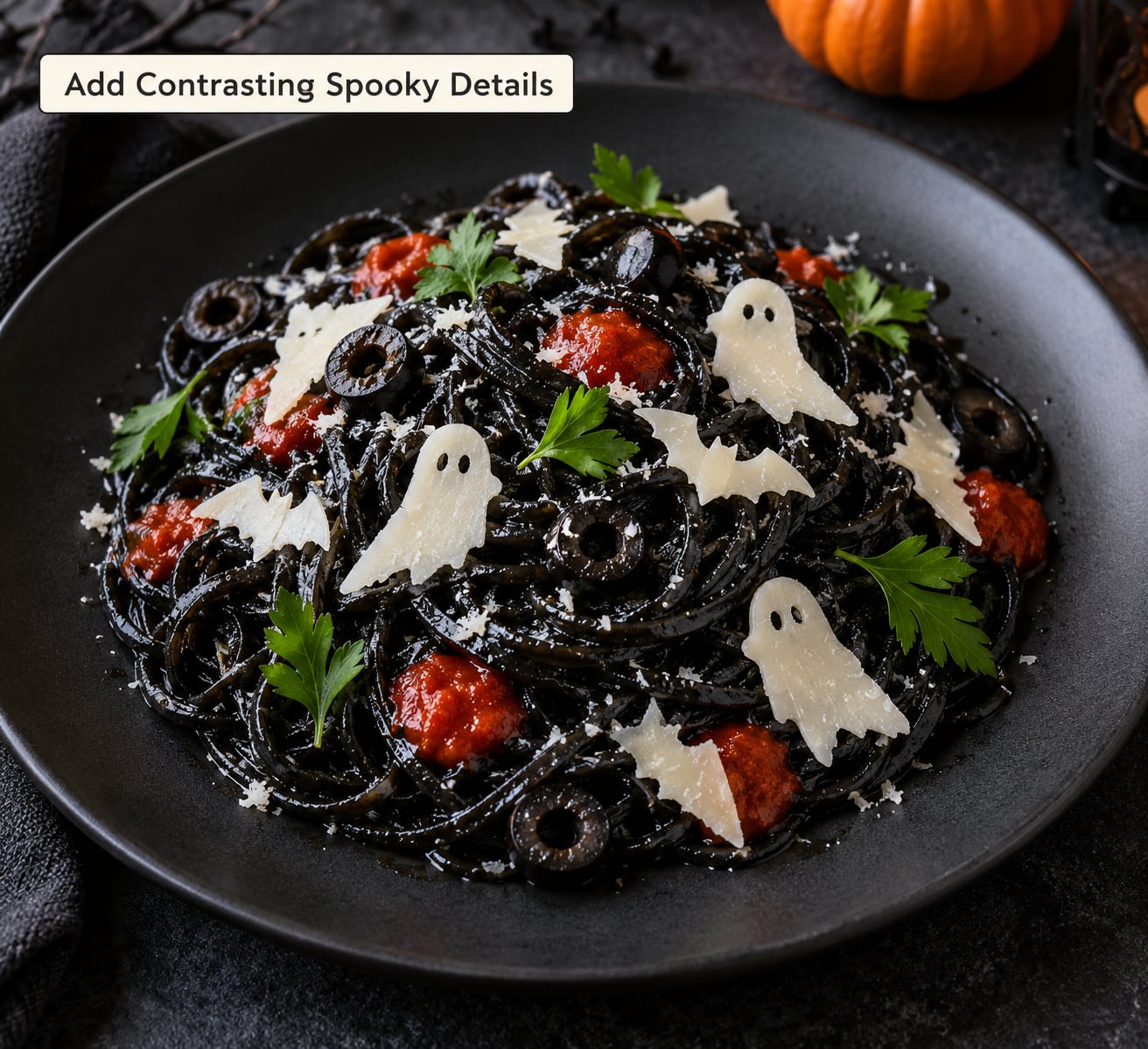
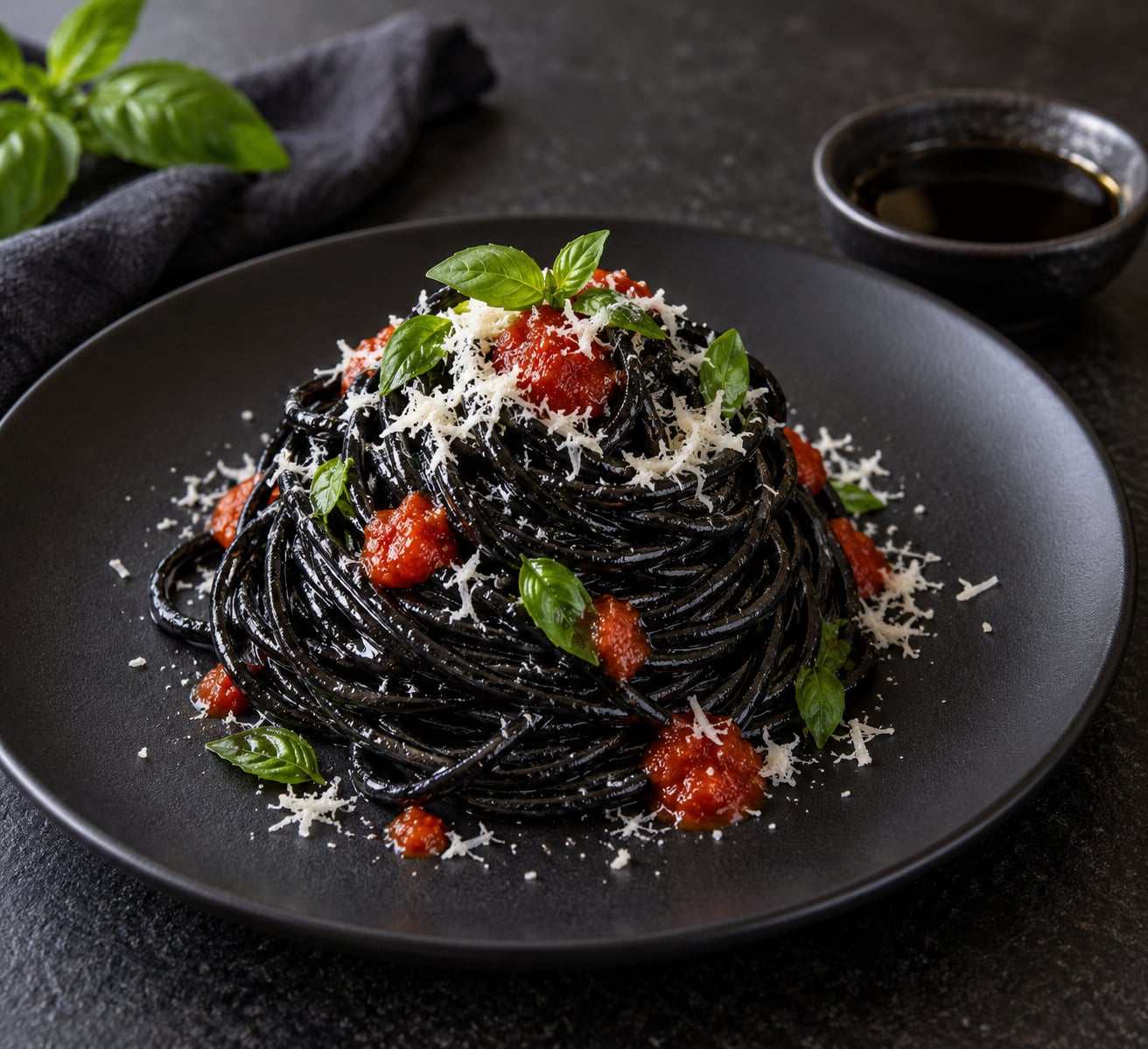
Contrast is what turns black food from an error into a statement. Rule of thumb: every garnish should be the opposite value of the pasta. Pale cheese shavings read instantly against black. A single dot of red sauce in the center of the nest lands like a wound. Chopped parsley or chives scattered on top looks like hair. Halved olives give you shape and shine.
Some of those ingredients also change how the dish tastes. Parmesan adds salt and crunch. Parsley and basil bring a green, herbal note that softens the briny ink. Red berry or tomato sauce adds sweet-sour brightness and cuts the ink. Black olives and soy sauce push it further toward savory. Save a few purely visual props, like the sauce dots and the olive halves, for the plate rather than the pot.
Plate and Serve It for Maximum Creepy Impact
Light a plate with a matte dark surface, matte black or charcoal, so nothing competes with the pasta. A white plate bleaches the whole thing into grey and a glossy plate throws a bright reflection across the center where you want the darkness to be.
Twirl instead of spreading. Put the pasta in the mug, press it down with a fork, lift it out with the fork and set it in the middle of the plate. You get a nest about two inches tall that stays wet in the middle and dry-looking at the edges, which is exactly the read you want. Spoon a little sauce into the center, dot with red, and shave cheese over the top last so it falls visible.
For a casual dinner, that nest on a dark plate with two garnishes is enough. For a centerpiece, build height: set the nest on a ring of sauce, prop a carved mushroom skull against one side, add three meatballs as eyeballs on top, and let the sauce run over the edge of the plate. Light the table with candles rather than overhead bulbs, since flat light flattens the whole thing.
If you are photographing it, put the light low and to one side. Overhead light on black food gives you a grey, dusty image; side light gives you the wet, glossy look people click on.
Common Mistakes
Using too much coloring at once. Gel and ink both stain and both go from perfect to inky fast. Add in thirds, tossing fully each time, and stop while it still looks slightly too dark.
Coloring cold, dry pasta. Dried noodles drink color unevenly and turn blotchy. Go straight from the colander back into the warm pot with a splash of pasta water.
Skipping the pasta water. A watery sauce runs off and leaves the pasta dull. The starch in that reserved cup is what emulsifies the sauce into a glossy coat that clings.
Picking garnishes that disappear. Black olives on black pasta, or dark mushrooms, or blackened cheese. Everything you add should be dramatically lighter or brighter than the noodles.
Plating flat on a white dish. A low, spread-out mound under bright light looks like a photo mistake. Twirl for height, use a matte dark plate, and light it from the side.
A couple of extra tips. If you are cooking ahead, stop the noodles a minute early, dress them with the sauce while still hot, and add the reserved water before storing; reheated pasta that dried out goes grey no matter how much color it started with. Reheat with a splash of water in a covered pan rather than in a microwave, which dries the surface. And if you are serving a buffet tray, hold it over a warm water bath and give the sauce a stir every twenty minutes, because the top of a tray is where color and gloss disappear first.
One safety note. Squid and cuttlefish ink come from mollusks, so treat it as a shellfish ingredient: label the dish if you are serving a party, and use charcoal, black sesame or food coloring instead if a guest has a shellfish allergy. If you add meatballs, cook ground meat to 160 degrees Fahrenheit, and keep any raw meat off the garnish plate.
Frequently Asked Questions
How can I make regular pasta black without food coloring?
Squid or cuttlefish ink is the classic answer, and a single sachet will color a whole batch of pasta water or sauce for a natural briny flavor. Food-grade activated charcoal is the second option: about a quarter teaspoon per serving turns cooking water jet black with no flavor at all. Black sesame paste or black garlic paste give you a charcoal grey rather than true black, which suits a more elegant spooky dinner. All three work on plain dried pasta without any special equipment.
What is the best way to color cooked pasta black?
Put the drained noodles straight back into the warm pot and tint them there, tossing continuously. Add your coloring in three or four small additions rather than all at once, tossing fully between each, and loosen with a splash of the starchy water you saved from cooking. Heat and moisture are what spread the color evenly; cold dry pasta drinks color in blotches. Stop when the noodles look a shade darker than you want, because the sauce will dilute them.
Does squid ink make pasta taste fishy?
Squid ink tastes briny and savory rather than fishy, and it adds a mild umami depth that works well with garlic, butter and chili. Most people describe the flavor as pleasant and savory, though a small percentage find it an acquired taste. If you want to soften it further, brown the garlic gently and finish with lemon zest or a squeeze of juice. Dry pasta is more absorbent than fresh, so the ink flavor comes through a little stronger there.
Should I add black food coloring before or after cooking the pasta?
After cooking, always. Raw dried pasta takes on color unevenly and can dye the cooking water without coloring the noodles properly. Boil the pasta plain, save a mug of the starchy water, drain it, and then tint the noodles in the warm pot with a little of that water. Gel coloring needs far less than liquid because it is more concentrated, so add it by the drop while tossing and stop before the water looks like printer ink.
How do I keep black pasta from turning grey or watery?
Keep the sauce thick and glossy rather than thin, because a watery sauce slides off the noodles and leaves them looking dusty grey. Save the starchy pasta water and use it to emulsify the sauce into the pasta in the pot instead of pouring a thin sauce on top. If the dish is sitting out, give it a stir and a splash of water, and avoid reheating it uncovered in a microwave, which steams the moisture off the surface. A glossy sauce re-wets dull noodles on contact.
What toppings look best on black pasta for Halloween?
Anything pale or bright, placed so it reads clearly against the noodles. Shaved parmesan or pecorino, mozzarella pearls, halved black olives, chopped flat-leaf parsley or chives for hair, and dots of red tomato or berry sauce all work. Carved button mushroom skulls and small meatballs styled as eyeballs add recognizable Halloween shapes. Keep the number of garnishes to three or four so the dish still reads as pasta rather than as a pile of props.
Conclusion
Start with the pasta: boil it a minute early, save a mug of the water, then tint the noodles in the warm pot a spoonful at a time until they read as wet asphalt. Build the contrast next with pale cheese, a dot of red and a scatter of green herbs, and only then add props. Darkness on its own just looks like a plating error; it is the contrast and the presentation that make it creepy.