Learning how to trick or treat in the rain comes down to four changes to a normal night: a waterproof layer over the costume, a sealed treat bag instead of a cloth one, reflective gear so drivers see you at dusk, and a short route with a quick exit. Rain does not cancel Halloween, but it does change what you carry and how long you stay out.
Most families spend about 15 minutes getting ready and can handle a wet night in costume without anyone shivering by the second doorstep. The trick is deciding before you leave whether you’re walking, driving, or staying in, and packing for the one you picked.
Table of Contents
- What You Need to Trick or Treat in the Rain
- Step-by-Step
- 1. Check the Weather and Neighborhood Conditions
- 2. Build a Rain-Ready Trick-or-Treating Kit
- 3. Choose Clothing and Footwear That Work in Wet Weather
- 4. Plan a Safe Route and Backup Plan
- 5. Protect the Costume, Phone, and Treats
- 6. Make the Route Work When Rain Changes the Plan
- Common Mistakes That Ruin a Rainy Halloween Night
- Frequently Asked Questions
- Is it better to go trick-or-treating in the rain or wait for another night?
- How can I keep candy dry while trick-or-treating in the rain?
- Should children carry umbrellas while trick-or-treating?
- Can we drive trick-or-treating through a rainy neighborhood?
- What should I do if there is lightning while trick-or-treating?
- How can I keep a Halloween costume from getting ruined in wet weather?
- A Rainy-Night Safety Checklist
What You Need to Trick or Treat in the Rain
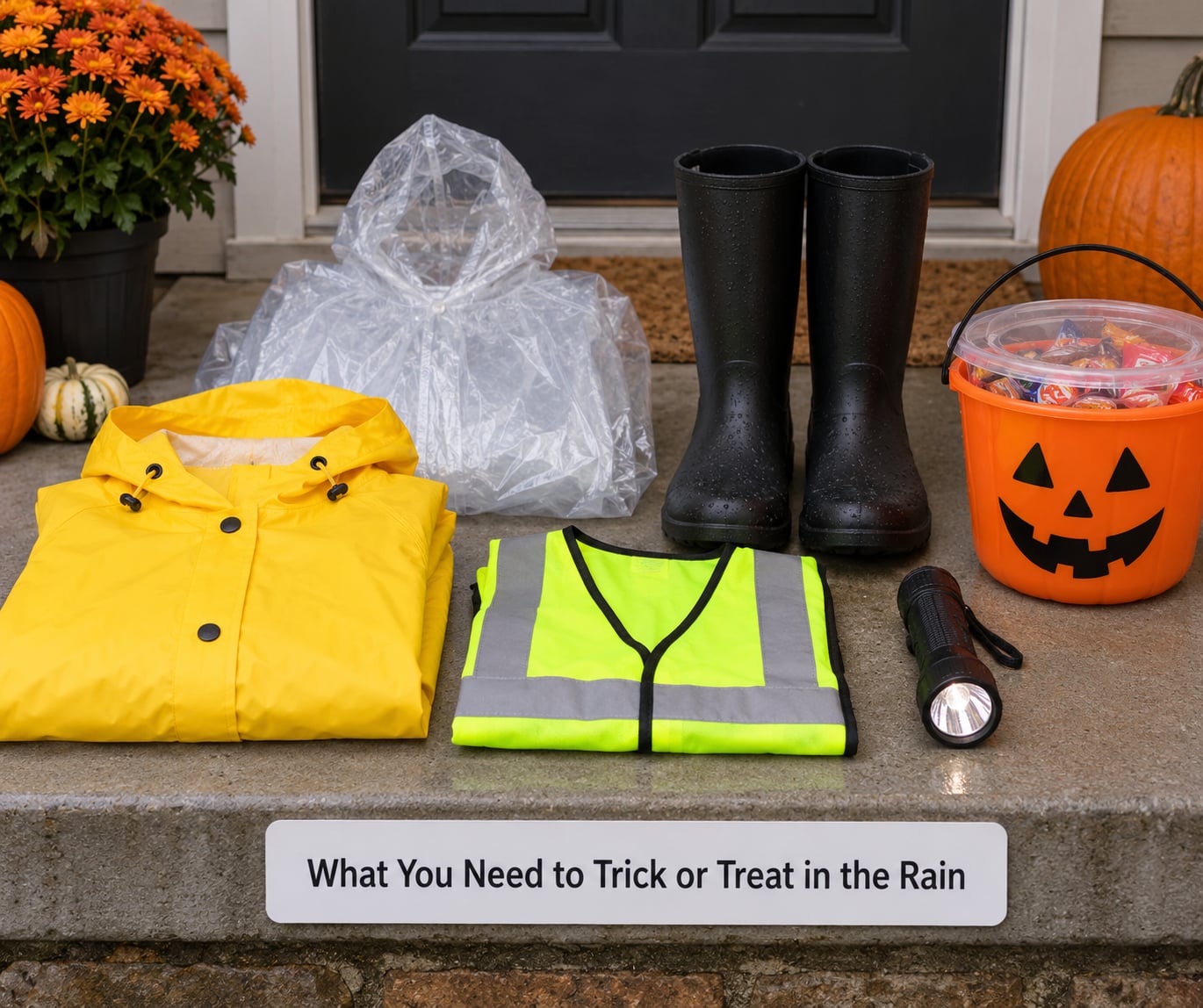
Pack these items into one bag or basket so nobody has to hunt for gear at the door. Most of it lives in a closet year-round.
- A waterproof outer layer: a clear poncho, a costume cape, or a hooded rain jacket that fits over the costume
- A waterproof treat bag, or zip-close bags inside a regular bag for double protection
- A headlamp or flashlight, plus spare batteries in a pocket
- A charged phone in a waterproof pouch or a zip bag
- One change of socks and a small towel in a sealed bag
- Reflective tape, a reflective vest, or a light-colored strip on the treat bag
- An ID card with an adult’s name and phone number for every child
- Warm layers: a fleece or sweater under the costume, hand warmers, and a thermos for cold rain
- A backup indoor option and a meeting point in case you turn back early
A waterproofing spray for fabric costumes is worth keeping on hand, but test it on an inconspicuous spot a day ahead. It repels light drizzle; it will not save you from a downpour, and it can stain synthetic material.
Step-by-Step
1. Check the Weather and Neighborhood Conditions
Open the hourly forecast for your exact trick-or-treat window instead of the daily high and low. Look at when the rain starts, whether wind is gusting, and how cold it feels at 7 p.m., then compare that with your town’s official trick-or-treat hours.
Run through the conditions before you commit:
- Drizzle or mist: go. A rain poncho and sealed bag handle this easily.
- Steady rain: go with the full kit. Wet leaves and pavement make footwear the deciding factor.
- Downpour: keep it short, drive instead of walking, or move indoors.
- Thunder with lightning: stay inside. You will not hear thunder well enough to count the gap between strikes.
- Flooded streets, downed lines, or a wind advisory: do not go out at all.
Notice how the neighborhood looked an hour ago. Standing water in a low spot, a storm drain backing up, or branches down tell you more than any forecast icon.
2. Build a Rain-Ready Trick-or-Treating Kit
Assemble the kit the night before so departure takes under a minute. Put everything in one waterproof tote: poncho or cape, headlamp, spare batteries, phone, reflective tape, ID cards, extra socks, towel, hand warmers, and the treat bag with its zip bags inside.
Charge the phone fully and download the map of your route in case the signal drops in a dead zone. Tell the children who is carrying the phone, who has the flashlight, and who holds the treat bag, so nobody drops a flashlight into a puddle at the third house.
3. Choose Clothing and Footwear That Work in Wet Weather
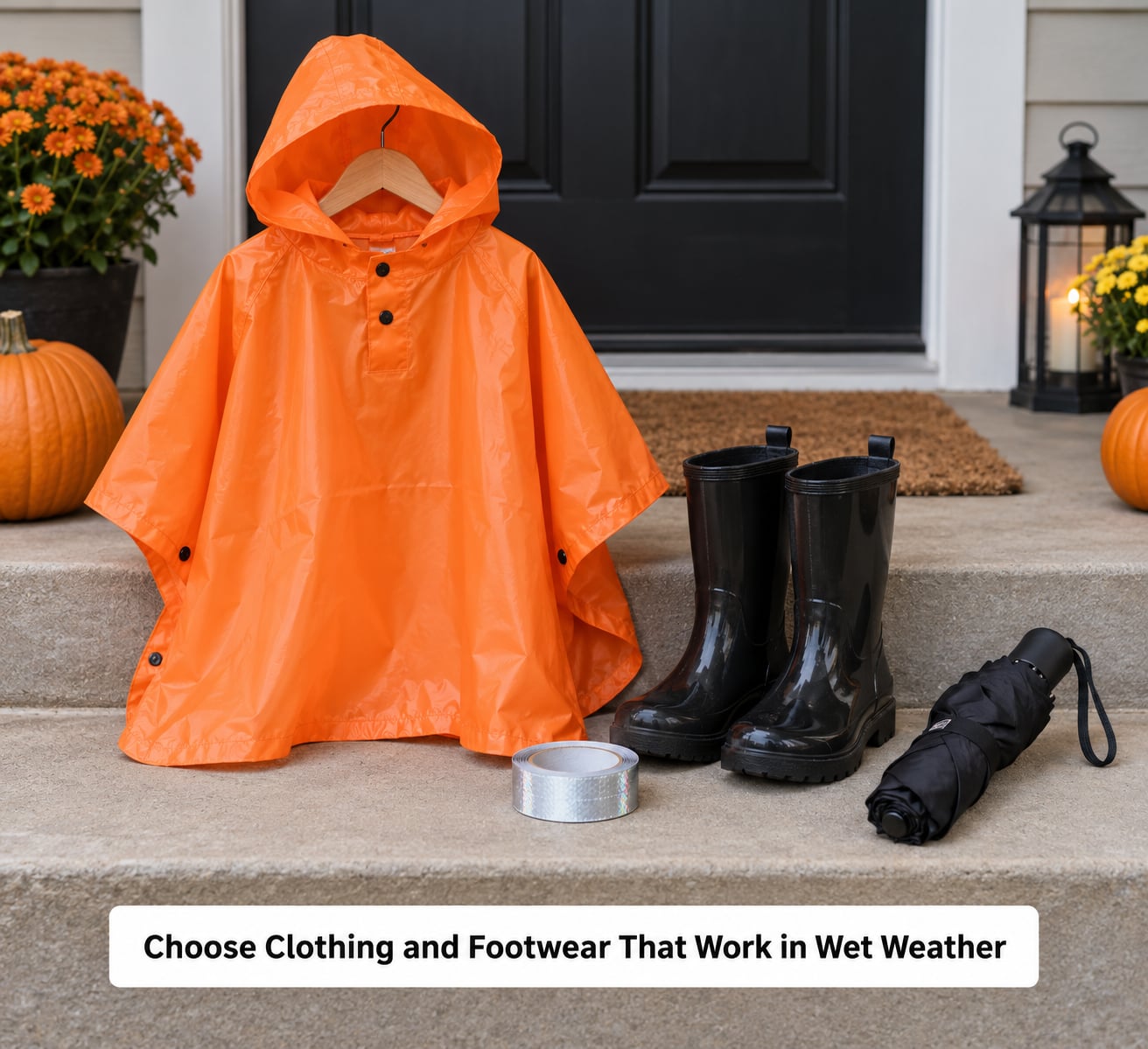
Footwear decides whether the night is fun. Sneakers soaked at 6:30 p.m. end the outing early, so pick shoes with a grippy rubber sole that will not slide on wet leaves or painted pavement. Rain boots are the safest choice, and waterproof sneakers come a close second if boots are too warm to wear for two hours.
Your rain layer does not have to hide the costume. A cape, a hooded jacket, or a clear poncho with a few Halloween stickers on it can read as part of the outfit, and it gives you something to shrug out of at the door. Umbrellas are the tricky option for kids: one hand ends up gripping the handle while the other carries a bag that gets heavier by the house.
Skip anything that drags or soaks. Long fabric trains, feathered wings, and papier-mâché pieces absorb water, weigh more every minute, and stay wet for hours indoors. A foam or inflatable piece is fine as long as it fits through doorways and the wearer can see clearly.
4. Plan a Safe Route and Backup Plan
Choose streets you know, with streetlights on and houses close to the sidewalk. Wet night visibility drops fast, and reflective tape on a bag or vest does more for safety at dusk than any costume detail.
Pick two indoor options before you leave: a mall or shopping center running an indoor trick-or-treat hour, or a trunk-or-treat event at a school or community center. Many malls mark participating windows with a Halloween sign, and some hand out allergy-free or non-food treats, which is worth knowing if a child has food allergies.
Set a turnaround time out loud before leaving. Pick a real hour, like 7:45 p.m., and treat it as the point when everyone goes home regardless of how many houses you reached. Share your route and destination with another adult who is not on the walk, and agree on one meeting point in case the group splits.
5. Protect the Costume, Phone, and Treats
Waterproofing the costume means covering electronics, fabric trim, and makeup. Face paint is the first casualty, so use makeup that is labeled water-resistant, set it with a translucent powder, and keep a damp cloth nearby for cleanup instead of rubbing at a streak.
Put your phone in a zip bag with the top squeezed shut, or in a dry pouch worn under the poncho. A soaked phone is the one problem you cannot solve halfway down the block.
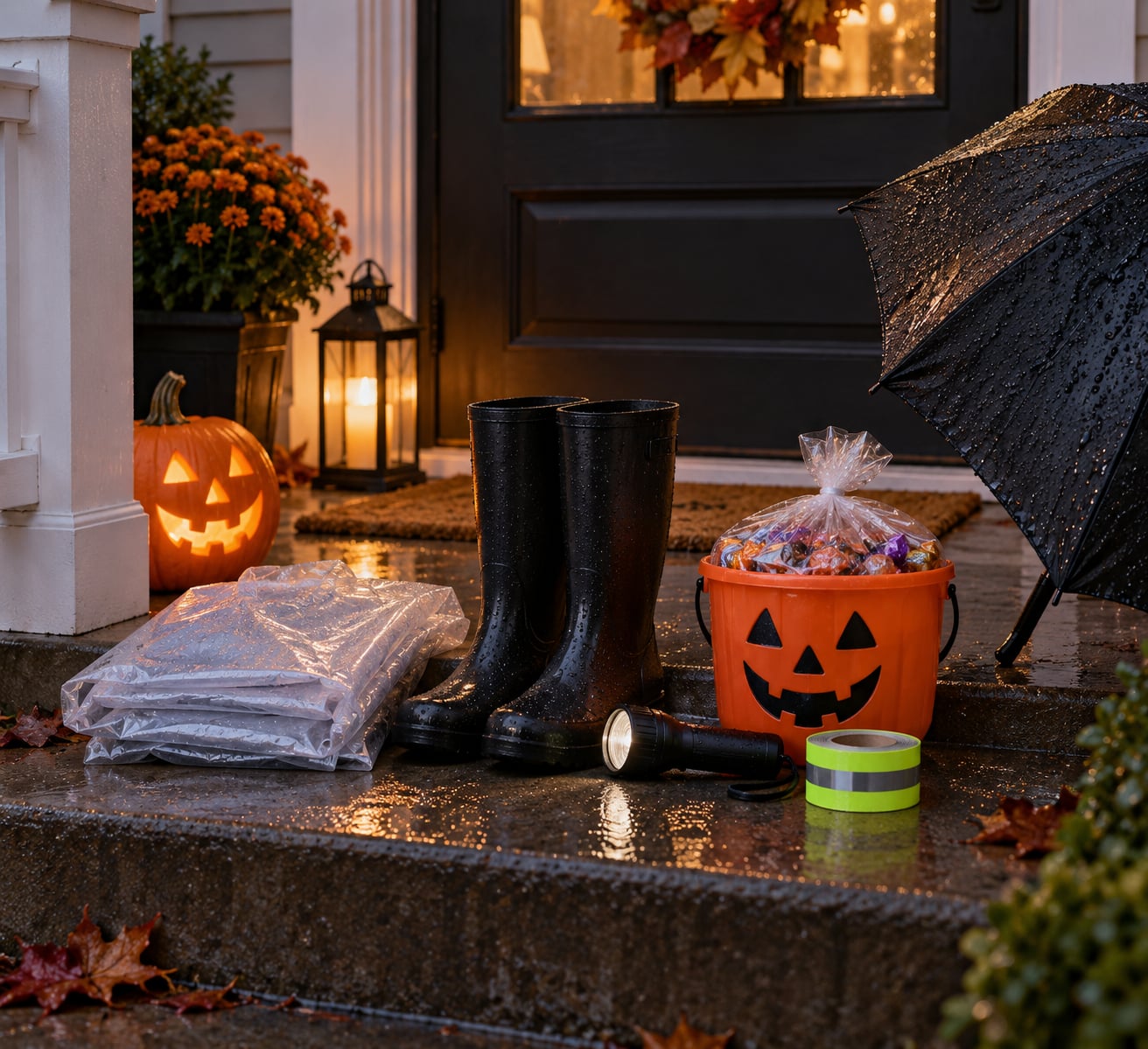
For candy, use a waterproof treat bag or a bucket with a sealed lid, and put a zip bag inside any paper or cloth bag. If a wrapper tears, assume that piece is a loss. Chocolate and anything with a glossy wrapper that looks swollen, dull, or bleached should be tossed, and the same goes for anything with a wet smell or a torn seal. Small candy bars survive a damp bag; filled chocolates and cookies usually do not.
6. Make the Route Work When Rain Changes the Plan
If you cannot get indoor trick-or-treating, the night still works with adjustments. Cut the route to one or two blocks of houses that are participating and stay close to home. Walk in a tight group, keep to the sidewalk, and step off the curb before you talk at a door.
Driving through a neighborhood works too, but stay in the car at low speeds with four-way flashers on so other drivers can see you pulling out. Trunk-or-treat in a parking lot keeps everyone near a car and out of the traffic lane. A home party, a haunted-house walk, or a movie night in the house is a reasonable answer when the rain turns serious.
Know the difference between an official postponement and your own decision. Towns and police departments sometimes move trick-or-treating to a different night for storms or safety, and local announcements usually land the afternoon of the 31st. Staying home without an official call is still a fine choice when the forecast is bad.
Common Mistakes That Ruin a Rainy Halloween Night
Almost every bad rainy Halloween traces back to one of these fixable choices.
- Thin costume shoes. Wet pavement turns smooth soles into skates, and soaked feet end the night. Fix: wear boots or waterproof sneakers with a grippy sole, and pack dry socks.
- A phone that cannot get wet. Rain in a treat bag reaches a phone in seconds. Fix: zip bag or dry pouch, carried by an adult rather than a child.
- An umbrella that blocks the view. A low umbrella means a child steps into the street unseen. Fix: hands-free poncho or cape, umbrella only for adults who can see over it.
- No flashlight batteries. Streets without streetlights get darker when the clouds thicken. Fix: headlamp plus a spare set of batteries.
- Walking the flooded route. Standing water hides curbs, drains, and drop-offs. Fix: pick another street, and skip the block entirely if water is over the sidewalk.
- Pushing past cold and tired kids. Shivering and wet socks are the real deadline, not the clock. Fix: use the turnaround time you set earlier and go home without debate.
- Treating wet candy as fine. A swollen or torn wrapper is a reason to throw it out. Fix: double-bag treats and sort the haul when you get home.
- Waterproofing a costume the same evening. Sprays need time to dry and can stain. Fix: spray a day ahead, test a hidden spot, and let it cure indoors.
One more that catches people: leaving the costume in the car or a cold garage after the walk. Wet fabric plus chill air means the costume can still be damp at breakfast. Hang it up, turn on a fan, and lay it flat on a towel.
Frequently Asked Questions
Is it better to go trick-or-treating in the rain or wait for another night?
Go if the rain is light or steady and your child has waterproof layers, grippy footwear, and an indoor plan you are willing to use. Wait when there is lightning, flooding, high wind, or an official postponement. You can also shorten the outing and treat on the way back, which keeps the tradition without a soaked costume. Children who are cold and miserable remember the night as a bad one, not a brave one.
How can I keep candy dry while trick-or-treating in the rain?
Use a waterproof treat bag with a sealed lid, or put zip-close bags inside a cloth or paper bag so there are two layers between the candy and the rain. Hold it upright rather than tilted, keep it under the poncho, and bring it inside before you open it. When you get home, discard anything with a torn wrapper, a swollen bar, or a damp, faded look, especially filled chocolate and cookies.
Should children carry umbrellas while trick-or-treating?
Usually not. Kids need both hands free for a treat bag that gets heavy, and a low umbrella blocks their view of cars and curbs. A poncho or cape is hands-free and keeps the costume visible. If your child insists on an umbrella, choose a clear one held high, pair it with reflective tape, and have an adult carry it instead. Skip umbrellas entirely in wind, where they become a sail.
Can we drive trick-or-treating through a rainy neighborhood?
Yes, and it is a good call in heavy rain or for small children. Drive slowly with four-way flashers on so other drivers see you pulling away from a curb, and let one person out on the sidewalk at a time. A trunk-or-treat in a parking lot is even easier because everyone stays near a car. Check whether your local malls run indoor trick-or-treat hours, often marked by a Halloween sign in participating store windows.
What should I do if there is lightning while trick-or-treating?
Go inside immediately and do not wait it out under a tree, a canopy, or near a metal fence. Lightning can arrive with almost no audible thunder when rain is loud, so you cannot reliably count the seconds between flash and boom. Stay off the phone and away from windows until the storm passes, then check a radar app before deciding whether to head back out.
How can I keep a Halloween costume from getting ruined in wet weather?
Cover it rather than fight it. A rain poncho, costume cape, or hooded jacket worn over the outfit shields fabric, trim, and electronics without hiding the costume. Skip long trains, feathers, and papier-mâché that soak through and weigh more every minute. Treat electronics with painters drop cloth taped over them, and set face paint with powder so it resists drizzle. Hang the costume up to dry indoors when you get back.
A Rainy-Night Safety Checklist
Run through this list before the door opens. If any line makes you hesitate, change the plan rather than the gear.
- Hourly forecast checked for rain start time, wind, and temperature during trick-or-treat hours
- No lightning, no flooding, no downed branches
- Your town’s official hours and any postponement notice confirmed
- Waterproof layer and grippy footwear chosen and sized
- Sealed treat bag with zip bags inside
- Phone charged, in a pouch, and assigned to an adult
- Headlamp plus spare batteries in a pocket
- Reflective tape on the treat bag or a vest
- ID card with an adult’s name and phone number
- Turnaround time agreed aloud, with everyone repeating it back
- Backup indoor option and meeting point decided
- Another adult has your route and destination
The first thing to do is decide before you leave: walk, drive, or stay in. Once the poncho is on, the bag is sealed, and the flashlight is working, the night stops being a weather problem and turns back into Halloween.