Knowing how to read Dracula for the first time comes down to three things: pick a modern-spelling unabridged edition, keep track of whose document you are reading, and promise yourself not to quit during the long stretch set in England. That is all. Bram Stoker’s 1897 novel is famous for being confusing, and it is, but the confusion is mechanical rather than structural, and a little preparation removes most of it.
The bigger risk is quitting. Most first attempts die somewhere between the arrival of the Demeter on the English coast and the final hunt across Transylvania, which is roughly a third of the book and much slower than the Transylvania opening everyone remembers. Readers on r/books and r/52book describe exactly this pattern, including one who failed twice before finishing and still rated the finished book only three out of five.
So this is a reading method, not a plot summary. I will not spoil a single document in the book.
Table of Contents
- What You Need
- Step-by-Step: How to Read Dracula for the First Time
- 1. Choose an Accessible Edition
- 2. Learn the Historical Context
- 3. Keep Track of the Story Structure
- 4. Read for Atmosphere and Clues
- 5. Finish by Revisiting the Opening Documents
- Common Mistakes
- Frequently Asked Questions
- Is Dracula difficult to read for the first time?
- Should I read a modern edition of Dracula with notes?
- Do I need to know anything about Victorian England before reading Dracula?
- How should I keep track of Dracula’s many letters and journal entries?
- Should I avoid spoilers while reading Dracula?
- Do I need a study guide to understand Dracula?
- Conclusion
What You Need
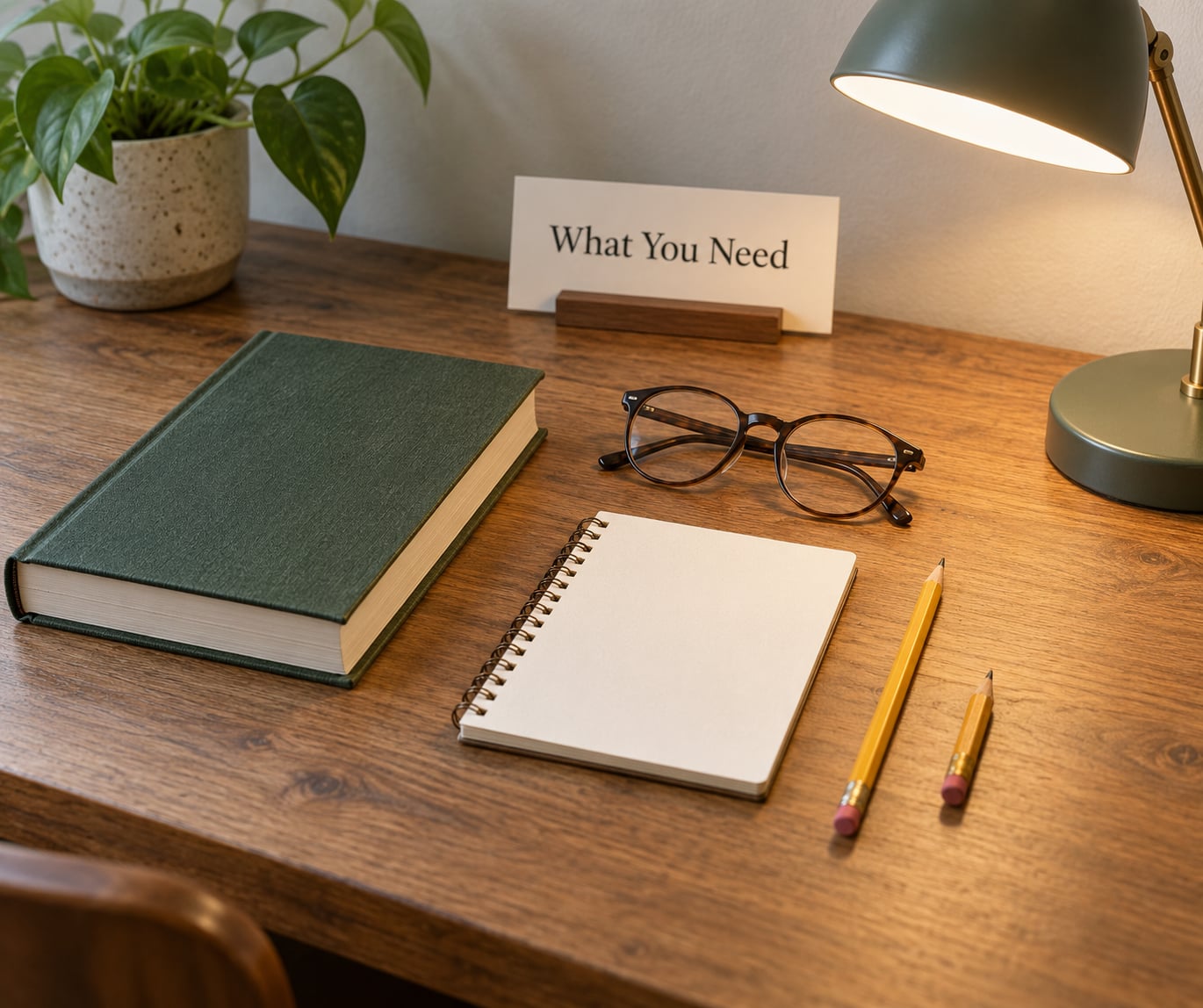
Four things, and one of them is optional. That is genuinely it, because Dracula is a book, not a kit.
- A modern-spelling, unabridged edition. Anything published in the last twenty years will do. The text is public domain, so the differences are packaging, notes and price rather than content.
- A place to track names and dates. A cheap spiral notebook is better than nothing in it. Dracula has around thirty named characters and covers most of a calendar year, and you will not hold all of either in your head.
- The free full text. Project Gutenberg, Standard Ebooks and LibriVox all host the novel legally and free. Edition number 345 on Gutenberg is the standard text; Standard Ebooks has a cleaner typeset.
- Optional: twenty minutes of context. A short piece on 1890s Victorian England saves you from stopping mid-chapter to wonder what a phonograph cylinder is.
I would skip the audiobooks at first, actually, unless you know you struggle with focus. A narration can carry you past the slower sections, but it also stops you doing the one thing the book rewards: going back three pages when a document turns up again. Come back to audio after your first attempt.
Step-by-Step: How to Read Dracula for the First Time
1. Choose an Accessible Edition
Choose a complete text in modern spelling with no modern paraphrase, and read the introduction if the edition has one.
The old printing quirks are the part worth leaving behind. Early editions use long s characters, inconsistent capitalisation and spelling changes that make the prose feel stranger than it is. A modern-spelling edition removes that friction without touching a word of Stoker’s actual sentences. Unabridged matters here too, because abridgements cut the documents that carry the plot, not the decorative ones.
What to check on the back cover or in the front matter: a note saying the text is complete or unabridged, a short introduction explaining that the book is made of documents, and a rough word count around 160,000, which is eight to ten hours of reading.
On annotated editions: read the introduction and any notes that explain foreign words, Victorian slang, or references to events outside the novel. Skip anything that summarises or interprets a chapter. Notes are not the problem readers think them to be; spoilers are. Many first-time readers on Goodreads report that the annotated edition made the book easier, provided they did not read ahead.
How you will know you chose well: you reach chapter seven without having to stop and consult a dictionary more than once.
2. Learn the Historical Context
Twenty minutes of background removes most of the confusion, because the book is full of objects a first-time reader has never encountered.
Stoker wrote in the 1890s, when a telegraph could send a message faster than a horse but not faster than a train, and when shorthand, a typewriter and the phonograph were new enough to be interesting. Dracula arrives with a phonograph cylinder and a stack of typed letters, and he is genuinely strange to his own readers, not just to us. That technology gap is part of the horror.
Two other threads are worth ten minutes each. First, the vampire was not a fixed creature in 1897. Stoker’s UnDead predates Bram Stoker’s Dracula, and the vampire folklore he drew on was eastern European and recent, not medieval European and ancient.
Second, the Count has a historical model in Vlad III, the fifteenth-century ruler of Wallachia, known for impaling enemies and for the name Dracula. A reader who knows that the name means something specific in Romanian reads the book differently, more cheaply for it. The novel also leans heavily on current affairs, including a scandal in the 1890s involving a military figure and a Whitby churchyard, which is why one part of the plot lands harder in England than elsewhere.
How you will know it worked: when a character mentions a scientific topic, you hear an argument rather than a random tangent. The book keeps putting a doctor and an occult professor in the same room, and it wants you to notice.
3. Keep Track of the Story Structure
This is the step that matters most. Dracula is an epistolary novel, meaning the entire story arrives through letters, diary entries, newspaper clippings, telegrams, ship logs and transcribed phonograph records, and nobody narrates it straight through.
Two habits fix the rest. When a new document starts, write down two things before you read a word: whose voice it is and what the date is. Then keep the notebook open on the table as you read. That is the whole system.
| Document type | Whose voice | Role in the story |
|---|---|---|
| Journal entries | Jonathan Harker | The opening documents and the castle |
| Ship’s log | The crew of the Demeter | The first document to mention something wrong at sea |
| Letters | Harker, Mina Murray, Professor Van Helsing | Instructions, warnings and disagreements |
| Diary | Mina Murray | The London timeline |
| Casebook and phonograph transcripts | Dr John Seward | A doctor’s notes plus recordings, often contradictory |
| Diary | Lucy Westenra | The document readers argue about most |
| Telegrams and newspaper clippings | Anonymous and Mr Swift, the newspaper owner | Short bursts that arrive out of order |
Now the second habit: the documents are not in calendar order. Dracula was published in serial form, and the sections move between countries and between months. This is why some chapters seem to undo earlier ones. They are not retractions; they are new information arriving later.
Because the date is doing the work, write it down. A spoil-free roadmap helps here, and this is what the shape of the book looks like without giving anything away.
| Part of the novel | Energy level | What to do if you stall |
|---|---|---|
| Chapters 1 to 7 | High. Travel, a castle, mounting dread | Nothing. Enjoy it |
| Chapters 8 to 16 | Drops. Arrivals, diaries, slow menace | Read one or two chapters a day. Keep the notebook going |
| Chapters 17 to 24 | Rises. New information and worse news | Switch to audio if you have to |
| Chapters 25 to 27 | Relentless | Read straight through if you can |
Readers on the Sufficient Velocity spoiler-free thread describe the arc of the middle honestly: it feels repetitive until it does not. The middle is where the fear turns from a threat abroad into something sitting in a drawing room in England. You cannot see that switch while you are inside it.
How you will know you are tracking it: at any point in the book you can say whose voice you are hearing and roughly when that entry was written.
4. Read for Atmosphere and Clues
Dracula rewards reading like a detective, but with a relaxed rule: notice everything, solve nothing.
Notice the names. Characters are introduced and then mentioned in other people’s documents, which means names arrive sideways. When you see a name you have not met, mark it. Notice the places. A country, a town and an abbey get named early and turn up again later, and that is not decorative writing.
Notice the warnings too. Several characters tell somebody not to do something, and the reader almost never takes that advice, which is the whole engine of the plot. If you keep a list of the things people warn against, you will assemble the evidence chain without a summary.
On the middle, a small practical trick: give it a deadline rather than an intention. Readers who abandon Dracula usually set it aside without deciding to abandon it. Read two chapters a day for a fortnight and the flat stretch is behind you.
How you will know it worked: at the end you can point to at least three lines you read quickly in chapter ten that you would read differently now.
5. Finish by Revisiting the Opening Documents
The last step is the one almost nobody takes, and it is where the book turns into a different book.
Go back to Harker’s earliest journal entries and read them again. The castle section reads completely differently once you know what the Count has been doing away from the viewpoint of the book.
Then reread the ship’s log. It is short, and by the end you will be able to line its entries up against what actually happened, which is a genuinely satisfying ten-minute exercise.
Finally, reread Seward’s earliest phonograph transcripts. That is where the doctor explains his own methods in his own words, and his confidence reads very differently at the end of the novel than it does at the start.
How you will know it worked: you find yourself arguing with a character in the past tense.
Common Mistakes
Reading summaries alongside the book. This is the single biggest spoiler risk, and it is not really cheating, it is self-sabotage. Dracula is a puzzle book; a summary solves it for you without the pleasure.
Losing track of the narrator. The fix is small and mechanical: write the name and the date at the top of every new document. Fifteen seconds each, and the whole book becomes readable.
Treating everything as confirmed fact. Characters argue with each other, and the medical opinions in particular are dated and wrong by modern standards. Read Van Helsing’s certainty as a character trait, not as the narrator’s verdict.
Skipping the context. People start the novel knowing nothing about Vlad the Impaler or 1890s European politics and then wonder why the historical passages land flat.
Quitting in the middle without a plan. About a third of readers who abandon the book do it in the England sections. That is not proof the book is bad, it is the structure. Set yourself two chapters a day and pick a finish line.
Being put off by dated material. There is genuine Victorian prejudice in the Transylvania sections, including xenophobia and stereotypes that modern readers rightly object to, and the book has violence with a sexual threat under it. Readers on forums frequently raise this as the reason they hesitate. Dracula is dated in places, and reading it in 2026 means holding that in your head rather than pretending it is not there.
Frequently Asked Questions
Is Dracula difficult to read for the first time?
Less than its reputation suggests. The difficulty is format, not vocabulary: the novel is built from letters, diary entries, newspaper clippings, telegrams and ship logs, and it is not in calendar order. Victorian sentences run long, but almost no word is genuinely obscure. Choose a modern-spelling unabridged edition and write down the name and date whenever a new document starts, and most readers finish it in eight to ten hours.
Should I read a modern edition of Dracula with notes?
Yes, as long as the notes explain rather than interpret. An introduction that tells you the book is made of documents, plus footnotes glossing foreign words and Victorian slang, genuinely help a first-time reader. Skip anything that summarises a chapter or explains a plot point, because that is a spoiler wearing a footnote mark. Read the introduction, skip the interpretive notes, and the book gets easier without giving anything away.
Do I need to know anything about Victorian England before reading Dracula?
No background is required, but twenty minutes pays for itself. Knowing that the telegraph, typewriter, shorthand and phonograph were new technology in the 1890s explains why the Count’s equipment unsettles the people around him. A quick look at Vlad the Impaler, the fifteenth-century Wallachian ruler whose name Dracula comes from, makes the historical passages land. That is it. You do not need to be a historian to read the book.
How should I keep track of Dracula’s many letters and journal entries?
Use one page of a notebook per character and write the date at the top of every entry. When a new document begins, note whose voice you are in before you start reading it, because the story jumps between countries and months without warning. Keeping a separate list of warnings, places and unexplained names means you can assemble the evidence later without rereading the whole novel for clues you missed.
Should I avoid spoilers while reading Dracula?
Completely, and this one has more justification than usual. The book works by hiding and revealing the same fact from different angles, so a single summary can flatten the entire effect. Be careful with reaction threads and short video reviews, which give away more than readers realise. If you want company, a spoiler-free chapter thread or the Dracula Daily newsletter gives you other readers without plot details.
Do I need a study guide to understand Dracula?
No, and a full summary actively works against you here. What helps is a one-page list of who is who and which document type they write in, which you build yourself as you go. Save the summaries and chapter breakdowns for after you finish, when rereading the opening documents makes far more sense than it does mid-book. If you are reading for a class, a critical companion helps with themes, not with following the plot.
Conclusion
Do three things tonight. Grab a modern-spelling unabridged copy, free from Project Gutenberg or Standard Ebooks if you prefer. Set up one notebook page per narrator with a date at the top of each entry. Then start chapter one and stop worrying about the middle, because the middle is a structure, not a failure.
Most people who want to know how to read Dracula for the first time already suspect it will confuse them. It will, a bit. The method above is enough to carry you through, and the second half of the book repays anyone who got that far.