To tell a scary story that actually scares people, you control the gap between what the audience knows and what they do not: give them one specific fear, open in the middle of something happening, hold back the cause, and land a final image before the tension resolves. Most stories that fall flat out loud were fine on paper. The failure is almost always delivery, not idea.
Here is the part most advice skips. Writing a creepy story and telling one are different skills. On paper you control every sentence; out loud the audience controls the silence, and you have nothing but your voice, your pace and the room to work with.
The whole process takes about an hour the first time and five minutes once you have done it a few times. You need no props, no budget and no special effects. What you need is a fear worth being afraid of, and the discipline to stop talking before the room wants to.
Table of Contents
- What You Need
- Step-by-Step: How to Tell a Scary Story That Actually Scares People
- Start With One Specific Fear
- Promise an Uncomfortable Situation
- Open in the Middle of Something Happening
- Use Vivid Details Instead of Gore
- Reveal Less Than You Think You Should
- Control Pacing With Sentence Length
- How to Tell a Scary Story With Your Voice, Not Just Your Facts
- Land the Ending, Then Stop
- Common Mistakes
- Starting With a Long Backstory
- Overexplaining the Monster or Supernatural Event
- Using Gore as the Only Source of Fear
- Forcing Reactions or Rushing the Pause
- Performance and Practice Tips
- Frequently Asked Questions
- How long should a scary story be when I am telling it aloud?
- How do I remember a scary story without sounding like I am reading?
- What is the best voice or tone for telling a frightening story?
- How can I tell a scary story without upsetting listeners who are sensitive?
- How do I make a scary story work for a group instead of just one person?
- Conclusion
What You Need
Five things, and none of them are equipment.
A willing audience. People are easier to frighten when they already agreed to be frightened. Set that up before you start: “everyone, lights off for this one” works far better than an audience that gets ambushed mid-sentence.
A story they can believe. Believable does not mean true. It means the premise fits the world your listeners already live in, so their brain keeps testing it against real logic instead of dismissing it as fiction.
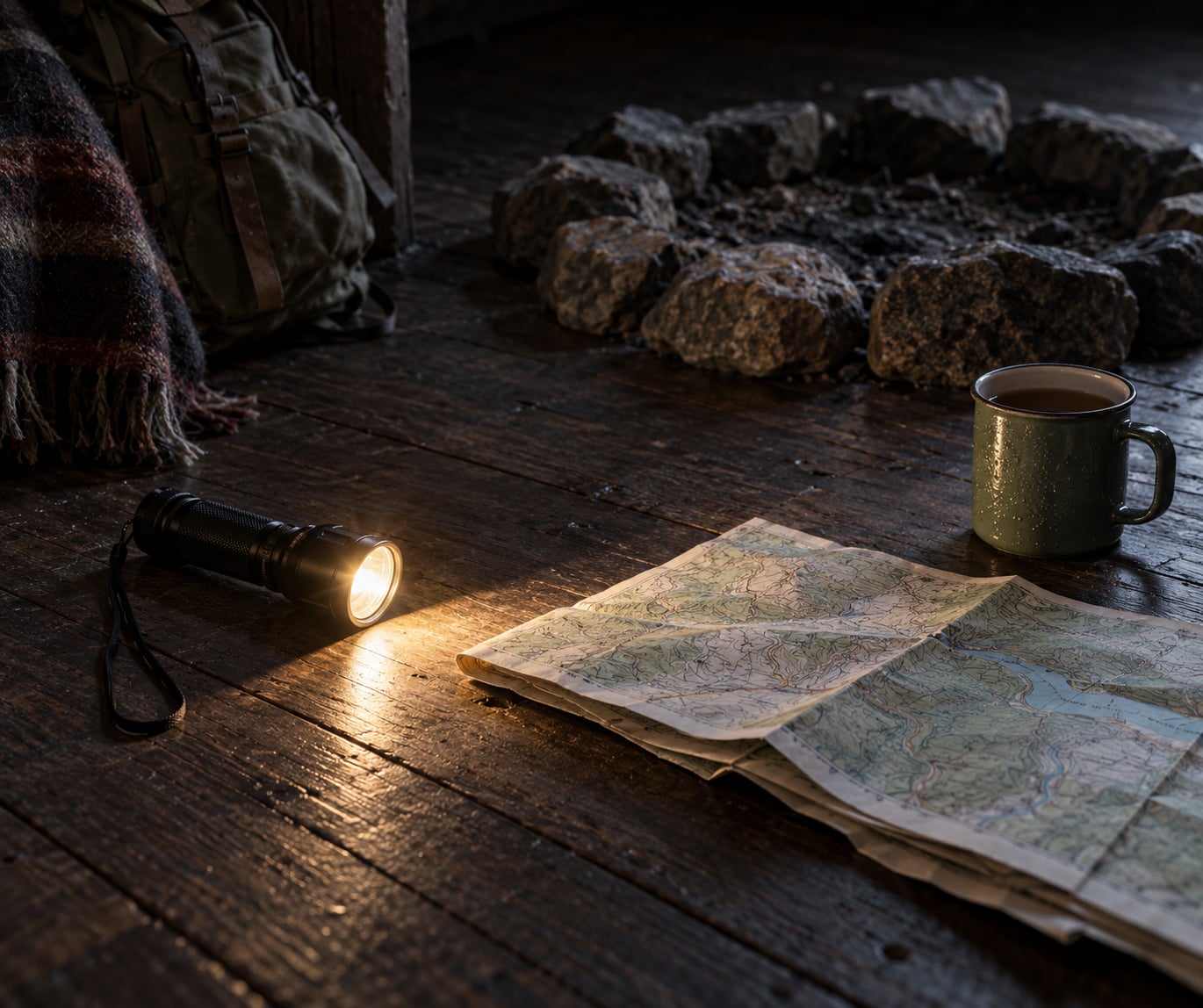
A setting that does half the work. A dark room, a circle of faces lit from one side, a fire or a single flashlight. Repeated stories in forums and campfire threads keep circling back to the same point: the more remote and the darker the setting, the creepier the same story feels.
A practiced draft. Not memorized word for word. Memorize the beats, not the sentences, so you can tell it conversationally instead of reciting it.
A plan for testing the opening. Tell the first two minutes to one friend before you tell it to ten people. That is where you find out whether the hook works or whether you have front-loaded a paragraph of throat-clearing.
Step-by-Step: How to Tell a Scary Story That Actually Scares People
Start With One Specific Fear
Reduce the whole story to a single threat, then make that threat concrete. “Something is out there” is vague and boring. “Someone is watching me and I cannot see them” has teeth, because your listener’s imagination fills in a face for you.
Three that work across almost any age group: being watched, hearing a familiar voice somewhere it should not be, and realising that a safe person is not quite what they seem. A broad monster with a backstory competes with the listener for attention. A specific threat does not.
If you can only describe your fear in a genre word, keep narrowing until you can describe a situation instead. “Body horror” is a genre. “The reflection blinks a half-second late” is a scene.
Promise an Uncomfortable Situation
Establish the danger in the first thirty seconds without explaining where it comes from. The audience should know that something is wrong long before they know what.
An ordinary situation turned slightly wrong does most of the work. Sitting in a parked car waiting for someone. Checking the back seat of a car before putting a child seat in. Hearing your own name said in a room you thought you were alone in. The listener’s brain supplies the cause, and whatever they supply is worse than what you would have written, because they chose it.
Quick checklist for finding your strongest source of fear:
- Does it happen somewhere real and familiar rather than invented?
- Is the threat pointed at one person, not a whole group?
- Can the listener picture one clear image instead of a whole scene?
- Does the danger grow from something already there, rather than arriving from nowhere?
- Could you describe it in one sentence without naming a monster?
Open in the Middle of Something Happening
Begin with action, dialogue or a discovery. Drop your listener into a scene that is already in progress and let them spend the first twenty seconds working out what they missed.
Weak opening: “So my friend Dan and I decided to take a shortcut down the old logging road, which at the time seemed like a totally normal thing to do on a Saturday.”
Stronger opening: “The trouble with the logging road is that there is no exit. Not a turnoff, not a gate. Eighteen miles of gravel and then the county line, and Dan had already gone eleven of them when he asked me why I thought we had passed that truck twice.”
The first version is a setup, so your listener sits back and waits. The second one is a problem, so they lean in. Nothing about the story changed except where the door opened.
Use Vivid Details Instead of Gore
Gore is a blunt instrument and it is easy to outgrow. Sensory specificity is what makes a scene feel like it is happening to the listener rather than being described to them.
Pick three senses and stay with them. Sound does most of the heavy lifting because it works in the dark: a single drip that has no obvious source, the sound of someone else’s breathing in a room you thought was empty, a car that turns into your driveway and does not stop. Then add one tactile detail, usually temperature, because cold is the shortcut to dread: a mug that is cold though the tea in it was hot five minutes ago.
One small wrong detail beats a paragraph of adjectives. “His coat was still on the hook, dry” is more frightening than any description of a ghost, because dry is an ordinary word doing an ordinary thing.
Try this exercise: take a scene and write five sentences, one each for sound, touch, temperature, light and smell. Read them aloud and keep only the two that made your own neck tighten. Those two are the ones that will work on other people.
Reveal Less Than You Think You Should
Every explanation you add hands your listener a closed door. Keep the door open and they will keep walking toward it on their own.
Before: “The sound was a monster growling, a deep low sound like a large animal breathing.”
After: “The sound was low and it kept coming from behind me, and it sounded like something breathing.”
The second version is vaguer, which is exactly why it is worse for you and better for them. Their imagination has somewhere to go, and whatever they picture will be tailored to whatever they are already afraid of at eleven at night.
Three ways to withhold: hide the cause, delay the confirmation, and let a character notice something and then talk themselves out of it. That last one is the strongest, because the audience is waiting for the character to be wrong.
Control Pacing With Sentence Length
Your sentences are your tempo, and tempo is what the audience feels rather than notices. Long sentences build dread. Short ones deliver a shock. The shift between them is what makes people lean forward without knowing why.
Build with clauses that keep adding: “and then, and then, and then” chained into a single breath. Land with three words. A seven-sentence climb followed by “It was already inside” hits ten times harder than a long slow paragraph ending the same way.
The pause is the other half of the tempo. Pause before the word the audience expects, never after. They will finish the sentence inside their own head, and that small act of participation is what makes it feel like it happened to them.
Read-aloud pacing exercise: set a timer and tell the story three times at three speeds. Once at conversational pace to find the plot, once deliberately slow to find where the pauses belong, once fast to find the moments that drag. Most people discover their slowest version is the right one for the reveal and their fastest version is right for the setup.
How to Tell a Scary Story With Your Voice, Not Just Your Facts
Voice is the instrument, and beginners underuse it. Drop your pitch slightly below your normal speaking voice for the whole story. Sit lower rather than standing, so your volume has to travel and the room has to lean in.
Vary one thing at a time and never the whole performance at once. Go quieter. Go slower. Stop moving. Look at one person for a beat too long, then look away and say nothing.
Silence is the hardest thing to hold. Most tellers rush into it because the quiet feels like a mistake, and that rush is exactly what breaks the spell. Count two in your head and keep your mouth closed. It will feel like ten seconds and the room will still be listening.
Delivery drill: record yourself on your phone telling the story cold, listen back, and mark every place you said “um”, “like” or “so”. That filler is what breaks tension, because it hands the room back to their own thoughts. Then tell it again and cut every filler you marked. Three recordings is usually enough to fix verbal pacing for good.
Land the Ending, Then Stop
End on an image, a realisation, or a question you refuse to answer. Then close your mouth and let it sit. The silence after the last line is not dead air, it is the space the audience needs to catch up.
Three endings that work. The image: a physical detail that lands wrong, like the coat that was still dry. The realisation: the character understands something one beat too late, and you cut off mid-thought. The question: you ask something the story never answers, and the listener spends the walk home building their own version.
What does not work is the warning afterward. Any line explaining what just happened hands the audience a tidy ending, and tidy endings drain fear. Stop, look at your drink, and let someone else be the first to speak.
Common Mistakes
Starting With a Long Backstory
The fix: move all background to the smallest detail that still makes sense, then open where the listener can already see that something is wrong. If a fact about the character, the place or the year is not needed for the ending to land, cut it.
Overexplaining the Monster or Supernatural Event
The fix: replace rules, lore and definitive explanations with evidence and partial observation. Describe what the character sees and cannot explain, then stop. Once you define what the thing is, the audience files it away and stops being afraid of it.
Using Gore as the Only Source of Fear
The fix: trade graphic shock for forbidden places, uncertainty, vulnerability, violated expectations and the possibility that something familiar is no longer safe. Gore has a ceiling and a short shelf life. The unfamiliar made ordinary does not wear out, which is why campfire stories that need no monster at all usually outlast the ones with a body count.
Forcing Reactions or Rushing the Pause
The fix: treat silence and facial expressions as the audience’s own response rather than as proof that you are winning. If you stop talking to wait for a gasp, you have handed control of your pacing to a group of teenagers who are checking their phones.
If a story lands flat, the recovery is smaller than people think. Slow down, lower your voice, and continue as though nothing happened. A confident storyteller who was not fazed is more unsettling than one who waits for applause.
Performance and Practice Tips
Learn the beats, not the words. Five or six beats on a scrap of paper is enough structure to tell from memory without sounding like you are reading.
Practise out loud every time. Silent rehearsal only fixes your memory, and the timing problems that ruin a live tell are all in the voice. Tell it three times to an empty room before you tell it to friends, which is the standard advice in the writing communities, and it works.
Time it once. A story told out loud runs about 40 percent shorter than the word count suggests, so a 750-word draft lands near three minutes. If you know the length, you can place the pauses instead of hoping for them.
Warn the room before you start when the material is intense. One sentence at the top, “this one has a body in it”, buys you patience and lets you be more frightening afterwards without anyone feeling caught out.
Calibrate by age rather than guessing. The same premise lands completely differently depending on what the listener already knows to fear.
| Audience | What lands | What to avoid | Sweet spot length |
|---|---|---|---|
| Kids under about 8 | Separation, darkness, being alone, sounds in the house | Death, violence, anything a parent would find hard to explain later | 2 to 3 minutes |
| Tweens and teens | Body autonomy, social exclusion, being followed, things that should not move | Cheap jump scares that break the spell they just built | 3 to 5 minutes |
| Adults | Isolation, loss of control, the familiar turning wrong, slow dread | Excess, cruelty to animals, extended graphic detail | 5 to 12 minutes |
If you are telling to a mixed group, aim at the youngest listener present. Adults will still lean in, and the story stays safe for everyone.
Frequently Asked Questions
How long should a scary story be when I am telling it aloud?
Roughly 300 words per three minutes when you include pauses. Most tellers run long because they add background they no longer need, so draft at the length you want and cut anything that does not change what the listener imagines. A three-minute story suits a sleepover or a school assembly; a campfire can carry eight to ten minutes if the beats keep moving.
How do I remember a scary story without sounding like I am reading?
Memorise the beats, not the sentences. Write five or six notes like she notices the coat, he counts the miles, the sound stops, and tell from those instead of a script. That way you can pause, look around the room and say things slightly differently each time, which is what separates telling from reciting. Record one practice take and cut the filler words you find.
What is the best voice or tone for telling a frightening story?
Quiet, steady and slightly low. Drop your pitch below your normal speaking voice and keep the volume modest so the room leans toward you. Save your loudest moment for the shortest line, then return to almost a whisper immediately afterwards. Consistent calm is unsettling on its own, because a storyteller who is not frightened sounds like they know something the listener does not.
How can I tell a scary story without upsetting listeners who are sensitive?
Warn the room in one sentence before you begin and let anyone step out without an audience noticing. Choose tension over shock: isolation, being watched and the familiar made wrong land hard without graphic content. Avoid extended cruelty, injuries to animals and anything involving a real person. With younger listeners, keep the threat implied and make sure the ending resolves into safety rather than lingering dread.
How do I make a scary story work for a group instead of just one person?
Aim at the youngest person present and the adults will follow. Set the contract up front with lights off and phones away, then ask the room for silence once at the start rather than nagging through the story. Use pauses long enough that the quiet becomes obvious, and keep your eyes moving so no one is singled out. Groups react to each other, so one person’s sharp intake of breath will carry the rest.
Conclusion
To tell a scary story that actually scares people, do four things: choose one specific fear, open inside the problem instead of before it, withhold the cause long enough for the audience to invent their own, and stop the moment the strongest image lands.
Everything else is practice. Tell it three times out loud before you tell it to the group, because that is where the pauses get placed and the filler words get cut. Then write your first three sentences tonight and test the opening on one person. That opening is the part most worth fixing.