Finding good horror shows to binge comes down to a filter, not a recommendation list. Name the subgenre you actually enjoy, count the episodes before you commit, read reaction to episode one without spoiling the arc, and confirm the season reaches a real ending. Then sample a single episode and decide. That takes about twenty minutes and saves you a wasted weekend.
Last checked October 2026. Streaming catalogs rotate constantly, so treat any platform detail here as a starting point rather than a guarantee.
Most people asking this question are not new to horror. They have already seen the obvious picks that every thread repeats, and they are tired of being handed the same ten titles. What they are missing is a repeatable way to sort a catalog of hundreds down to something they will finish.
It helps to know why the genre is awkward to browse. Horror series have to earn their dread across eight or ten hours, and the genre has a high abandonment rate. Strong first seasons get renewed, and the later seasons often dilute the payoff. Shows get cancelled mid-arc. Trailers oversell. Any method worth using has to account for that.
Table of Contents
- What You Need Before You Start: Access, a Scare Limit, and a Place to Keep Notes
- How to Find Good Horror Shows to Binge: A Seven-Step Process
- 1. Decide What Kind of Horror You Want
- 2. Set Your Scare and Story Preferences
- 3. Check the Episode Length and Season Commitment
- 4. Look Beyond the Total Score
- 5. Verify Where the Show Is Streaming
- 6. Watch One Episode Before You Commit
- 7. Build a Binge-Ready Shortlist
- Common Mistakes That Waste a Weekend
- Frequently Asked Questions
- What is the best way to find a new horror series to binge?
- How can I find horror shows that are not too scary?
- Where can I check if a horror show is streaming?
- Are short horror series good for binge-watching?
- How do streaming services decide which horror shows to offer?
- Conclusion: Pick the Subgenre, Then Check the Commitment
What You Need Before You Start: Access, a Scare Limit, and a Place to Keep Notes
You need three things, and none of them cost anything.
First, a way to watch. That is a streaming subscription, a cable package, a rental service, or a library card with a digital lending program. Subscribers on a platform you do not own cannot use that platform’s catalog, so knowing what you have access to narrows the field before you start scrolling.
Second, an honest limit on graphic content. Horror covers everything from dread with almost no violence to body horror and torture that runs for minutes. People regularly abandon a show in episode two because it went further than they wanted, then assume the genre is not for them. It may simply have been the wrong subgenre.
Third, a way to keep track of candidates. A note on your phone is enough. Give each show four fields: title, subgenre, episode count, and where it streams. Tracking by service and subgenre is what makes step seven fast later.
How to Find Good Horror Shows to Binge: A Seven-Step Process
Work through these in order. Skipping ahead is what produces the mismatched picks that waste your weekend.
1. Decide What Kind of Horror You Want
Start with subgenre, because horror is not one thing. Psychological horror works through suspicion, unreliable narrators, and characters you doubt. Supernatural horror deals with ghosts, possessions, and rituals. Slasher and crime-linked horror follow a killer and a procedural. Found footage presents events through recovered recordings. Folk horror draws on rural customs and old rituals that are never fully explained. Body horror deals with transformation and physical wrongness. Zombie and outbreak horror is slower, lonelier, and more about decay than shocks.
Search each category separately. Most recommendation lists mix all of them into one ranking, which is why the same show keeps being suggested to people who hated it.
One category is routinely skipped: grounded horror with no supernatural explanation at all. Viewers in the r/televisionsuggestions threads ask for it constantly, describing criminals, cults, monsters, and pure dread with no aliens or ghosts. It is the hardest genre to find because the marketing calls it something else.
2. Set Your Scare and Story Preferences
Now pick your delivery mechanism. Jump-scare horror fires sudden shocks and works in shorter bursts. Slow-burn dread builds quietly over an episode or a whole season, and it frustrates people who want escalation. Character-driven horror leans on performance and dialogue, with the horror almost secondary. Black comedy and horror satire run jokes into genuine danger, which is the option that works well with a partner who does not scare easily. Graphic horror involves sustained gore and torture.
Add two more filters while you are here. Do you want horror played straight, or with comedy and camp mixed in? And do you mind subtitles? Foreign-language horror gets recommended far more freely in series than in film, and viewers are usually happy with subtitles. If you are, the catalog roughly doubles.
Write the two or three combinations you will accept. “Slow-burn psychological, no graphic gore, subtitles fine” is a filter that eliminates most of the catalog instantly.
3. Check the Episode Length and Season Commitment
This is the step people skip and regret. Find the episode count and runtime before you press play, then multiply. Eight episodes at forty-five minutes is about six hours, which is a committed Saturday. A ten-episode hour-long series is closer to ten hours and will not fit in a weekend.
Then establish the ending type, and this matters more than any rating.
A limited series is built to finish. It has a defined episode count from the start, and the story resolves. An anthology series resets with new characters each episode or each season, so you can stop at any point without losing an arc. An ongoing series is built to continue, which makes it a gamble.
The ongoing category is where the genre’s famous trap lives. A first season that ends on a cliffhanger forces a second season, and the second season frequently has a different creative team, a different tone, and a worse payoff. Check whether the show has since been renewed, and check what happened after the season you are about to start. If the next season exists and reviews of it are mixed, start anyway but lower your expectations.
Series that ended unresolved deserve the same scrutiny. If a show was cancelled with major questions open, you are signing up for an incomplete story no matter how good the acting is.
4. Look Beyond the Total Score
Aggregate scores tell you very little. A show with a mid-range audience score often has a high critic score, and that split usually means a real problem: the premise is strong and the execution disappointed, or the reverse. Split scores are more useful to you than a single number, because they tell you which experience you are buying.
Read reactions to the first episode specifically. Viewers are honest early and generous later, so complaints about the opening are credible. Look for recurring words rather than individual hot takes. If several people separately describe the pacing as talky, the show is talky.
Now the part most guides skip: researching without spoilers. The reliable trick is a search that adds episode count, because it retrieves episode-by-episode discussion that is about the work rather than the finale. Keep a second tab open with anything that names a mid-season twist or a resolution closed. Reading a review that spoils the ending does not save you time, it ruins the only part you cannot get back.
Finally, check content notes. The sites that publish per-episode trigger warnings list gore, substance themes, religious imagery, and violence. If a show leans on religious or supernatural ritual content, that is a reasonable reason to pass, and it is easier to know now than at midnight.
5. Verify Where the Show Is Streaming
Take the title and search the service directly, inside the app or on its official site. This matters more in 2026 than it ever has, because shows leave catalogs and re-enter them on licensing cycles without warning. A list written six months ago is not wrong, it is just old.
When you find it, note the exact format. A limited series may sit inside a subscription bundle, while an older title might be a rental or a purchase on the same service. Both count as available, but the commitment is different, and one is a click while the other is a payment decision.
Availability also varies by country, so check a current page in your region rather than assuming a US answer applies to you. Titles added and removed from services without announcement are the single most common reason a good show never gets started.
If a title you want is on a service you do not subscribe to, decide honestly whether a month is worth it for the back catalog. For a genre that recycles titles, one subscription month often covers a full list of four or five shows.
6. Watch One Episode Before You Commit
This is the step that separates a good weekend from a wasted one, and it costs forty-five minutes. The first episode tells you almost everything you need: whether the writing holds up without an established cast, whether the acting is doing the work, whether the atmosphere is consistent, whether the pacing moves or stalls, and whether the intensity matches what you said you could handle in step two.
Be honest about the most common failure mode. Horror frequently opens with setup, world-building, and slow character introduction before any threat appears. Slow horror is not automatically bad horror, but it is a real preference, and watching one episode tells you which kind you have.
A general rule for anything with a slow opening: if the first ten minutes establish a clear question, you are probably fine. If the first ten minutes are atmosphere with no idea what is being set up, that patience may be tested repeatedly.
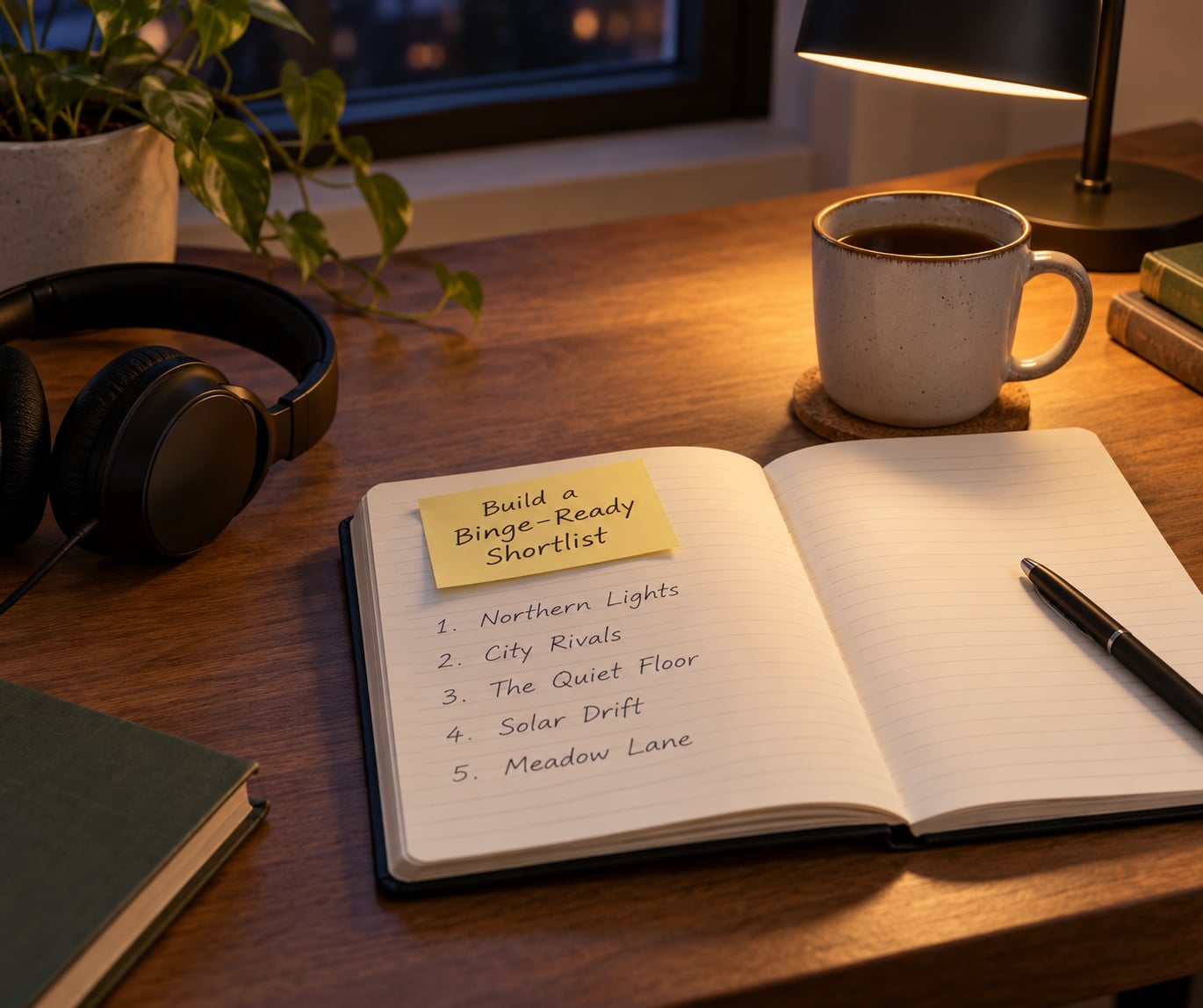
7. Build a Binge-Ready Shortlist
Keep four or five finalists, never more. Organize them by commitment level rather than by quality: one evening, one weekend, and one long commitment. Then start with the most accessible show, not the best one. A first-time viewer’s first horror binge sets their expectations for the genre, and finishing something beats finishing something acclaimed.
Add a similar-series column while you are at it. Once you find a creator whose work you like, staying inside that filmography saves hours of searching. Mike Flanagan’s television work is the most repeated quality filter in r/horror threads for a reason. For viewers who want commitment-light options, anthologies such as Masters of Horror, Tales from the Crypt, and Creepshow are the standard recommendation because every episode is a fresh entry point.
If you are a film-only viewer, start with something short and self-contained. A limited series of eight episodes requires less investment than any long-running show and has a guaranteed end. That is the gentlest on-ramp into the genre.
Common Mistakes That Waste a Weekend
Bingeing by cover art and trailer. Horror marketing sells atmosphere, and atmosphere is the easiest thing to fake. Check for a rating spread and first-episode reactions before you commit.
Treating a high score as a guarantee. A critic score reflects the episode people wrote about, often the premiere. Read the audience side too, and look for the gap.
Ignoring content warnings. A show with sustained torture imagery is a different experience from one with a shocking scene. If that distinction matters to you, find out before episode one.
Skipping the availability check. This is the mistake with the highest failure rate and the lowest cost to fix. Search the service yourself in 2026 rather than trusting a list.
Starting a twenty-episode commitment on a Friday. Ten hours does not fit in a weekend. Pick the runtime before you pick the night.
Refusing to quit. Give yourself a three-episode rule. If after three episodes you still have no sense of escalation, no unresolved question pulling you forward, and no growing investment in the characters, the show is not working. Drop it. The sunk time is not an argument for continuing, and the three-episode test exists so you can leave without feeling like you failed at something.
Confusing unresolved with suspenseful. A cliffhanger is not a good ending. Check whether the story closed before you hand over a whole season of your attention.
A few tips that make the actual binge better. Watch with the lights low but not off, since total darkness makes every noise land. Use sound; a horror show with speakers is a different show. Avoid starting anything heavy late at night if you have an early morning, which is obvious and which everyone does anyway. And if you are watching with a partner, pick something with a comedic streak or a slow-burn dread rather than a slasher series, because the person next to you is having a worse time than you are.
Frequently Asked Questions
What is the best way to find a new horror series to binge?
Filter before you search. Name the subgenre and the scare level you enjoy, check the episode count and whether the season ends properly, read first-episode reactions without opening any review that names a twist, and confirm the show is on a platform you actually have. Then watch episode one before committing to the season.
How can I find horror shows that are not too scary?
Search by mechanism instead of by title. Slow-burn dread, psychological suspense, and horror with a comedic streak are all far quieter than slasher or found-footage series. Checking content warnings before you start also rules out titles leaning on graphic violence. If you tell the search engine atmosphere over jump scares, the results shift noticeably.
Where can I check if a horror show is streaming?
Search the title inside the streaming service’s own app or on its official site, which shows availability in your region and current format. JustWatch, Google, and Apple TV all list services carrying a show. Availability rotates with licensing cycles, so verify near the time you plan to watch rather than trusting a list written months earlier.
Are short horror series good for binge-watching?
They are usually the safest place to start. A limited series of six to eight episodes is one committed afternoon, and because it was built to finish, it resolves its story. Anthology series are even lower commitment, since each episode stands alone. Short shows are also the easiest to abandon without having wasted a whole weekend.
How do streaming services decide which horror shows to offer?
Availability usually comes down to licensing rights. A service buys the right to stream a show for a window of months or years, and when that window ends the title can leave, sometimes return later, and sometimes move to a rival. Renewals, contract disputes, and a show’s popularity all shift things around, which is why old lists go stale so quickly.
Conclusion: Pick the Subgenre, Then Check the Commitment
The method is simple enough to repeat. Name the subgenre, set your limit on gore and jump scares, total up the episode count, read first-episode reactions without opening anything that names a twist, confirm where it streams, and sample one episode before committing to a full season.
Start with the shortest completed show that matches your preferred scare level, not the most acclaimed one. Finishing something builds the habit, and habit is what turns a list into a regular October.