Finding short horror stories to read at night comes down to three filters: pick a subgenre you actually enjoy, set a hard reading-time limit, and search with specific terms instead of browsing. Add a preview check and a saved queue, and you go from forty minutes of scrolling to reading in about two minutes.
The reason short horror works so well late at night is structural. A short story has a closed arc, so nothing carries over to tomorrow, and a low commitment means you can stop mid-story without losing the thread. The catch is discovery: most search results are either a 400-page book that mislabels itself as a story collection, or an ad-stuffed page that breaks the mood halfway through.
I have built this method around the places horror readers actually use — free story archives, public-domain libraries, community recommendation threads, print anthologies, and narrated audio. Five steps, maybe ten minutes of setup, and you will have a queue ready before lights out.
Table of Contents
- What You Need
- Step-by-Step: How to Find Short Horror Stories to Read at Night
- 1. Choose the Kind of Horror You Want to Read
- 2. Set a Realistic Short-Story Length
- 3. Search With Specific Horror Terms
- 4. Browse Curated Short-Story Collections
- 5. Preview Before You Start Reading
- 6. Build a Nighttime Reading Queue
- Common Mistakes
- Tips for a Better Late-Night Horror Story Experience
- Frequently Asked Questions
- Where can I read short horror stories online for free?
- What are some good short horror stories to read at night?
- How do I find horror stories that are actually short?
- What scary stories can I listen to in the dark?
- Is it better to read horror in bed or in a chair at night?
- How do I stop finding the same famous horror recommendations?
- Conclusion
What You Need
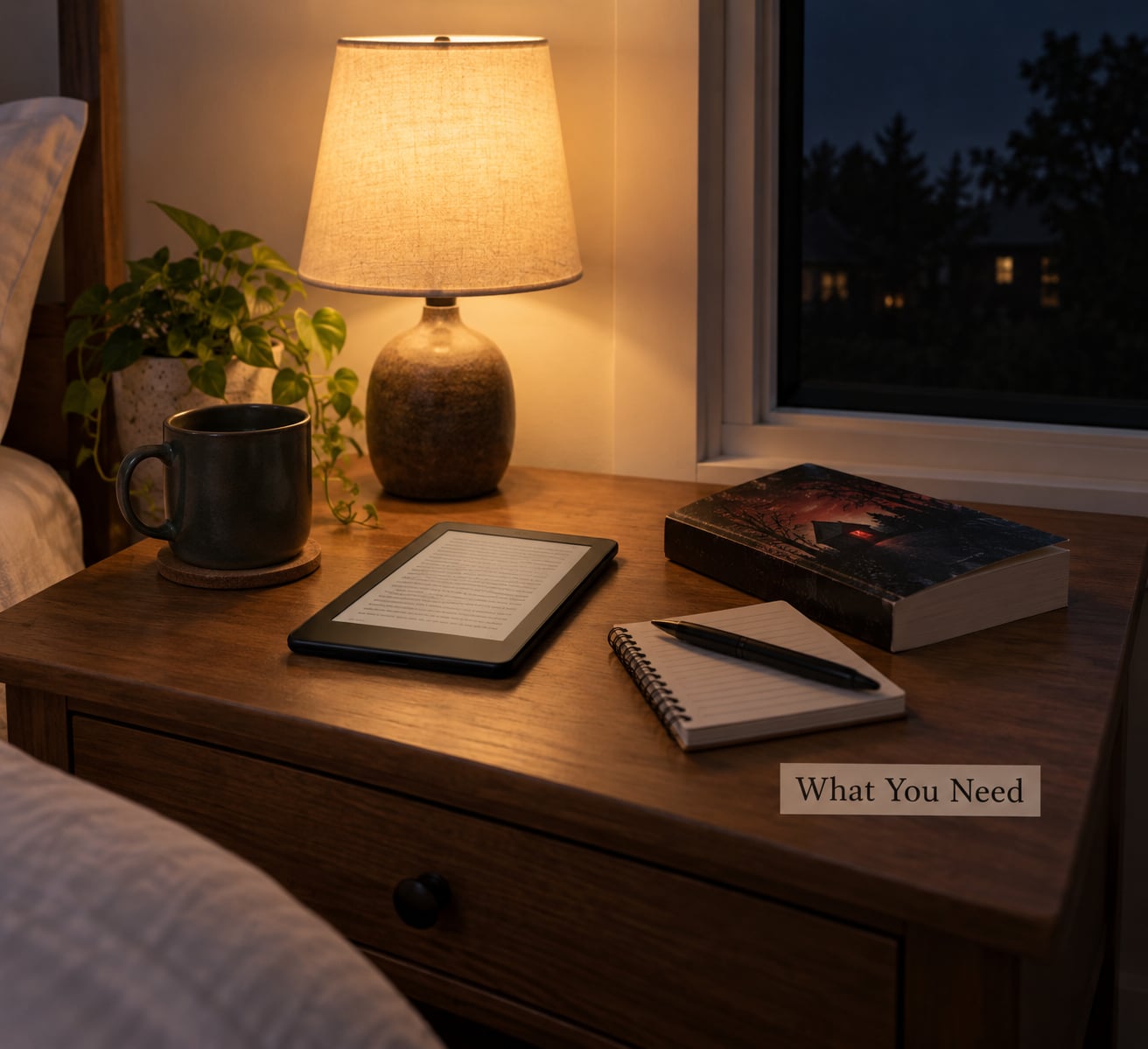
You need somewhere to read, a way to search, and one decision made in advance. Most failed searches fail because the decision was never made.
- A reading device. A phone, tablet, e-reader or laptop. A dedicated e-reader is easier on the eyes in a dark room than a bright phone screen, but any screen works if you lower the brightness.
- A reading app or site. Your library app, an ebook reader, a free story archive, or a browser. Pick one and use it consistently so your bookmarks stay in one place.
- A chosen subgenre. Psychological, folk, cosmic, gothic, supernatural, body horror, or weird and dream-logic fiction. Decide this before you search.
- A reading-time limit. The window you actually have, in minutes. Fifteen is common. Anything more and you are choosing a novel.
- A comfortable spot that is not too immersive. A lamp on, a chair rather than a bed if you want to keep sleeping afterward, and a door within reach if you live alone.
- Optional sorting tools. A bookmarks app, a reading list, a notebook, or a folder on your device for saving candidates.
Step-by-Step: How to Find Short Horror Stories to Read at Night
1. Choose the Kind of Horror You Want to Read
Narrow by subgenre first, because length alone will not save a bad match. Readers on recommendation forums repeatedly ask for atmosphere over gore — unsettling dread rather than shock — and the writers who deliver that are named far less often than the famous names.
Here is the working set of categories, with what each one actually feels like at night:
- Psychological horror. Unreliable narrators, doubt, things explained away. Quiet, which makes it worse in a dark room.
- Folk horror. Rural rituals, old songs, wrongness in the landscape. Good for reading aloud but slow enough that you may finish only two.
- Cosmic horror. Lovecraft and his descendants. Ideas rather than scares; best read when you want dread, not shock.
- Gothic fiction. Shirley Jackson, M.R. James, Poe. Decayed houses and inherited guilt. Ideal for bedtime because the horror is decorative and slow.
- Supernatural and ghost stories. Direct, plot-driven, often the easiest entry point for a short session.
- Weird and dream-logic fiction. Rules that do not explain themselves. This is the niche readers on r/horrorlit ask for by name, with Laird Barron and Matthew M. Bartlett cited as benchmarks for the feeling of reading something you cannot fully account for.
- Creepypasta. Internet folklore, first-person, often framed as found or real. Free and instant, but quality varies wildly.
Write your choice down before you start browsing. One line, one genre, is enough.
2. Set a Realistic Short-Story Length
Length is the real constraint at 1am, and most online archives never tell you it. Learn the bands so you can estimate from page count:
- Flash fiction: under 1,000 words. About four minutes. Good for a first story of the night.
- Short story: 1,000 to 5,000 words. Roughly five to twenty-five minutes. The most reliable night-length format.
- Novelette: 5,000 to 20,000 words. Thirty minutes to an hour. Fine if you have decided not to sleep yet.
At roughly 250 words a minute, a five-minute story is about 1,250 words and a fifteen-minute story is about 3,750. When a site does not label length, the page count on a listing is your only clue, and a 20-page story is a reliable twenty minutes.
Test the system before bed. Pick your limit, then find one story that fits it and time yourself. Readers who do this report it stops the mid-story panic of opening something you cannot finish.
3. Search With Specific Horror Terms
Broad searches fail because the phrase horror brings back novels. Narrow it deliberately, and these strings do most of the work:
"short horror story" + [length]— quotes force the exact phrase, so results stay story-sized."gothic short story" free to reador"folk horror short story"— name the subgenre you picked in step one."nightmare logic" short story collection— the term r/horrorlit posters use; it surfaces the weird-fiction niche almost nothing else finds.site:reddit.com/r/horrorlit short story under 100 pages— search one community rather than the whole web."under 1000 words" horror story— a reliable flash-fiction filter.
Two habits make this work. Search inside the community rather than around it — most horror readers have a standing request thread for exactly this, and answers there come with a reason attached. And add the words that describe what you want to avoid: add no jump scares or atmospheric, no gore when that matters to you.
Community etiquette matters more than people expect. Say what you have already read, name the length you need, and ask for one recommendation rather than a list. Posts that say stuck at home and need something short get answers; posts that say give me horror do not.
4. Browse Curated Short-Story Collections
Search gets you one story. Collections get you the next twenty, which is what you actually want at night. Here is where each format earns its place.
Free story archives. Creepypasta sites publish new material constantly and cost nothing. Many carry a reader rating, which is a fast quality check before you commit. The drawback readers complain about most is advertising interrupting a story mid-sentence, so check one story end to end before settling on a site.
Public-domain libraries. Project Gutenberg, Standard Ebooks and Wikisource are free, ad-free, and never disappear. This is the reliable fallback when a free archive turns cluttered or a story vanishes. Poe, M.R. James and Bierce are all here, and so are later writers whose work has entered the public domain.
Community lists and shelves. Goodreads shelves and public lists, plus the recommendation threads on r/horrorlit, r/horrorstories and r/suggestmeabook, are where you find writers outside the obvious names. Forum readers consistently want the next collection after the famous ones — Night Shift, Books of Blood, The Bazaar of Bad Dreams are already exhausted for most of them.
Print anthologies. Single-author collections suit a known taste; edited anthologies suit exploration. Both give you a fixed number of stories and a natural stopping point, which is exactly what a night reader wants. Your library app is usually the fastest route, and it works offline once downloaded.
Audio. Narrated stories remove the screen entirely, which is easier on the eyes at midnight than a bright page. Community readers judge audio on narration quality more than on length, so sample a chapter first. Some also publish short horror series built for late listening.
5. Preview Before You Start Reading
A 30-second check saves a wasted hour. Before opening a story, confirm five things.
- Length. Word count, page count or a read-time estimate. If none is given, skip it unless you feel like gambling.
- Content warnings. Look for mentions of gore, sexual violence, animal harm, self-harm or death of children. Skip anything flagged for a thing you cannot take tonight.
- The opening paragraph. Read 200 words. First-person creepypasta openings are formulaic by convention; an anthology piece with a distinctive first line is often the better bet.
- Publication date. Old free-site stories get copied and edited badly. Recent date on a free archive is a decent quality signal.
- Rating or review count. Archive reader scores and community upvotes are rough, but a low score with lots of ratings is informative.
Skip anything where the search result already explains the ending. That one is non-negotiable for a story you have not read yet.
6. Build a Nighttime Reading Queue
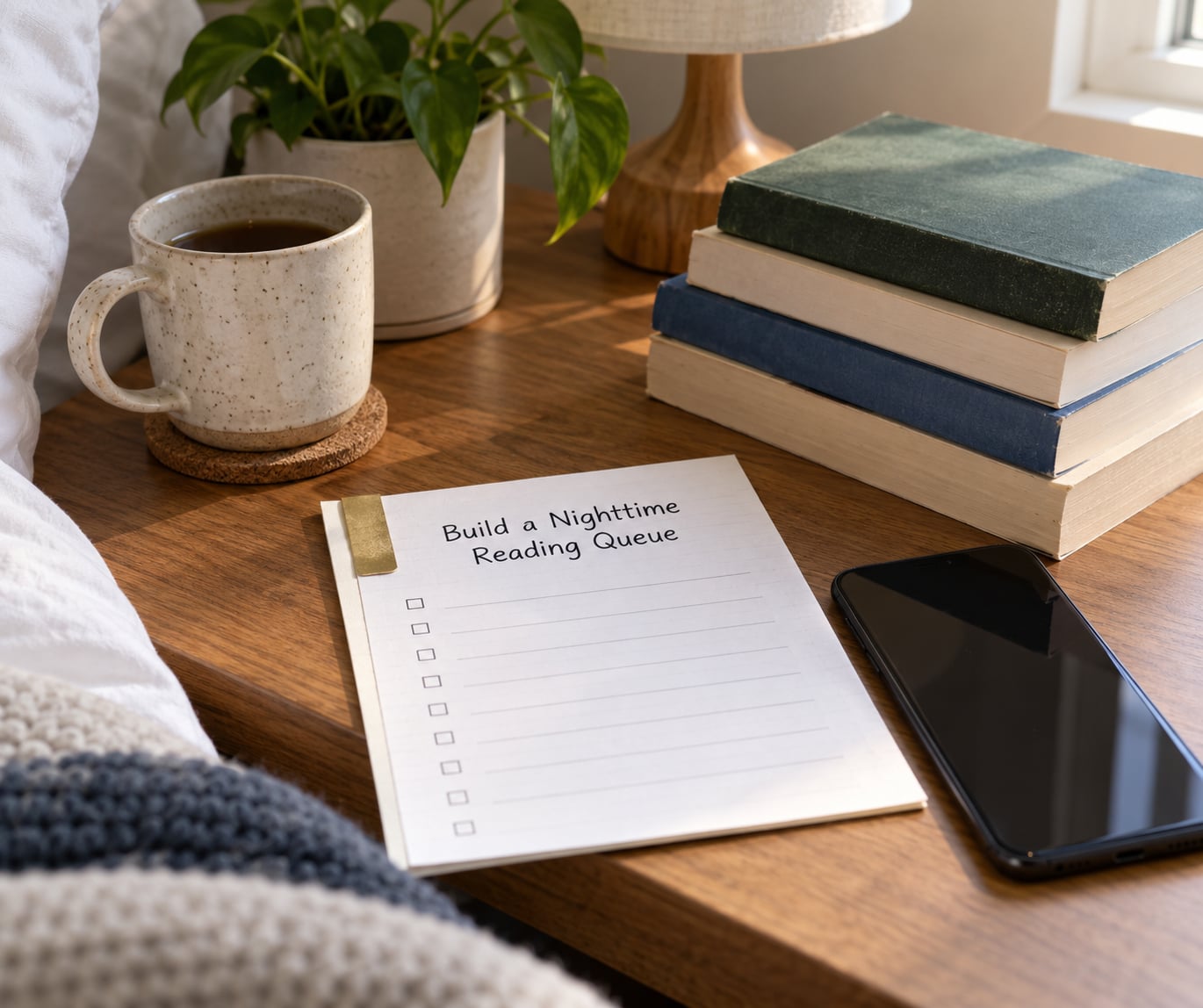
Save five or six candidates before you lie down. Four to five stories is plenty: enough that a dud does not end the night, few enough that the choice itself does not become a problem.
Put them in one place — a bookmarks folder, a reading list, your library app shelf, or a note on your phone. Then order them shortest to longest. Starting with the shortest is the reliable move: you finish something in five minutes, and finishing something is what makes the next one easy.
Keep one backup story you have already finished somewhere you can reread. Nights happen where nothing new fits, and a known ending is still an ending.
Common Mistakes
Searching too broadly. Searching horror returns books. Search the subgenre plus the format, in quotes, and you get stories.
Choosing without checking length. A bait title on a 400-page collection is the single most common complaint in recommendation threads. Check page count before you commit.
Ignoring content warnings. Horror readers in shared households gatekeep hard for good reason. A warning takes five seconds to read and can spare you a genuinely bad night.
Treating unverified recommendation lists as gospel. Posts rating a story ten out of ten with no reasoning are not curation. Lists that name an author and say why are worth more.
Storing 40 options and reading none. A huge saved list becomes another thing to scroll through. Five is a queue. Forty is a backlog you will abandon.
Forgetting to test the setup. Screen brightness, font size and the reading app itself. Twenty minutes of setup before the story matters more than the story choice.
Reading the most graphic thing first. Go in gently. Start with atmosphere and save the heavy material for a weekend morning.
Tips for a Better Late-Night Horror Story Experience
Keep one light on. Total darkness plus horror is a bad combination at 2am. A low lamp gives you atmosphere without the startle of a bright screen in a dark room.
Use the reading-time estimate as your ending. When the estimated time is up, stop and pick something else. It beats reading a sentence twice because your attention has gone.
Alternate scare with calm. One tense story, then a quieter one. This keeps the night from turning into a single escalating panic.
Note what worked. After finishing, write two words in your notebook — author, mood, read time. Six weeks of that gives you a shortlist you built yourself, which is worth more than any list you find.
Set a not-too-late rule. Decide before you start how long the session lasts. Horror read past your normal bedtime is the most reliably ruined sleep there is, and it costs you the next day.
Read somewhere you can leave. If you live alone, a chair in a common room beats a bed. You can walk away from a story; you cannot walk away from your own ceiling at 3am.
Pair it with something ordinary after. Finish a creepy story with a dull, ordinary task — dishes, a walk, a podcast you have heard before. It gives the ending somewhere to land that is not your imagination.
Frequently Asked Questions
Where can I read short horror stories online for free?
The most reliable free routes are public-domain libraries such as Project Gutenberg, Standard Ebooks and Wikisource, which are ad-free and permanent, plus free story archives that publish new creepypasta and horror fiction regularly. Archive sites often show a reader rating, which is a quick quality check. Check one full story before you settle on a site, because advertising interrupting a story is the most common complaint readers have about free archives.
What are some good short horror stories to read at night?
For a night-length session, single-author collections and edited anthologies work best because each story has a closed arc and a natural stopping point. Gothic writers like Poe, M.R. James and Shirley Jackson suit a dark room, since the horror arrives slowly. Readers who want atmosphere rather than gore often prefer the weird and dream-logic short story tradition, where writers such as Laird Barron and Matthew M. Bartlett are the names most requested on recommendation forums.
How do I find horror stories that are actually short?
Look for a word count or page count before you commit. As a guide, flash fiction runs under 1,000 words, a short story runs 1,000 to 5,000 words, and a novelette runs 5,000 to 20,000. At about 250 words a minute, that is roughly four minutes, twenty-five minutes and an hour. If a listing gives no length at all, skip it unless you feel like gambling on a bait title.
What scary stories can I listen to in the dark?
Narrated horror removes the screen entirely, which is easier on the eyes at midnight than a bright page. YouTube channels that narrate creepy story collections, audiobook apps and your library app all work. Community readers judge audio on narration quality more than on story length, so sample one chapter before committing to a long collection. Some creators also publish short horror series built specifically for late listening.
Is it better to read horror in bed or in a chair at night?
A chair in a common room is the safer pick, especially if you live alone. In bed, the ceiling becomes part of the story, and any small sound in the house gets attributed to whatever you just read. A dim lamp and a normal ambient sound, like a fan or familiar podcast, keep the experience atmospheric without turning your bedroom into a set. Pick a chair and you can simply walk away when you are done.
How do I stop finding the same famous horror recommendations?
Name what you have already read in your search, and search inside one community rather than across the whole web. The most-recommended collections on forums, including Night Shift, Books of Blood and The Bazaar of Bad Dreams, are already exhausted for most readers, so terms like not by Stephen King or something not famous surface fresher picks. Subgenre words such as nightmare logic or folk horror narrow results more than the word horror does.
Conclusion
Start with the fastest version tonight: choose one subgenre, set a fifteen-minute reading limit, search with the subgenre name plus short horror story in quotes, preview one story, and save one finished story as a backup. That sequence takes about ten minutes and takes the scrolling out of the decision, which is the part that usually goes wrong at midnight.