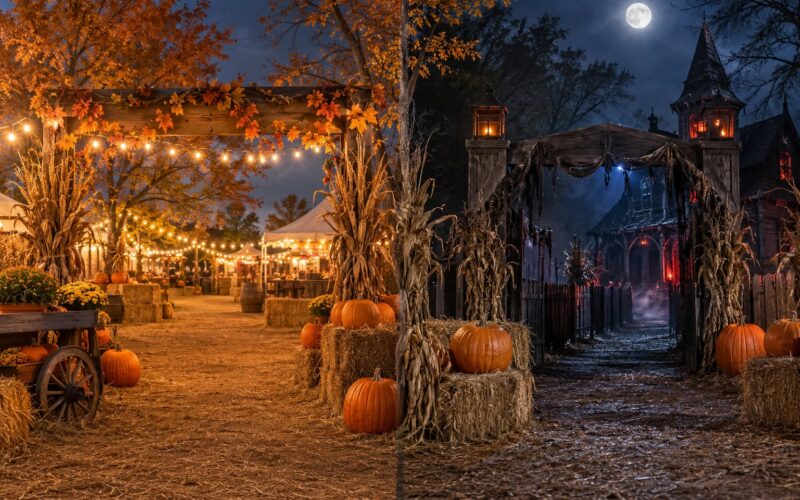
What to expect at a haunted house attraction is simpler than most first-timers imagine. You buy a timed ticket, wait in a queue, get a short safety briefing, and then walk through a themed set where actors, animatronics, lighting and sound deliver jump scares and unsettling imagery. The whole visit usually takes 60 to 90 minutes, and the actors are trained performers, not threats.
That covers the short answer. The rest of this guide covers what the different formats feel like, how to dress, what the rules actually are, how to leave if it gets too intense, and how to pick an attraction that matches your tolerance.
Table of Contents
- What to Expect at a Haunted House Attraction at a Glance
- Types of Haunted House Attractions
- What to Expect at a Haunted House Attraction by Type
- How to Prepare for Your First Visit
- What Happens During the Experience
- Common First-Timer Mistakes
- Comfort, Accessibility, and Safety
- How to Choose the Right Level of Scare
- Tips for Families, Groups, and Nervous Visitors
- Frequently Asked Questions
- Can actors at a haunted house touch visitors?
- Can I use a phone or camera inside a haunted house?
- What if my group gets separated inside the attraction?
- Is every haunted house different each night?
- What should I do if a scare feels too intense?
- Can I visit a haunted attraction with young children?
- What to Do First
What to Expect at a Haunted House Attraction at a Glance
Ranges, not promises. Every venue runs its own show, so treat the numbers below as a starting point rather than a guarantee.
| Detail | Typical range or rule |
|---|---|
| Total visit length | 60 to 90 minutes, including the queue |
| Time inside the attraction | 8 to 20 minutes of actual walkthrough |
| Scare intensity | Anything from jumpy but playful to genuinely frightening |
| Actor interaction | Occasional in most houses, near-constant in immersive haunts |
| Darkness | Common; some rooms are pitch black with no flashlight |
| Physical demands | Low to moderate; expect standing, crouching and uneven floors |
| Age guidance | Often 8 to 10 and up for intense houses; check the event page |
| Accessibility | Varies widely; most venues publish an accessibility page |
| What you may bring | Phone and small wallet at most; bags, flash photography and loose items are usually not allowed |
Types of Haunted House Attractions
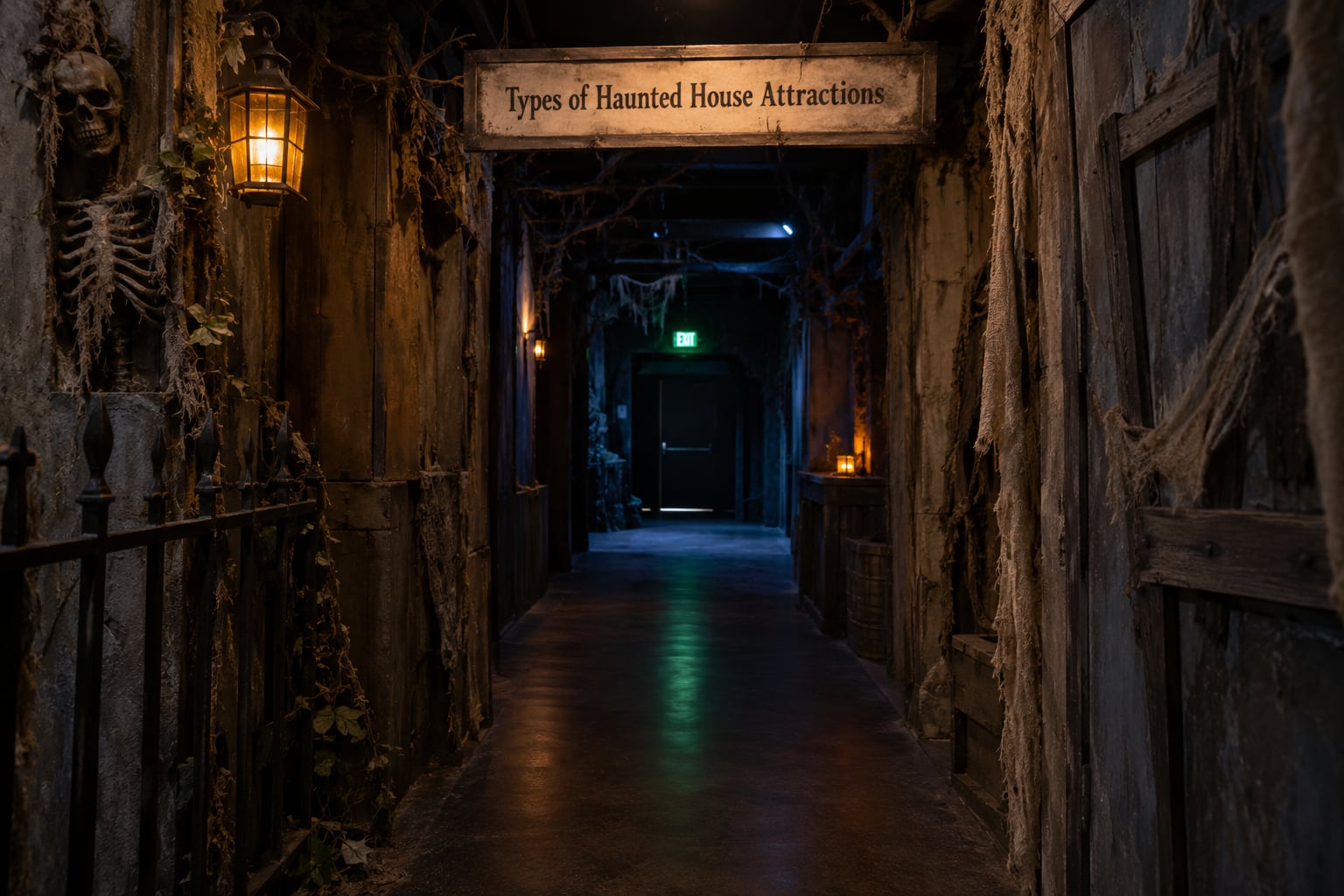
Walkthrough haunted house: the classic format. You move on foot through a series of rooms and corridors, usually in a group, and the scares come from wherever the designer put them. This is the most common type and the one most people mean when they say haunted house.
Haunted maze: darker and tighter than a walkthrough, with more blind corners and fewer places to see what is coming. Some mazes use black light, which makes white clothing glow and makes it much easier for actors to track you.
Dark ride: you sit in a vehicle or boat on rails and the scares are staged for a seated audience. No walking, no touching, and a good option for anyone who would rather not navigate a corridor in the dark.
Festival attraction: part of a larger Halloween event, such as a theme park’s seasonal night or a multi-haunt festival trail. You usually pay for entry to the event rather than a single house, and the queues are longer.
Seasonal decoration: a walk-through display, graveyard, or front-yard scene with no actors and no fee. It is genuinely kid-friendly and a decent warm-up before committing to a full haunt.
What to Expect at a Haunted House Attraction by Type
Walkthrough haunted houses pace you at walking speed with the group, and the viewing angle is straight ahead. You see the scare from about 15 feet away, which builds anticipation.
Mazes add tight turns and low ceilings. Paces shift from slow sightseeing to fast bursts of walking, and darkness is heavier. The scares lean on surprise and sound rather than gore.
Dark rides keep you seated. Sound design and lighting do the work, and you never have to decide what to do with your hands or your feet.
Festival attractions mix formats, so you might do a short maze, then a show, then a hayride. Expect walking between buildings and more waiting between attractions than inside them.
Decorations are walk-through and self-paced, with ambient sound and props. Scare intensity is basically zero, and it works well as a low-stakes first outing.
How to Prepare for Your First Visit
Most first-night disappointments come down to logistics, not scares. Work through this list before you leave the house.
- Book a timed ticket if the venue offers them. It is the single biggest way to cut your queue.
- Check the venue’s event page for effect warnings. Strobe lights, fog, loud audio and darkness are almost always listed.
- Confirm the touch policy. Look for the words no-touch, no-grab, or touch pass on the event page.
- Arrive 20 to 30 minutes early, more if you want to browse props or a photo area.
- Wear closed-toe shoes with good grip. The floors are often carpeted, uneven or deliberately slippery.
- Secure your phone before you enter. Cases, pockets and lanyards all become liabilities in the dark.
- Plan transport. Seasonal events run on a limited timetable and parking fills early.
- Decide your group size and who holds the loose items.
- Eat beforehand and skip the very strong drinks. Queues are long enough without a queasy stomach.
One more thing worth checking: the venue’s re-entry policy. Some events let you leave and return later the same night, and some do not.
What Happens During the Experience
The sequence is remarkably consistent from venue to venue.
- Ticket check. Staff scan your ticket and hand over a wristband or stamp. This is where prohibited items get collected or refused.
- Queue. You wait in a themed queue with a script, a speaker, and often a scare actor working the line. This is where most people decide whether they are having fun.
- Safety briefing. A staff member or recorded video explains where the exits are, what to do if you need help, and the photography rule. Do not skip this in your head.
- Entry. The door opens, the lights change, and the walkthrough begins.
- The build. The first rooms are atmospheric rather than loud. Props, set dressing, low sound, and slow reveals set the pace.
- Escalation. Scares arrive in waves. The middle of the route carries the heaviest hits, and loudness peaks there.
- Exit. You come out into a themed lobby, sometimes past a photo or merch area, and back into open air.
Inside, keep your phone away. Most venues prohibit flash photography, and a bright screen ruins the effect for everyone around you.
Common First-Timer Mistakes
Arriving late is the mistake people regret most. Peak-season queues at major events can run well over an hour on weekend nights, and arriving late can mean you miss your own slot.
Ignoring effect warnings causes trouble more often than anyone expects. If a venue flags strobe lighting and you have photosensitivity, that warning is not marketing copy.
Assuming every prop is touchable gets you separated. Scare actors will grab you only where the policy allows it, and reaching into a scene can knock something loose or get you pulled out of the route.
Following the group too closely puts you at the front of every surprise, and following too far behind loses you the timing. Stay in the middle of the line and you will see most scares arrive from the side instead of head-on.
Wearing restrictive clothing turns a 15-minute walkthrough into an uncomfortable one. Skip long scarves, loose jewellery, high heels, contact lenses you cannot remove quickly, and anything you would be upset about losing.
Filming in restricted areas gets you removed. Some mazes forbid all video, and flash photography is usually banned outright.
Forgetting where the exit is leaves you stuck in the dark with no plan. Note an exit marker during the briefing and count how many emergency doors you pass.
Comfort, Accessibility, and Safety
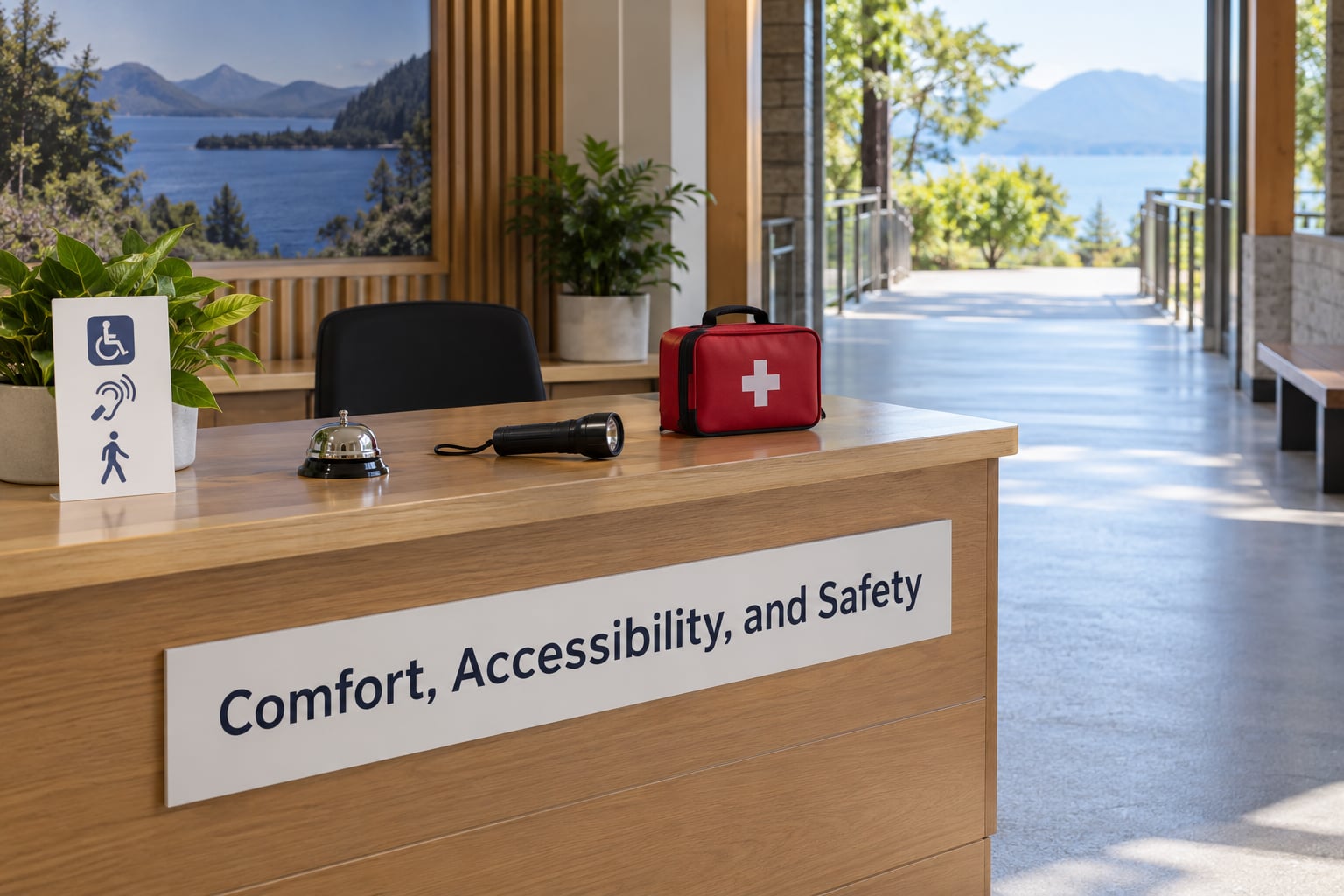
The touch question comes up more than any other, and it deserves a straight answer. Actors are trained to scare you, not to harm you, and contact is governed entirely by the policy the venue publishes.
| Policy | What the actor may do | How to check before you buy |
|---|---|---|
| No-touch | Nothing physical. Actors stay at a set distance and never make contact. | Look for explicit no-touch wording on the event page or ask staff directly |
| No-grab | They may loom, chase and come close, but no contact occurs. | Often described as no-grab or hands-off |
| Touch pass | Guided contact is permitted, sometimes only in marked scenes. | Usually sold as a separate wristband or upgrade; the base ticket may not include it |
A touch pass is an optional add-on that grants contact in designated scenes. Wearing one does not mean actors can touch you anywhere, and the boundary is set by the scene, not by the performer.
Other effects worth checking for: strobe lighting, fog and smoke, sudden loud audio, total darkness, low ceilings, narrow passages, live animals, and props that reach into the walkway.
If any of those are a problem for you, you have three options: ask the venue about an accessible or low-sensory route, use the safe word or hand signal if one is offered, or take a pass and watch your group go.
Every venue has an emergency exit and a staff member whose job is to help guests. Leaving mid-queue is allowed. Whether you get your ticket back depends on the venue’s policy, so ask at the gate rather than assuming.
How to Choose the Right Level of Scare
Intensity gets communicated badly. Marketing language like the scariest in the state tells you nothing useful, so look elsewhere.
Start with the event page. A specific effect list and a stated age range tell you far more than a headline. Then read recent reviews that describe what actually happens rather than shouting about it.
A simple working scale runs from family-friendly to extreme. A family or kids zone uses sets and actors that perform at a safe distance. A standard haunted house uses jumpscares, darkness and light contact like a hand on the shoulder. An intense or extreme haunt uses pursuit scenes, actors in the group, heavier props and a longer build.
Pick one step below where you think your limit is. People overestimate how much they will enjoy and then bail out halfway, which is the most expensive possible outcome.
Themed-IP mazes are worth noting. Guests who recognise the film or show the house is based on report calmer, more enjoyable walkthroughs, because the story does the frightening for you.
Tips for Families, Groups, and Nervous Visitors
Stay together and pick a front person. The group moves as a unit, and splitting up in a dark maze is how people get separated.
Agree on a hand signal before you enter, since shouting is not practical in a set with loud audio. Two taps on the arm usually means keep moving.
Tell each other about touch-based scenes in advance. Nobody minds contact that was flagged in advance, and plenty of people mind contact that was not.
Set a check-in point outside the entrance. If someone needs out, they go there and everyone else finds them after.
Do not apologise for laughing, crying or freezing. Scare actors are instructed to stay in character and move on, and breaking character to comment is a sign of a badly run venue.
Walk with a nervous friend rather than in front of them. Actors tend to work the middle and rear of a group, so the position closest to the exit is the safest one.
Afterward, give people ten minutes. Adrenaline drops fast, and a quiet drink and a bench settle most first visits better than another horror film would.
Frequently Asked Questions
Can actors at a haunted house touch visitors?
Only where the venue allows it. Most houses run a no-touch or no-grab policy, where actors loom and chase but never make contact. Some sell a touch pass as an add-on, which permits guided contact in marked scenes only. Check the event page before you buy, and ask staff at the gate if the wording is unclear.
Can I use a phone or camera inside a haunted house?
Sometimes, and rarely with the flash. Many venues ban photography outright because it breaks the effect for everyone behind you, and a few ban all phones and provide a locker instead. Keep your phone away rather than at the ready. Filming in a restricted area is a fast route to being removed from the attraction.
What if my group gets separated inside the attraction?
Stay where you are if you can and wait. Haunt staff know the layout and check blind corners, and most rooms have an intercom or a guide who can fetch someone. Do not run back through a scene or leave through an emergency exit, which is reserved for emergencies and staff use. Tell staff on the way out if someone is still missing.
Is every haunted house different each night?
The set stays the same, but the show does not. Actors change their timing, their target list and their lines between nights, and a haunt that ran quietly on a Tuesday may be relentless on a Saturday. Some events also swap in extra rooms or actors for the busiest weekend nights. Repeat visits are less about new scenery and more about a different performance.
What should I do if a scare feels too intense?
Use whatever signal the venue offers, such as a safe word or a hand on the shoulder, and keep walking toward the nearest exit without stopping. Do not stop in a dark corridor to sort it out. Staff will walk you out along a safe route. Ask at the gate about re-entry and refunds before you enter, so you know the policy before you need it.
Can I visit a haunted attraction with young children?
Yes, if you pick the right one. Family zones and kids mazes use actors who perform at a distance, shorter routes and daytime hours, and they are genuinely fine for younger children. Standard and intense haunts usually carry a stated age guidance, often eight or ten and up. Check the event page, and never force a child through a house they have asked to leave.
What to Do First
Decide which format suits your group, then read the venue’s effect warnings and touch policy before you buy. Book a timed slot, arrive early, wear closed-toe shoes with grip, and secure your phone.
On the way in, note an exit marker during the safety briefing. That single habit is what turns a panic into a plan.