The honest answer is that you cannot stop being startled, but you can stop a scare from taking over your night. Knowing the rules before you enter, agreeing on a stop signal with whoever you are with, and running one slow breathing exercise in the queue will carry you through a haunted attraction you would normally dread.
Here is the part almost every guide leaves out. The anticipation is worse than the attraction. People who scare easily tend to spend days mentally rehearsing the worst room in the place, and that rehearsal does more damage than anything an actor does with a rubber head. On the other side of the door, most visitors say the same thing: it was much less frightening in person than the week of worrying beforehand.
There is a second layer, and it is the one nobody admits to. Fear of the monsters is easy to laugh at. Fear of screaming in front of the people you like, crying in a room full of strangers, or being walked out by a staff member while your friends keep going is what actually keeps people at home on Halloween weekend.
So this guide covers the practical side first, then the social side, and finally what to do in the hour after you leave when your heart is still going. It takes about ten minutes of preparation and no equipment.
Table of Contents
- What You Need
- Step-by-Step: How to Survive a Haunted House If You Scare Easily
- 1. Learn the attraction’s rules before you enter
- 2. Set a personal boundary with the people accompanying you
- 3. Use a simple breathing reset before entering
- 4. Keep your eyes and attention on the next small detail
- 5. Have a discreet way to pause or leave
- 6. Recover quickly after a surprise
- Common Mistakes
- Frequently Asked Questions
- Can I leave a haunted house if I start to feel scared?
- How can I stop feeling so scared during a jump scare?
- Are haunted houses safe for people who get anxious easily?
- What if I am easily startled by darkness or sudden noises?
- Should I tell my friends I scare easily?
- What should I do after leaving a haunted house feeling shaken?
- Conclusion
What You Need
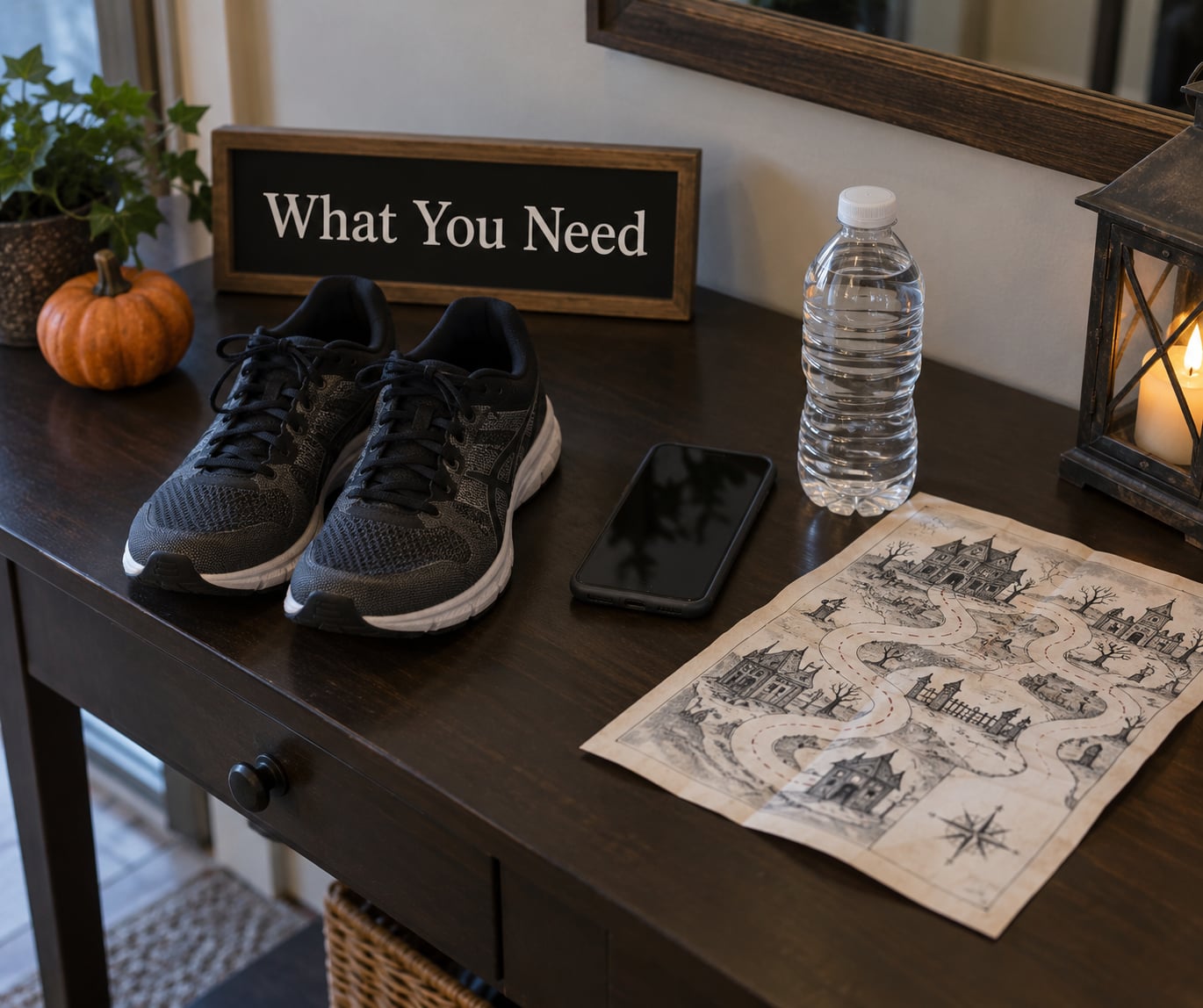
Four things, and none of them are equipment.
The attraction’s published information. Before you pay for a ticket, find the haunt’s own page and look for an intensity rating, a scare or gore level, a photo policy, and any warning about strobe lights, fog, or total darkness. Most commercial haunts publish a number or a word like moderate, intense, or extreme, and a few publish a plain warning about strobe effects. If the site shows you nothing, the guest-services desk will tell you on the phone, and that one call is worth more than an hour of watching walkthrough videos.
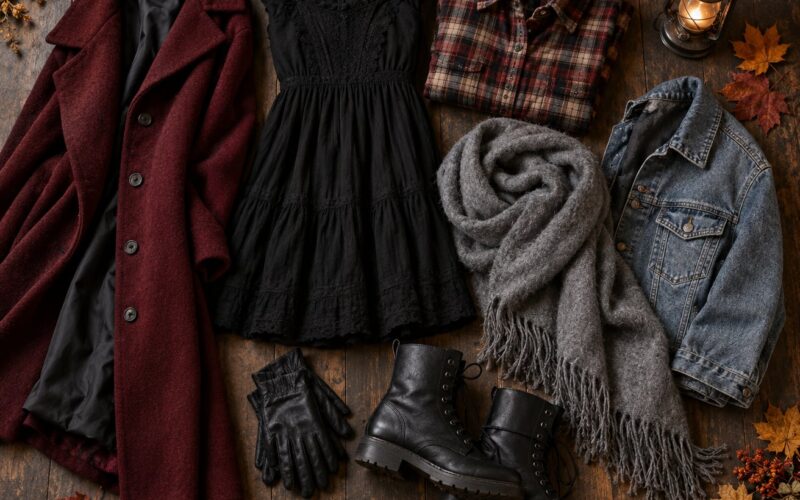
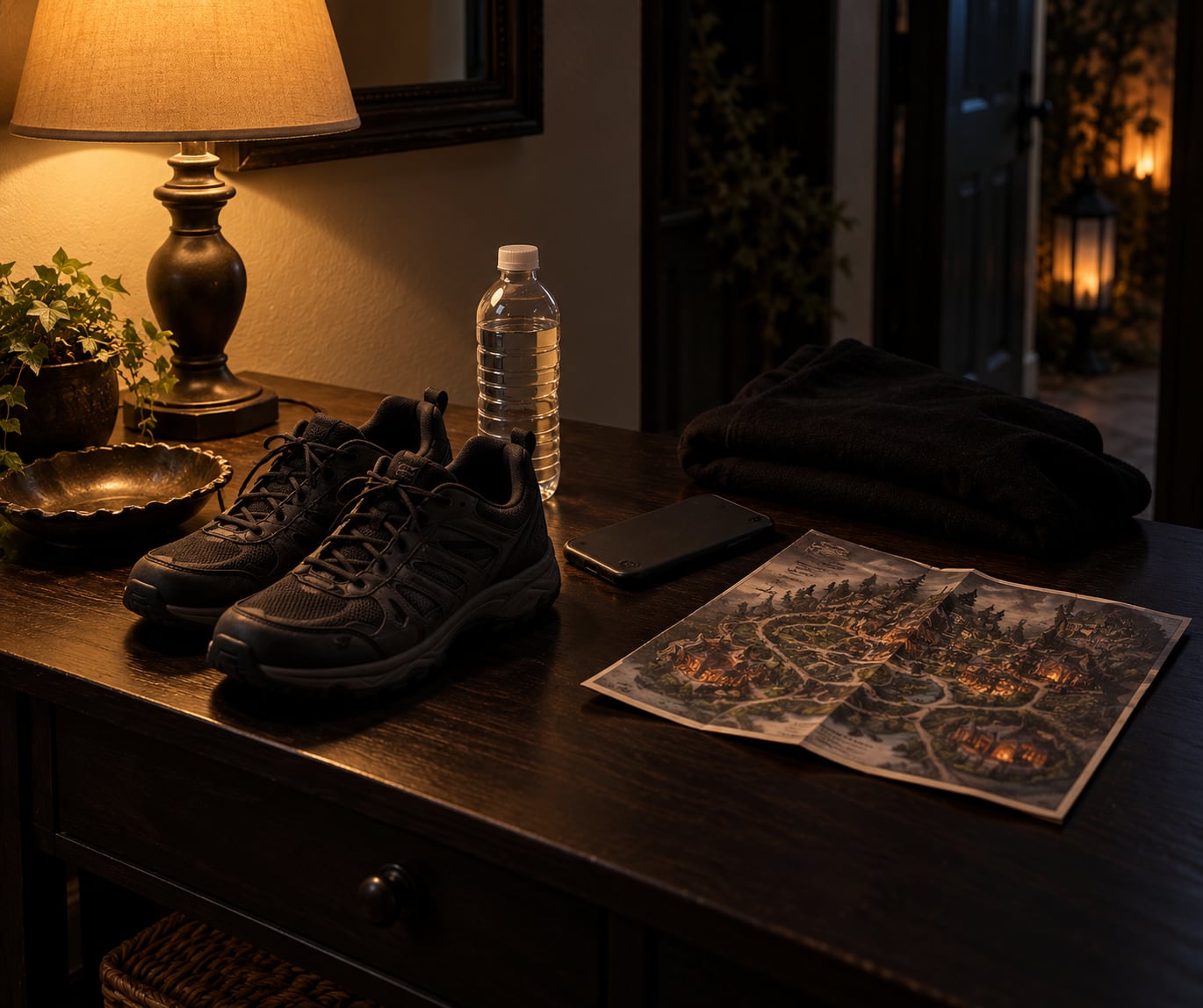
Clothes you can move in. Closed-toe shoes with grip, because you will be walking on gravel, dirt, and uneven ground in the dark. Dark trousers are the old advice and they still help, since a flash of white fabric is easier for an actor to lock onto. Skip anything loose with a hood, long scarf, or dangling jewelry; a hood can block your peripheral vision in a dark room, and that alone can turn a mild scare into a bad one.
One grounding anchor. A familiar object you can hold without anyone asking about it. A phone with the brightness turned all the way down, a key, a small stone, whatever you have. Squeezing something gives your nervous system somewhere to send the tension, and it also gives your hands a job so they stop shaking.
A stop plan, decided out loud. Not a vague hope that you will tough it out. An actual sentence your group knows, and a person who knows where the exit is. This is the single thing that separates people who have a good night from people who spend the rest of October annoyed at themselves.
Skip the research rabbit hole after that. Doomscrolling strangers’ walkthrough videos before you go is the most reliable way to talk yourself into a bad night, because you are studying every possible trigger in advance and storing each one.
Step-by-Step: How to Survive a Haunted House If You Scare Easily
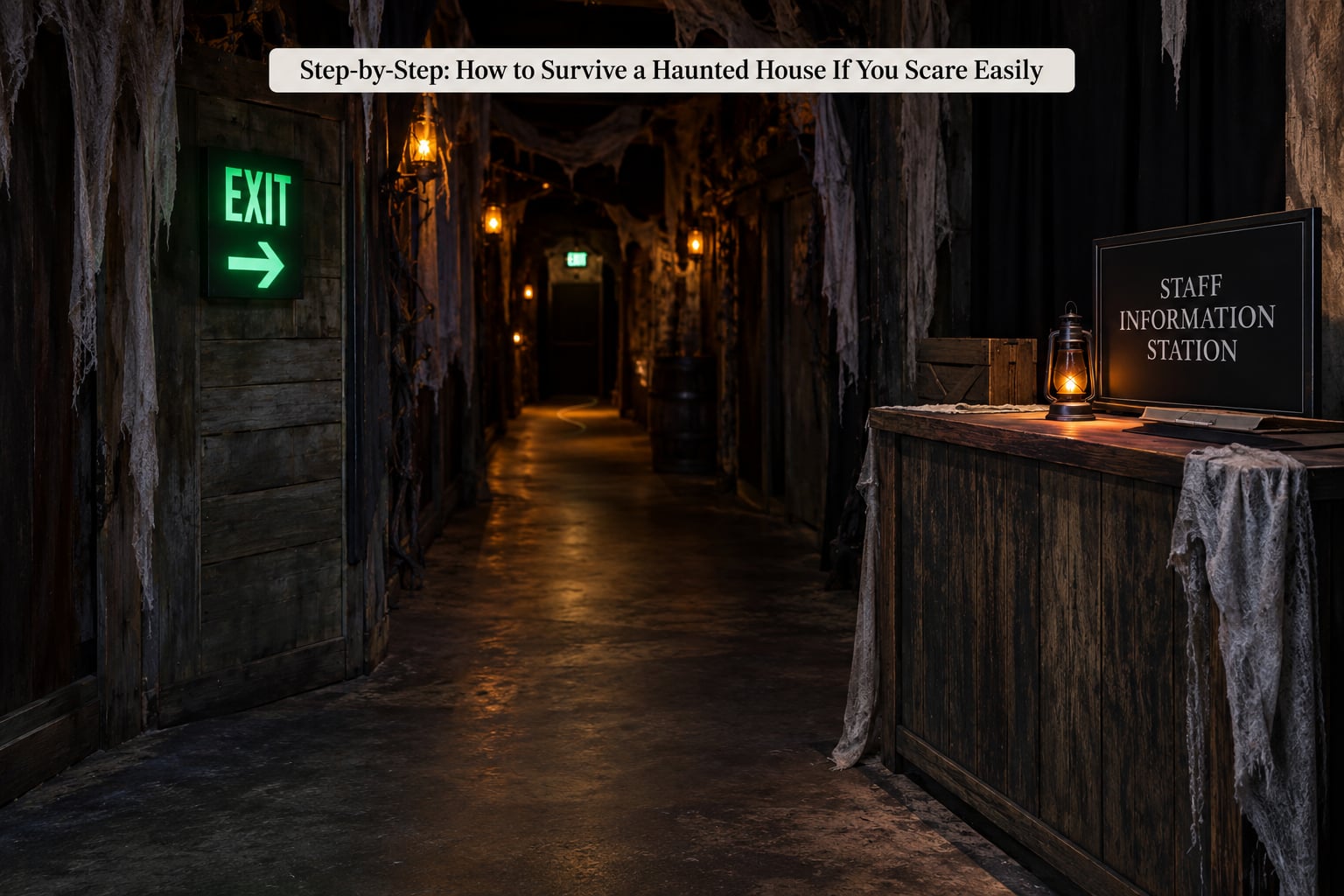
1. Learn the attraction’s rules before you enter
Every commercial haunted attraction is a controlled environment with staff in every room, and the safety briefing you get at the door is the single most useful ninety seconds of the whole experience. Listen to it. It tells you whether actors use physical contact, whether you can raise your hand to be escorted out, and where the emergency exits are.
Write down the two or three things that actually change your risk level before you arrive. For one person that is a fear of total darkness, for another it is sudden loud audio, for a third it is confined spaces. If the attraction’s page mentions strobe lighting, fog machines, or low lighting, and one of those is your trigger, you have your answer before you buy anything.
Also check the age guidance and the group size rules. A lot of scares work on the size of the group, so a group of ten will have a different experience than three friends walking through alone. You are allowed to ask the attendant what the scariest room is and whether the actors get in your face in that one.
2. Set a personal boundary with the people accompanying you
Tell the group before you go, not halfway down a dark corridor. A short version works: I am not a fun-killer, but if I hold my phone up like this or touch your arm twice, walk me out. Then let them react. The fear of being teased lasts longer in your head than the actual teasing does.
Agree on what happens if you need out. Pick a word or a hand signal, because whispering a plan in a room where actors are listening is not a plan. Agree on a meeting point outside, usually a specific bench or the front desk, since a haunted house queue can take twenty minutes to re-enter and nobody should have to hunt for you.
Say out loud that leaving early is a normal outcome and not a verdict on anyone’s courage. If you need to hear that from somebody else, ask a friend who has been through one to say it. People who scare easily and go anyway tend to be the ones who hold it together best for the rest of the group.
3. Use a simple breathing reset before entering
Your body reacts to a masked person lunging at you the same way it reacts to real danger, and the result is faster breathing, a pounding chest, and a head that goes quiet. Slow breathing is the one lever you control that interrupts that cycle.
Try 4-6-8 breathing in the queue. Breathe in through your nose for a count of four, hold for six, and let it go slowly through your mouth for eight. Three rounds is usually enough to feel the difference, and you can do it sitting in a line without anyone noticing.
Pair it with a short grounding routine using your senses. Name five things you can see in the queue, four you can feel, three you can hear, two you can smell, and one you can taste. It sounds gimmicky and it works because it pulls attention off the internal narration that keeps rehearsing the worst-case room.
Pick one sentence to repeat quietly while you wait. Nothing mystical, just something plain such as it is a room with people in costumes and I can walk out at any time. Vivid, ordinary detail beats trying to talk yourself into being fearless, which almost nobody can do on demand.
4. Keep your eyes and attention on the next small detail
Trying to anticipate every possible jump scare is exhausting and it never works, because the whole point of the effect is surprise. Aim your attention at one small thing at a time instead: the floor marker under your foot, the next doorway, the ceiling fan turning slowly overhead. One detail at a time is a much smaller job for your brain than watching for threats everywhere at once.
Position matters more than people expect. The middle and the back of a group are where scare actors spend most of their time, because a big loud reaction carries down the line. At the front, or on the outside edge of the group, you usually get a calmer route through the same rooms. It is the most repeated tip on the general haunted-attraction forums and it costs nothing but arriving early enough to choose your spot.
Keep moving. Standing still in a dark room gives a jump scare somewhere to land, so a slow steady pace on a wall you can feel is worth more than freezing. Look at the scenery rather than the actors, since an actor is far less effective when you are watching the ceiling tiles.
Do not perform. A muted reaction gets you through the room faster, because an actor who gets a scream usually follows through and takes a second run at the group. Being polite is a strategy.
One more trick: play along. If an actor addresses you as a character, answer in kind. When you cooperate with the scene, you stop being a target and become a participant, and that switch is what makes people say on the way out that they enjoyed it more than expected.
5. Have a discreet way to pause or leave
Know the exact words. Saying I need to go to the bathroom to an attendant, or simply holding your hand up with your palm out, is enough. Staff hear a request for an exit rather than a request for a rescue, and they will walk you out through a separate route so you are not pushed back through the crowd.
When you reach the exit, the pressure is on, because you have just done the thing you were afraid of. Have the plan ready for that moment. Sit on the bench you agreed on, text the group your location, and expect the front desk to let someone rejoin a queue or offer a pass for a later slot, depending on the attraction.
Most groups are fine with it. The ones that are not were not going to enjoy the night anyway, and you will find that out more comfortably over a slice of pizza than in the queue.
Two limits worth stating plainly. Actors in a commercial haunt work under rules, and the standard rules are no real weapons, no chasing you out of the attraction, and no force. If the attraction you are visiting advertises actor contact, that is advertised, and you will know before you buy the ticket because it is in the rules you read in step one.
6. Recover quickly after a surprise
When a scare lands, the first few seconds feel far worse than the room was. Your body has committed to a full response, and that response has to finish before you can think. Give it thirty seconds and run the grounding routine again, naming what you see, hear, and feel. Ninety seconds later the sharp edge is usually gone.
Then expect the delayed part. The adrenaline crash tends to arrive later in the evening, sometimes hours after you leave, and it can feel like restlessness, a low mood, or a general sense of unease that has nothing to do with the hour. Water helps, sitting down helps, and going straight home rather than adding a loud second event is usually the kindest plan.
If the feeling stays for days rather than hours, that is worth taking seriously. Visits to a single horror room rarely cause lingering symptoms, but they can set off something in someone already managing anxiety, and a therapist is a better call than a haunted house.
Most important: decide your exit threshold before you enter, not during it. If you can state it in advance, you are choosing. If you are deciding while an actor is two feet from your face, you are panicking, and the two feel completely different from the inside.
Common Mistakes
Arriving already exhausted. Sleep deprivation and a full day of activity lower the threshold at which surprise becomes distress. Pick a slot earlier in the evening rather than the last one of the night, and eat something before you go.
Watching walkthrough videos to prepare. You are training your brain with every prop, every sound, and every corridor in advance. One or two minutes of someone else’s walkthrough is enough to know the format. Ten videos is enough to make you worse.
Hiding that you scare easily. Performing toughness means nobody knows when you need help, and the group cannot respond to a signal you never gave. The forums are full of people who survived on a hand squeeze that nobody noticed because they had said nothing beforehand.
Overestimating your own limit. Everyone can handle the first room. Trouble starts when people treat the first easy room as proof that the whole place will be fine, and then hit a scene built around their specific trigger. The fix is a stated limit in advance, not a test of yourself in the dark.
Running in the dark. Moving fast in an unfamiliar space is how people trip, twist something, or back into a wall, and the physical jolt usually frightens them more than the actor did. Slow and steady, with a hand on a wall, keeps the body relaxed.
Freezing in place. Standing still is the same as telling an actor exactly where you are. Keep a slow forward pace and stay near your group, since a stationary person gets a second pass.
Treating a staff request as a challenge. The moment you start arguing with an attendant or joking to cover how you feel, you have made an exit socially expensive, which is exactly what you were trying to avoid. Say the sentence, walk out, sit down.
Picking the biggest haunt on the block. The most advertised attraction is rarely the best first visit. A scare zone, a hayride, or a family-rated daytime event gives you a night out with the group and a reason to try the bigger one next year when you know what you are walking into.
And one habit worth building on purpose: after you finish, ask the person you went with what their best room was. It shifts the conversation from what you almost did to something you all did together, which is usually the memory that sticks.
Frequently Asked Questions
Can I leave a haunted house if I start to feel scared?
Yes, and you never need a reason. Raise your hand, say “I need to step out,” or ask an attendant for the bathroom, and staff will walk you out through a separate route so you do not have to push back through the group. Most commercial haunts will let someone rejoin the queue or return later. Decide your threshold before you enter, so leaving feels like a plan rather than a defeat.
How can I stop feeling so scared during a jump scare?
You cannot stop the startle, but you can shorten it. Breathe in for a count of four, hold for six, and exhale for eight, then name five things you see, four you feel, three you hear, two you smell, and one you taste. That combination slows your heart rate and pulls your attention out of the loop. The sharp edge usually fades within ninety seconds.
Are haunted houses safe for people who get anxious easily?
Commercially run haunted attractions are among the more controlled environments you can be in. Staff are present in every room, actors work under published rules about contact and chasing, and safety briefings happen at the door. The main risk is psychological rather than physical, so read the attraction’s warnings about strobe lights, fog, darkness, and loud audio first, and skip the visit if one of those is a trigger for you.
What if I am easily startled by darkness or sudden noises?
Check the attraction’s page or call ahead, because many haunts publish a darkness level and a warning for strobe effects and sudden audio. If darkness is your issue, stay at the front of the group where there is usually a little more light and fewer people behind you. If sudden loud sounds are the problem, bring an earplug-style filter or earplugs for the loudest rooms, and keep your exit signal agreed beforehand.
Should I tell my friends I scare easily?
Tell at least one person, and make it practical rather than confessional. Something like “I jump at everything, and if I touch your arm twice, walk me out” gives your group something to act on without turning you into the evening’s story. People who say it out loud tend to enjoy the attraction more, because nobody is then watching to see if you are coping.
What should I do after leaving a haunted house feeling shaken?
Give it thirty seconds of grounding, drink some water, and sit down somewhere quiet rather than adding a loud second activity straight away. The adrenaline crash can arrive hours later as restlessness or a low mood, so a calm evening at home helps more than another attraction. If the unease lasts days instead of hours, that is worth raising with a therapist, especially if you already deal with anxiety.
Conclusion
Do one thing first, before Halloween weekend: find the attraction’s intensity rating and warnings, and decide your exit threshold before you pay for anything. Everything else in this guide, the breathing, the stop signal, the position in the line, is easier once that one decision is made.
Leaving early is a responsible choice, not a failure. Attractions exist to be enjoyed, and the version of the night you enjoy is the one you are still present for.
Before you try a bigger one, write down what you want out of the visit and who is going with you. That takes two minutes and it turns a queue into a plan.
Haunted houses are one of the few places where you pay to be frightened on purpose, with a guaranteed safe exit and staff in every room. Use that, and go have the night out.