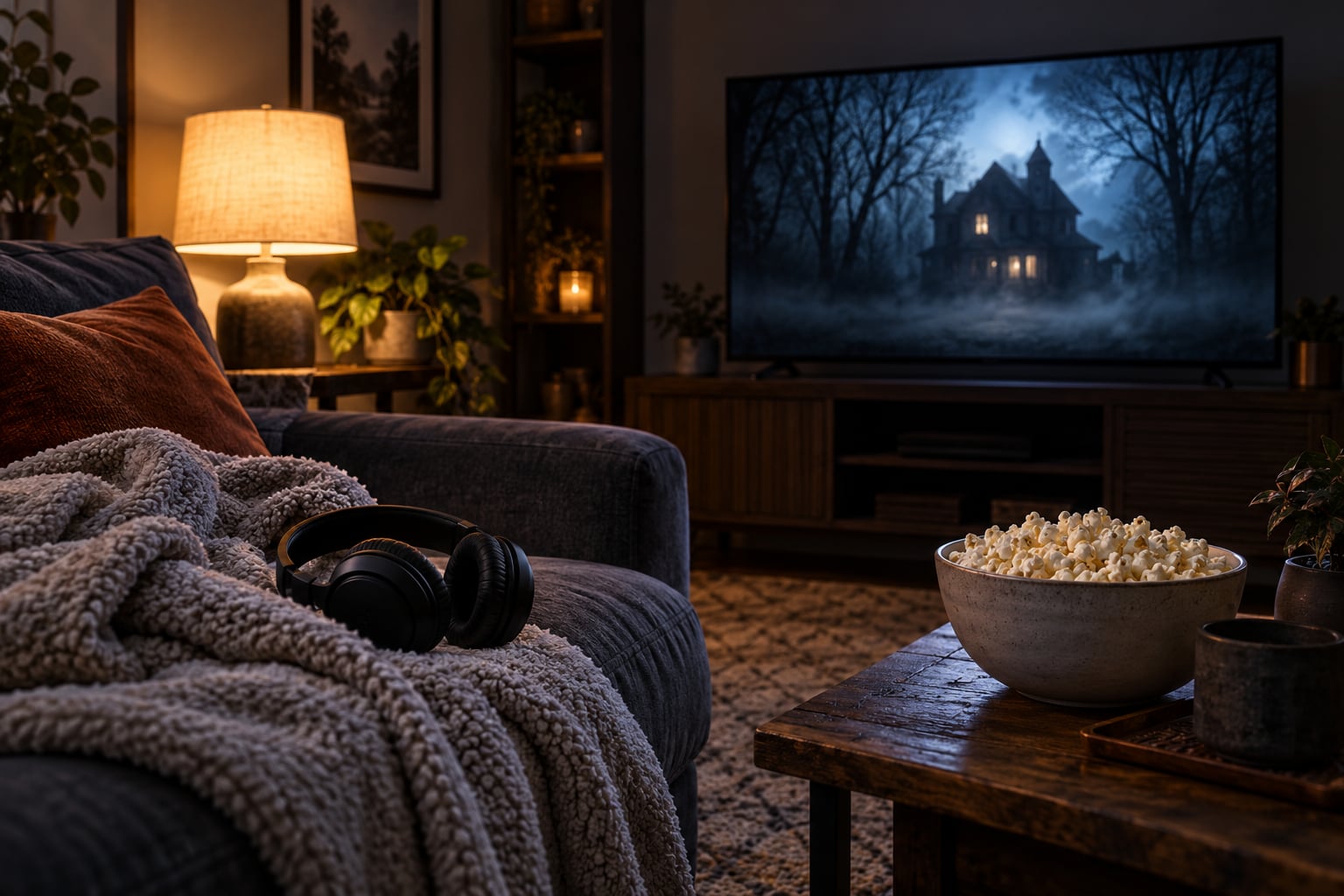
To watch scary movies without nightmares, you control three things: when you watch, how much the film hits your senses, and what you do in the hour after the credits. Horror triggers a real fight-or-flight response, and that arousal does not switch off the second the screen goes black. Give it a few hours and a deliberate wind-down, and most people sleep fine.
This is a system I have tuned with friends who can rattle off every franchise they own and still lie awake checking the hallway after a midnight screening. None of it is complicated. It is mostly about timing, volume, lighting and a plan for the forty minutes after the film.
It also helps to be honest about what this can and cannot do. Some people breeze through horror and never dream about it again. Others get vivid, recurring dreams from a film most viewers find mild. The steps below lower your odds and shorten the recovery. They do not promise to cancel every nightmare, and I would not sell you a trick that does.
Table of Contents
- What You Need
- Step-by-Step: How to Watch Scary Movies Without Nightmares
- 1. Choose a movie that matches your stress level
- 2. Watch earlier in the evening
- 3. Lower the volume and cut the sudden-sound surprises
- 4. Keep the room comfortable and avoid total darkness
- 5. Use a calming pre-movie routine
- 6. Watch with a trusted person
- 7. Know when to pause or stop
- 8. Transition out of the movie before bed
- 9. Keep a horror movie journal
- Common Mistakes
- Finishing a film right before sleep
- Marathoning intense films night after night
- Extra caffeine during a horror marathon
- Headphones at unsafe volume
- Treating an occasional nightmare as proof that horror is dangerous for you
- Ignoring repeated, distressing nightmares
- Frequently Asked Questions
- What should I do if a scary movie gives me nightmares?
- Can watching horror movies before bed cause nightmares?
- Are horror movies with jump scares worse for nightmares?
- Is it safe for children to watch scary movies?
- How late can I watch a horror movie before sleeping?
- Conclusion
What You Need
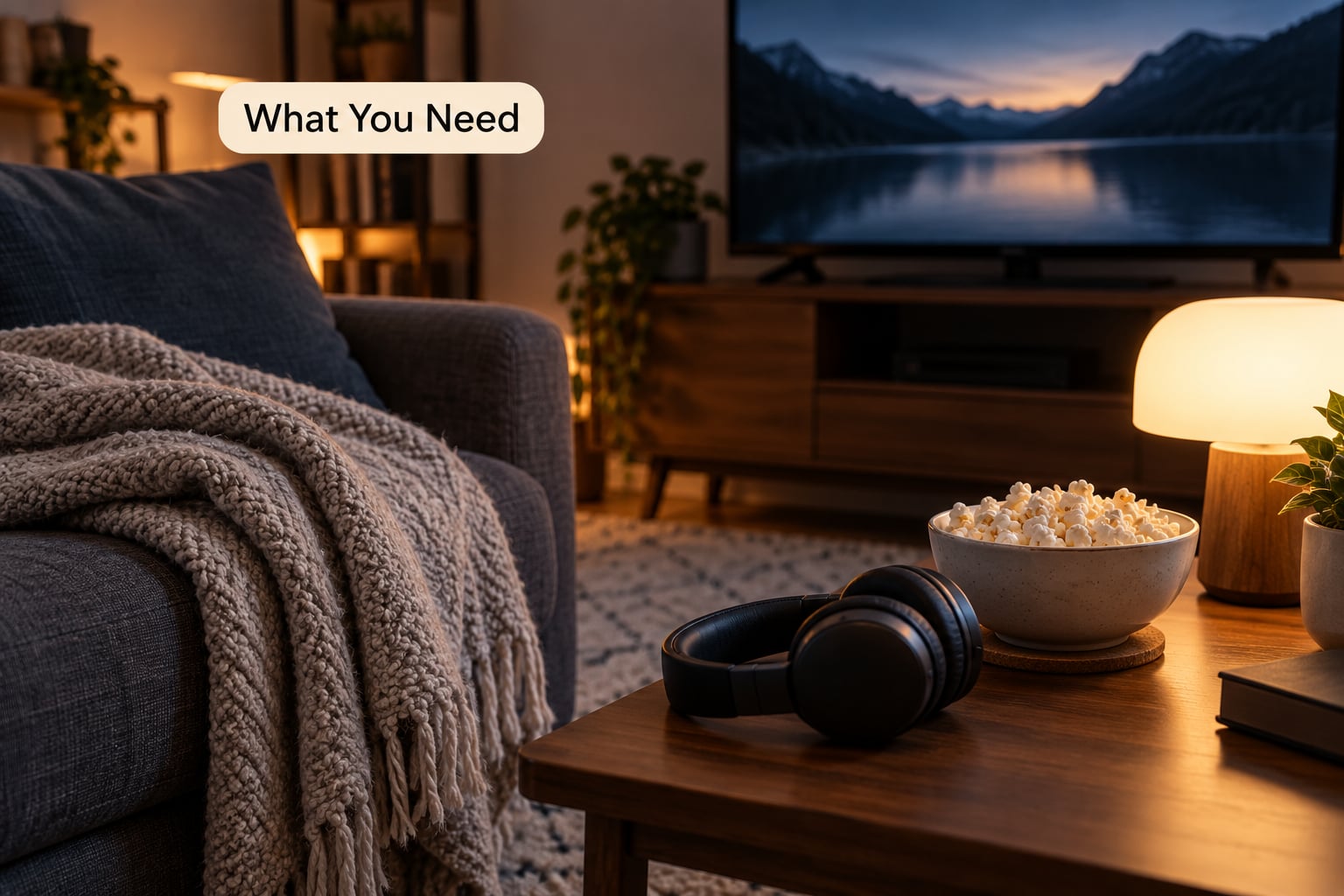
The list is short, which is good, because every item is one less excuse to postpone the movie night you already had planned.
- A screen you can pause instantly. A remote within reach matters more than screen size. Being able to stop mid-scene is what keeps a bad moment from becoming a bad night.
- Volume control that is not all or nothing. Most TVs and soundbars go from comfortable to startling in one step. A TV, a laptop or headphones with their own slider give you finer control.
- One light source you can leave on. A lamp behind the couch or beside the screen keeps the room from going fully black, and a fully dark room is where the imagination starts filling in details the film never showed.
- Something warm and physical. A blanket, a hoodie, a drink you like. Comfort matters more than most guides admit, because a tense body cannot settle.
- About three hours before your normal bedtime. That is a buffer, not a law. Adjust it based on how easily your sleep is usually disturbed.
- A plan for afterwards. Decide now what you will do in the next hour, before the film convinces you that nothing matters.
If you have kids in the house, add one more thing: an honest preview of any frightening scenes before you press play. More on that below.
Step-by-Step: How to Watch Scary Movies Without Nightmares
1. Choose a movie that matches your stress level
Pick intensity based on the day you had, not on the film’s reputation. A slow psychological film that makes you wait for dread can settle in harder than ninety minutes of loud nonsense, because dread keeps your brain narrating.
Before you commit, check three things: how many jump scares there are, whether the sound design relies on sudden bangs, and whether the ending resolves. Films that leave a threat unresolved tend to replay longer, since your brain keeps trying to finish the story. Note that no genre is automatically safe or dangerous. A campfire comedy might unsettle one person more than a slow-burn possession film unsettles another.
2. Watch earlier in the evening
Finish the film a few hours before your usual bedtime. Sleep after a horror movie is mostly about how much time your nervous system has to come down before you lie down.
Aim for a buffer of roughly three hours as a starting point, and use your own track record to adjust. People who fall asleep easily can get away with a late film. People who lie awake for an hour after a coffee or a bad meeting need more room. The worst timing is finishing a film in the last hour before bed, when your body has no time to shift out of alert mode.
3. Lower the volume and cut the sudden-sound surprises
Turn the volume down a few notches from where dialogue is comfortable. Loud sudden sound is what produces the flinch, and the flinch is the part that lingers.
If you use subtitles, turn them on even if you do not need them. They anchor you in language rather than letting your brain invent what a muffled shape means. Skip trailers and shorts before the feature, since that is where the loudest stingers usually live. And if a film keeps building to a sting every ten minutes, that pattern is predictable enough to decide against, no matter how good the reviews are.
4. Keep the room comfortable and avoid total darkness
Leave a lamp on and sit somewhere you can shift position easily. A cold room plus a tense movie makes you physically uncomfortable, and physical discomfort is easy to misread as fear.
Physical stress is the part people forget. Clenched jaw, held breath, cold feet and a couch arm going numb all add up. If you notice you have stopped moving for forty minutes, stand up during a quiet scene and stretch. Small, boring physical actions give your body an outlet and give your attention somewhere to land.
5. Use a calming pre-movie routine
Treat the movie like an event with a beginning, not something you fall into from scrolling. Eat normally rather than skipping or overdoing it, use the bathroom first, and skip the extra coffee or energy drink.
Caffeine is the most underrated culprit. A double espresso at 9pm does not make you feel wired, it just quietly shortens your sleep later, and you blame the movie for a problem you built hours earlier. Decide in advance that you can stop the film at any point without explaining why. Having permission granted in advance removes the pressure to push through a scene that is doing more harm than good.
6. Watch with a trusted person
Company changes the experience more than almost any setting. A person next to you gives your brain something real to process, and it makes permission to pause feel natural instead of apologetic.
The best partner is someone calm, not someone who loves the genre and will egg you on. Chat about ordinary things through the tense parts. Many people find that narrating what is on screen, out loud and plainly, deflates it, because describing a thing as a wig and a sound effect is very different from reacting to it as a threat.
7. Know when to pause or stop
Warning signs show up before you fall asleep badly, if you learn to catch them. Common ones: holding your breath through a scene, jaw clenched, eyes scanning a dark room that is only dark because you turned the lamp off.
When you notice one, pause. That is the whole technique. Use the pause to do something physical and ordinary, such as get a drink or check the front door, and then decide whether to continue. Skipping or turning off a film is not failure. It is the single most effective thing in this guide, and it costs nothing.
8. Transition out of the movie before bed
Do not go straight from the credits to bed. Give yourself a deliberate bridge of about thirty minutes that has nothing frightening in it: a shower, a snack, a light stretch, a low-stakes show, a podcast you have heard before.
Slow breathing helps more than people expect, partly because exhales are hard to tense up. Box breathing, four counts in and four counts out, for two or three minutes is a reasonable starting point. People who wake startled in the night after a horror film sometimes get sleep paralysis, a temporary state of consciousness where you feel awake but cannot move. It passes on its own. Trying to move harder makes it worse, so stay still, remind yourself where you are, and focus on moving your fingers and toes.
Some viewers find that a night-light or background noise changes the whole night. Others find it makes things worse by keeping attention on the dark. Test it once, during a week when a bad night would not hurt you.
9. Keep a horror movie journal
Write down three things after each film: what you watched, how you felt during it, and how you slept. Ten minutes of notes a month is enough to find your pattern.
Most people find one of three results. Either a subgenre reliably costs them sleep, or the timing is what matters, or the films they enjoy most are also the ones that keep replaying in dreams. Journaling turns a vague sense that horror is bad for you into something specific enough to act on, and it makes gradual progress visible when you would otherwise feel stuck.
Common Mistakes
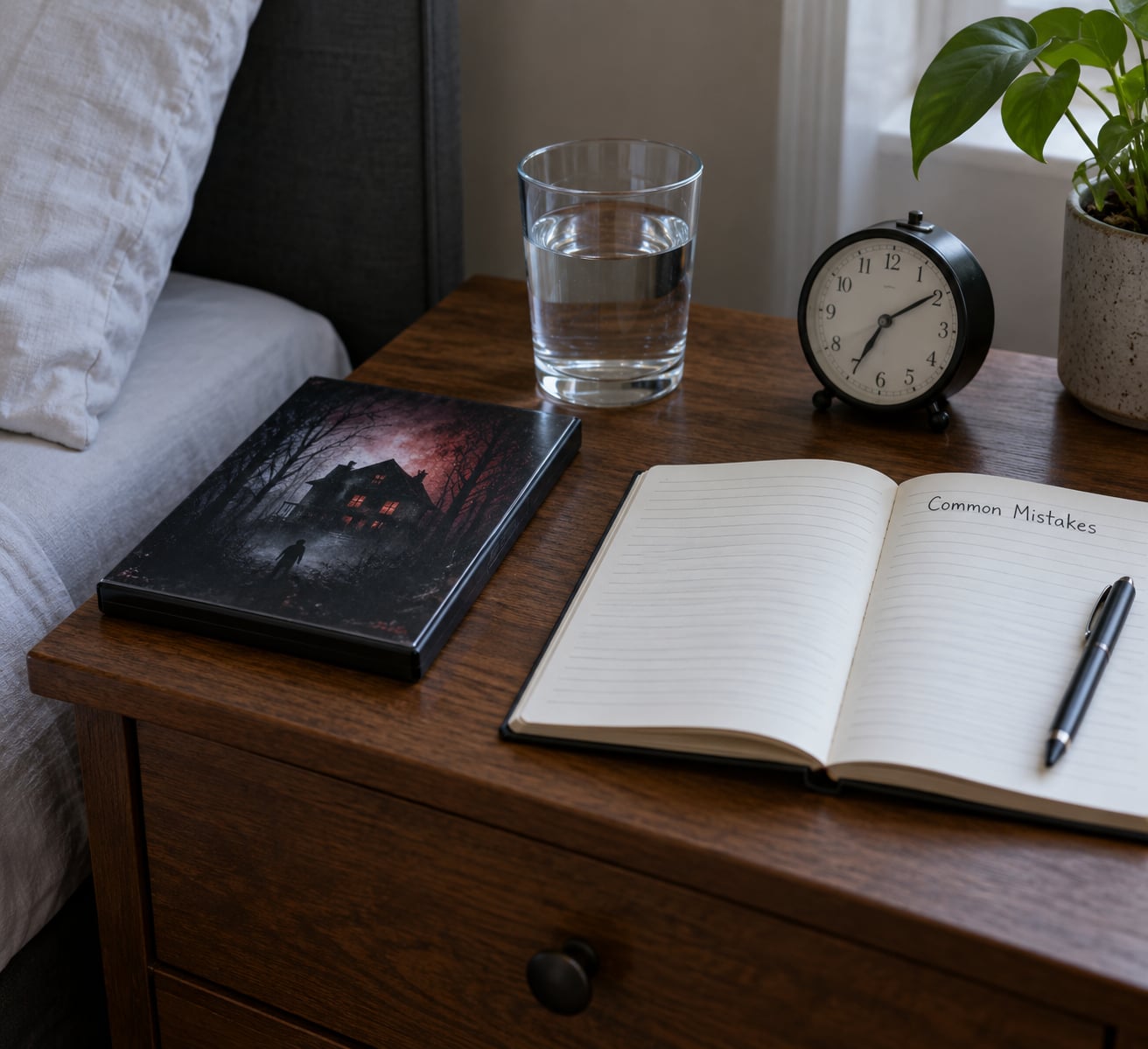
These are the habits that undo all the work above, and every one of them is common.
Finishing a film right before sleep
This is the single biggest mistake, and no technique fully compensates for it. Watch earlier and the rest of the guide becomes optional.
Marathoning intense films night after night
October makes it easy to run three horrors in a weekend. Each one stacks on the last, because the arousal from Friday has not fully cleared by Sunday. Take a night off between the intense ones, even if you feel fine.
Extra caffeine during a horror marathon
You are stacking a stimulant on top of an activated nervous system. Keep caffeine to the morning and the film will cost you less.
Headphones at unsafe volume
This is a hearing risk first. Turn it down before you get invested, because once a scene has you hooked, raising the volume feels like the only option.
Treating an occasional nightmare as proof that horror is dangerous for you
One bad night after a bad film is not a pattern. The habit of watching and then dreading the result is often the part that keeps the fear alive, which is why people who watch with lights on and a plan tend to relax over time. Nobody wants an anxiety-shaped hobby.
Ignoring repeated, distressing nightmares
If nightmares recur often, feel distressing, or make you avoid sleep, that is worth talking to a doctor or therapist. Recurrent vivid dreams are a recognized condition, and treatments exist, including imagery rehearsal therapy and cognitive behavioural therapy for insomnia. Nobody needs to just endure bad nights for years.
Frequently Asked Questions
What should I do if a scary movie gives me nightmares?
Stop rewatching the intense scenes, because repeated exposure replays them again that night. Return to your normal bedtime routine rather than changing it, since an irregular schedule adds to the problem. Do something calm and screen-free for half an hour, and keep lights on if that helps you settle. If nightmares keep happening or start affecting your days, speak with a doctor or therapist.
Can watching horror movies before bed cause nightmares?
It can, but it is far from inevitable. Horror raises your heart rate and dumps adrenaline and cortisol into your system, and vivid emotional scenes tend to resurface during REM sleep. Timing matters most, so watching several hours before bed leaves room for that arousal to fade. Plenty of regular horror viewers never have a bad night at all.
Are horror movies with jump scares worse for nightmares?
Usually yes, because a jump scare is a sudden sound and visual event that your body reacts to before your brain catches up. That spike takes longer to come down than ordinary tension. You can soften it by lowering the volume, leaving a lamp on, skipping trailers beforehand, and picking a film where you know the stingers are spaced out.
Is it safe for children to watch scary movies?
There is no single age, so judge the content and the child. Kids tend to struggle more with creatures, darkness and unresolved threats than adults do, and they are less able to tell fiction from reality. Preview frightening scenes, watch well before bedtime, and pick something your child will not fear after the credits. If they seem unsettled, stop and pick something lighter.
How late can I watch a horror movie before sleeping?
There is no universal cutoff, because sleep sensitivity varies a lot between people. A buffer of around three hours is a reasonable starting point, and many people need more. If you already know your sleep is light or easily disrupted, give yourself a longer gap. The first few nights of testing should happen on a night where a bad night will not matter much.
Conclusion
Start with the timing, because that single change does more than everything else combined. Pick a film that suits how tired and wound up you already are, watch it a few hours before bed with the volume down and a lamp on, then give yourself thirty calm minutes before you lie down.
Give yourself permission to stop early. That is the step most people skip, and it is the one that keeps a bad scene from turning into a bad night. Keep a short journal for a month and you will know more about your own triggers than any general guide, including this one, can tell you.