
If you want the short answer to how to watch the alien movies in order, it is release order: Alien (1979), Aliens (1986), Alien 3 (1992), Alien: Resurrection (1997), Alien: Covenant (2017), then Alien: Romulus (2024). That is the six-film core of the franchise, and it is the order I recommend for anyone starting cold. The two Alien vs. Predator crossovers sit outside this list on purpose.
Total screen time for the six runs a little over eleven hours. Add the optional Prometheus and the five-part TV series Alien: Earth and you are looking at a long weekend rather than a weeknight. Streaming rights move between services by region and change often, so check what your platform currently carries before you start, and check that it carries the cut you want. Last reviewed for October 2026.
Table of Contents
- How to Watch the Alien Movies in Order at a Glance
- Which Alien Movie Should You Watch First?
- The Six-Film Viewing Checklist
- How to Watch the Alien Movies in Order: Release-Order Checklist
- 1. Alien (1979): Start the Franchise Here
- 2. Aliens (1986): The Essential Continuation
- 3. Alien 3 (1992): The Original Trilogy Ends
- 4. Alien Resurrection (1997): The Unrated Chapter
- 5. Alien: Covenant (2017): A New Story Arc Begins
- 6. Alien: Romulus (2024): The Current Endpoint
- Which Cut of Each Alien Movie Should You Watch?
- Do the Alien Prequels Need to Be Watched in Release Order?
- Should You Watch the Alien Movies by Release Order or Story Timeline?
- Are the Alien vs. Predator Movies Part of the Alien Franchise?
- Frequently Asked Questions
- Do I need to watch the Alien prequels before the six main movies?
- Can I watch Alien: Romulus without seeing Alien: Covenant?
- How long does it take to watch all six Alien movies?
- Are the extended editions of Alien and Aliens better than the theatrical cuts?
- Should the Alien vs. Predator movies be watched before Alien: Covenant?
- Conclusion
How to Watch the Alien Movies in Order at a Glance

This is release order, the sequence the films were first shown in, and it is the one to use for a first run. Runtime figures are the standard theatrical cuts. The final column is the version I would actually put on.
| # | Film | Year | Director | Runtime | Story phase | Watch |
|---|---|---|---|---|---|---|
| 1 | Alien | 1979 | Ridley Scott | 117 min | Original trilogy opens | Theatrical cut |
| 2 | Aliens | 1986 | James Cameron | 137 min | Direct continuation | Special Edition |
| 3 | Alien 3 | 1992 | David Fincher | 137 min | Original trilogy closes | Theatrical or Assembly |
| 4 | Alien: Resurrection | 1997 | Jean-Pierre Jeunet | 111 min | Original trilogy ends | Collector’s Edition |
| 5 | Alien: Covenant | 2017 | Ridley Scott | 105 min | New arc begins | Theatrical cut |
| 6 | Alien: Romulus | 2024 | Fede Alvarez | 101 min | Back to the Nostromo era | Theatrical cut |
One film sits between numbers four and five and belongs on your list if you care about where the creatures came from: Prometheus (2012, Ridley Scott, 124 min). It is a prequel to the prequels and it is the single most common place new viewers get stuck. I have kept it out of the numbered core so the six-film run stays clean, and covered it properly in the prequel section below.
Which Alien Movie Should You Watch First?
Start with Alien (1979). Everything else in the franchise is a response to it, and almost nothing lands properly if you have not seen it first.
It is also the shortest commitment on the list at 117 minutes, which matters when you are not sure whether the franchise is for you. The 1979 film sets the rules the later movies keep breaking: a working crew, a bad corporate decision, a creature nobody understands, and a lot of very quiet scenes. Ridley Scott’s horror is unhurried, so give it the time. If you are binging and checking your phone, the first hour will feel slow and then it will not.
No prequel goes first. Prometheus, Covenant and Romulus all assume you already know who Ripley is. Alien: Earth is a television series set before the films, and it is a poor substitute for the 1979 original because it works on a completely different rhythm. Hold it until you have finished the six.
The Six-Film Viewing Checklist
How to Watch the Alien Movies in Order: Release-Order Checklist
- Alien (1979) — the crew of a commercial towing ship answers a distress signal.
- Aliens (1986) — the survivors are back on a bigger ship with a bigger crew and a bigger problem.
- Alien 3 (1992) — a new location, a new cast, and no safety net from the first two films.
- Alien: Resurrection (1997) — the crew is assembled again, this time by a scientist with her own plan.
- Alien: Covenant (2017) — a colony ship arrives at a planet and uncovers something older than the crew.
- Alien: Romulus (2024) — a small crew on a derelict station, and the franchise’s timeline folds back on itself.
Two reminders between films. After Alien 3, do not go looking for explanations of what you just saw; the next film answers part of it and the rest stays open. And after Covenant, keep Romulus for a fresh evening rather than the same night, because it is a different kind of film and the tonal shift lands harder with a gap.
1. Alien (1979): Start the Franchise Here
Ridley Scott’s debut feature is a haunted-house story in space. Seven commercial employees aboard the USCSS Nostromo wake their ship early to investigate a beeping signal and end up sharing their cargo hold with something that treats the crew as building material.
Ran roughly 117 minutes in its theatrical version. Sigourney Weaver plays Ripley, who is not a hero for most of the film, and the supporting cast is small enough that you will remember every name. Tom Skerritt, Yaphet Kotto, Ian Holm, Harry Dean Stanton.
For a first viewing, watch the theatrical cut. The 2003 Director’s Cut is an assembly of existing footage with new CGI work and a score that does not sit right next the original; it is a curiosity for later, not an entry point.
2. Aliens (1986): The Essential Continuation
James Cameron made Aliens after Alien and The Terminator, and it is the best action film in the series by a distance. It picks up with Ripley and the surviving Nostromo crew, now working on the USS Sulaco as a salvage operation gets complicated by corporate interference and a new colony with its own problems.
At 137 minutes, it is twenty minutes longer than the original and much louder. Ripley is now a different person, and the returning cast members have aged and changed rank. It introduces a second Xenomorph type that changes how the whole franchise is fought.
A word on content. This is a war film with genuinely extreme violence, harsh language and a body count that is easy to lose track of. If you are squeamish, know that before pressing play rather than discovering it halfway through. Watch the Special Edition: the extra roughly two minutes of a dance scene and a few other adjustments genuinely improve the film, and unlike the Alien Director’s Cut nobody argues against it.
3. Alien 3 (1992): The Original Trilogy Ends
David Fincher’s first feature follows a prison colony planet after the crew escapes the Sulaco. Everything you learned from the first two films about the crew’s dynamics and about how the creature works carries straight into it, and the film is much bleaker and more cynical than its predecessors.
Ran about 137 minutes, so it is a long sit. Fincher brings a harder visual palette and a colder sense of humour than Cameron did. The cast changes completely apart from Ripley, so there is no ensemble to pick up. What you are really bringing to this one is knowledge of how badly the company’s decisions tend to go.
This is the first film where skipping becomes tempting. It is the weakest of the original trilogy by most people’s measure, and you can jump from Aliens to Resurrection without breaking the main storyline. What you lose is a closing chapter for the colonial era and a lot of the franchise’s bleakest material, which is a real part of the character’s arc.
4. Alien Resurrection (1997): The Unrated Chapter
Jean-Pierre Jeunet, who made the surreal Amelie, took over the franchise and made it funny, glossy and much more brutal than the films before it. Ripley is cloned, which is the film’s central idea, and the movie has more nudity, gore and gallows humour than anything else titled Alien.
Runtime is about 111 minutes, the shortest of the post-1979 films. Content-wise it is the most freely graphic entry: nudity, torture, medical procedures and a creature that is a considerable step further than anything in the first three films.
Do not skip it on reputation. It is stylistically the odd one out, and that is exactly why it is interesting after four more sombre films. It also hands the franchise one of its better ideas about how the Xenomorph could persist without a natural host. The Collector’s Edition is the version to find, since the theatrical release was rated in a way that later changed and the special material was cut from the original home release.
5. Alien: Covenant (2017): A New Story Arc Begins
Covenant opens a different chapter. A colony ship full of sleeping colonists drifts to a planet, wakes its crew and finds an ancient structure that nobody should be alive to find. Katherine Waterston plays Daniels and Michael Fassbender plays the android David, the most talked-about character in the film for good reason.
At 105 minutes it is the tightest of the Scott films, and its tone sits between horror and moody science fiction. Where Alien kept its characters talking, Covenant leans on silence and dread.
It is also where most viewers get confused, because it is a sequel to Prometheus and a prequel to Alien at the same time. Watch it as the fifth film in release order and it works perfectly. Its reputation took a hit in 2017, largely because fans felt burned by Prometheus, and that has faded. Do not skip it. Romulus lands differently depending on it, and skipping it leaves the last film without context.
6. Alien: Romulus (2024): The Current Endpoint
Fede Alvarez, who made the effective Evil Dead reboots, made the most frightening film in the series. The premise is deliberately small: a crew of seven scavengers working a derelict station, with almost no dialogue, no exposition and very little light. Cailee Spaeny plays Rain, and it is a first leading role that carries a lot of weight.
It runs about 101 minutes, roughly half of Aliens, and it is an ending more than a beginning. Without spoiling anything: it reconnects directly to the world of the 1979 film and closes a loop more than forty years open. The ominous prologue, the explicitly unnamed creature and the unglamorous modern-day framing are all deliberate callbacks.
Six films is where the released features currently sit. A franchise this old always has something announced, and Romulus is the latest released feature as of October 2026. The TV series Alien: Earth is set in the same era as the original and is best treated as a follow-up for a completed run, not a substitute for one.
Which Cut of Each Alien Movie Should You Watch?
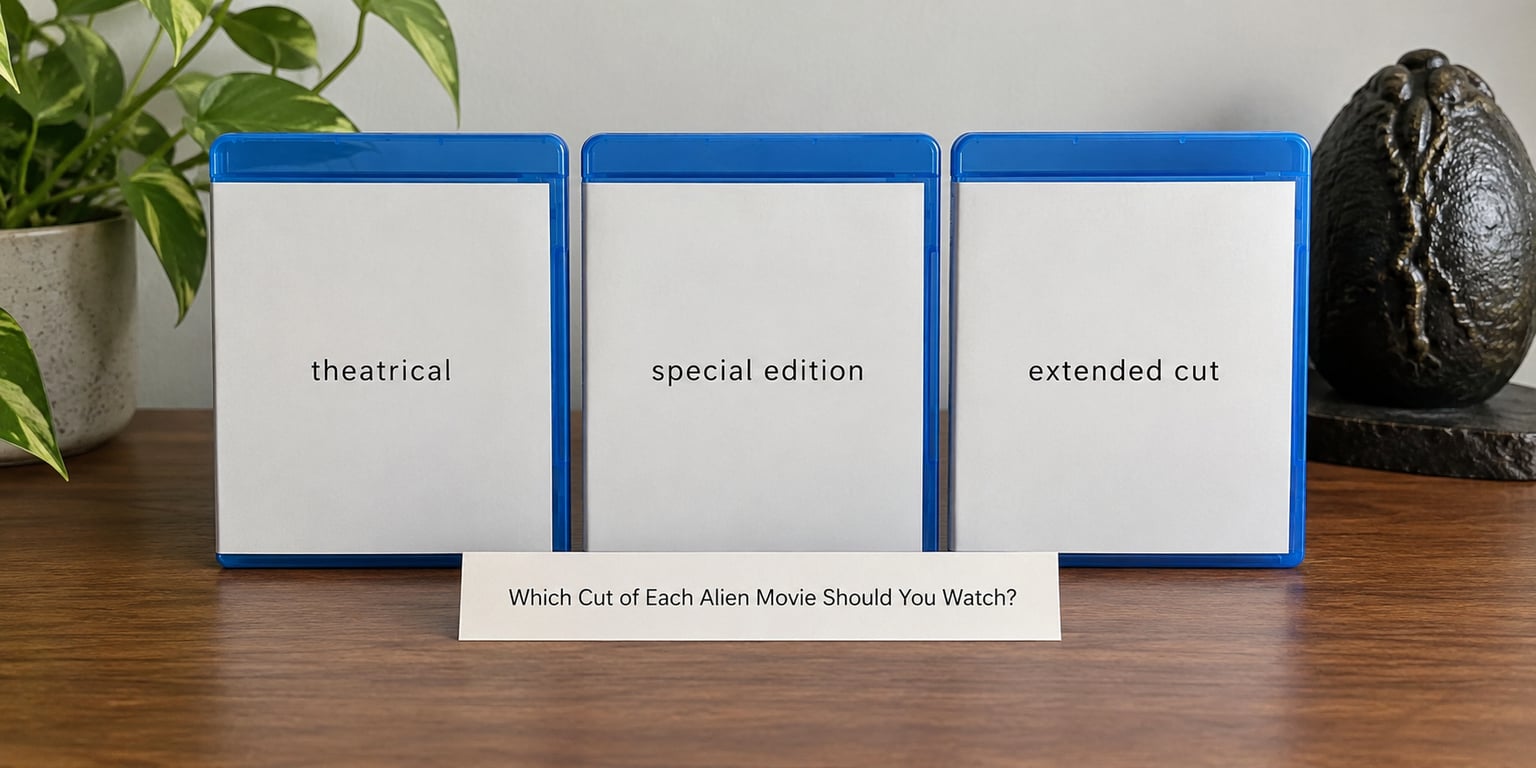
Default to the best-reviewed home video edition of each film and ignore the “definitive cut” arguments until you have seen the movies once. Cut names in this franchise are marketing more than filmmaking, and the differences range from trivial to a completely different film.
Alien (1979) — theatrical cut, 117 minutes. The 2003 Director’s Cut is 138 minutes and adds a scene most viewers cannot tell apart from the surrounding material. Watch the short one.
Aliens (1986) — Special Edition, roughly 139 minutes. The theatrical version clocks in around 137. Two extra minutes of a cargo-loader dance sequence and a slightly altered ending make the Special Edition the better film. This is the rare case where the extended version is simply better.
Alien 3 (1992) — theatrical cut, about 137 minutes. The Assembly Cut is roughly 30 minutes longer, was assembled for a release that never happened worldwide, and changes the ending in a way most viewers find worse. A Restoration edit appeared in 2026 and runs about 141 minutes using effects completed for the original production. Treat it as a rewatch option, not a first look.
Alien: Resurrection (1997) — Collector’s Edition, about 111 minutes, sometimes listed as the Extended Edition. It restores an extended ending. The “Assembly Edition” on some releases is a different, older assembly and is a genuine curiosity rather than a recommendation.
Alien: Covenant (2017) — theatrical cut, 105 minutes. There is no director’s cut. Several fan edits exist, none official.
Alien: Romulus (2024) — theatrical cut, 101 minutes, including the opening prologue. Some streaming platforms split the prologue into a separate short or drop it; if you can, watch the full feature as released so the framing works.
The practical problem is that these cuts are scattered. Licensing is different in every country, and services that carry one film rarely carry its special features. Before you start, look up the films in your region and note which edition you are getting, because finding the Aliens Special Edition after you have already watched the theatrical version is annoying.
Do the Alien Prequels Need to Be Watched in Release Order?
Only if you choose to watch them, and yes, in release order, because Prometheus then Covenant then Romulus is how they were made and how they pay off.
What is already in the six-film list needs clarifying. Covenant and Romulus both contain prequel material inside a sequel structure, and neither is skippable or optional. Prometheus is different: it is a full prequel film, it is the most divisive hour and fifty minutes in the franchise, and nothing in the six-film run breaks without it.
Add it after Resurrection and before Covenant, or skip it and accept that the Engineers never get a proper introduction. For a first run, my preference is to skip it. You lose a mythology rather than a story, and the six films tell a complete arc on their own.
The television series Alien: Earth is a separate decision. It is set decades before the films and assumes you know the cast of the original, so put it after Romulus. Watching it second, as some people do to catch the timeline, spoils the texture of the 1979 film without explaining it better.
Should You Watch the Alien Movies by Release Order or Story Timeline?
Use release order. The in-universe timeline is a genuinely interesting rearrangement and it is the wrong tool for a first viewing.
Here is both, side by side. The in-universe years are approximate and, for the prequel era, contested by fans.
| Release order | Film | Approx. in-universe year |
|---|---|---|
| 1 | Prometheus | 2093 |
| 2 | Alien: Covenant | 2104 |
| 3 | Alien: Romulus | 2122 |
| 4 | Alien | 2122 |
| 5 | Aliens | 2173 |
| 6 | Alien 3 | 2173 and after |
| 7 | Alien: Resurrection | Late 2170s |
Chronological order tells you the history of the species before it tells you anything about the people who meet it. You start with engineers on a sterile world, then a clone army, then a woman called Ripley waking up on a ship with no idea why she is significant. It is a good way to understand the franchise’s design and a poor way to feel anything.
Release order does the opposite. It gives you one very frightened film, then a sequel you have to recover from, then a character study, then something strange, then a horror movie, then a prequel. The genre shifts are part of the ride. Many fans who watch chronologically first end up concluding the franchise is hollow when what they actually did was read the last act before the first one.
My own recommendation: release order for run one, chronological order for run two once you already know the story and want to see how the pieces were built.
Are the Alien vs. Predator Movies Part of the Alien Franchise?
Not for the purposes of this guide, and the honest answer is that the franchise itself has never settled it.
Alien vs. Predator (2004) and Aliens vs. Predator: Requiem (2007) were made to sell two merchandise lines at once. They have their own continuity, a different tone, a different cast and their own pair of films that follow them in the Predator series. Nothing in them connects to Ridley Scott’s prequel films, and the connections that later Alien movies make to the wider universe quietly ignore them.
So treat them as their own list, not a chapter in this one. Two options if you like them: watch them immediately after Alien: Resurrection, while you are in the mood for the 1990s and 2000s style, or watch them as part of a combined Predator marathon. What you should not do is slot them between Alien and Aliens because you saw them in that order on a listicle.
If you want the crossover version, the combined order people actually use runs Predator (1987), Alien (1979), Predator 2 (1990), Aliens vs. Predator (2004), Aliens (1986), Aliens vs. Predator: Requiem (2007), Alien 3 (1992), Alien: Resurrection (1997), Prey (2021), then the prequel trilogy. Fans disagree on where Prey belongs, which tells you how loose the rules are.
Frequently Asked Questions
Do I need to watch the Alien prequels before the six main movies?
No. The six-film run stands on its own, and the prequel material inside Alien: Covenant and Alien: Romulus arrives in a way that assumes nothing. Prometheus (2012) is the only standalone prequel film, and skipping it costs you a mythology, not a storyline. Add it after Alien: Resurrection if you want the full history of the Engineers, but many viewers watch the six first and never go back.
Can I watch Alien: Romulus without seeing Alien: Covenant?
Technically yes, but you will lose a lot. Romulus directly continues the ending of Covenant and reuses characters and ideas set up there, so without it the film reads as a standalone horror movie with unexplained flashbacks. Covenant is only 105 minutes. Watching the two back to back also mirrors how the story was built, since Romulus was made as a direct continuation.
How long does it take to watch all six Alien movies?
About eleven hours in total, plus roughly ten minutes of credits. Alien runs 117 minutes, Aliens 137, Alien 3 137, Alien: Resurrection 111, Alien: Covenant 105 and Alien: Romulus 101. Using the longer Aliens Special Edition adds a couple of minutes. That is comfortably two evenings, or one long one with a proper break between Alien 3 and Resurrection.
Are the extended editions of Alien and Aliens better than the theatrical cuts?
It depends on the film, and the difference is bigger than most people expect. Aliens genuinely improves in its Special Edition, which adds about two minutes and some scene adjustments, so that is the one to watch. Alien’s 2003 Director’s Cut is a separate 138-minute edition that most viewers do not need, so stick with the 117-minute theatrical cut for a first viewing.
Should the Alien vs. Predator movies be watched before Alien: Covenant?
They can go either way because they share nothing with the prequel films. Watch them after Alien: Resurrection if you want the darker, effects-driven 1990s and 2000s films grouped together, or leave them for a separate Predator marathon later. Just avoid putting them between Alien and Aliens, which is a common mistake in other guides and breaks the momentum of the first sequel.
Conclusion
Start with Alien on a night you are not tired, because the first hour is slow on purpose. Then work through the list in release order: Aliens, Alien 3, Alien: Resurrection, Alien: Covenant, Alien: Romulus. Use the Aliens Special Edition, keep everything else on its standard cut, and leave Prometheus until the run is done.
That is how to watch the alien movies in order without overthinking it, and it takes about eleven hours. You do not need the chronologically sorted timeline, you do not need a machete cut, and you do not need to read another argument about canon before pressing play. The films were made to be watched in the order they came out, and the 1979 one is still doing most of the work.