Fall festivals celebrate the harvest, autumn weather, and community life, and they usually run for several weeks between September and November. Halloween events are built around costumes, treats, and fright, and they anchor to one night: October 31. The two overlap in October and share a lot of decor, which is exactly why people mix them up.
Getting it wrong is mild but real. You show up in a full costume to a craft fair that asked for jeans, or you bring a six-year-old to a haunted trail built for teenagers. On this site we hear about it constantly, so this guide lays the categories side by side, then helps you pick one for your group.
Table of Contents
- How Fall Festivals Differ From Halloween Events at a Glance
- Seasonal Timing and Event Length
- How fall festivals and Halloween events line up on the calendar
- Themes, Costumes, and Decorations
- Activities and Entertainment
- Atmosphere and Scare Level
- Crowds, Families, and Age Suitability
- Cost, Scheduling, and Practical Logistics
- Where the Two Types of Events Overlap
- Which Should You Choose?
- Frequently Asked Questions
- Are fall festivals usually held before Halloween?
- Do fall festivals allow costumes?
- Which type of event is better for young children?
- Can one event include both fall festival and Halloween activities?
- Should I buy tickets for a fall festival or Halloween event in advance?
- How can I find out whether an event is family-friendly or frightening?
- Conclusion: Choose the Kind of Spooky Day You Want
How Fall Festivals Differ From Halloween Events at a Glance
| Category | Fall festivals | Halloween events |
|---|---|---|
| Typical season | September through November | October, peaking on October 31 |
| Length | Days or weeks of programming | A single night, sometimes a weekend |
| Core purpose | Harvest, gratitude, arts, food, gathering | Costumes, candy, scares, spectacle |
| Dress expectation | Costume-optional, sometimes discouraged | Costume-expected, sometimes required |
| Signature activities | Craft vendors, live music, food stalls, hayrides, corn mazes | Trick-or-treat, haunted houses, costume contests, scare zones |
| Atmosphere | Daylight, warm, open-air, conversational | After dark, theatrical, loud, structured |
| Operating hours | Late morning to early evening | Mostly dusk to late evening |
| Admission model | Often free or low-cost general entry, paid add-ons | Tiered tickets, timed slots, bundled fright passes |
| Food focus | Cider, cider donuts, caramel apples, soup, craft beer | Candy, themed snacks, drink specials |
| Typical crowd | Mixed ages, strollers, dog-friendly, daytime | Age-tiered, older kids and adults after 8pm |
| Best fit for | Seasonal outings, crafts, music, mild entertainment | Costumes, scares, horror programming |
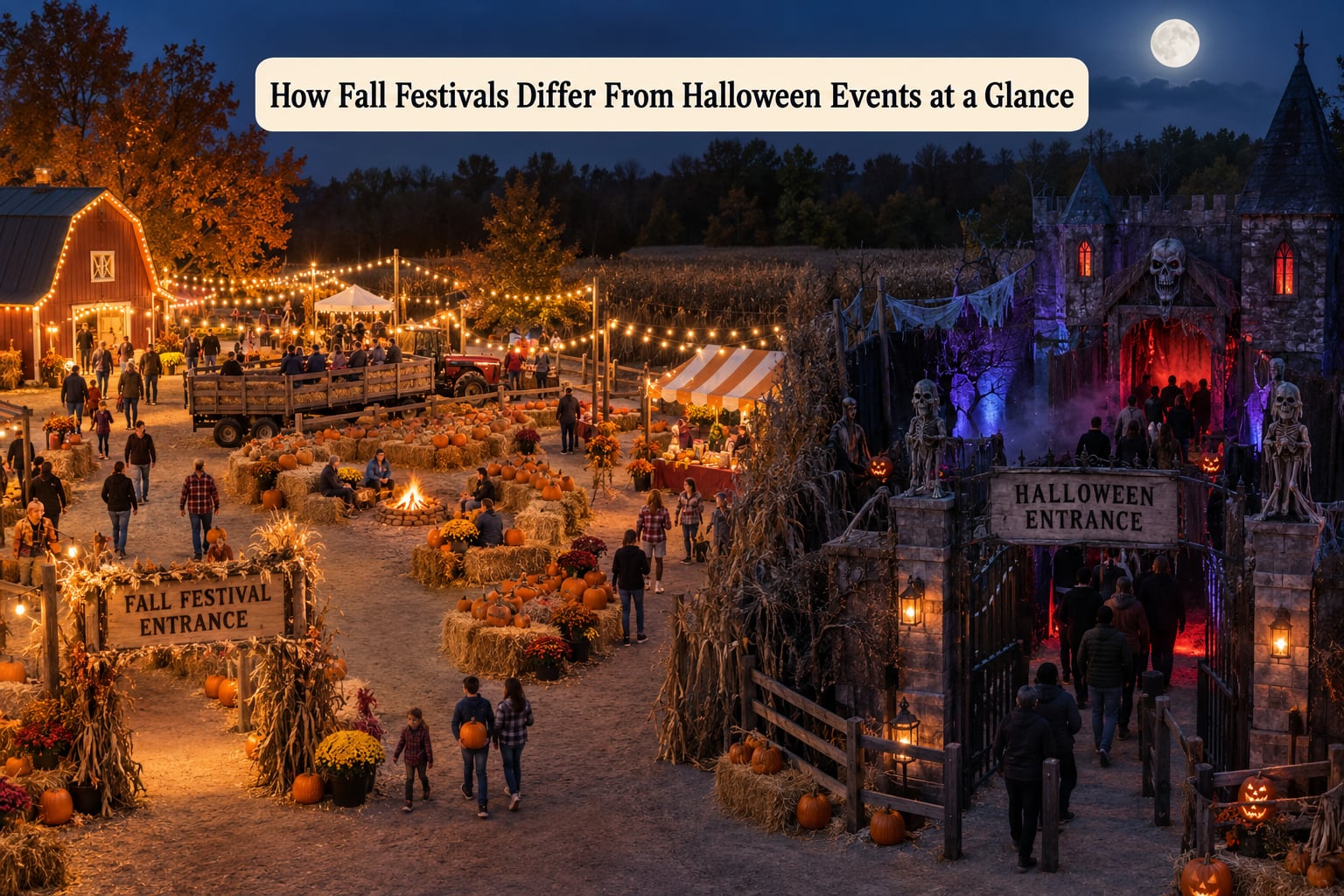
In short: fall festivals are seasonal, daytime, and costume-optional, while Halloween events are a fixed date, mostly after dark, and built around dress-up and fright.
Seasonal Timing and Event Length
How fall festivals and Halloween events line up on the calendar
A fall festival has a window. A pumpkin patch might open the first weekend of September, a homecoming parade lands in mid-October, and a food festival can run into the second week of November. That spread is what lets a festival pick a warm day and build a schedule around it.
Halloween events have a deadline. Haunted houses, fright nights, and street trick-or-treating all compress into the week around October 31, which is why those events start later in the day. The season-long ones, like a harvest festival with a haunted hayride added in October, split the difference.
Timing also decides your weather. A September festival is often warm and bright, and a late-October one can be cold enough that layers matter. Halloween nights tend to be chilly earlier, which is one reason many set up fire pits and covered queues.
The practical upshot: fall festivals give you options on the date, Halloween events give you one date. If your schedule is tight, that single difference often settles the choice before anything else does.
Themes, Costumes, and Decorations
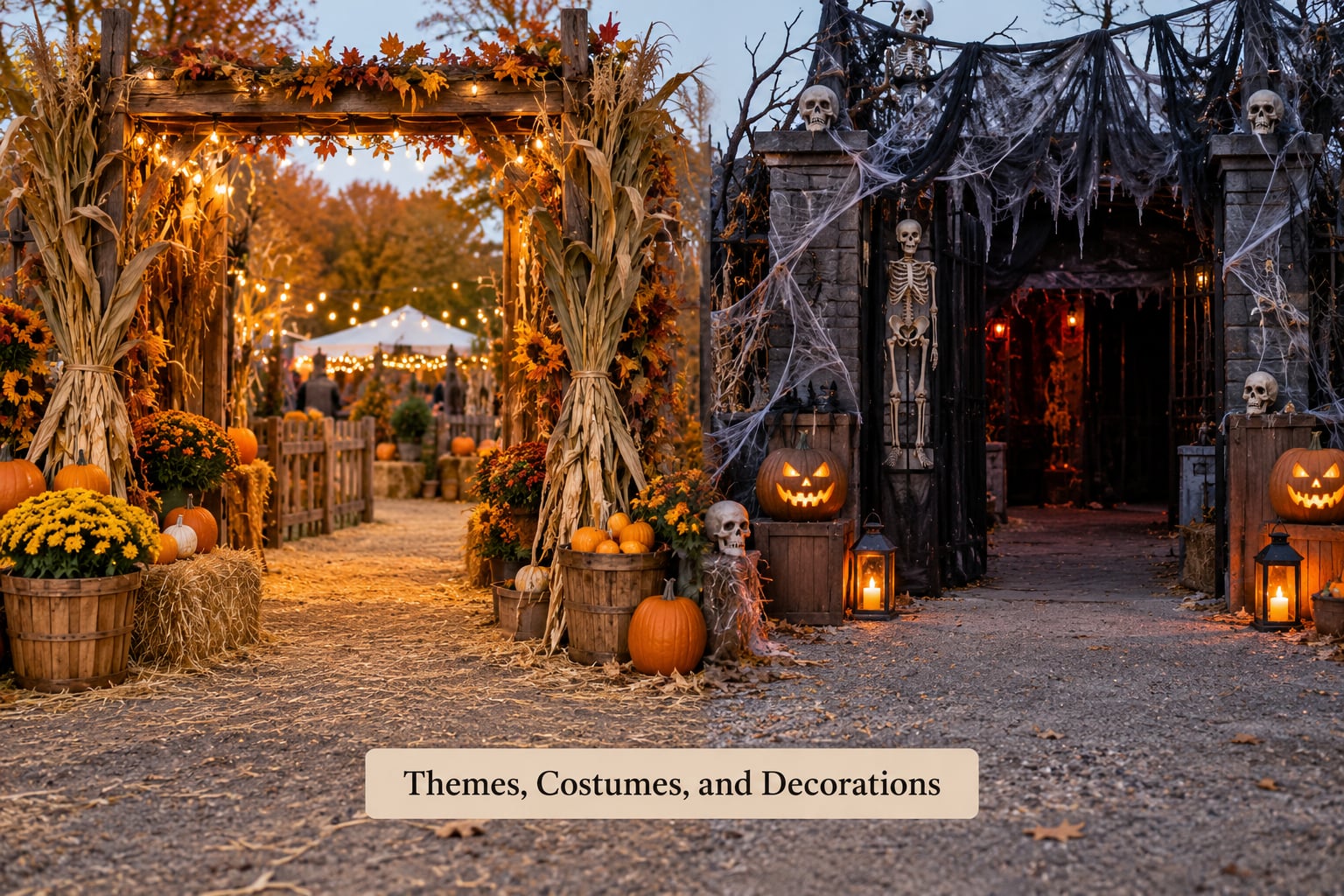
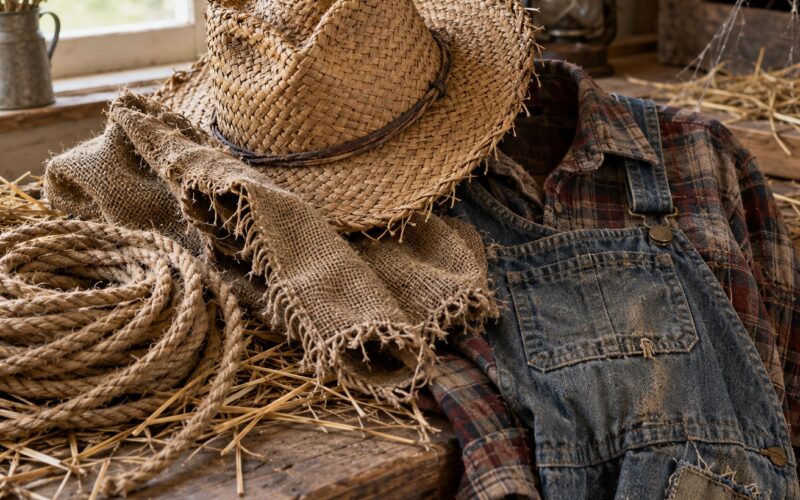
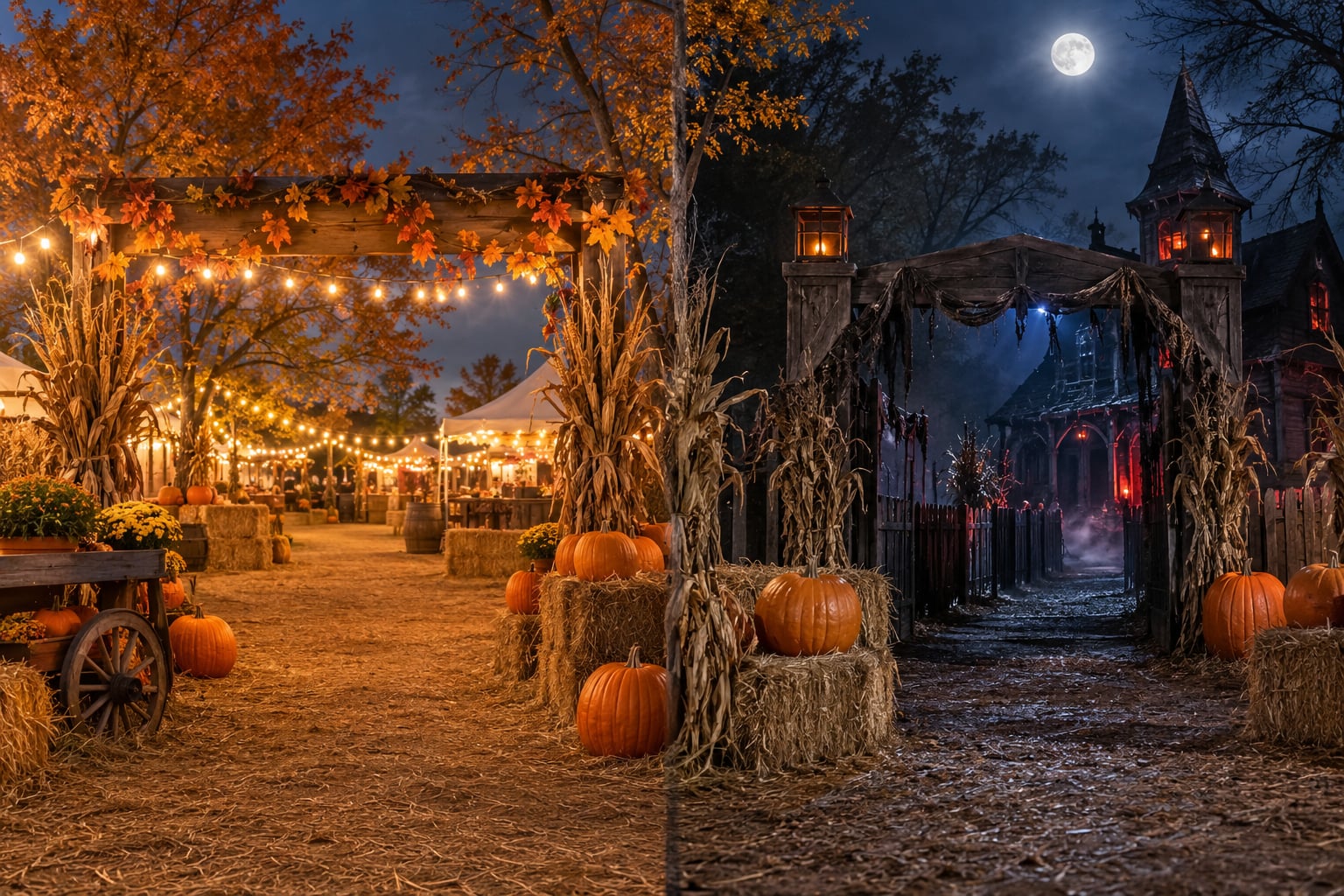
Fall festival imagery leans harvest and heritage: corn stalks, scarecrows, baskets of apples, hay bales, bundles of wheat, cider presses, and warm string lights. Nothing in that list is meant to frighten you. Some fall festivals lean arts and music instead, with white canopy tents and chalkboard menus.
Halloween imagery is built to unsettle: cobwebs, skulls, gravestones, skeletons, fog machines, and jack-o’-lanterns carved with faces instead of smiles. The lighting drops, the sound design adds low drones and sudden noises, and the color palette goes black, orange, and sickly green.
Dress expectations follow the decor almost perfectly. At a fall festival you are a customer at a market, so normal seasonal clothes work and a costume can feel like you missed the dress code. At a Halloween event arriving in ordinary jeans and a hoodie can read as not trying, especially at a costume contest.
The gray zone is a scarecrow contest or a pumpkin-carving category at a harvest event. There you are explicitly asked to dress up, just in a rustic register rather than a horror one.
Activities and Entertainment
Fall festival programming is built around participation. You make something at a craft booth, throw a pie at a target, walk a vendor row, listen to bluegrass or a folk trio, ride a wagon through the field, or navigate a corn maze in daylight. Kids hand up artwork for judging, and adults drink something warm and talk.
Halloween programming is built around a sequence. You enter, you pass a scare zone, you collect candy or tickets, and you end somewhere with food. Haunted houses run on timed entry, scare zones have actors in costume who interact with you, and costume contests put participants on a stage in numbered categories.
There is real overlap. Hayrides and corn mazes show up at both. So do trunk-or-treat, pumpkin carving, and a stage with live music. What changes is the framing: a hayride at a harvest festival is a scenic trip, and the same hayride in October has actors climbing aboard.
That overlap is the reason a lot of guides blur the two. If you read only a listing, you cannot tell which you are walking into until you see the scare actors standing at the entrance.
Atmosphere and Scare Level
Scare level is the clearest dividing line between the two categories, and it runs from nothing to extreme. Fall festivals sit near the bottom. The loudest sound might be a chainsaw competition, a petting zoo, or a band, and the scariest thing on site is usually an inflatable slide with a steep drop.
Halloween events run a spread within themselves. A trunk-or-treat in a church parking lot is gentle, with volunteers handing out candy and no actors at all. A haunted trail at a regional park is moderate, mostly jump scares and sudden voices. A professionally built haunted house can be intense enough that operators post a content warning and recommend an age floor.
You can read the tone from the listing before you leave the house. Words like fright night, scare zone, terror trail, gore, and content warning signal real scares. Words like harvest, craft, folk music, and family-friendly signal none.
For what it is worth, most parents who write in about this topic say the scare level matters far more than the theme. A cheerful pumpkin festival with a haunted corner can be managed. A fully themed Halloween night in a dark barn is harder to leave halfway through.
Crowds, Families, and Age Suitability
Fall festival crowds skew young and daytime. Strollers, grandparents, and dogs all turn up, and you can usually arrive, wander, and leave without committing to a schedule. The busiest window is late morning to early afternoon on a weekend.
Halloween crowds split by hour. Early evening skews toward families with younger kids, because parents want to be home before the late-night crowd. After about 9pm the crowd shifts to teens and adults, and the queue behavior changes with it.
Younger children do fine at a fall festival. At a Halloween event, match the activity to the child rather than the event name. A pumpkin patch or trunk-or-treat suits toddlers and early elementary kids. A corn maze suits kids who can handle 30 minutes of walking and a few costumed characters. A live-action haunted house or a full haunted trail is usually better saved for kids around 10 and up.
Teens and adults get more out of the Halloween side, with costume contests, themed nights, horror programming, and later hours. Adults chasing food, music, and crafts will find more of it at a fall festival.
Sensory needs deserve their own mention. Both categories can host a crowd that is loud, dark, and dense. Quiet zones, daylight-only hours, and low-stimulus sessions exist at larger events, but they are rarely advertised in the headline, so look for sensory-friendly wording in the details or ask the organizer directly.
Cost, Scheduling, and Practical Logistics
Entry models differ more than the themes do. Fall festivals often charge nothing or a small general admission, with money spent at vendor booths and food stands. Some sell a wristband that covers a hayride, maze, and a slice of pie.
Halloween events usually run on tickets: general admission for the grounds, timed slots for haunted houses, and bundles for everything together. Add-ons are common, such as a premium pass, a photo booth, or a souvenir pumpkin.
Parking is worth checking in advance. Harvest festivals spread out over fields and often have free or cheap parking on grass. Haunted attractions tend to be on smaller sites with a defined lot, which fills early on October 31. Arriving 30 to 45 minutes before your slot makes a bigger difference than anything else you can prepare.
Weather deserves a plan. Fall festivals are usually designed to go on in light rain and often have covered areas. Halloween queues are more exposed, and fog effects and dark walkways do not survive a downpour well. Organizers do adjust, but changes go up on their site or social accounts, not in search results.
Accessibility details, admission windows, hours, and whether parking is included all change from season to season. Confirm them with the organizer before you drive out, and check again the week of the event.
Where the Two Types of Events Overlap
Plenty of events are deliberately both, and these are the hardest to sort out from a listing. A harvest homecoming in a small town often adds trunk-or-treat in the afternoon, so you get crafts and a parade in daylight and candy at dusk.
A farm autumn festival often adds a haunted hayride or a nighttime maze in October, keeping the same site and the same ticket. The daytime version is genuinely a fall festival, and the evening version is genuinely a Halloween event, using the same farm.
Theme park seasonal events blur it most of all. A park’s fall festival runs with daytime harvest themes, and its Halloween overlay takes over the same park after dark for a month, sometimes with both running on the same day.
The overlap exists because it works commercially and practically. Many families only have one weekend free, so a single event that serves a three-year-old at 2pm and a teenager at 9pm sells more than two separate days would.
How to tell which you are walking into: look for whether the schedule lists separate daytime and evening sessions, whether costume rules appear anywhere on the page, and whether the scare content is described or left out. If it is left out entirely, ask before you go.
Which Should You Choose?
Choose a fall festival when the day is about the season itself: foliage, food, crafts, live music, and a slow walk with people of mixed ages. It suits toddlers, grandparents, school groups, and anyone who would rather not be startled. The trade-off is that costumes are usually optional and there is little to be frightened of.
Choose a Halloween event when the night is the point: dress up, walk through a scare zone, collect candy, and be home late. It suits older kids, teens, and adults who want the full seasonal tradition. The trade-off is narrower hours, ticketing, and a real chance of overstimulation.
Choose a hybrid when your group spans ages. A trunk-or-treat in the late afternoon, a nap at home, then a haunted trail after dark covers everyone without forcing the little ones through the loudest part.
Two questions settle most cases. Does your group want to be scared? And does anyone in it need a costume for the experience to feel complete? Yes and no means fall festival. Yes and yes means Halloween event.
Frequently Asked Questions
Are fall festivals usually held before Halloween?
Usually yes, though the two share plenty of October dates. Most fall festivals open in September, peak around homecoming and pumpkin season, and some run into November. Halloween events cluster tightly around October 31. So if you want the harvest version, look earlier in the season; if you want costumes and scares, look later.
Do fall festivals allow costumes?
They allow them but often do not want them. A fall festival is a public event with vendors and families, so most goers wear normal seasonal clothing, and a costume can stand out as out of place. The exceptions are themed categories such as scarecrow contests or costume parades. Check the listing for any dress note before you commit to a costume.
Which type of event is better for young children?
Fall festivals are usually the easier choice with toddlers and early elementary kids, since they are daytime, outdoors, and built around crafts and food rather than scares. Halloween events work fine for young children in specific formats: trunk-or-treat, a pumpkin patch, or a gentle family haunt. Save the live-action haunted houses and dark trails for older kids.
Can one event include both fall festival and Halloween activities?
Yes, and it is common. Harvest homecomings often add trunk-or-treat in the afternoon, farm festivals add a haunted hayride or nighttime maze in October, and theme parks run a daytime fall festival and a nighttime Halloween overlay on the same dates. These hybrids are the reason event labels alone rarely tell you what an evening will feel like.
Should I buy tickets for a fall festival or Halloween event in advance?
For a fall festival, usually not, unless it is a large ticketed festival with craft fairs or a headline performer. For a Halloween event, advance tickets are often worth it, because haunted houses and scare trails run on timed slots that sell out, and parking fills early on October 31. Either way, check whether the organizer publishes a capacity number.
How can I find out whether an event is family-friendly or frightening?
Read the listing for tone words: fright night, scare zone, terror trail, gore, and content warning signal real scares, while harvest, craft, folk music, and family-friendly signal none. Then look for a posted age recommendation, quiet or sensory-friendly sessions, and daylight hours. If none of that appears, contact the organizer directly and ask what the scare level and age guidance are.
Conclusion: Choose the Kind of Spooky Day You Want
Fall festivals run a season, celebrate the harvest, and expect normal clothes. Halloween events run to one night, celebrate costumes and fright, and expect both. Decide first whether you want seasonal community fun, real scares, or a hybrid of the two, then check the organizer’s current schedule for dates, hours, dress notes, and age guidance before you go.