To sort Halloween candy with your kids, dump the haul on a clean table, split it into named groups, and let your children choose their own favorites first. Then work through allergies, duplicates, trade piles, and storage together so the whole stash ends up in labeled containers instead of a bedroom drawer. It takes about 30 minutes.
I do this the night we get back from trick-or-treating. Last year my oldest counted 212 pieces out loud like it was a math problem, and my youngest wanted to eat the wrappers. Giving each kid a real job turned a fight about candy into something closer to a project.
Updated for 2026, and this works whether you plan to let the kids eat freely for a day or set a piece limit. The mechanics of sorting are the same either way.
Table of Contents
- What You Need
- Step-by-Step: How to Sort Halloween Candy With Your Kids
- Step 1: Set Up Safe Sorting Stations
- Step 2: Check for Allergies and Dietary Restrictions
- Step 3: Let Kids Choose Their First Favorites
- Step 4: Group Duplicates and Trade-Friendly Candy
- Step 5: Decide What to Keep, Share, and Store
- Step 6: End with a Reset and Cleanup Plan
- Common Mistakes
- Frequently Asked Questions
- How many pieces of Halloween candy should my kids eat each day?
- Should I let my kids eat all their Halloween candy?
- How do I split the candy haul fairly between two kids?
- How long does Halloween candy last before it goes bad?
- What can I give my kids instead of candy for Halloween?
- Conclusion
What You Need
You do not need anything special. The whole setup runs on whatever is already in your kitchen.
- Bowls, trays, or muffin tins for each sorting category
- Masking tape and a pen for labels, or sticky notes
- Disposable gloves if a wrapper has torn and you want to handle a loose piece
- Your family’s allergy checklist and any allergy meds a guest child needs nearby
- Zip bags or small containers for the trade pile and the storage pile
- A permanent marker to write names and dates on bags
- A scale or your phone’s calculator if you want to split a haul by weight rather than by piece
One more thing worth adding: a small jar you can seal, usually called a candy bank. Kids deposit a piece or two each day into it, and the jar gives them something to watch fill up.
Step-by-Step: How to Sort Halloween Candy With Your Kids
Step 1: Set Up Safe Sorting Stations
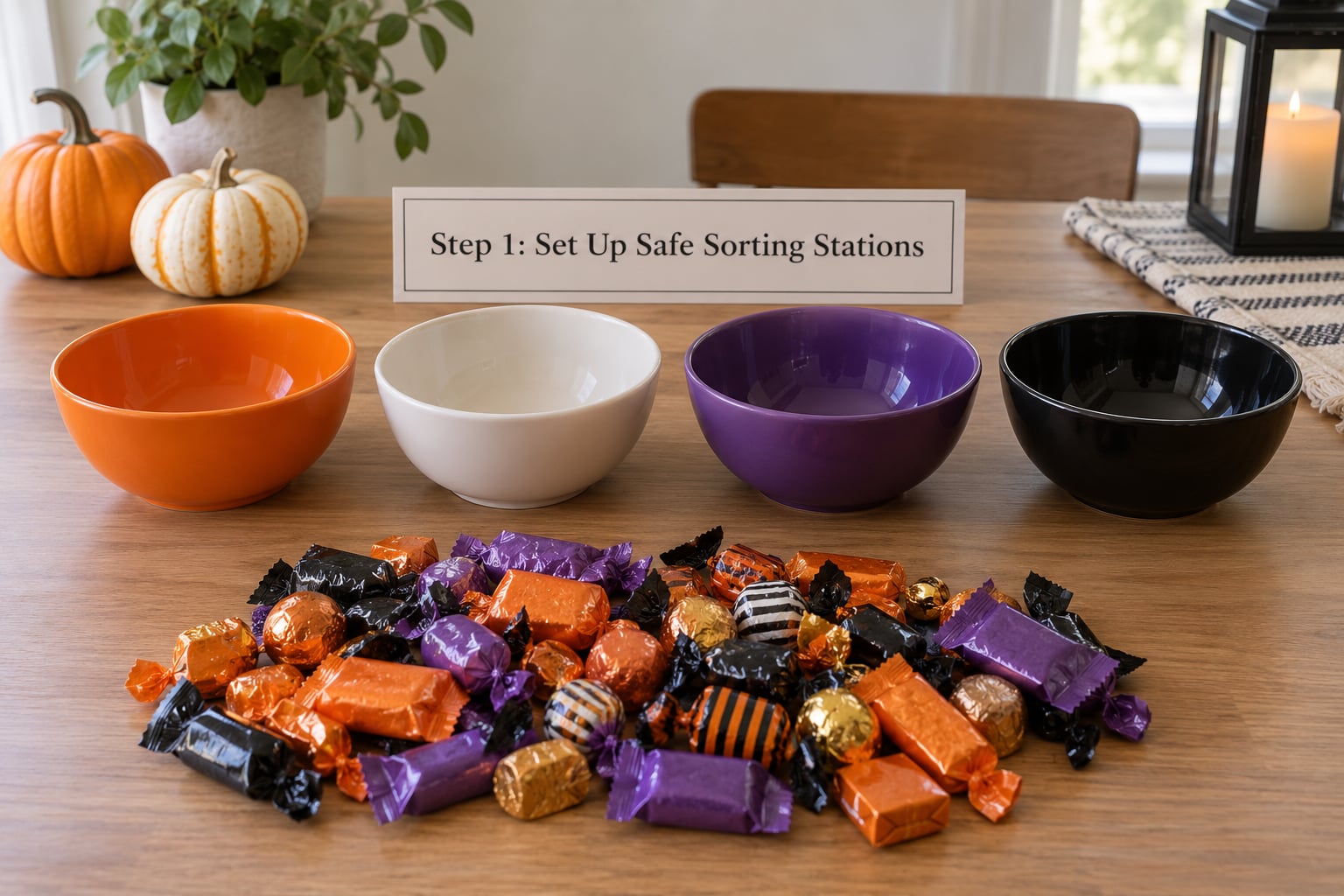
Wipe down a table or the kitchen floor first. Granulated sugar finds every surface, and sticky residue on a table is a problem that shows up a week later.
Then pull out anything already unwrapped, torn, or squashed into a discard bowl. Not for the kids’ sake, for your peace of mind. Anything dropped on a wet porch or handled by a stranger has an unknown history, and I am not brave enough to hand that to a toddler.
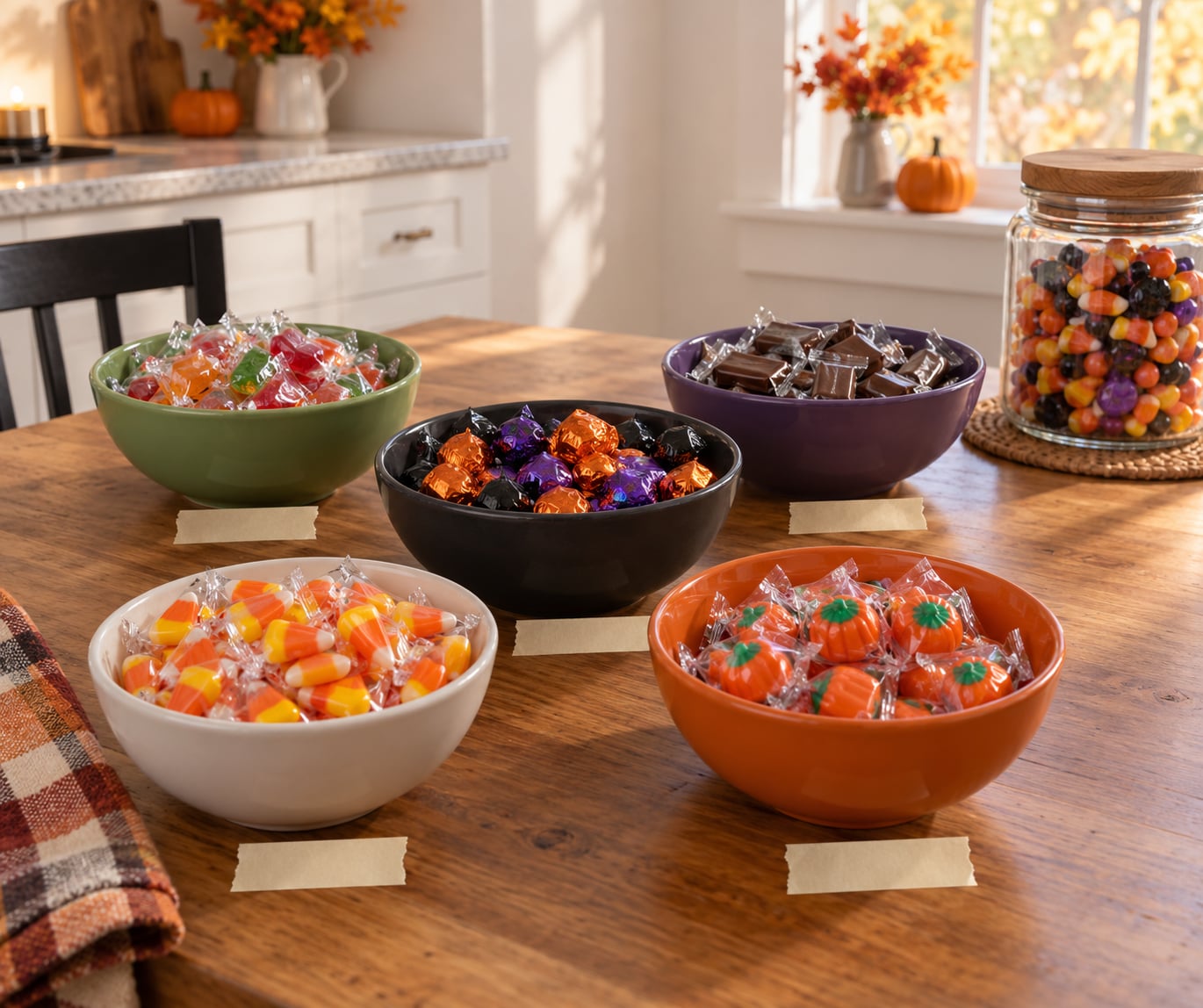
Line up the remaining categories on paper plates or in bowls. Keep the categories simple, because six bowls and a five-year-old turns into chaos. Five works: chocolate, gummies, sour, hard candy, and novelty or toy items.
Step 2: Check for Allergies and Dietary Restrictions
This is the adult-only job, and it comes before any fun sorting starts.
Common allergens in Halloween candy include peanuts, tree nuts, milk, wheat, and soy. Many peanut butter candies also carry a cross-contact warning because they are made on shared equipment. When you read that warning, treat the candy as unsafe for anyone in the house with a nut allergy.
Read the ingredient panel, not just the front. Keep an allergy-safe bowl that stays on the adult side of the table. For anything you are unsure about, read the label with a registered dietitian or your child’s allergist rather than guessing from a brand name. Only claim a candy is free of an allergen when the packaging itself supports that.
Step 3: Let Kids Choose Their First Favorites
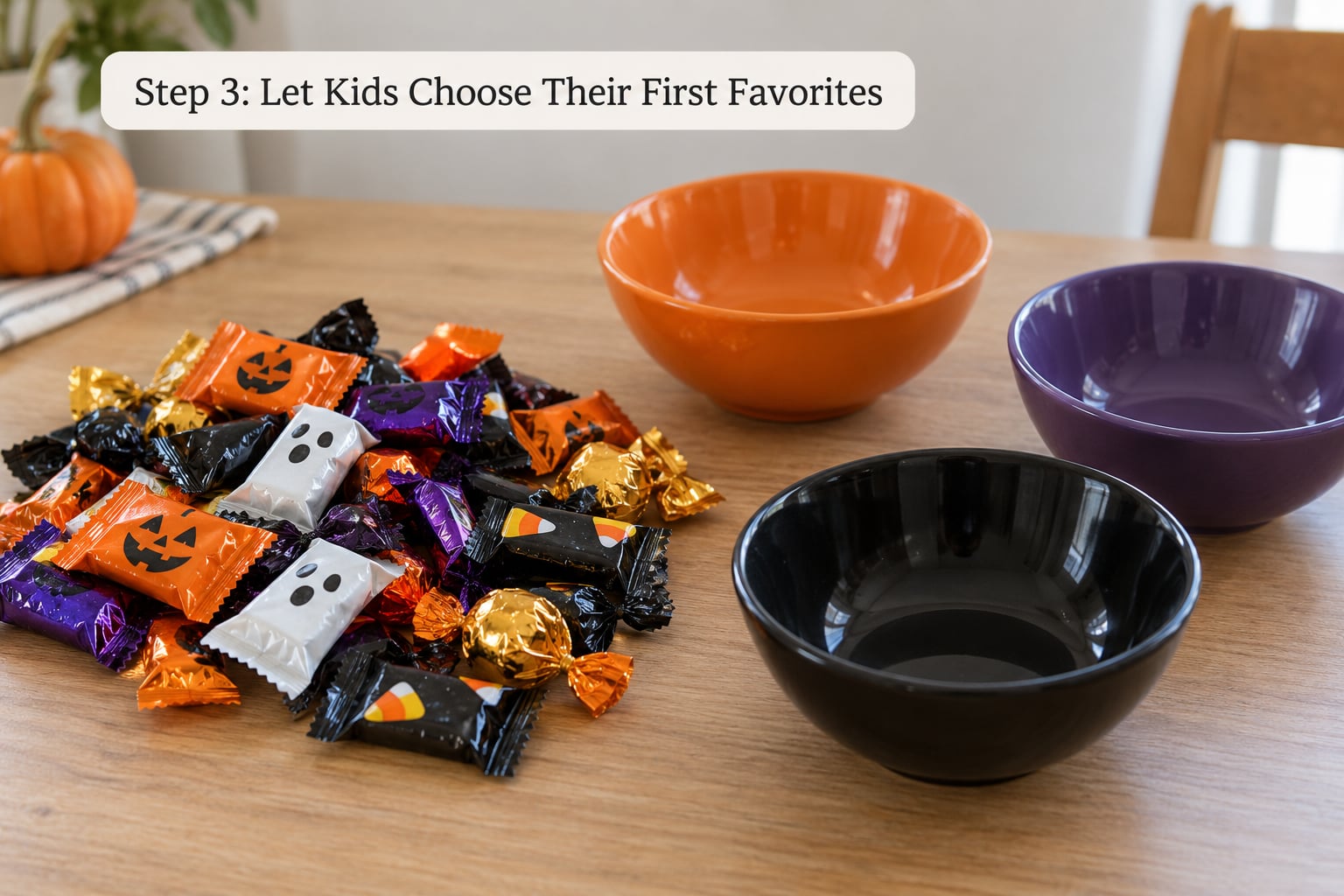
Before anything gets categorized, each child picks a handful of pieces they genuinely want and puts them in a personal bowl. My rule is five pieces for my older two and three for my toddler, chosen freely.
This step matters more than it looks. Kids who get first pick rarely argue about the rest of the stash later. It also keeps the sorting itself honest, because you are not deciding what counts as a fair treat for a six-year-old and an eleven-year-old on the same night.
Step 4: Group Duplicates and Trade-Friendly Candy
Now count duplicates. Four identical mini chocolate bars is four of the same thing, which is not variety, and it is exactly what a sibling swap resolves.
Put one of each duplicate into a trade pile and keep the rest. Let your kids swap with each other or with a neighbor’s kid, but keep it optional. Nobody has to surrender a piece from their favorites bowl, and nobody has to trade at all. Trading that feels compulsory turns into resentment by the second day.
Novelty items often draw the most interest. Kids rank things like Fun Dip, Airheads, and Ring Pops well above plain chocolate bars, so give that category its own bowl rather than mixing it in with the sweets.
Step 5: Decide What to Keep, Share, and Store
Work through the sorted piles one category at a time and decide the fate of each.
- Eat first anything with peanuts or nuts, plus anything chocolate that will not survive a warm cupboard
- Store long wrapped hard candy and sealed gummies, which hold up well
- Share with grandparents or neighbors who asked for treats
- Trade out the trade pile at school or to a sibling’s friend
- Donate only unopened, undamaged pieces with intact ingredient labels
Bag each group separately and write the name and date on it with a permanent marker. A bag dated 2026 tells you in six weeks what you were looking at, which matters more than people expect.
Step 6: End with a Reset and Cleanup Plan
Before you scatter off, agree on when sorting is finished. Otherwise the trade pile quietly restarts at bedtime and you end up mediating candy at 9 p.m. on a school night.
Put the agreed pieces where kids can reach them during snack time, move the rest to a secure high shelf or the candy bank jar, and wipe the table down while the kids are still awake to complain about it. Then close the topic for the night.
Common Mistakes
Sorting the whole haul at once. Four hundred pieces on one table turns into a lost child and a melted chocolate wrapper. Fix: sort one category per session, or set a 30-minute timer.
Skipping the allergy read. This is the one mistake with real consequences. Fix: do the label check before the bowls come out, and keep a written list of what is safe.
Making trading compulsory. If a child has to trade to participate, the pile becomes a debt. Fix: trading is always optional, and favorites are never tradeable.
Treating novelty items as food. A toy wand inside a wrapper looks like candy to a five-year-old. Fix: separate toys and candy at step one, not after someone bites a plastic bat.
Storing candy in a warm garage or a car. Chocolate blooms and fillings turn strange well before anyone checks a date. Fix: cool, dry, and dark, in an airtight container or sealed bag.
Allowing unlimited access. A candy stash that is never structured gets hidden, and hidden candy gets found melted. Fix: set the pieces per day, put them at meals and snacks, and let the candy bank show the progress.
One tip I would add: write down what worked and what blew up. Next year you will not be negotiating from scratch at 9 p.m.
Frequently Asked Questions
How many pieces of Halloween candy should my kids eat each day?
Most families land somewhere between two and four pieces a day for a few days, attached to meals or snacks rather than eaten in one sitting. The exact number matters less than picking a number, writing it on the bag, and sticking with it for a week. A candy bank jar makes the limit visible, which reduces the nightly argument more than the number itself does.
Should I let my kids eat all their Halloween candy?
Letting the whole haul go on Halloween night and the next day is a reasonable choice, and plenty of parents do it without regret. The important part is what happens after: the sorted bags go away, the daily structure starts, and the leftovers do not stay in a bedroom drawer. Pick whichever approach fits your family, then be consistent about it.
How do I split the candy haul fairly between two kids?
Start with each child choosing their own favorites bowl first, since that removes most of the dispute. Then split the remaining sorted piles by count rather than by eye, or by weight if the pieces are wildly different sizes. When one kid genuinely came home with less, equalize at the end with a piece or two from the bigger pile rather than splitting everything blindly.
How long does Halloween candy last before it goes bad?
Wrapped shelf-stable candy usually keeps for months when stored cool and dry, but check the printed date first. Eat nut-containing candies early because the oils go rancid fastest, and eat chocolate early if you live somewhere warm or store it in a garage. Discard anything with a torn wrapper, a puffed package, or a strange smell, and toss loose candy that has been out in the open.
What can I give my kids instead of candy for Halloween?
Stickers, glow sticks, bouncy balls, and small toys work well in the same trick-or-treat bags without adding to the sugar pile. For your own kids, a special movie night, a small pumpkin patch outing, or a breakfast swap works better than more candy. Non-food treats also solve the allergy problem outright for that year.
Conclusion
Start with the wrappers and the allergy labels, because nothing else matters if someone in the house cannot eat the candy. Give each child a small favorites bowl of their own choosing, then sort what is left into eat-first, store, share, and trade groups with the name and date written on every bag.
The whole thing takes half an hour and it changes what happens over the next two weeks. Kids get to make real decisions, the stash becomes something the family manages rather than something they hide, and you get a plan you already agreed on instead of an argument you have to win at bedtime.