Folk horror is horror rooted in folklore, superstition and ritual, usually set in an isolated rural community where an outsider runs into locals whose customs are older and stranger than anything they grew up with. That is the short version of what folk horror is. Below you’ll find the four elements critics use to spot it, how it differs from gothic and cosmic horror, and a sensible place to begin. Updated October 2026.
Table of Contents
- What Is Folk Horror?
- How Does Folk Horror Differ From Other Horror?
- What Makes a Story Folk Horror?
- Why Do People Find Folk Horror Unsettling?
- Where to Start With Folk Horror
- How to Choose a Folk Horror Starter
- Frequently Asked Questions
- What qualifies as folk horror?
- What are the key differences between folk horror and gothic horror?
- What are the typical tropes of folk horror?
- Is Blair Witch folk horror?
- What are some popular folk horror TV series?
- What is the scariest folk horror movie?
- Conclusion
What Is Folk Horror?
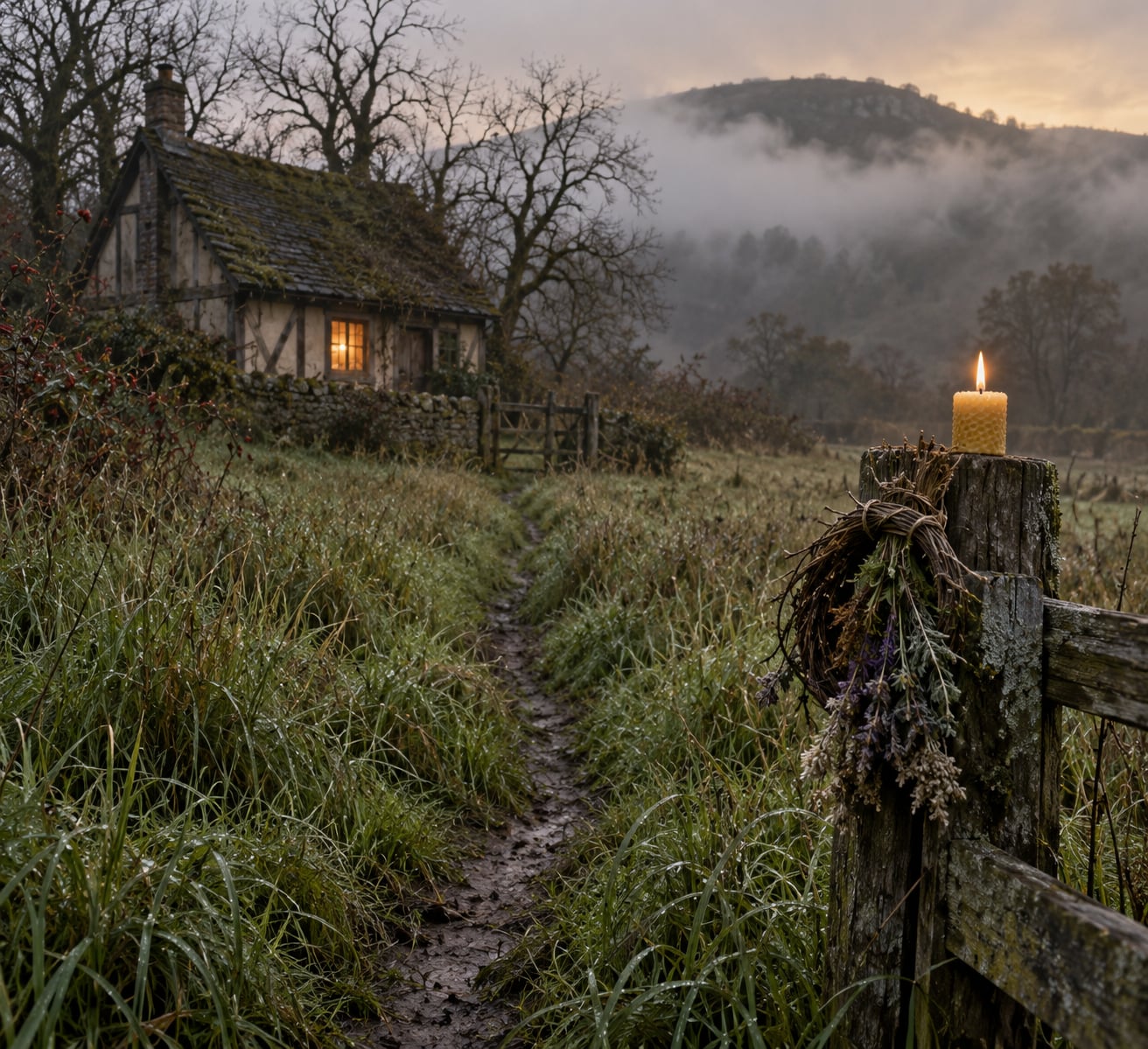
Folk horror is a subgenre of horror in which the threat comes from folklore, superstition and ritual rather than from a monster or an outside force. It usually takes place in a remote village, on isolated farmland, or in a marsh, with a protagonist who has no idea how the local community thinks. The beliefs on screen belong to that community, and they are presented as part of the place itself.
There is no official definition, and anyone who claims there is one is overreaching. British writer and folklorist Andy Paciorek has described folk horror as “a box the exact shape of mist,” which captures the problem neatly. Critics Adam Scovell and others have argued instead that it is better described as a chain of four elements rather than a fixed set of tropes, which is a better way to test a title than arguing about wording. Most people in genre circles now use the term to describe a mood: the sense that a place has its own rules and you have walked into them.
The literary roots go back further than most film lists admit. M. R. James wrote ghost stories about haunted buildings and anxious academics from the 1890s onward, and Dennis Wheatley’s 1948 novel The Devil Rides Out put a full satanic ritual inside an English country house. On screen, Hammer Film Productions turned that material into a decade of witch and devil films through the 1960s and 1970s, and The Wicker Man in 1973 turned it into something much stranger.
What followed in the 2000s and 2010s is usually called the folk horror revival: a run of films and books that borrow the older textures for new anxieties. No locked definition, but a very recognizable set of ingredients.
How Does Folk Horror Differ From Other Horror?
The difference comes down to where the fear lives. In folk horror it sits inside a community and the land it occupies, not inside a building, a madman, or a thing from outer space.
| Genre | Where it happens | Where the fear comes from | The threat | Example |
|---|---|---|---|---|
| Folk horror | Remote villages, farms, marshes | The land and inherited custom | A community, a belief, sometimes a god | The Wicker Man (1973) |
| Gothic horror | Castles, plantations, asylums | The buried past and what it suppresses | A person: the ancestor, the widow, the doctor | Rebecca (1940) |
| Cosmic horror | Vast anywhere, often the sea or ruins | Human smallness against the unknowable | Something indifferent and enormous | The Call of Cthulhu (1928) |
| Slasher | Suburbs, camps, apartment blocks | A masked pursuer you cannot reason with | One killer | Halloween (1978) |
Gothic horror keeps an architecture at its centre: the house, the estate, the institution. Its villain is usually an individual who carries a secret. Cosmic horror makes a similar move with a single antagonist, but shrinks the human being instead of enlarging the house.
Folk horror tends to refuse both. There may be no identifiable villain at all, and the most frightening thing on screen may be the harvest song or the field itself.
What Makes a Story Folk Horror?
Scovell’s four-part chain is the most useful thing a beginner can learn, because it applies to films, novels and TV alike. In order: the land, isolation, skewed moral beliefs, and a happening or summoning.
- The land is a character. The countryside is never just scenery. Weather, stone, water and darkness do something in the story.
- Isolation. A phone signal drops, a road closes, a phone box has not worked for years. Escape becomes theoretical.
- Skewed moral beliefs. The community’s ethics are recognisable and off. Cruelty reads as ordinary. Kindness reads as suspicious.
- A happening or a summoning. Something is invoked, or offered up, or required in exchange for a harvest, a birth or a return.
You will also keep meeting the same supporting cast of characters: the outsider who arrives with a sensible modern worldview, the young woman who knows more than she lets on, the wise woman who explains too much too late, and the child who understands the rules without needing them explained.
Why Do People Find Folk Horror Unsettling?
Because the explanations you would normally rely on stop working. In most horror the audience is handed a cause: a monster, a killer, a curse with a known origin. Folk horror takes that away.
Three things tend to unsettle people most. First, there is usually no individual to defeat. You cannot reason with a village, and you cannot negotiate with the ground.
Second, the rituals work. That is the disturbing part. A rite performed badly fails, a rite performed correctly produces a result, and the film never fully rules out that the ritual was correct. A skeptic in a horror film is usually proven right. In folk horror the skeptic is often proven to be the problem.
Third, the community’s certainty is contagious. Watching people behave normally around something monstrous teaches you, for ninety minutes, to find it normal too. That is a hard effect to shake, and it explains why the genre lands harder than gore. Forum readers in r/movies and r/horrorlit describe it far more often as atmosphere than as shock.
The cultural version is older than any one film. Haunting as a concept is about places holding memory, which sits awkwardly beside a life lived entirely through screens. Genre has been leaning into that gap for years.
Where to Start With Folk Horror
Start with one of the 1970s British films, because they are short, they are quiet, and they contain almost none of what makes modern horror exhausting. Then move outward. Here is the ladder.
| Title | Year | Medium | Intensity | Why it earns its place |
|---|---|---|---|---|
| Blood on Satan’s Claw | 1971 | Film | Low to moderate | A whole village’s worth of folk horror in about 84 minutes |
| Penda’s Fen | 1974 | TV film | Low | Remarkable work with marsh and fog; a fair entry point |
| The Wicker Man | 1973 | Film | Low | The cult classic; warmer and funnier than newcomers expect |
| The Ritual | 2017 | Film | Moderate | Modern pacing, old tropes; an easy bridge in |
| The Witch | 2015 | Film | Moderate | Period New England and a genuinely unresolved ending |
| The Wailing | 2016 | Film (Korean) | Low gore, high dread | The best non-Anglophone entry point |
| Hagazussa | 2017 | Film (silent) | Low | Black and white and near-wordless |
| Viy | 1965 | Film (Soviet) | Low | Camp, folklore and early sound effects |
Streaming availability for older titles changes constantly and varies a lot by region, so search the title on your platform rather than trusting an old list. Collectors tend to find the 1970s titles through Severin Films and Arrow box sets, which is worth knowing if you want a physical copy.
If you read rather than watch, start with The Ritual by Adam Nevill, a short novel about a hiking trip that goes wrong in an English forest. Its length makes it the least intimidating door in. From there go to Dennis Wheatley’s The Devil Rides Out for pure ritual, Alan Garner’s Penda’s Fen for the bleakest version, and The Only Good Indians by Stephen Graham Jones for the modern American rural version.
For television, the honest answer is that there is less of it, and much of what is labelled folk horror on streaming is supernatural drama wearing the name. Genuine folk horror TV does exist: the 1974 Penda’s Fen, the Australian rural mystery The Kettering Incident, and the domestic dread of Servant.
Comics are underrated as a door in. Harrow County is the softest starting point and the most folkloric, Wytches is built entirely on real rural American legend, and the Alan Moore run of Saga of Swamp Thing does more with a swamp than most films manage.
Audio works too, if you want the genre without pictures. BBC Sounds has carried folk horror anthology drama for years, and public radio ghost story collections are a free way to test whether the atmosphere works on you before you commit to a film.
How to Choose a Folk Horror Starter
Choose by how much uncertainty you can tolerate, then by medium. The Ritual and The Wicker Man are safe first steps because nothing graphic happens and the horror is conversational. The Wailing will unsettle you without showing much of anything. Witchfinder General and Kill List do contain real violence, so save those for later.
Length is the other underrated factor. Nearly all of the 1970s entries run under 90 minutes, which makes them far easier to finish than a modern three-hour horror epic. If you bounce off horror easily, a novella beats a film.
On content notes: folk horror usually avoids graphic gore and instead leans on bodily themes, ritual practice and occasionally harm to children. If that is the part you want to avoid, the 1970s films and The Ritual are the safer selections.
Two questions come up constantly in forums. Is Blair Witch folk horror? Loosely, yes, because of the isolation and the land, though it is really a found-footage film that borrowed the texture. And should you watch in order? No. The 1970s films reference each other, but nothing requires sequence.
Frequently Asked Questions
What qualifies as folk horror?
Folk horror qualifies as any horror story whose threat comes from folklore, superstition and ritual within a community, usually set in an isolated rural place. An outsider meets locals whose customs are old and morally strange, and the ritual itself often drives the plot. It does not require a supernatural ending, and it has no fixed definitional checklist.
What are the key differences between folk horror and gothic horror?
Gothic horror is organised around a building: the castle, the plantation, the asylum. Its threat is usually an individual carrying a buried secret. Folk horror is organised around a place and its people, and its threat is a belief system rather than a person. Gothic horror wants you trapped inside; folk horror wants you stranded outside.
What are the typical tropes of folk horror?
Four recurring elements do most of the work: the land treated as a character, physical isolation, moral beliefs that are recognisable but skewed, and a happening or summoning that something must be given up for. You will also meet the outsider protagonist, the young woman who knows more than she says, the elder who explains too late, and a harvest or festival ritual at the centre.
Is Blair Witch folk horror?
It borrows heavily from folk horror, since the isolation and the land do real work in the film. But its machinery is found footage and media distrust, which comes from a different tradition. Most critics place it as an influence on the genre rather than a central example. If you want the tradition itself, start with Blood on Satan’s Claw or The Wicker Man instead.
What are some popular folk horror TV series?
Genuine folk horror television is rare because the genre suits short films. Real examples include the 1974 Penda’s Fen, the Australian rural mystery The Kettering Incident, the domestic and ritual dread of Servant, and Archive 81. Much of what is marketed as folk horror on streaming is closer to supernatural drama, so read a review before you commit to a series.
What is the scariest folk horror movie?
There is no objective answer, but The Wailing is the one most often named, followed by The Wicker Man and Blood on Satan’s Claw for atmosphere and The Ritual for sustained dread. The distinction matters: folk horror rarely frightens through imagery. If gore unsettles you more than atmosphere, the genre is friendlier than you expect.
Conclusion
Put on Blood on Satan’s Claw tonight. It is short, it is cheap-looking in the way that makes a period setting feel lived in rather than designed, and it contains nearly every element the genre will ever use. Then let the four-part chain do your sorting for you: when a film shows you a place that matters, people who cannot leave, rules that look wrong, and a ritual with a price attached, you have found folk horror and you no longer need anyone to define it for you.