If you’re searching for how to make Halloween treats for kids with nut allergies, the short answer is this: buy with the label in your hand, bake with sunflower seed butter instead of peanut butter, and treat any voluntary “may contain peanuts” warning as a real risk rather than a formality. October is the single busiest month for allergy accidents because treats are unlabelled, handed out by strangers, and mini candy is not processed the same way as full-size candy.
This guide covers the whole job, from setting up a clean prep area to sorting the candy haul afterward. Read the label list before you read anything else here.
Table of Contents
- What You Need
- Step-by-Step
- How to Choose Ingredients for Kids with Nut Allergies
- How to Make the Treat Base
- How to Decorate Without Risky Mix-Ups
- How to Prevent Cross-Contact
- How to Store and Serve the Treats Safely
- Common Mistakes
- Frequently Asked Questions
- What Halloween treats are safe for kids with peanut allergies?
- What does it mean if a candy says may contain tree nuts?
- Are fun-size candies safe if the full-size version is peanut free?
- What are good treats to bring to a class Halloween party?
- What is the three-day rule for allergies?
- Conclusion
What You Need
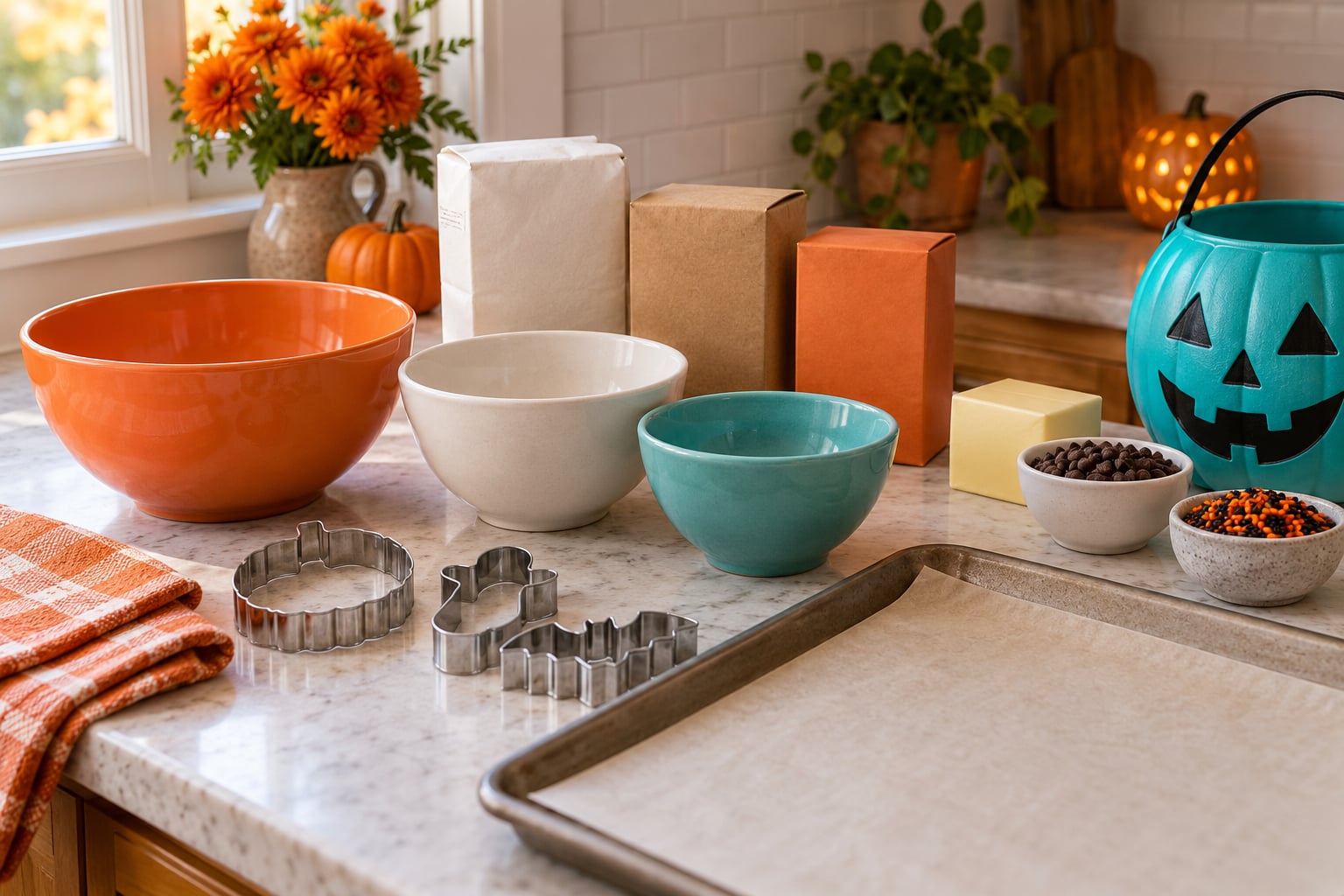
You don’t need a dedicated allergy kitchen to do this well. You need discipline, separate tools, and the original packaging for every ingredient.
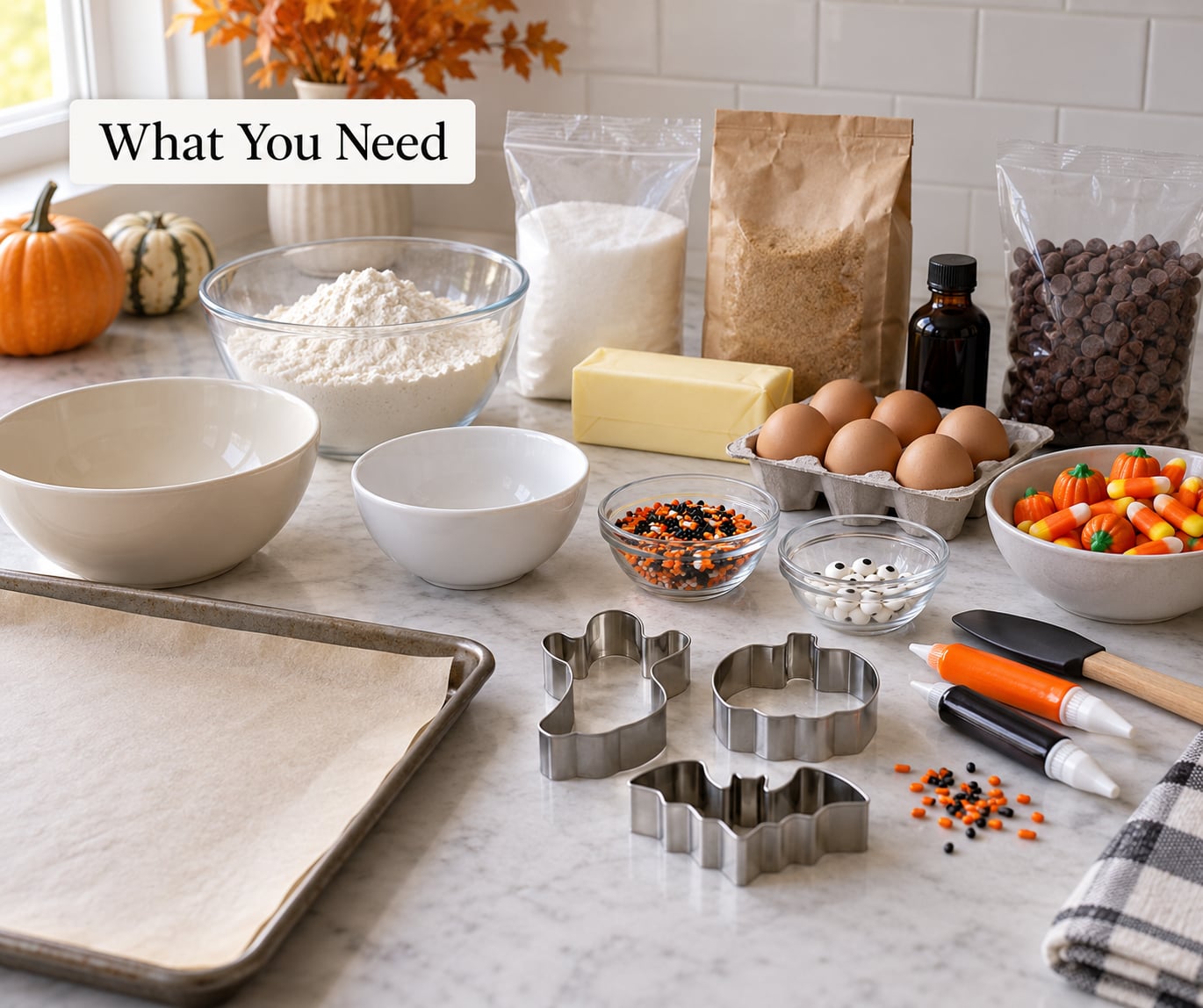
- Original ingredient packaging. Every carton, bag and jar stays on the counter until the treat is finished. Formulas change, and only the package tells you what is in the jar this year.
- Two sets of utensils. One set that lives with the allergy-safe baking, kept in a drawer nobody uses for snacks.
- Parchment or wax paper for lining trays and separating layers.
- Cookie cutters and a baking sheet for anything you roll or cut.
- Sprinkles, frosting, edible markers and small silicone molds for decorating, each one checked for nut terms on its own label.
- Airtight containers or cellophane bags plus a marker for labeling each portion.
- A written allergy plan naming exactly which nuts your child avoids and how severe the reaction is.
Add a teal pumpkin or teal bucket if you want neighbors to know your treats are nut-free without anyone asking. A paint marker on a plain pumpkin costs almost nothing and does more work than a conversation at the door.
Step-by-Step
Work in this order and the rest gets easy: choose, prepare, decorate, prevent cross-contact, then store and serve.
How to Choose Ingredients for Kids with Nut Allergies
Read three parts of the label, in this order: the ingredient list, the Contains statement, then the facility warning at the bottom. The facility line matters most and gets ignored most.
- Scan the ingredient list for nut terms. Watch for peanuts, peanut oil, peanut flour, almond, cashew, walnut, pecan, pistachio, hazelnut, macadamia, brazil nut, praline, marzipan, nutella, and phrases like natural flavors or artificial flavoring that can carry nut derivatives.
- Check the Contains statement. Under US labeling rules the eight major food allergens must be declared by their common name. Sesame became the ninth in 2023, and it turns up in seed butter, tahini and some breads.
- Read the last line. “May contain peanuts” or “made on equipment that also processes peanuts” is a voluntary advisory statement. No law requires a company to print it, which means an absent warning proves nothing.
- Check the size you are buying. Fun-size and mini versions are frequently produced on different equipment with different ingredient lists. A safe full-size bar is not automatically safe in mini form.
- Look for a dedicated facility claim. Parents in allergy communities consistently rank facility statements above ingredient lists, because a plant that never handles nuts cannot cross-contact your treat.
Re-read the labels every single Halloween. Brands reformulate without notifying anyone, and last year’s safe bag is this year’s recall.
How to Make the Treat Base
Pick one recipe, set out only its ingredients, and keep the packages open on the counter. These ten are written to be made in a home kitchen with nut-free pantry staples.
| Treat | Nut-free | Gluten-free | Dairy-free | Vegan | Time |
|---|---|---|---|---|---|
| SunButter cookie balls | Yes | Swap | Yes | Yes | 20 min |
| Marshmallow ghost bars | Yes | Check cereal | Yes | Yes | 10 min |
| Rice cereal pumpkins | Yes | No | Yes | Yes | 10 min |
| Chocolate pumpkin cups | Yes | Swap | Check chips | Yes | 25 min |
| Popcorn candy corn | Yes | Yes | Yes | Yes | 10 min |
| Fruit eyeball skewers | Yes | Yes | Yes | Yes | 10 min |
| Seed butter fudge | Yes | Swap | Use vegan butter | Yes | 15 min |
| Applesauce oat cookies | Yes | No | Yes | Yes | 30 min |
| Mini pumpkin muffins | Yes | Swap flour | Yes | Yes | 25 min |
| Frozen yogurt ghost pops | Yes | Yes | Yes | Yes | 15 min |
1. SunButter cookie balls. Mix 1 cup smooth sunflower seed butter, 1 cup rolled oats, 1/2 cup honey or maple syrup, 1/4 cup mini chocolate chips, and 1 teaspoon vanilla. Roll into 1-inch balls, chill 20 minutes, then add candy eyeballs. Swap certified gluten-free oats for a gluten-free version.
2. Marshmallow ghost bars. Melt 3 tablespoons vegan butter in a pan, add 3 cups mini marshmallows until soft, then stir in 2 cups crispy rice cereal. Press into a parchment-lined 8-inch square, cut into rectangles, add two chocolate chip eyes, chill 1 hour. Some marshmallow brands are made in facilities that handle nuts, so read that label too.
3. Rice cereal pumpkins. Warm 3 tablespoons butter or coconut oil with 3 cups marshmallows until molten. Fold in 4 cups orange rice cereal and 1/2 cup pumpkin seeds, press into a greased muffin tin, and chill 2 hours. Pumpkin seeds are the traditional reason this recipe exists and they are a seed, not a nut.
4. Chocolate pumpkin cups. Melt 1 cup dairy-free chocolate chips with 1/3 cup canned pumpkin and 1 teaspoon vanilla. Pour into silicone cup liners, press a pretzel stick into each as a stem, chill 2 hours. The chocolate is the variable here; use a brand whose package states it does not process nuts.
5. Popcorn candy corn. Pop 6 cups air-popped popcorn and let it cool completely. Toss with 10 ounces vegan mini marshmallows and 2 tablespoons sunflower seed butter, then shape into a round with a mini candy corn pressed into the center.
6. Fruit eyeball skewers. Thread halved grapes, blueberries, banana coins and melon balls onto wooden skewers. Add a small dot of yogurt-cheese for each pupil. Serve the skewers to older children and hand younger ones the loose fruit instead; whole grapes and hard rounds are choking hazards for toddlers.
7. Seed butter fudge. Bring 1 cup sunflower seed butter, 2 cups powdered sugar, 1/3 cup maple syrup, and 1 teaspoon vanilla to a simmer, stirring constantly for 3 minutes. Pour into a lined 8-inch square and chill 4 hours. Use vegan butter if you need it dairy-free.
8. Applesauce oat cookies. Mix 2 cups rolled oats, 1 cup applesauce, 1/2 cup sunflower seed butter, 1/4 cup maple syrup, and 1 teaspoon cinnamon. Flatten to 1/4 inch and bake at 350°F for 12 minutes. These are naturally gluten-free only if you use certified gluten-free oats.
9. Mini pumpkin muffins. Stir 1 cup seed butter, 1 cup brown sugar, 1 pumpkin pie mix, and 2 eggs, then fold in 1 1/2 cups gluten-free flour blend and 1 teaspoon baking soda. Fill a mini muffin tin two-thirds full and bake at 350°F for 14 minutes. Check the spice blend for nut-containing compounds.
10. Frozen yogurt ghost pops. Blend 2 cups plain yogurt, 1 cup fruit, and 1 tablespoon honey, pour into ghost molds with a popsicle stick, and freeze 4 hours. Use dairy-free yogurt if needed and check the fruit puree for shared-fruit processing.
How to Decorate Without Risky Mix-Ups
Decorating is where nut cross-contact usually happens, because decorations get shared, dipped, and licked by fingers that were just holding something else. Confirm each decorating ingredient against its own label before you open it.
Sprinkles and candy decorations carry their own risk: many are made on shared equipment with nuts, and some include crushed nut pieces in the mix. Choose ones labeled nut-free for a dedicated facility if you decorate at all. Edible markers, themed sugar shapes made in a dedicated facility, and colored coconut are the safest options.
Skip anything shaped like a peanut or a mixed-nut cluster. A peanut-shaped chocolate sitting on a nut-free cookie causes a problem for everyone, including a child who has simply learned that a peanut shape means stop.
Set out one decoration bowl per treat, never a shared community bowl. If you hand out treats at a party, use small cups with lids or clear bags so each child gets a portion that nobody else has touched.
How to Prevent Cross-Contact
A trace of peanut butter left on a spoon can get baked into an otherwise nut-free treat, which is the cross-contact risk pediatricians warn parents about most. Manage it with sequence and equipment rather than with more cleaning.
- Wash hands and clean surfaces first. Twenty seconds with soap, then wipe counters with a fresh cloth. Do this before you unpack a single ingredient.
- Use dedicated utensils. The allergy-safe spatula, spoon and measuring cups should not be the ones that stir a peanut butter sandwich.
- Make nut-free treats first. Open the nut butter after your tray is already cooling, and never use the same toaster, cutting board or sink basin.
- Label every portion. Write the treat name and the allergens it contains on each bag. Unlabeled treats get dumped, which breaks your child’s night.
- Confirm the allergy details. Get the exact nut names and reaction severity from your child’s household, and share them with the teacher, the party host, and any adult handing out treats.
- Keep the base safe. Stock your allergy-safe supplies in October so you are not improvising with whatever is on the shelf on the afternoon of a party.
Tell the teacher in writing rather than in a hallway conversation. A short note naming the specific nut, the reason, and the treats you are sending removes the guesswork from an adult who is busy and nervous.
How to Store and Serve the Treats Safely
Most homemade treats hold three to four days sealed at room temperature, a week refrigerated, and two to three months frozen. Sliced fruit eyeballs and anything with fresh cut fruit belong in the fridge and out of a room-temperature party table for more than an hour or two.
Pack single servings in sealed bags or small lidded cups so nothing is handled twice. Carry treats in a separate insulated tote from any food you are transporting for another reason, and hand them out yourself rather than leaving them on a shared table.
For trick-or-treating, keep two bags in the car: one safe pile your child can sort through, and one to hand out. Parents on allergy forums describe the sorting ritual in the same terms every year, and a two-bag system makes it less of an event.
Join the Teal Pumpkin Project by painting a pumpkin or lining your bucket teal. Neighbors and other parents learn what it means, and your child gets to hunt for them instead of explaining anything at a door.
For non-food handouts, lollipops, juice boxes, glow sticks, temporary tattoos, stickers, bubbles and pencils are the ones kids still count as a real treat. Parents in allergy groups say those work better than a single substitute candy, and they carry no allergen risk at all.
If a reaction does happen, follow the emergency plan your child’s clinician has written. Epinephrine is the first-line treatment for anaphylaxis, and reactions to food allergens usually show up within minutes to a few hours. Call emergency services immediately, use the prescribed auto-injector as directed, and do not rely on this article or any website for a medical plan.
Common Mistakes
Trusting the front of the package. Words like nut-free on the front carry no regulatory weight. The correction is to read the ingredient list and the facility warning on every purchase, every year.
Treating a missing “may contain” warning as proof of safety. The advisory statement is voluntary. The correction is to choose products that state they were made in a nut-free facility, or to skip them.
Assuming a safe full-size candy is safe in fun-size form. Mini versions often run on different lines. The correction is to check the mini size on its own label.
Reusing utensils, spoons and toasters from everyday snack duty. The correction is a separate set of tools for allergy-safe baking, stored apart from the rest.
Using loose candy decorations and one shared bowl. A child reaching in gets an unknown handful. The correction is individually portioned treats with nothing shared.
Assuming one treat is safe for every allergy. A nut-free cookie can still contain milk, wheat, soy or egg. The correction is to label the allergens in each recipe and match them to the specific child.
Leaving treats unlabeled. Everything gets tossed, including the ones you made carefully. The correction is a marker and one bag per portion.
Skipping the allergy talk with adults who are not the parent. Classroom parties are where control is weakest, since the adult handing out food is often someone else’s teacher. The correction is a written note and a conversation before the event, not on the day.
Frequently Asked Questions
What Halloween treats are safe for kids with peanut allergies?
Fruit-flavored candy such as lollipops, gummies, Dots and Swedish Fish is widely recommended by allergy families because it is less often processed on shared equipment with peanut products. Microwave popcorn, plain rice cereal treats, freeze-dried fruit and homemade seed-butter cookies are the other standbys. Check the label every season, because formulations change without notice.
What does it mean if a candy says may contain tree nuts?
It means the manufacturer believes cross-contact with tree nuts is possible during production. The advisory statement is voluntary rather than required by law, so the absence of one proves nothing. Many parents treat a shared-facility warning as a dealbreaker and choose products that state they are made in a dedicated nut-free facility instead.
Are fun-size candies safe if the full-size version is peanut free?
Not always. Parents on allergy forums report repeatedly that mini and fun-size versions carry different ingredient lists and may run on equipment that also handles nuts. A full-size bar you have verified is not proof for the mini version in the same bag. Always read the label on the exact size you are handing out.
What are good treats to bring to a class Halloween party?
Individually wrapped single-servings win here, since a classroom is a shared surface with many allergic children. Seed butter cookie balls, popcorn balls, pretzel pumpkins, fruit skewers and sealed cups of rice cereal treats travel well and need no utensils. Send a written note naming your child’s allergen so the teacher can keep the food off the shared table.
What is the three-day rule for allergies?
There is no widely recognized three-day rule for food allergies, and holding treats back does not make them safer. What matters is whether an allergen is in the ingredient list or could have cross-contacted, and that status does not change after three days. For guidance on your child’s specific reactions, talk with their pediatrician or allergist.
Conclusion
Start with the label, not the recipe. Confirm every ingredient against its original packaging, check the facility line at the bottom, and treat a voluntary “may contain” warning as a real risk.
Then work in a clean area with dedicated utensils, make the nut-free treats before anything else, and portion each one into a labeled bag so nobody has to guess. Tell the teacher, the coach, and the party host in writing which nuts are the problem. That single act does more for your child’s night than any substitute candy you could bake.