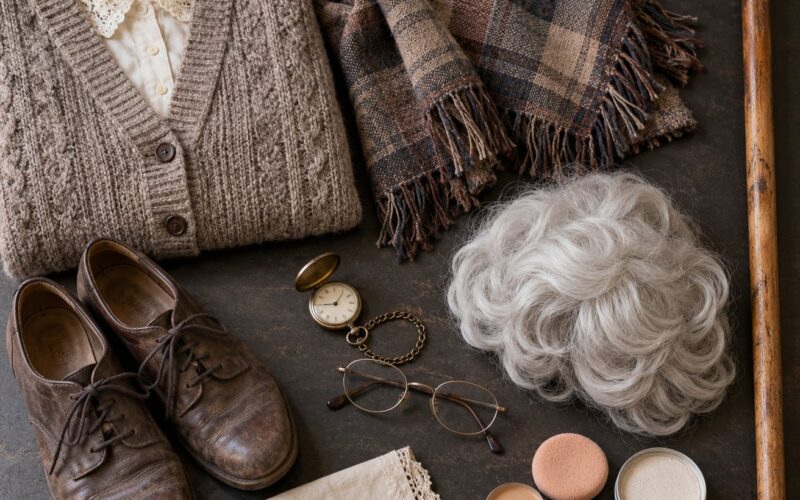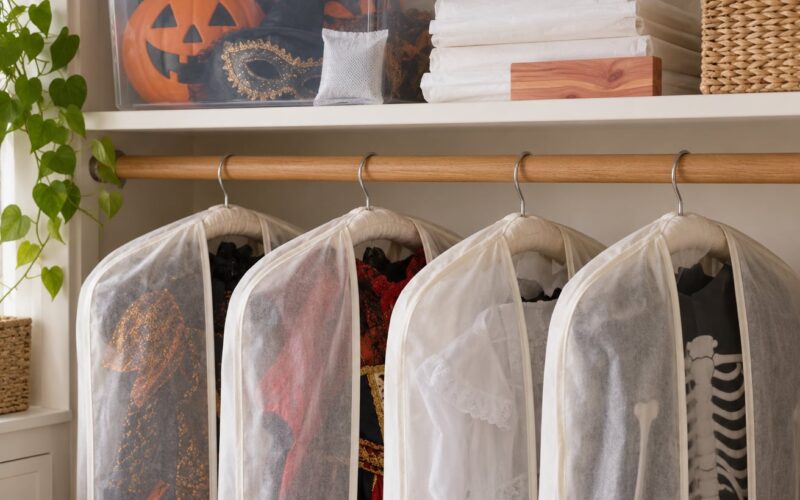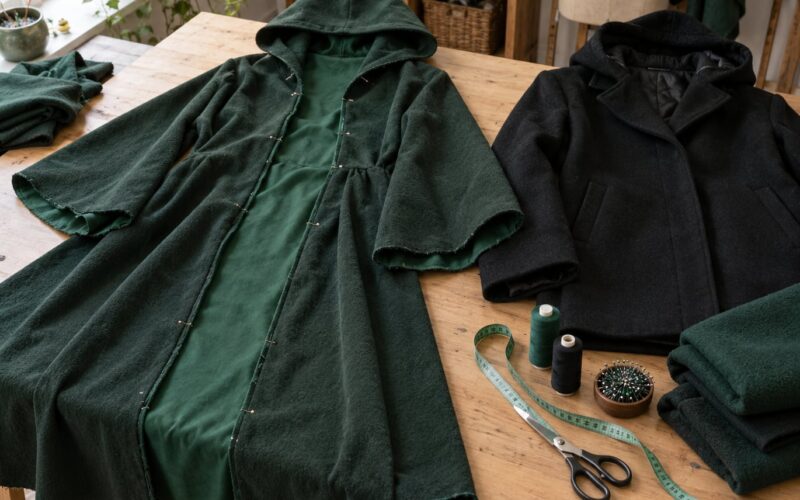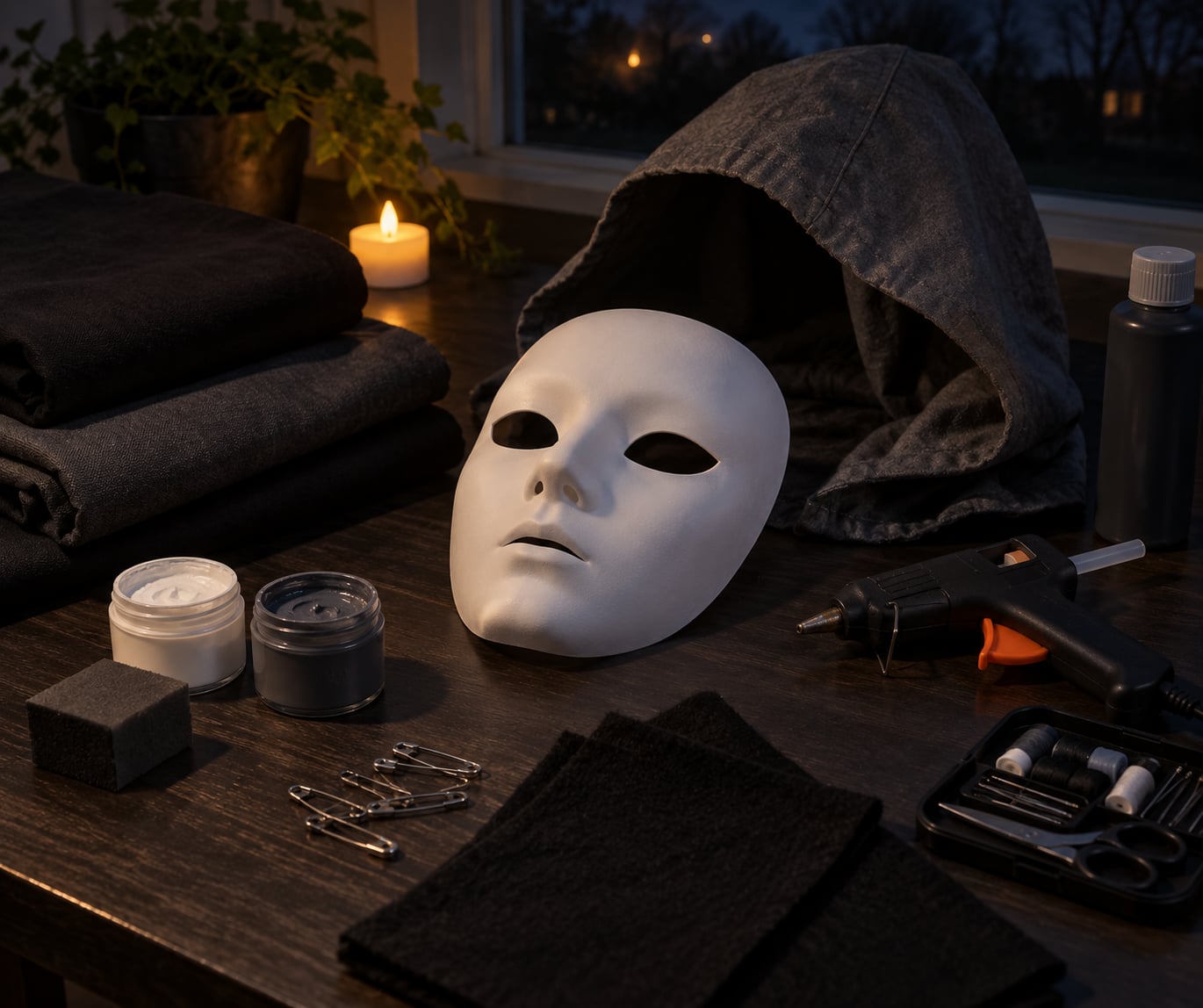
A Halloween costume that frightens people without blood works on suggestion instead of simulated injury. Pale skin, hollow dark eyes, one oversized shape, dim light and slow deliberate movement do the job that fake blood and torn prosthetics usually get asked to do. It costs less, it washes off, and it reads as eerie rather than injured.
The whole build takes an afternoon. Budget an hour to choose the visual hook, two or three for the silhouette and makeup, then twenty minutes walking it in front of a mirror with the hall lights off.
One thing I learned the hard way: the fear lands hardest when the costume looks like an ordinary person who should not exist. A plain coat, a blank mask and a person who refuses to speak will unsettle a room faster than a full monster suit with all the seams showing.
Table of Contents
- What You Need
- Step-by-Step: Building a Scary, Non-Gory Costume
- Choose a frightening character with a clear visual hook
- Create an unsettling silhouette
- Use makeup to suggest menace without wounds
- Add one or two controlled special-effect details
- Rehearse the reveal and movement
- Common Mistakes
- Frequently Asked Questions
- What are some simple but scary Halloween costumes I can make?
- How can I make a costume scarier without blood?
- What can I use instead of fake blood?
- What is the scariest Halloween outfit?
- How do I make a creepy costume with no makeup?
- What is the easiest Halloween outfit I can make the night before?
- Conclusion: Start With One Frightening Detail
What You Need
The best materials depend on the character you choose, but every version of this costume comes from the same four buckets. Spend nothing on the first two until you have a working silhouette in front of a mirror.
- From your closet: a long dark coat or trench, a hooded sweatshirt, a full-length skirt or wide trousers, a plain dress shirt, tall boots, gloves, an old sheet or sheer curtain in black or grey, and a stiff collar or short cape.
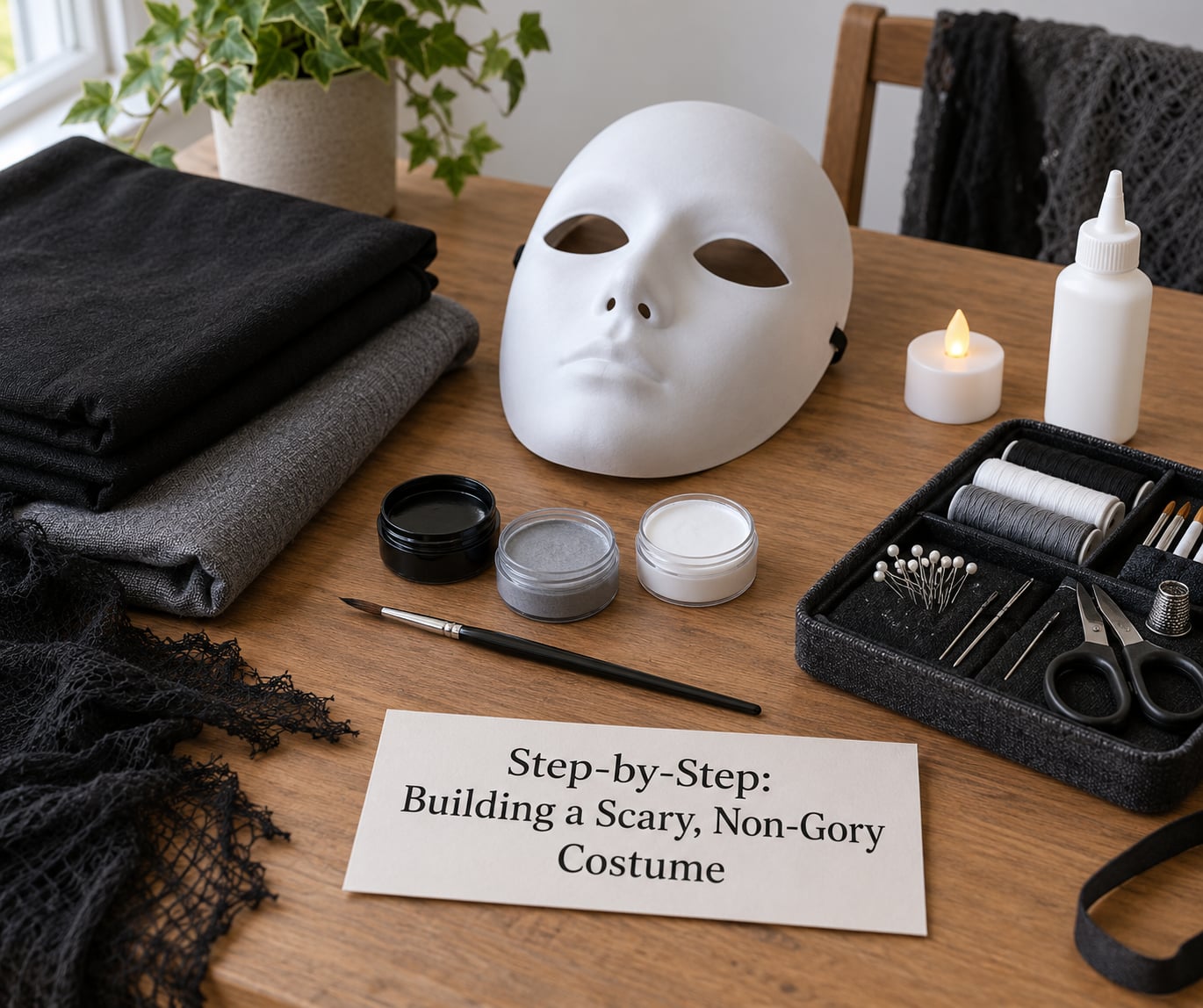
- From a thrift store or dollar store: a blank or plain white mask, black and grey fabric dye, cool grey and white face paint sticks, charcoal and black eye shadow, black eyeliner, a small mirror, a cane, an old umbrella, a birdcage, and battery tea lights or LED candles.
- From a craft drawer: hot glue and fabric glue, safety pins, black felt, scissors, a needle and thread, aerosol black spray paint, sponge, a stippling brush, tinted setting powder, and dried beans or uncooked rice for rattling.
- Optional but useful: translucent fabric for a veil or sleeve panels, a cheap water mister for drifting fog, a phone flashlight, and a small battery pack.
Test everything that touches skin or fabric 24 hours before the night. Put a stripe of face paint on your inner arm and leave it, wash a scrap of the dye you plan to use, and check whether spray paint stiffens the curtain fabric. Forum costumers who build creepy cloth from old sheers consistently warn that heavy paint turns a drape into cardboard.
Two safety lines. Skip liquid latex, teeth prosthetics and anything sharp-edged, because the whole point is a clean look that works around children and coworkers. And keep your peripheral vision open, since a mask that narrows your field of view is how people trip down a porch step.
Step-by-Step: Building a Scary, Non-Gory Costume
Choose a frightening character with a clear visual hook
Pick a character whose danger comes from posture, shape or expression, not from injury. Faceless wanderer, masked stranger, eerie doll, shadowy figure and porcelain host all qualify because each one can be described by an outline and a face rather than a wound.
A shadowy figure is the easiest starting point: all-black layers, a hood that eats the light, gloves on, face in shadow. The masked stranger takes an ordinary outfit and a blank mask, which plays on the fear of the ordinary stranger rather than on fantasy monsters. The eerie doll leans on texture instead of colour — pale cracked porcelain finish, jointed-looking ribbon limbs, a still posture.
Run the five-word hook test. Show yourself to a friend for three seconds in dim light, then ask what they saw first. If they describe a shape, a colour and a mood rather than a person in a costume, your hook is working. If they say “cute” or “nice outfit,” you have built a party costume.
Create an unsettling silhouette
The silhouette carries more of the scare than any makeup step, because it is the first thing a person reads across a dark room. Work on the outline before you touch your face.
- Restrict the palette to two or three colours. Black, charcoal and one bone or grey tone gives you depth without looking like a character in a play.
- Build vertical lines. A long coat, a floor-length skirt, a hanging veil, a heavy collar, all drawing the eye down to where you want it.
- Layer for weight. Two or three pieces with a little bulk in them moves strangely when you walk, which reads as unsettling long before anyone speaks to you.
- Widen the shoulders. Structured jacket shoulders, a padded hoodie or two layers of felt on the shoulders make you larger than a person, which is the point.
- Frame the face. A hood, a tall collar or a wide-brimmed hat turns a normal head into a shape with something inside it.
Check it from ten feet away in low light. You want a clear outline against a wall, not a person-shaped outline with costume seams showing. Walk the length of the room and watch the hem — if it drags on the floor it will trip you, so shorten it or pin it up inside.
Use makeup to suggest menace without wounds
Menace comes from hollows and paleness, not from damage. Stay inside a palette of white, grey, black and blue, and put zero red pigment anywhere on your face.
Start with a matte pale base. A white or cool grey liquid foundation applied thin over moisturised skin, set with tinted powder, stops your skin from reflecting light. Then build the face in four passes:
- Empty eyes. Grey or black shadow blended up and outward from the lash line, then smudged black liner around the whole eye, upper and lower. Leave no white showing inside the lash line except a small catchlight.
- Hollow cheeks. Contour under the cheekbone and at the temples with a cool brown or grey shadow so the face looks thinner and further away.
- Cracked lips. A thin dark vertical line drawn from the lip edge toward the chin, a few per lip, with pale matte colour underneath. A closed mouth reads far creepier than an open one.
- Bruise instead of blood. Blend blue and purple gel colour in soft circles on the cheekbone or forearm. It reads as damage without showing a wound.
For grit, stipple brown and black shadow on the sponge with a sponge, then press rather than rub so it settles into the skin and does not transfer onto a collar. A dusting of ash or candle soot on the shoulders finishes it in about a minute.
The check that matters: look at yourself in daylight and say what you see. If the answer contains wound, cut or blood, scrub that part and rebuild it with shadow. Every non-gory makeup tutorial I trust uses the same principle — bruise colour, ash and shadow instead of any red.
Add one or two controlled special-effect details
One detail that no one expects beats five that everyone does. Pick from this short list and stop there.
- Cracked porcelain finish. Pale base, then thin irregular lines drawn with a fine brush in diluted black shadow, sealed with a clear matte spray.
- Pale sculpted hands. Grey gloves, or pale foundation worked into the knuckles and fingertips with a dark line in each crease.
- Translucent layers. Sheer grey or white voile over a black base catches light and makes the figure look half-there.
- Light as a prop. Battery tea lights clipped inside a coat, or a phone flashlight in a translucent mask so the face glows faintly from within. LED light runs cool and never burns.
- Small sounds. Dried beans in a tin, uncooked rice in a sealed bottle, a walking cane, a set of keys, or a fan pointed at a sheet to make it breathe.
- Drifting fog. A mister set into the hem, switched on by a helper or a timer so it starts when you open the door.
Try each one where you will actually use it, not just in your hallway. A bell that rattles quietly on a quiet street does nothing; the same bell in a room with a hard floor is unsettling.
Rehearse the reveal and movement
Delivery is the cheapest upgrade in this whole costume. People on Halloween forums keep saying that the memorable version was the one who stood still, and I have found the same thing every year.
Walk slowly and deliberately. Stop for two full seconds at a doorway before anyone sees you. Look away first, then hold eye contact a beat longer than is comfortable for the other person. Do not lunge, chase or shout, because a fast mover reads as a party costume while a slow one reads as a threat.
Rehearse the reveal rather than the entrance. Practise one movement you do on arrival, one you do when someone approaches, and one you do when the music starts, so your body has three scripted moments instead of none.
Before the night, ask three people to describe you for ten seconds. If all three mention danger, shadow, stillness or a shape, the costume is doing its job without a drop of blood.
Common Mistakes
Almost every failed non-gory costume comes down to one of these six, and all six have a quick fix.
- Reaching for fake blood out of habit. Blood says injured, and injured is exactly what this costume avoids. Keep the contrast pale-versus-dark and put the energy into silhouette and movement.
- Building something you cannot walk in. Test a full lap around the block and up and down stairs. Put bulk on the shoulders, not the hips, keep hems off the floor, and choose boots you have already worn.
- Makeup that reads as an open wound. No red pigment, no latex, no cut lines. Use a bruise palette in blue and purple, and check the look in daylight before you commit to it.
- Forgetting the lighting. A bright porch flattens everything you built. Test the costume with the house lights off and one warm light source at eye level, which is where most parties actually are.
- Using products that irritate skin. Patch test paints and adhesives 24 hours ahead, keep glue off the hairline, and plan to remove makeup with a cold cream and a damp cloth rather than scrubbing hot water.
- Carrying too many props. Pick one signature object and carry it the same way all night. Everything else goes away.
Instead of fake blood, use these: ash and candle soot stippled onto skin and shoulders, brown and black shadow worked into seams, blue and purple gel colour blended as bruising, diluted black shadow for cracked porcelain lines, food colouring in a spray bottle for coloured drips on a wall or floor, and black fabric dye sponged onto a hem for grime.
Here is how the main scare methods compare, if you are picking one technique for this year:
| Scare method | Gore level | Time to set up | Difficulty |
|---|---|---|---|
| Pale makeup and hollow eyes | None | 20-30 minutes | Easy |
| Oversized silhouette and hood | None | 1-2 hours | Easy |
| Blank mask over an ordinary outfit | None | 15-30 minutes | Easy |
| Porcelain crack texture and pale hands | None | 45-60 minutes | Medium |
| Prosthetic wounds and blood | High | 2-4 hours | Hard |
A few final presentation tips. Have someone photograph you from slightly below and off to one side, because a low angle turns an ordinary figure into a looming one. Arrive a few minutes after the room is full so the first sight of you is somebody else turning around. And say nothing for the first ten seconds — a character who does not introduce themselves has already told you something.
Frequently Asked Questions
What are some simple but scary Halloween costumes I can make?
The fastest route is an ordinary outfit plus one alteration. Wear a plain coat over black clothes, add a blank mask or pale makeup, and let the silhouette do the work. A faceless wanderer in a hood, a masked stranger in a thrift-store blazer, or a shadowy figure in all black with grey gloves all take under an hour and need no sewing.
How can I make a costume scarier without blood?
Take the detail away and the fear gets stronger. Use a pale base with dark hollow eyes, build a wide silhouette, hold eye contact slightly too long, and move slowly with long pauses. If people describe your costume using the words shadow, stillness, shape or dread rather than wound or blood, you have hit the mark without gore.
What can I use instead of fake blood?
Ash and candle soot stippled onto skin and shoulders, brown and black shadow blended into seams, blue and purple gel colour applied as bruising, and diluted black shadow for cracked porcelain lines. For props and rooms, sponged black fabric dye on hems or coloured water in a spray bottle. All of these rinse off or wash out, and none of them read as an injury.
What is the scariest Halloween outfit?
The scariest outfits are the ones that make people unsure whether to laugh or step back, and they share four traits: an unfamiliar silhouette, a face that gives nothing away, one unexpected detail, and slow stillness at the exact moment something could have happened. No single mask wins on its own, so pick the trait your costume lacks and fix that.
How do I make a creepy costume with no makeup?
Lean on cover, light and sound. A blank mask, a hood, or a translucent veil pushed low over the eyes hides the face entirely, so the audience fills in the blank with whatever frightens them most. Add one flickering LED candle, a hood that casts shadow across the eyes, and the slow walk, and a makeup-free costume carries across a dark room just as well as a painted one.
What is the easiest Halloween outfit I can make the night before?
Start with a full-length dark base layer so nothing else is optional, then add two pieces: a hood or wide collar to frame the face, and one object to hold, such as a lantern, cane or empty birdcage. Keep your hair back, choose one shadow colour for the face, and rehearse the walk for five minutes before bed. You can finish and test this in under an hour.
Conclusion: Start With One Frightening Detail
Scary without gore is a construction problem, not a special-effects problem. Pick one character with a shape rather than a wound, build the silhouette first, keep the palette to two or three colours, and let the face stay pale and dark-eyed.
Start tonight with a single detail that makes the costume stop being a normal person in a costume: a blank mask, a hood that swallows the light, or a hand that does not move when you walk past. Test it under a dim light with a friend watching, and only then decide whether you need more. Most of the work happens in the mirror before the night, not on the night itself.