You warm up a cold-weather costume the same way you warm up any winter outfit: a moisture-wicking base layer against your skin, an insulating middle layer, and a wind-blocking outer layer, then cover your head, hands, and feet. Most costumes are cut for an indoor party, and thin fabric plus open-face shoes lose heat fast over a two-hour walk at dusk.
The trick is doing that without turning your kid into a puffy marshmallow. This guide walks through the layers in order, tells you what to add at each temperature, and covers the mistake that ruins most cold-weather costume plans: getting warm by sweating, then chilling faster once the wind hits a damp shirt.
Budget about 20 minutes of prep plus whatever sewing or shopping the layers require, and do a full dress rehearsal before the night. Skip the rehearsal and you will find out at the third house that the cape catches on every railing and the mask fogs solid after ten minutes of walking.
Table of Contents
- What You Need
- Step-by-Step: How to Make a Costume Warm Enough for Cold Weather
- 1. Make a Costume Warm Enough From the Skin Up
- 2. Add Insulation Where the Costume Fabric Is Thinnest
- 3. Protect Your Head, Hands, and Feet
- 4. Layer Costume Pieces Without Losing the Look
- 5. Test the Whole Outfit Before the Night
- Common Mistakes
- Frequently Asked Questions
- How to stay warm in a Halloween costume?
- What should I wear under a Halloween costume?
- What is the best Halloween costume to wear in cold weather?
- How do you dress kids warm for Halloween without overheating them?
- What if it rains or snows on Halloween night?
- Do heated gloves and hand warmers really help?
- The Short Version
What You Need
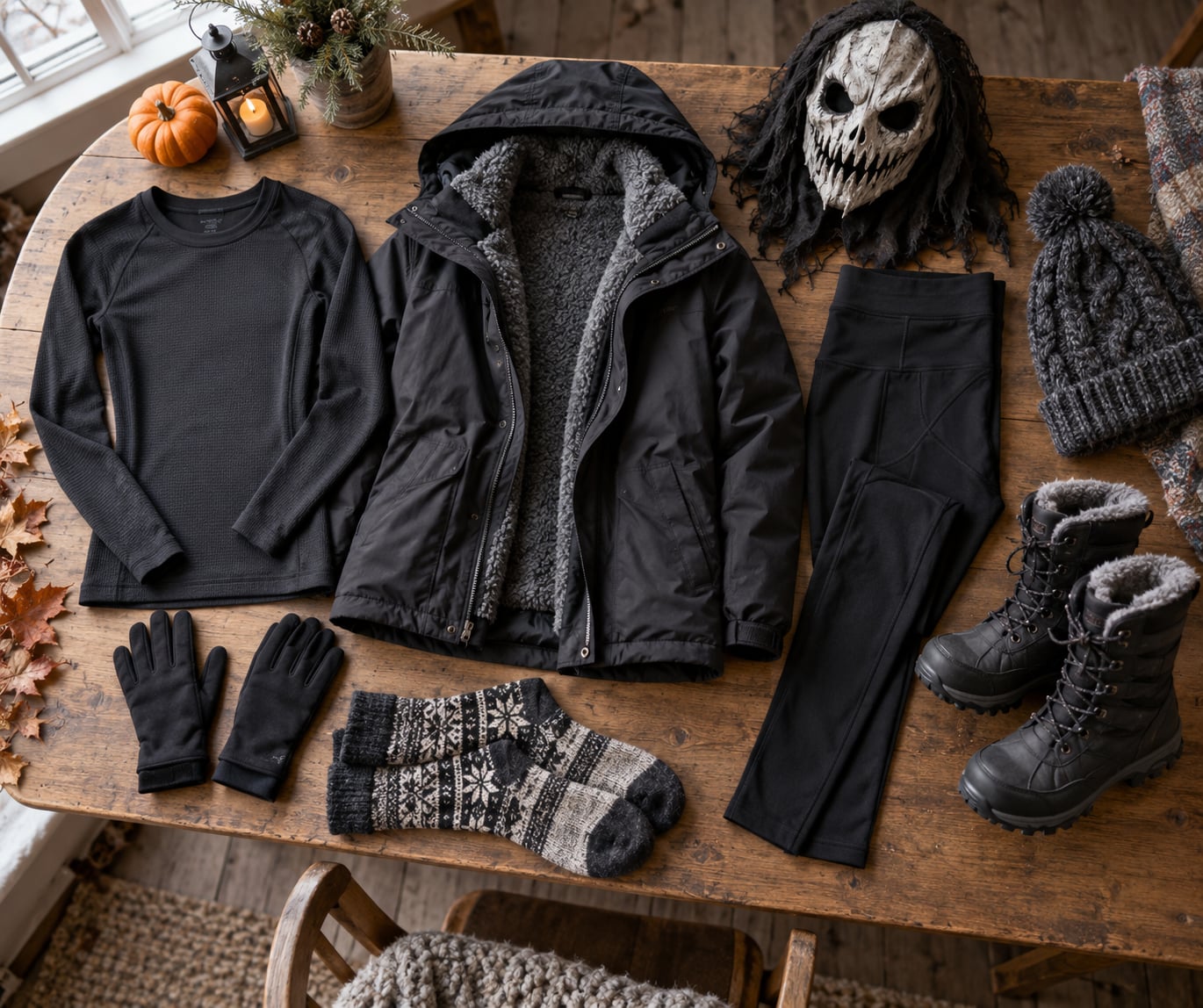
Gather these before you start. Most families already own the base-layer and extremity items, so the real shopping is usually one warm mid layer and a windproof outer piece.
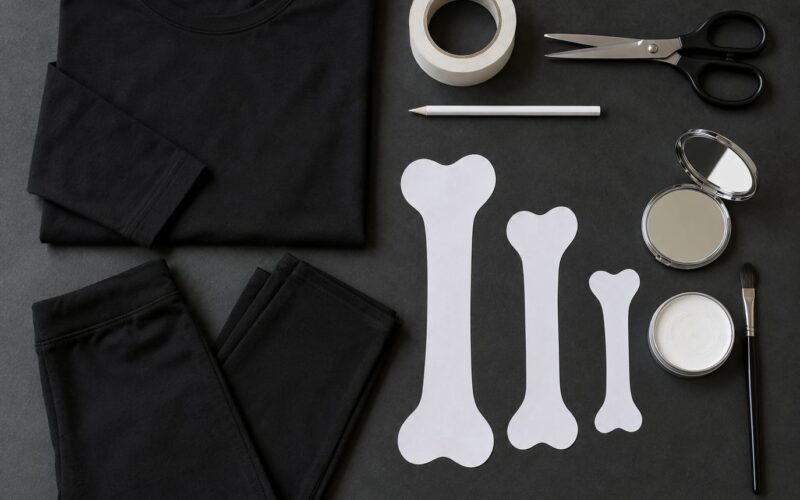
- Base layer: a thermal undershirt, long-sleeve moisture-wicking top, long underwear, leggings, or tights. Nude or skin-tone shades keep a light costume from looking like pajamas.
- Insulation: fleece, a fleece-lined hoodie, a flannel shirt, quilted fabric, or a puffy vest that fits over the costume torso.
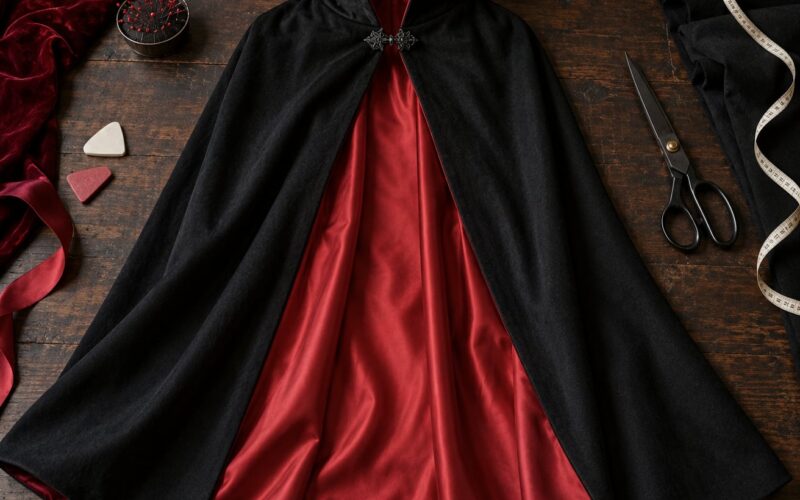
- Outer layer: a coat, cloak, cape, poncho, or rain shell that blocks wind. Rain and sleet come from the north wind more often than people expect in late October.
- Head: a knit hat, fleece-lined beanie, balaclava, ear warmer, or hood that covers the ears.
- Hands: thin liner gloves under costume gloves, plus pocket hand warmers you can crack and slip into a pocket or a seam.
- Feet: two pairs of thick socks and closed-toed boots or shoes that fit without pinching. Cheap costume slippers are the reason so many trick-or-treaters come home with wet feet.
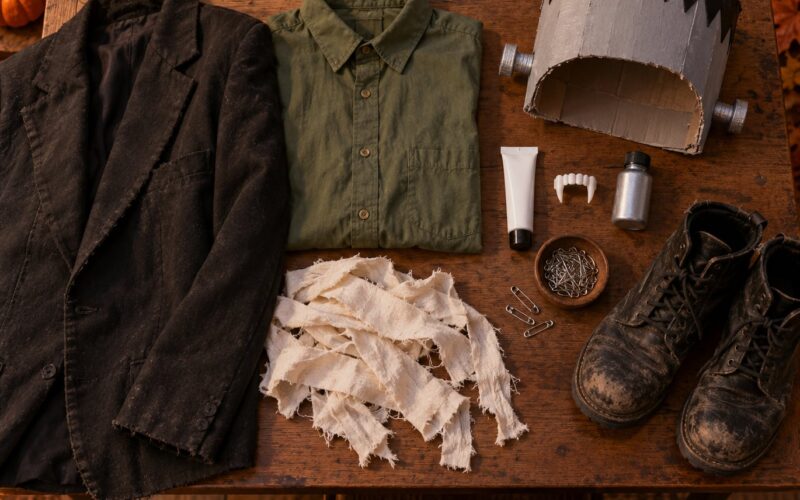
- Supplies for the job: sewing machine or hand-sewing kit with fleece and batting, safety pins, fabric markers, a hot water bottle or pouch, a thermos, and reflective tape for dusk visibility.
Once you have those, match them to the forecast. Check the windchill rather than the stated temperature, because the number that matters is the one the wind makes your skin feel.
- 50s°F (about 10°C): thermal base layer, a sweatshirt or fleece vest over the costume, a hat, gloves, thick socks, and regular shoes. No coat needed.
- 40s°F (about 5°C): add a coat, cape, or hooded jacket over everything, plus hand warmers and a scarf if the costume leaves the neck bare.
- 30s°F (about 0°C): full outer layer with a windproof shell over the costume, fleece-lined tights or leggings under any skirt, insulated boots, and a hat that covers the ears.
- Teens and below freezing: consider dressing for the coldest hour, not the warmest one, and cut the route short or move it indoors. No costume is worth a serious cold exposure, especially for a toddler.
For toddlers, keep it simple: a footed pajama or fleece onesie is both base layer and costume, and the outfit doubles as the blanket for the ride home.
Step-by-Step: How to Make a Costume Warm Enough for Cold Weather
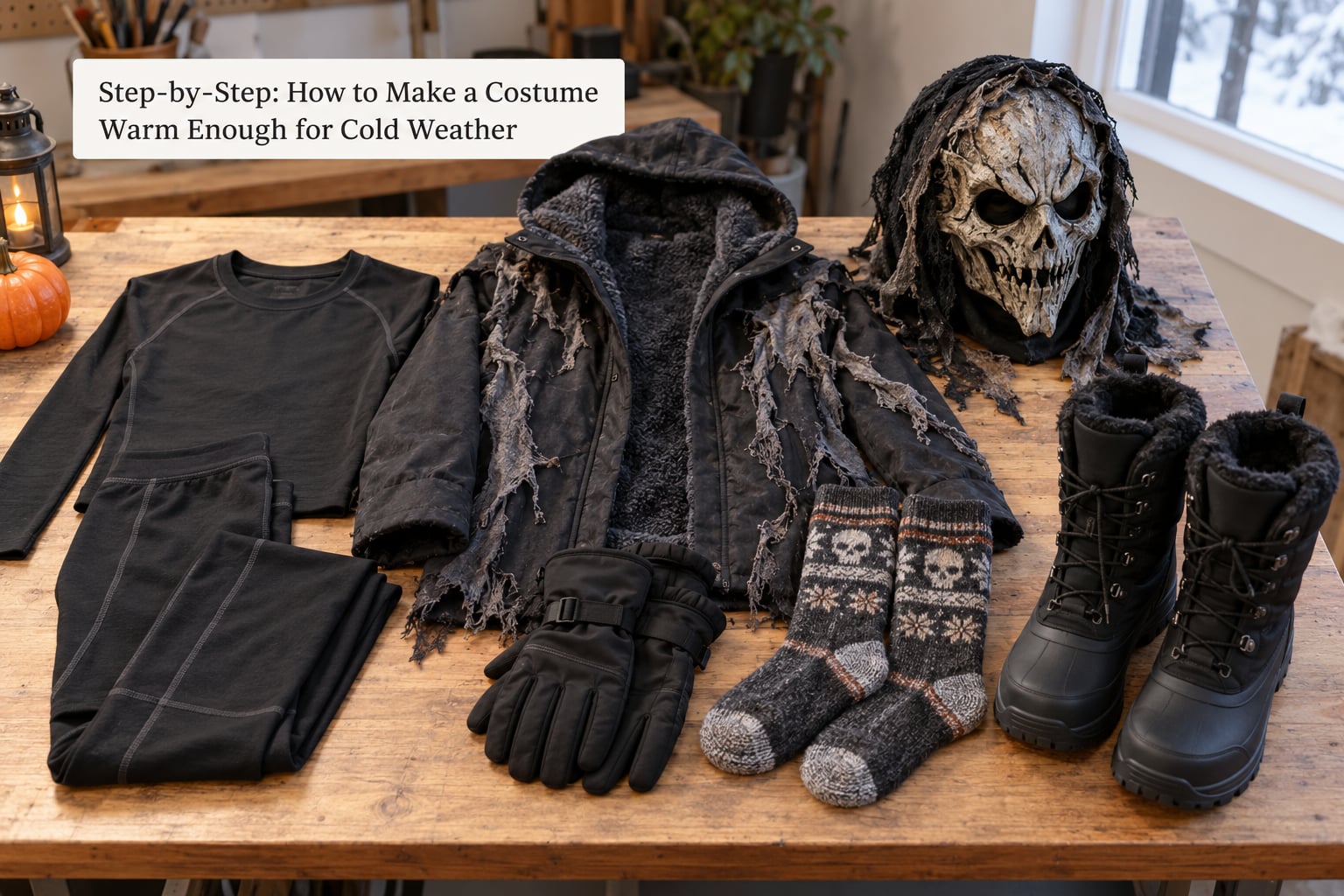
The order matters. Build warmth from the skin outward, then protect the parts the costume leaves exposed, then make sure the layers still let you walk.
1. Make a Costume Warm Enough From the Skin Up
A moisture-wicking base layer is the foundation. It pulls sweat off your skin so you stay dry, which matters because damp skin loses heat far faster than dry skin in moving air.
Pick a thin, close-fitting top and either long underwear, leggings, or fleece-lined tights for the legs. Skip cotton here. Cotton soaks up sweat, stays wet, and turns a cool night into a genuinely cold one, which is the opposite of what you want.
Match the color where it shows. A nude or skin-tone bodysuit under a princess, fairy, or vampire costume disappears completely, while a bright red thermal shirt under a princess dress is visible from across the street. Parents on costume forums keep making the same point: the layer you hide is the layer that works.
For kids, a long-sleeve bodysuit or a footed sleeper counts as the base layer and the bottom half of the costume at once. For adults, long underwear under a revealing costume does the same job without adding bulk where it shows.
2. Add Insulation Where the Costume Fabric Is Thinnest
Insulation is whatever traps a pocket of still air next to your body. Fleece, wool, quilted fabric, and puffy vests all do it; a single thin sheet of costume fabric does not.
Focus on the torso first. The chest and back lose more heat than the arms, and a fleece vest or quilted lining under a costume shirt adds warmth without hiding the design. Then cover the thighs and upper arms, which is where cold air creeps in on a skirt or a sleeveless top.
Polyester and fleece are the two workhorse fabrics here because they trap heat better than cotton and dry faster if you do sweat. Wool is warmer but heavier, so it earns its place as a thin layer rather than a bulky one.
If you sew at all, this is where a costume gets permanently warmer. Line the bodice with fleece, quilt batting between the outer fabric and the lining, and add a strip of fleece down the back panel. Use a lighter fill on the arms so you can still reach for a doorbell or hold a parent’s hand.
3. Protect Your Head, Hands, and Feet
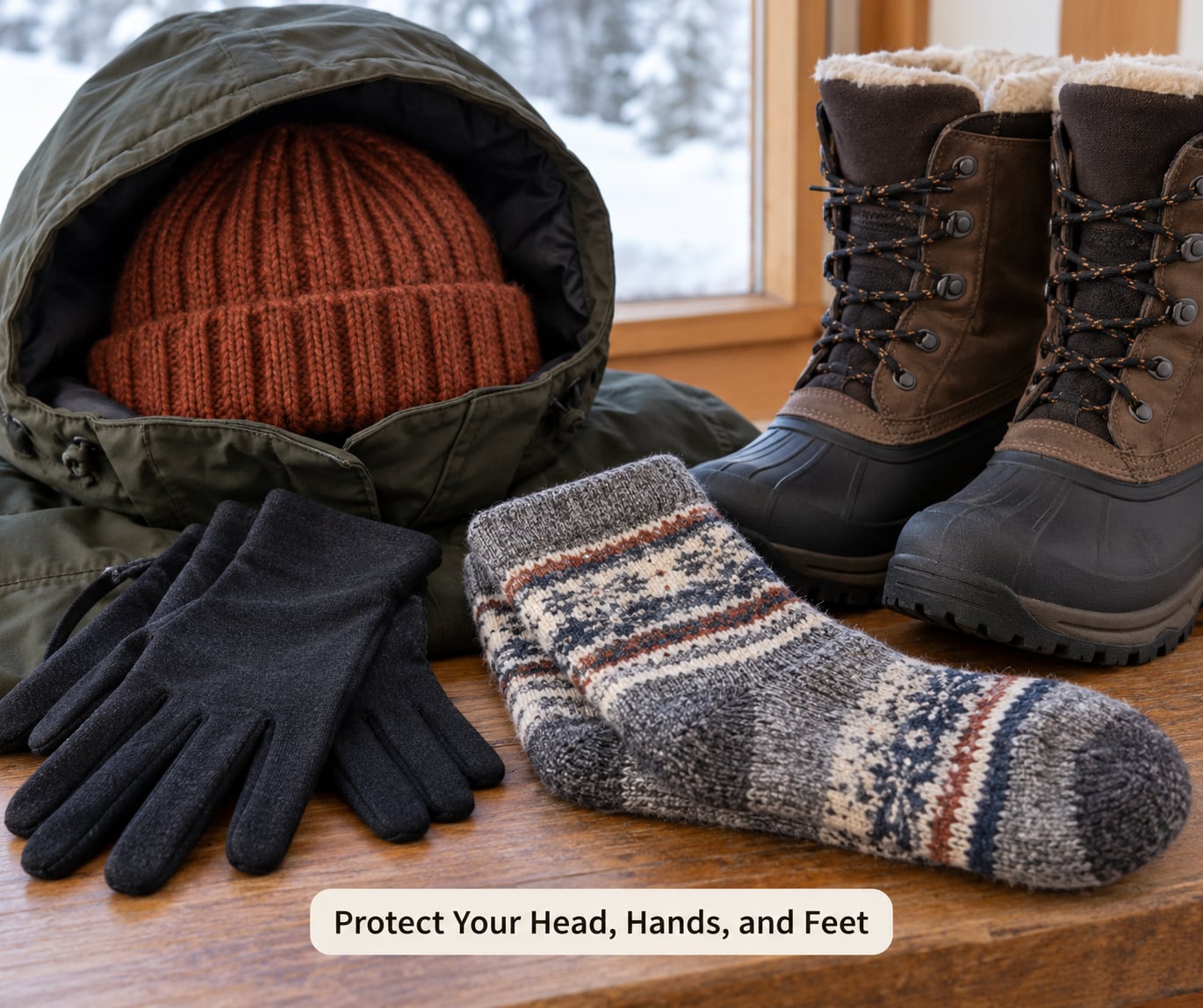
Cold hands and feet come first, every time. They are the complaints that end trick-or-treating early, and they hit twice as hard on a child who cannot tell you how much colder they feel than you do.
For your head, cover your ears. A wig works as a hat if it is dense enough, but a beanie or ear warmer underneath a hood costs nothing and does more. For your hands, put thin liner gloves on first, then costume gloves over them, and keep a hand warmer in a pocket or stitched into a seam. For your feet, wear two pairs of socks and closed-toed shoes.
Size matters more than brand with children’s costume boots. A costume shoe sized to match the costume often runs a full size narrow, so check with the same socks you plan to wear and leave a thumb’s width at the toe. Cold, compressed feet are worse than slightly cool ones in roomy boots.
4. Layer Costume Pieces Without Losing the Look
Where you can, build the warmth into a garment the character already owns: a cloaked figure, a heavy coat, a shearling-lined vest, a poncho, a long tailored coat on a character who would wear one. Then work backwards from that warm piece to the rest of the outfit, which is a faster way to build a cold-weather look than starting from a thin costume and bolting a jacket onto it.
If a coat has to go on the outside, buy or pick the costume one size up so it fits over. That single fix removes the sagging shoulders and gaping neckline that make a layered costume look wrong rather than puffy.
Secure everything that could move: pin or clip capes at the shoulders, shorten a hem that trails near the ground, and tie or hook a skirt to leggings so it does not ride up. Use safety pins inside a lining where a visible pin would break the illusion, and check every closure while the child is moving, not while standing still.
Mobility matters more than people expect. A costume that restricts your arms or your stride generates more chill than cold air alone, because you stop generating body heat. If you cannot climb a step comfortably, take the layer off or rework the costume.
5. Test the Whole Outfit Before the Night
Wear the complete outfit for 20 to 30 minutes, indoors first and then outside, at the same hour you will actually be trick-or-treating. Dusk in late October feels very different from a warm afternoon, and you want to find problems when they are cheap to fix.
Look for four things: cold spots, usually the neck, the waist, and the ankles; damp skin, especially the back, which means too many layers; restricted movement; and loose or dragging fabric. Check how the mask or glasses fog after ten minutes of walking, because a face that cannot see clearly at dusk is a real problem.
Then add two dusk safety items nobody expects: reflective tape on the back of the costume and on the adult escort, and a carried flashlight or battery light. Both make a group far more visible to drivers at the exact moment the light fails.
Before you head out, decide your cold rule in advance. Pick the house that is the warm-up stop, the halfway point to turn back, and the temperature that sends everyone inside. Deciding at the third house, in the cold, with a tired child, is how plans unravel.
Common Mistakes
Wearing cotton as the base layer. Cotton holds sweat against the skin and dries slowly, so it makes you colder, not warmer. Replace it with polyester, merino, or any moisture-wicking thermal layer.
Using one bulky coat instead of layers. A single puffy coat traps warmth well at rest but does nothing while you are moving, and it cannot be peeled off when a kid overheats. Base, mid, and outer can each come off separately.
Over-layering into sweat. This is the most common parent worry, and it deserves respect: sweat plus a cold wind chills faster than dry cold air. Kids sweating under three layers within about 20 minutes of walking is a real pattern, not a hypothetical. Dress one layer lighter than feels right and check at the halfway house.
Covering too much of the face. Thin, poorly ventilated masks get uncomfortable and foggy once you are walking fast in cold air. Choose a mask with eye openings that clear your breath, or wear glasses so the mask does not have to seal against the face.
Leaving feet and hands bare. Open-face costume shoes, sandals, and thin gloves undo everything above the knee. Two pairs of socks and closed-toed boots are the cheapest fix in this whole guide.
Ignoring rain, snow, and slush. A costume that holds water keeps you cold long after you get inside. Prefer polyester and fleece over cotton, skip long trailing hems that drag through puddles, and put a waterproof shell over the outfit. Bring a spare pair of dry socks for kids in a car bag, because wet socks end the night for everyone.
Overlooking the adult escort. Whoever is walking alongside the kids is outside for the same two-plus hours. Dress the adult for the coldest hour on the route, not for the character they picked, and plan a warm indoor stop halfway.
Frequently Asked Questions
How to stay warm in a Halloween costume?
Layer it like winter clothing: a moisture-wicking base layer against the skin, an insulating middle layer such as fleece or a quilted vest, and a wind-blocking coat, cape, or poncho over the costume. Then cover the three areas costume fabric usually leaves open: your ears, your hands, and your ankles. Walking keeps you generating heat, so light layers that you can remove beat one heavy coat.
What should I wear under a Halloween costume?
A thin moisture-wicking top and either long underwear, leggings, or fleece-lined tights. Skip cotton, which holds sweat against the skin. Choose nude or skin-tone shades under light or revealing costumes so the layers vanish, and add a thin liner glove set under costume gloves for full coverage from shoulder to fingertip.
What is the best Halloween costume to wear in cold weather?
The warmest cold-weather costumes cover the whole body and are built from thick or layered fabric rather than thin stretchy material. Look for cloaks, coats, shearling vests, footed onesies, and sweatsuit-based characters. Every good example can hold a base layer and a mid layer underneath without gaping at the shoulders, which is the real test of whether a costume can be warmed up.
How do you dress kids warm for Halloween without overheating them?
Dress in three adjustable layers rather than one heavy coat, and stop at the layer that feels slightly too warm at rest. Walking generates heat quickly, so most kids need less than adults expect. Check at the halfway house: damp skin or a red face means remove the mid layer, cold hands and a pale face mean add it. A bulky costume plus a thick coat plus thermals is the fastest route to sweat and then a fast chill.
What if it rains or snows on Halloween night?
Prioritize a waterproof outer layer over costume accuracy: a rain shell, poncho, or plastic cape worn over everything keeps wind-driven rain from soaking the insulation. Choose polyester and fleece rather than cotton because they dry faster, avoid long hems that drag through puddles, and carry a spare pair of socks and a change of shirt for kids. If the temperature is low and the ground is wet, moving the trick-or-treating indoors is the safest call.
Do heated gloves and hand warmers really help?
Yes, particularly for the hands and feet, which have no muscle to generate heat of their own. Air-activated hand warmers fit in a coat pocket or a costume seam and last several hours once cracked. Rechargeable heated gloves work well but need a spare battery pack for a long night, and neither replaces a base layer or a proper glove, since they warm the surface rather than insulating you from the wind.
The Short Version
Start at the skin and work outward: moisture-wicking base layer, insulating middle, wind-blocking outer. Cover the ears, hands, and ankles, secure anything that drags or flaps, and do a 20 to 30 minute test walk at dusk a few days before.
Watch for sweat as closely as you watch for cold, because damp plus wind costs you more warmth than the cold air alone. Bring a dry pair of socks, put reflective tape on the back of every costume, and set your warm-up house before you leave the door.