Learning how to dress like a classic monster on a budget comes down to three things: the silhouette, one signature prop, and the face. Borrow a jacket, pin a bolt to the collar, and paint yourself gray, and people read Frankenstein from twenty feet away. No plastic mask required.
That matters because the costume aisle is where budgets go to die. By the second week of October the classic monster outfits are picked over, and what remains is a rubber mask with a bedsheet apron. Building the look yourself from a closet, a dollar store run and about forty minutes of craft time costs a fraction of that and fits far better.
Below are six classic monsters you can put together this weekend, plus the shared supply list and the mistakes that turn a clever costume into a bad night.
Table of Contents
- What You Need
- Clothing you probably already own
- Dollar store and craft store supplies
- Prep tools
- Step-by-Step: Six Classic Monster Costumes on a Budget
- 1. Dress Like Frankenstein on a Budget
- 2. Dress Like a Vampire on a Budget
- 3. Dress Like a Mummy on a Budget
- 4. Dress Like a Werewolf on a Budget
- 5. Dress Like a Zombie on a Budget
- 6. Dress Like a Mad Scientist on a Budget
- Common Mistakes
- Buying a whole costume off the rack
- Ignoring the silhouette
- Wearing hard masks and full headpieces in the dark
- Using hot glue or spirit gum carelessly
- Choosing shoes you cannot walk in
- Not rehearsing in low light
- Frequently Asked Questions
- Where is the cheapest place to buy classic monster costume pieces?
- Can I make a monster costume without buying a full costume?
- What is the most important part of a recognizable monster costume?
- How can I make monster makeup look convincing but stay comfortable?
- What costume pieces can I reuse for different Halloween characters?
- How should I prepare a budget costume so it is comfortable all night?
- Conclusion
What You Need
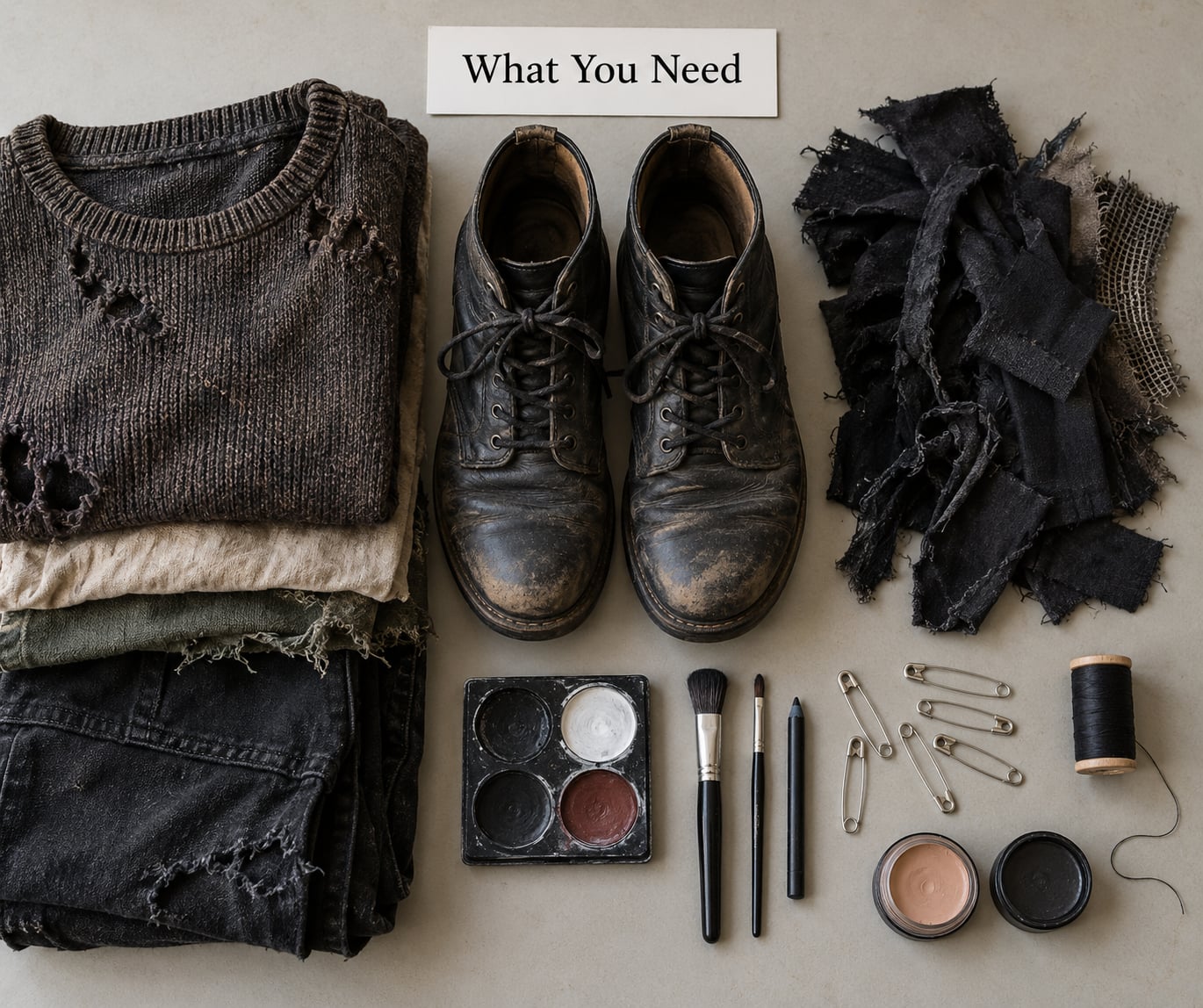
None of the looks below require sewing. If you can cut with scissors and operate a glue gun, you can build any of them. Gather what you can before you start shopping, because the same tube of white face paint does double duty on the mummy, the vampire and the zombie.
Clothing you probably already own
- A dark jacket, blazer or suit coat
- A white or black button-down shirt
- Black trousers or dark jeans
- A flannel shirt in plaid
- A plain black dress or long skirt
- A white coat, lab coat or oversized white shirt
- Old bedsheets, curtains or pillowcases
Dollar store and craft store supplies
- White and black face paint plus a cream or gray shade
- Cheap plastic fangs or vampire teeth
- Safety pins, a spool of thread and fabric glue
- Cardboard, a craft knife and silver craft paint
- Faux fur trim or a scrap of fur fabric
- Washable liquid color for wounds and stains
- Safety goggles from a hardware or dollar store
- Small empty soda bottles and a few beakers or cups
Prep tools
A hot glue gun, scissors, a stapler and a headlamp for the makeup mirror. Lay everything out on the floor the day you build so nothing disappears into a closet between steps.
Step-by-Step: Six Classic Monster Costumes on a Budget
1. Dress Like Frankenstein on a Budget
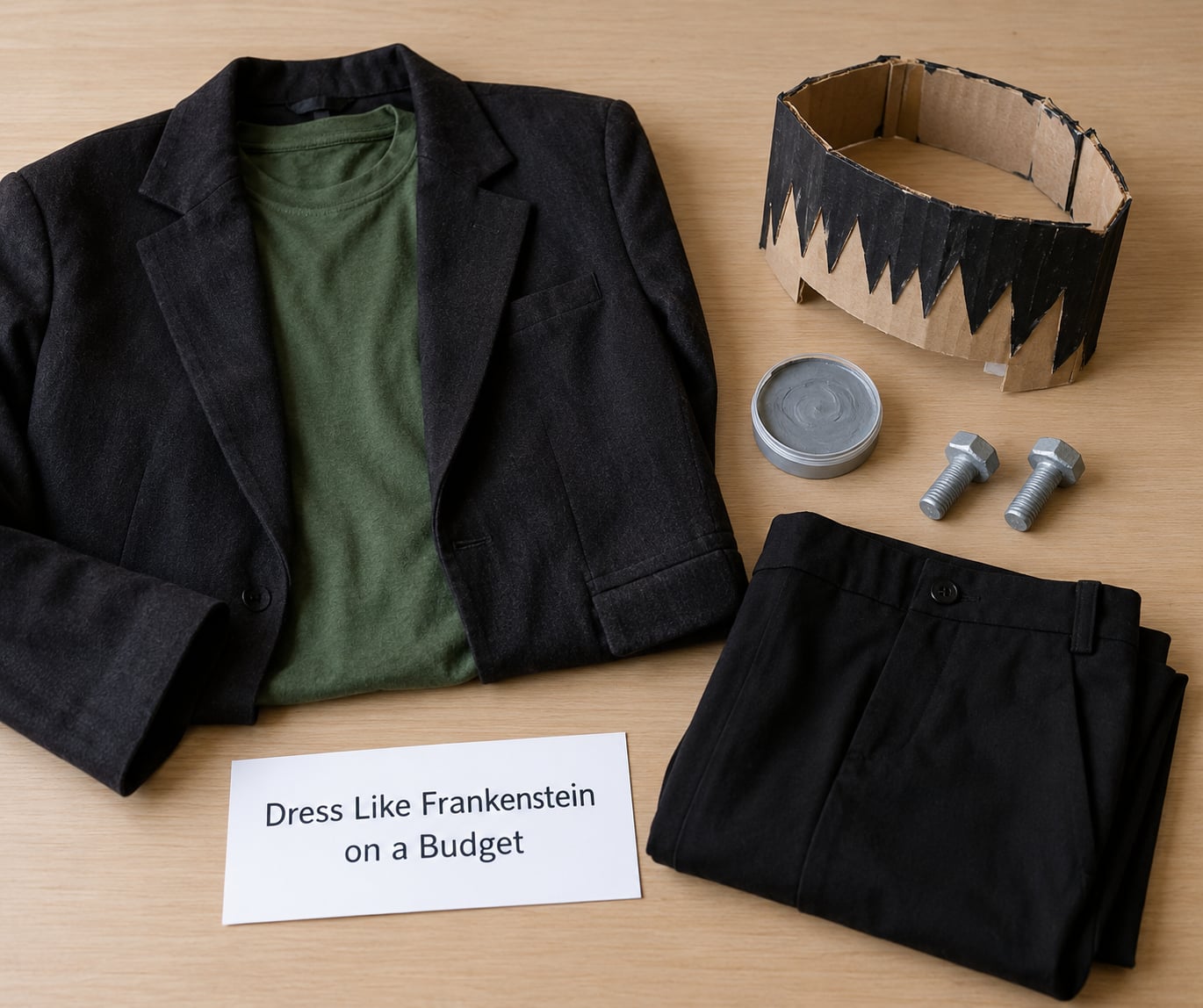
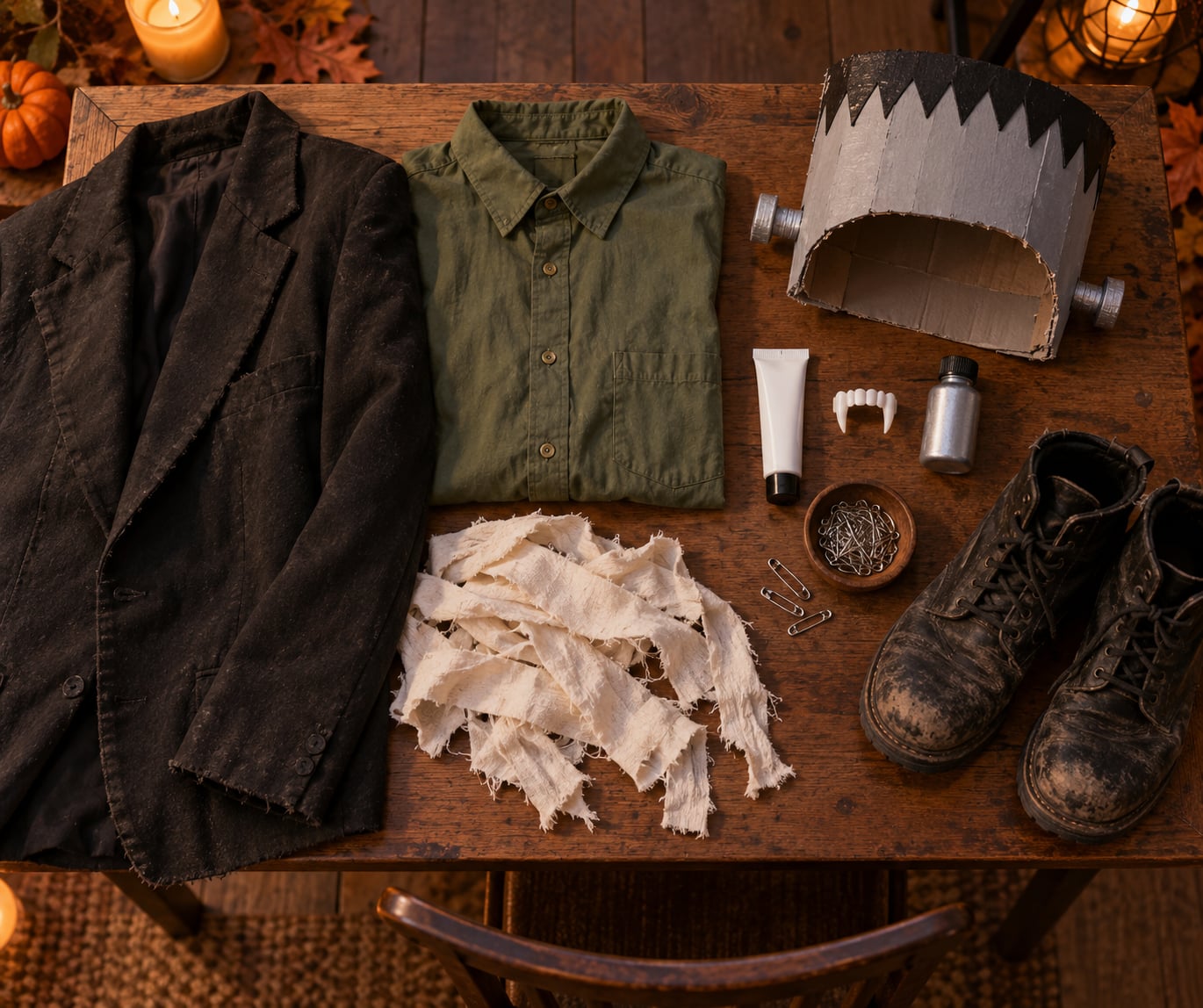
Budget: the jacket and trousers come from your closet. The headpiece is cardboard and craft paint, and the bolts are little plastic discs from a party table supply bin. Build time is roughly forty minutes if you skip papier mache.
- Darken the face with a gray or green wash, then paint a flat black strip across the forehead and two squares on the cheeks. Keep the eyes and mouth bare so your face still reads at a distance.
- Cover your hair with black paint or a black swim cap, then dust cornstarch over it while it is still wet for the flat-topped look.
- Cut two rectangles from cardboard, one slightly narrower than the head. Fold up the sides to make shallow walls and glue them to your own hairline rather than building a full hat that wobbles.
- Paint the cardboard gray, then add darker gray smudges with a sponge. Silver craft paint on the edges reads as bare metal in low light.
- Drill or pin one bolt to each side of the neck area where the collar meets your jaw. Plastic bolts from a party store cost very little and glue on fine.
- Tuck the top of a green or dark shirt into the trousers and wear the jacket buttoned. Squared shoulders and a slow, stiff walk finish the character more than any prop.
If you want the full built-up version, papier mache over a plastic bucket shape gives you a proper squared head. Just know that it adds hours and gets uncomfortably warm, which is the whole problem with most store-bought headpieces.
2. Dress Like a Vampire on a Budget
This is the easiest classic monster costume on the list, and the closet does almost all of it. A crisp white shirt, black trousers and dark shoes give you the century cross-section immediately.
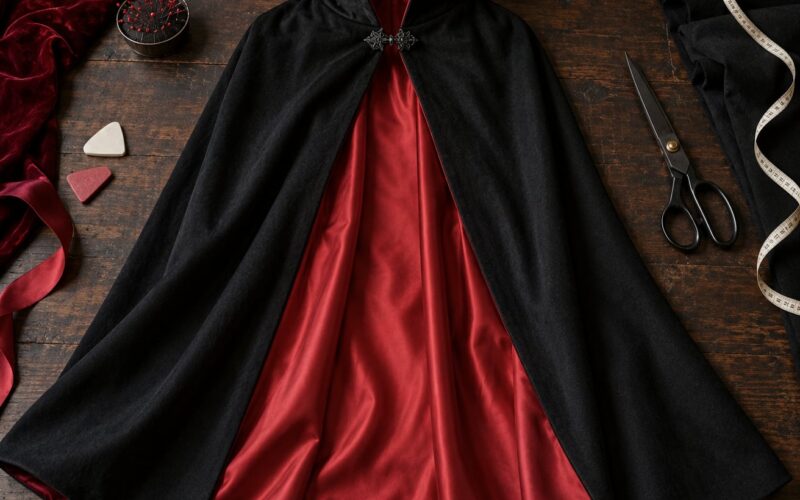
- Add a cape by cutting a rectangle out of a black tablecloth or thrift-store curtain, with a hole cut for the head. Safety pin it at the shoulders over the shirt collar.
- Whiten the face with a pale base, then gray the eye sockets and under the cheekbones with a sponge. Leave a shadow on the upper lip and temples.
- Part the hair down the middle, comb it flat, and draw a widow’s peak at the hairline with a dark pencil that rinses out.
- Set the cheap fangs in with a tiny dab of spirit gum or costume glue, biting down on a thin layer of petroleum jelly first so they do not stick to your teeth.
- Dark red at the mouth corners and a few drops down the chin complete it. Blood caps work too if you can get a pair, but red mouth corners read the same at night.
If you already own a black vest or a dark coat with a high collar, skip the cape entirely. The high collar and the widow’s peak are the two details that separate Dracula from a casual vampire.
3. Dress Like a Mummy on a Budget
A mummy is the cheapest classic monster to build, and it is the easiest to do with children because there is nothing sharp and nothing hot. Costume is the least expensive part, and the total spend usually lands on makeup alone.
- Tear old white or cream sheets, pillowcases and even a soft tablecloth into strips two to four inches wide. Ragged, uneven widths look far more decayed than neat gauze.
- Wrap from the ankles up, leaving gaps and pushing the odd strip out at an angle so the layers look loose and old rather than bandaged.
- Skip the shoulders and chest a bit, then wrap the arms loosely. Tight wrapping on a child restricts movement, so keep the elbows and knees free.
- Dust the face with a pale cream shadow and gray the hollows of the eyes, temples and jaw. More eyeshadow than you think, blended upward.
- Add a thin washable line at the mouth for a slack jaw, and smudge a little gray or brown across the strips for grime.
The toilet paper roll method is the zero-spend version and it genuinely works. Wrap from the ankles up, spiral the roll as you go, and tear rather than cut so the strips flare at the ends. Leave the cardboard core on the floor afterward; it makes the setup a hit at a party.
4. Dress Like a Werewolf on a Budget
The Wolfman reads through shape, not through a mask, and that is good news for anyone avoiding hard plastic over their face. Build time runs about thirty minutes, most of it the hair.
- Start with a flannel shirt in plaid, dark jeans and boots or heavy shoes. Plaid is the single most recognizable werewolf signal.
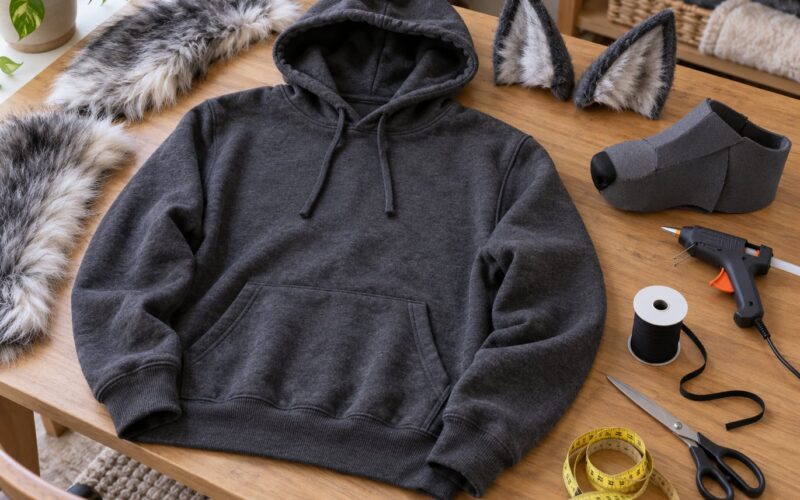
- Cut strips of faux fur trim and safety pin them along the collar, cuffs and waist for a shaggy outline.
- Make facial hair from yarn or wool pulled into short pieces, knot it in small tufts and pin it under the chin and along the jaw. Leave the mouth uncovered so speech stays clear.
- Smear dirt-tone shadow across the forehead, nose and cheekbones, and darken the eye sockets. Add a few scratch lines with a dark pencil.
- Tease the hair up and back with gel or pomade so it stands away from the face rather than lying flat.
- Walk with the shoulders forward and hands hanging low. Posture sells a werewolf better than any amount of face paint.
For a kids version, drop the yarn and add a hooded sweatshirt in brown or gray with torn holes at the elbows. No mask, no blocked vision, and it survives trick-or-treating in the cold.
5. Dress Like a Zombie on a Budget
A zombie is almost entirely a makeup look, which makes it the cheapest option on the page and the most useful for a group. Everyone buys one palette and shares it.
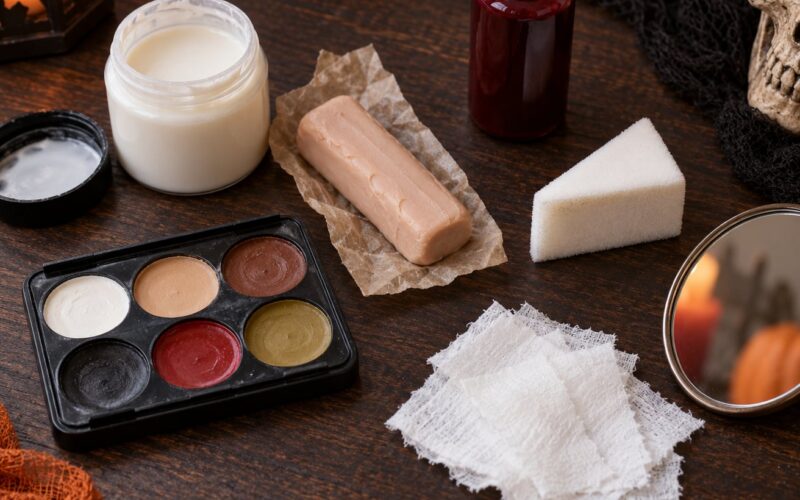
- Apply a pale matte base over the face, neck and any exposed skin. Matte is the whole trick; a shiny finish reads as a vampire, not a zombie.
- Blacken the eye sockets and the skin around the mouth with a sponge. Sponge, do not brush, or the edges look hard.
- Pull small pieces of tissue or toilet paper off, dip the edges into washable liquid color and press them onto the cheeks and chin for torn, decayed skin.
- Drip a thin line of the same color from the corner of the mouth. Less than you want.
- Add a few dark bruises with a gray or purple shadow on the forehead, nose and jaw, blending outward to nothing.
- Choose torn clothing in muted colors, blacken the nails with eyeliner, and mess the hair up with gel and water.
Keep a damp washcloth in your pocket for the night. Long trick-or-treating routes sweat, and wiping down before you reach a porch makes the makeup read properly again.
6. Dress Like a Mad Scientist on a Budget
The mad scientist is a costume staple that costs very little because it is clothing you would wear anyway. The lab coat does about eighty percent of the work.
- Throw on a white lab coat, or a white button-down with the sleeves rolled up and a white towel over the shoulders. Stain the hem with tea or coffee beforehand.
- Add dark trousers and worn shoes. A tie knotted loose and slightly crooked sells the distracted genius angle.
- Pull cheap safety goggles over the eyes, then smear the lenses with petroleum jelly to fog them deliberately.
- Fill soda bottles and small cups with colored water, dish soap and a little food coloring. Carry them in a tote bag or bucket.
- Add rubber gloves from the kitchen drawer. Worn leather gloves or stained dish gloves both work.
- Do the hair in a tall silver-white mess with a toothbrush, pomade and a little baby powder for the dust.
Wear the goggles pushed up on your forehead for the party and pull them down only for the effect photos. Nobody has fun in a costume they cannot see out of.
Common Mistakes
Most ruined budget costumes come from the same handful of errors, and every one of them has a cheap fix.
Buying a whole costume off the rack
A packaged outfit gives you a mask, a rubber suit and a cape that fits nobody properly. Pull the bolts and the headpiece idea from it and build the rest from clothing that fits you. That is where the money is, not the fabric.
Ignoring the silhouette
Broad shoulders, a stiff walk, a slow turn of the head. Half the recognition happens before anyone sees your face, so stand in a mirror and check the shape before the makeup comes out.
Wearing hard masks and full headpieces in the dark
Full masks trap heat and block your peripheral vision, which is exactly when you are crossing streets and looking for doorbells. Cardboard headpieces sit on your hair and leave your eyes clear. If you must wear a mask, take it off between houses.
Using hot glue or spirit gum carelessly
Never run a hot glue gun over skin, and test spirit gum on an inner arm for an hour before trusting it near your neck or face. Kids react faster and skin pulls more easily, so use costume glue instead and skip the glue gun.
Choosing shoes you cannot walk in
The oversized boot is a costume-shop staple that nobody enjoys for four hours. Wear your own broken-in boots or shoes and dirty them with brown shoe polish the night before.
Not rehearsing in low light
Test the whole look with a flashlight on your face, because that is the lighting at most doorsteps. Makeup that reads great in a bathroom mirror can vanish in darkness. Rehearse sitting, walking and standing, and trim anything that catches.
One more habit worth naming: take the costume off before you use the bathroom. Half the bad stories you hear about homemade monster makeup come from a bathroom mirror at a party where the lighting is terrible.
Frequently Asked Questions
Where is the cheapest place to buy classic monster costume pieces?
Thrift stores first, then dollar stores, then craft stores only for the specific bits you cannot source secondhand. Thrift racks give you jackets, shirts, dresses and coats for a few dollars each, and they last longer than packaged costume fabric. Dollar stores carry plastic fangs, safety goggles, faux fur trim, silver craft paint and safety pins. Save the craft store for cardboard, fabric glue and a good sponge blender. Costume shops are the last resort because the markup on the same bolts, masks and capes is the highest of any option.
Can I make a monster costume without buying a full costume?
Yes, and that is exactly how most of these looks work. Every costume here is built from ordinary clothing plus one or two cheap extras. Frankenstein is a jacket, cardboard and two bolts. A mummy is torn sheets and makeup. Dracula is a white shirt, black trousers and a tablecloth cape. The only rule is that the look needs a clear silhouette and one recognizable detail before it goes anywhere near a door.
What is the most important part of a recognizable monster costume?
The face and the silhouette together. A viewer identifies a monster from shape first and detail second, so shoulder width, head shape and stance do more work than fabric quality. Then one signature accessory confirms it: the bolt, the widow’s peak, the plaid flannel, the trailing bandages. Spend your small budget on the face and that one detail rather than on the whole outfit.
How can I make monster makeup look convincing but stay comfortable?
Start thin and build in layers, because makeup applied heavy pulls at the skin after a few hours. Use a matte base, sponge the shadows on instead of brushing them, and keep the eye area light so you can see. Set the fangs with a thin layer of petroleum jelly on your teeth first so they release easily. Carry a damp cloth and re-blend the high points before you arrive anywhere.
What costume pieces can I reuse for different Halloween characters?
A black cape works for Dracula, a vampire, a witch and a headless horseman. A white lab coat covers a mad scientist, a surgeon, a ghost and a plague doctor. Torn strips become mummy bandages, zombie wounds and pirate wraps. Black trousers and dark shoes appear in almost every classic monster look. The face paint palette is the most reusable item of all, so buy the big one and share it.
How should I prepare a budget costume so it is comfortable all night?
Build it a week early, wear it for a full hour at home, and fix what moves. Then store it hanging rather than folded so the cape and headpiece keep their shape. On the night, eat before you put the makeup on, bring a damp cloth to re-blend, and remove any mask or headpiece the moment you get indoors. Most people who regret a costume spent the evening in a hot plastic mask they never needed.
Conclusion
Start with one monster and one week. Shop thrift and dollar stores for the base outfit, spend your actual budget on the face and a single signature prop, and skip the plastic mask entirely.
Build the whole look a week ahead, wear it for an hour at home, and test it with a flashlight on your face. Once you know how to dress like a classic monster on a budget, the closet pieces stay in your closet afterward and next October costs you a refill of face paint.