To pick a Halloween costume for a toddler who hates masks, skip anything that covers the face, ears, or eyes, and start with a soft two-piece outfit that pulls on like a T-shirt and pants. Add the Halloween in the ears, the collar, and the colour instead. It takes about 20 minutes to shop well and a week of practice before the night.
I have watched a happy toddler go from grinning in a costume to sobbing in under three seconds, and it almost always comes down to the same four things: heat, blocked peripheral vision, fabric rubbing the cheeks, and no way to take it off themselves. Every fix below removes one of those four problems.
Last reviewed: October 2026
Table of Contents
- What You Need
- Step-by-Step: How to Pick a Halloween Costume for a Toddler Who Hates Masks
- Start With Mask-Free or Removable-Mask Designs
- Check the Fit Around the Face, Neck, and Shoulders
- Choose a Design That Still Feels Like Halloween
- Check the Event Rules Before You Buy
- Build the Costume From Clothes They Already Own
- Decide About Face Paint Early
- Handle the Relatives Who Want a Scarier Costume
- Test Wear the Costume Before Buying
- Plan for Changing and Emergency Comfort
- Common Mistakes
- Frequently Asked Questions
- What are good Halloween costumes for toddlers who hate masks?
- Can a toddler wear a costume with a hood instead of a mask?
- How can I tell if a toddler costume is comfortable enough to wear?
- What should I do if my toddler refuses to wear a Halloween costume?
- Are dark Halloween costumes safe for toddlers at night?
- How do I choose a costume for a sensory-sensitive toddler?
What You Need
Grab a few things before you start shopping, so the decision gets made with facts instead of with whatever looks cutest in the aisle.
- Current measurements. Chest, waist, and height in inches. Toddler clothing sizes are inconsistent between brands, and torso length is what usually breaks first.
- The child’s current clothing size. Size up one from everyday clothes, not two. You want room for a base layer underneath without the hem dragging on the floor.
- A calendar. Aim to have the costume in hand two to three weeks ahead so practice wears fit in before the week of.
- Three or four mask-free options saved side by side, so you are comparing real choices rather than reacting to the first thing you see.
- The event rules. Many trunk-or-treats, parades, and school parties ban masks and prop weapons outright. Check before you buy, not after.
- A soft measuring tape and a seam ripper if you plan to remove tags or let out a neckline later.
Step-by-Step: How to Pick a Halloween Costume for a Toddler Who Hates Masks
Start With Mask-Free or Removable-Mask Designs
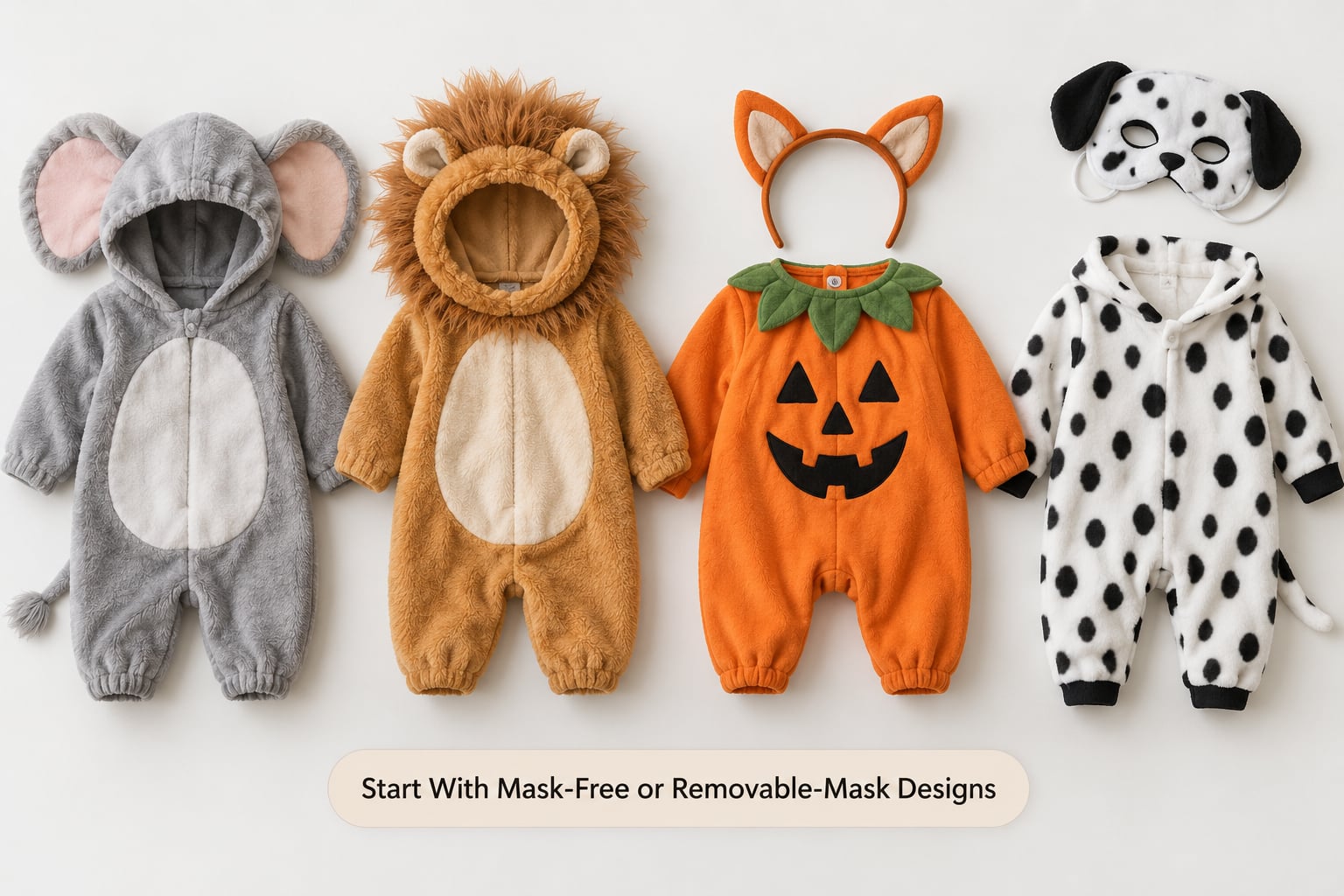
The most reliable answer comes from parents on r/Autism_Parenting, where the recurring recommendation is two-piece costumes that fit like a T-shirt and pants, with the hats and accessories simply skipped. That advice works for any child who flinches at headwear, sensory differences or not.
Look for these categories first, because they carry the Halloween theme without touching the face:
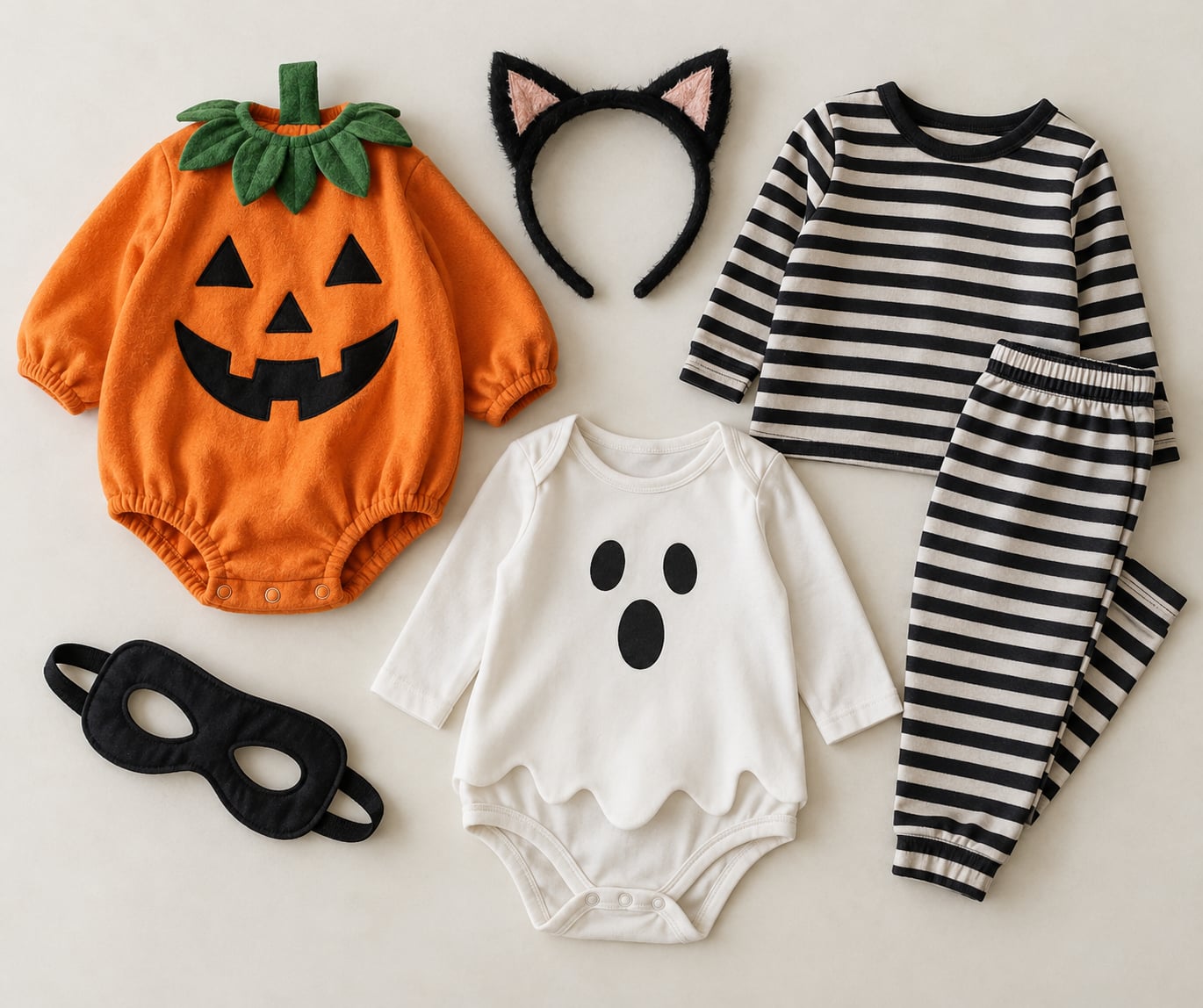
- Ear headbands and clip-on ears. All the signal, none of the coverage.
- Hoods that sit behind the head. A hood that falls to the shoulders and leaves the whole face and both ears visible reads as a costume in photos.
- Printed bodysuits and onesies. A pumpkin, a ghost, a black cat, a bat, all printed across the chest. No separate pieces to lose or pull over the head.
- Two-piece sets with snaps at the crotch. Snaps beat zippers for small fingers and for the adult trying to change them in the dark.
- Sets where the mask detaches. Keep it in the box. It becomes a fun prop to hold in photos rather than something worn.
- Accessories that attach to the shoulders. A cape fastened at the back of the neckline or to the shoulders gives a silhouette without a collar.
One rule for the whole aisle: if the toddler cannot take the headpiece off with one hand in about three seconds, leave it in the box.
Check the Fit Around the Face, Neck, and Shoulders
This is where most returns happen. Face, neck, and shoulder fit decides whether the costume survives the night, and you can check all three in under a minute with a stretch test.
Hold the costume up to their face first. Any seam, zipper, or trim that lands near the mouth or cheeks gets rejected on the spot, even if the design is perfect on paper.
Then check the neck. A collar that sits at the base of the neck rather than around it is fine; anything that touches the jaw or the sides of the neck is trouble. Snug elastic at the neck is the single most common reason mask-averse toddlers also refuse hooded costumes.
Shoulders matter more than most parents expect. A costume that rides up in front the moment the child bends down gives them a sudden full-body wrong feeling, and you cannot explain that away in the driveway. Reach forward, squat, and stand up while they wear it.
Run this checklist at home or in the aisle. It takes about a minute and it answers most of the decision for you. Each line gives you the thing to look for and the reason to walk away.
- Neckline. Good: sits at the base of the neck. Walk away if it touches the jaw or chin.
- Seams and tags. Good: flat seams, tagless or a removable tag. Walk away if the stitching is rough across the collarbone.
- Face coverage. Good: open face, both ears visible. Walk away from anything that crosses the eyes or cheeks.
- Closures. Good: snaps, a wide neck opening, no zipper over the face. Walk away from small buttons, tight zips and hook-and-eye.
- Hem length. Good: clears the feet when walking. Walk away if it drags on the floor.
- Small parts. Good: nothing detachable that can be pulled off and mouthed. Walk away from loose bows, bells or plastic gems.
- Fabric. Good: soft, breathable, stretchy. Walk away from tulle, stiff mesh or a rough polyester lining.
- Weight. Good: light enough to forget about. Walk away from anything bulky, padded or stiff.
- Layering. Good: room for a long-sleeve base layer. Walk away if it is cut so a coat cannot go over it.
- Care label. Good: machine washable so you can soften it first. Walk away from dry clean only, or no label at all.
On the care label, check for flame resistance too. Anything advertised for children should carry one, and a missing label on a costume is worth a walk away on its own.
Choose a Design That Still Feels Like Halloween
A mask-free costume only works if it still photographs as Halloween. Otherwise somebody will ask, and your toddler will hear you explain why the mask is in the kitchen drawer.
Build the look with things that sit away from the head. Deep orange or black bodysuits, a jagged hem on leggings, felt bats appliqued to a shirt, reflective piping on a jacket, black socks with jack-o-lantern faces, striped or patterned tights, and sneakers with light-up soles all read clearly in a photo.
Texture does more work than most people expect. A fuzzy fleece dinosaur, a quilted pumpkin, or a shaggy friendly monster gives you a costume shape without a single piece of headwear.
Friendly monsters beat scary ones with this age group. Keep the ghouls and skeletons for the treat bucket and the wall decorations, where nobody has to wear them.
Then spread the theme wider than the outfit. Decorate the stroller, pick a pumpkin-shaped treat bag, have an adult match the family, or let your toddler hand out candy from a wagon. Any of those make the night count even if the outfit is a favourite jumper with a bat stencil on it.
Check the Event Rules Before You Buy
A lot of the mask pressure parents feel is really event pressure. Trunk-or-treats, church parties, parades and school events frequently ban masks, prop weapons and face coverings outright, and some ask adults to keep within arm’s reach the whole time. Buying a mask-free costume solves that before it becomes a problem, and it also stops your toddler seeing other children in full-face costumes and reaching for one.
Sensory-friendly events are worth hunting for when the date is flexible. Usually the differences are small and specific: volunteers wear ordinary clothes rather than gore, the doors are early so the queues are short, nobody jumps out or uses a surprise flash, and there is a quiet corner to sit in. Ask your child’s preschool, therapy practice or local disability group, because these events are usually announced to families rather than advertised.
Build the Costume From Clothes They Already Own
You do not need to buy a costume at all. The outfits that work best are usually the ones built from clothes the child already thinks of as their own. An oversized tee with a stencil or fabric paint on the front, a plain onesie with felt bats stuck on with double-sided tape, or a stripy shirt with orange leggings makes a passable Halloween outfit in about five minutes.
If you want the themed print but not the fuss, print a design onto a plain shirt or onesie. A pumpkin, a ghost, a little bat, a friendly monster, anything flat and matte with no glitter. Glitter is a terrible idea around toddlers: it transfers to hands, mouth, and the inside of the car seat.
Secondhand is worth checking too. Older siblings pass down bodysuits and two-piece sets, and a costume that has already been washed once or twice arrives softer than anything new off the shelf.
Decide About Face Paint Early
Face paint sits right next to the mouth, which is why a child who refuses a mask sometimes accepts a painted nose and sometimes not. It is also the one accessory with a clear age line: cosmetic face paints sold for children are labelled for age three and up, and anything applied near the eyes or on very young skin deserves a word with your child’s doctor before you use it.
The simple rule for a mask-averse toddler: keep it to a nose and whiskers, use a product labelled for their age, and keep it off the skin right before bed. Test it a few days ahead rather than on the night, because the washing-off is sometimes the part children object to most.
Handle the Relatives Who Want a Scarier Costume
Someone will suggest the vampire. Or the werewolf. Or that they would be so much cuter in a wig. A short script helps: “He gets overwhelmed when things touch his head, so we are doing the pirate this year.” Stating it as a fact about the child rather than a request to the grown-up usually ends the conversation, and repeating it once without explaining further stops the debate restarting on the doorstep.
You may not get a photo of your toddler in the costume you planned. That is genuinely fine, and worth saying to yourself before the night rather than at the doorstep. What you are buying is a toddler who enjoyed the evening.
Test Wear the Costume Before Buying
One try-on in a shop tells you almost nothing. A proper test runs 10 to 15 minutes at home and includes movement, because the costume is fine right up until they try to climb something.
Run it in this order:
- Five minutes of normal play. Whatever they usually do, not a special activity. That is where the costume quietly gets evaluated.
- Sitting on the floor. Cross-legged, then standing up. Jumpsuits and long hems fail here.
- Walking, then a short climb. Arms up, one foot on a step. Watch the hem and the waistband.
- A silly pretend moment. Two minutes of roaring like a lion or stomping like a monster. Pretend play is how a toddler copes with a costume instead of fighting it.
- Taking it off, on their own. This is the real test. If they need help or panic at the snaps, the design is wrong.
Watch for overheating, which usually shows up as a red face and damp hair at the back of the neck, and for rubbing, which shows up as redness at the collar, the wrists, or the waist. If either appears, wash the costume, soften the seams with a fabric shaver, and retest. If it happens again, return it.
Practice in stages rather than one long wear. Two minutes on day one, five on day three, a full 15 on day five, and a pretend trick-or-treat at home on day seven works far better than one endurance test. Most refusals are habit, not preference, and a costume worn happily three separate times will usually go straight on on the night.
Plan for Changing and Emergency Comfort
Decide now, while you are calm, what happens if the costume comes off halfway down the street. Doing that in the moment with a crying toddler on a pavement is a bad time for improvisation.
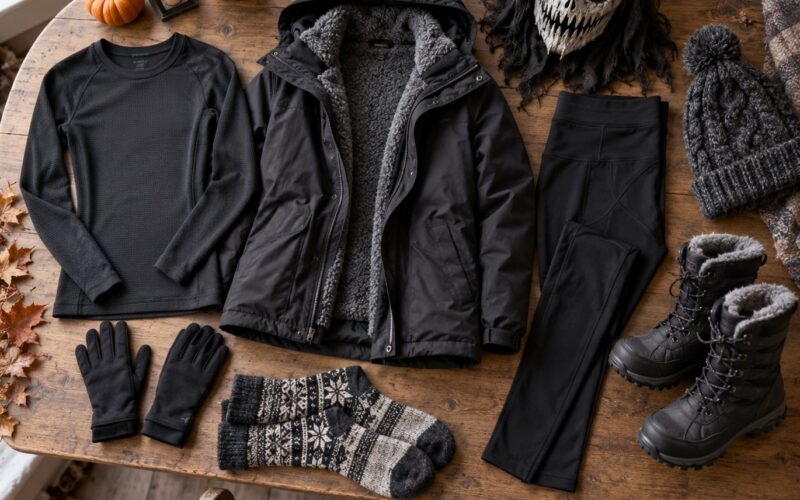
Pack a long-sleeve base layer with the costume so the switch takes seconds rather than minutes. If it is cold, dress the costume over the coat and add a hat and gloves, or carry the costume in a bag and put it on at the door. Skip the bulky puffer over a fleece, which is how you get an overheated, miserable toddler on a warm evening.
Keep the whole costume removable without undressing from the waist down. An open-front cape, a pullover top, and snaps rather than a zipper mean you can strip it fast in a porch light.
Give yourself permission in advance. If your child has genuinely had enough, the costume comes off and they go in a shirt with bats on it. Parents on r/Autism_Parenting describe this as the whole night still working, because the plan was made calmly in advance rather than negotiated during a meltdown.
Common Mistakes
Buying too early. Toddlers change fast, and a costume bought in August can be outgrown, or outgrown of tolerance, by October. Buy two to three weeks out and leave room for one return or swap.
The fix: check the return window before you buy, not after the tags are off.
Trusting the in-store excitement. A costume gets a two-minute try-on and a cheer. The novelty wears off in about forty minutes at home, which is the real duration you are planning for.
The fix: make the store visit short and put the decision on ice for a day before you pay.
Ignoring the neck and seams. Parents focus on the mask and forget that a scratchy collar or a stiff waistband causes the same meltdown.
The fix: wash the costume at home, use a fabric shaver on the inside seams, and cut out the neck tag before the first wear.
Choosing dark, bulky clothing with no plan for visibility. A black costume on a dark street makes a toddler hard to see, and bulky padding is heavy on a small frame.
The fix: add reflective tape or piping to the shoulders and the treat bag, and carry a small light. Skip thick padded suits and go for a layer over a base layer instead.
Forcing the mask or accessory after repeated refusal. Holding a toddler down for a costume photo turns Halloween into the thing they dread, and you end up with neither a photo nor a happy child.
The fix: if it has been refused three times, the answer is no, and the costume becomes a doll costume or a drawing instead.
Discovering the event rules late. Some trunk-or-treats and parades ban masks and prop weapons, and some ask adults to stay within sight of their child.
The fix: check the event page or ask the organiser in advance, then dress the toddler for the event you are actually going to.
Frequently Asked Questions
What are good Halloween costumes for toddlers who hate masks?
Start with anything that leaves the face, ears and eyes clear: ear headbands, clip-on ears, hoods that fall behind the shoulders, printed pumpkin or ghost bodysuits, and two-piece sets with snap closures. Parents on r/Autism_Parenting recommend two-pieces that fit like a T-shirt and pants, with hats and accessories simply skipped. Skip wigs, full masks, and anything with a collar that touches the jaw.
Can a toddler wear a costume with a hood instead of a mask?
Yes, as long as the hood sits behind the head and leaves the whole face visible. Avoid any hood that covers the eyes, crosses the mouth, or pulls at the neck, since blocked peripheral vision is one of the main reasons toddlers panic in a costume. A hood with an opening wider than the face can still work, but turn the hood to the back so nothing is near the cheeks or chin.
How can I tell if a toddler costume is comfortable enough to wear?
Run a 10 to 15 minute home test that includes sitting on the floor, walking, reaching overhead and taking the outfit off on their own. Watch for a red or damp neck, redness at the collar or waist, and costume pieces that ride up when they bend. If they need help removing it, or cry at the snaps, the fit or the closures are wrong and it is worth exchanging.
What should I do if my toddler refuses to wear a Halloween costume?
Stop pushing and offer an alternative rather than a compromise they have to accept. A printed shirt, an oversized tee with a stencilled pumpkin, or simply their own clothes with face paint kept off works fine, and the night still counts. Decide your fallback in advance so you are not negotiating with a crying child in a driveway. Refusal after three attempts means no costume, not a longer negotiation.
Are dark Halloween costumes safe for toddlers at night?
Dark colours are fine to wear but hard to see. Add reflective tape or piping at the shoulders, the back and the treat bag, and carry a small light so drivers and neighbours can spot your child on a dark street. Bright orange, green and white also photograph better while keeping the Halloween theme. Whatever the colour, stay within sight of your toddler at busy events.
How do I choose a costume for a sensory-sensitive toddler?
Favour soft, stretchy, breathable fabric and skip tulle, stiff mesh, rough polyester linings, tight elastic and scratchy tags. Choose two pieces that pull on like ordinary clothes rather than anything that goes over the head, and let your child wear their preferred long-sleeve shirt underneath. Practice in short doses across several days, and check the event rules before buying, since many ban masks entirely.
Start tonight by measuring your toddler and pulling three mask-free options onto a phone screen. Send the most-likely choice to a week of practice wears at home, and decide now what happens if it comes off in the street. That one habit removes most of the mask battles before they begin.