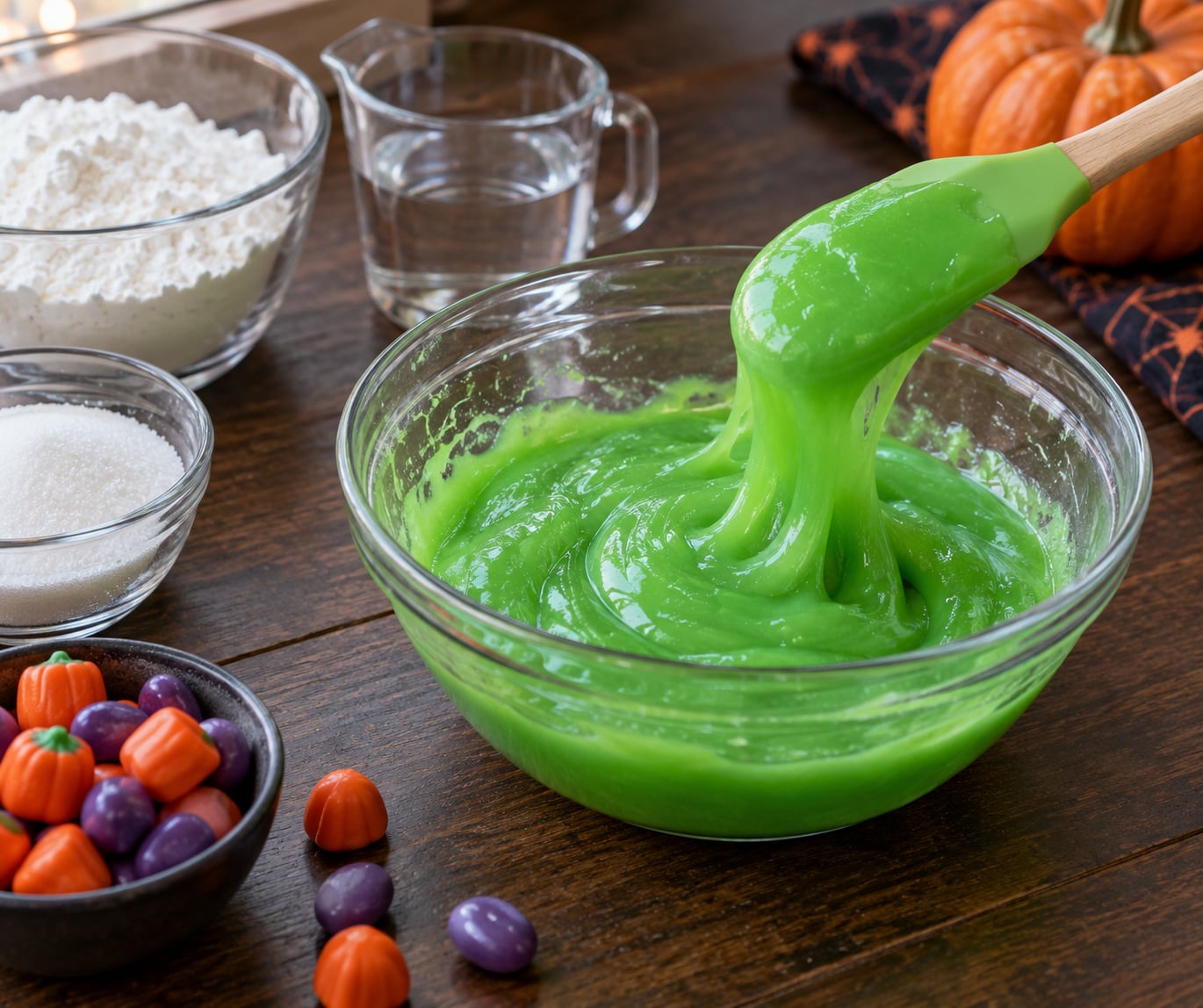
How to make edible slime for kids takes about ten minutes and three pantry ingredients: cornstarch, water and a little sugar. You stir it in a bowl, no cooking and no microwave, then let the kids squish it. It stretches like oobleck, holds a shape when you press it, and every ingredient is food.
The reason parents search for edible slime instead of the store-bought bottle is simple. Regular slime contains borax or contact-lime activator, which is not food. Under-fives put their hands in their mouths constantly, so a slime made entirely from kitchen ingredients removes that question entirely.
One honest note before you start: taste-safe and edible are not identical terms. Every recipe here is made from food you would eat yourself, but most contain sugar or starch that should not be eaten in quantity. Treat it as a sensory play material that happens to be food-based, not as a snack.
Table of Contents
- What You Need
- Step-by-Step
- How to Make Edible Slime for Kids: Mix the Base
- Add the Edible Components
- Color the Slime
- Adjust the Texture
- Store and Serve It Safely
- Fun Halloween Variations
- Common Mistakes
- Frequently Asked Questions
- Is homemade edible slime safe for babies to taste?
- What ingredients make slime edible?
- Can I use liquid dish soap or toothpaste in edible slime?
- Why is my edible slime watery, sticky, or powdery?
- How long can edible slime be kept in the refrigerator?
- Conclusion
What You Need
This is the whole shopping list for one small batch, enough for two or three kids to share:
- 1 cup cornstarch
- Half a cup of cool water
- 2 tablespoons of sugar
- Food coloring, gel or liquid (optional)
- 1 teaspoon vanilla or a safe flavoring (optional)
You also need a medium bowl, a spoon or silicone spatula, and a placemat or tray to play on. I use the same bowl for mixing and serving, which means one thing to wash afterward.
What you do not need matters as much. There is no borax, no slime activator, no school glue, no shaving cream, and no contact solution. Everything above comes from a standard supermarket aisle or your pantry, and none of it needs a special trip to find.
If your child has a food allergy, check the label on the vanilla and the food coloring. Cornstarch and corn syrup are both corn-derived, so a corn allergy rules out this base entirely.
Step-by-Step
How to Make Edible Slime for Kids: Mix the Base
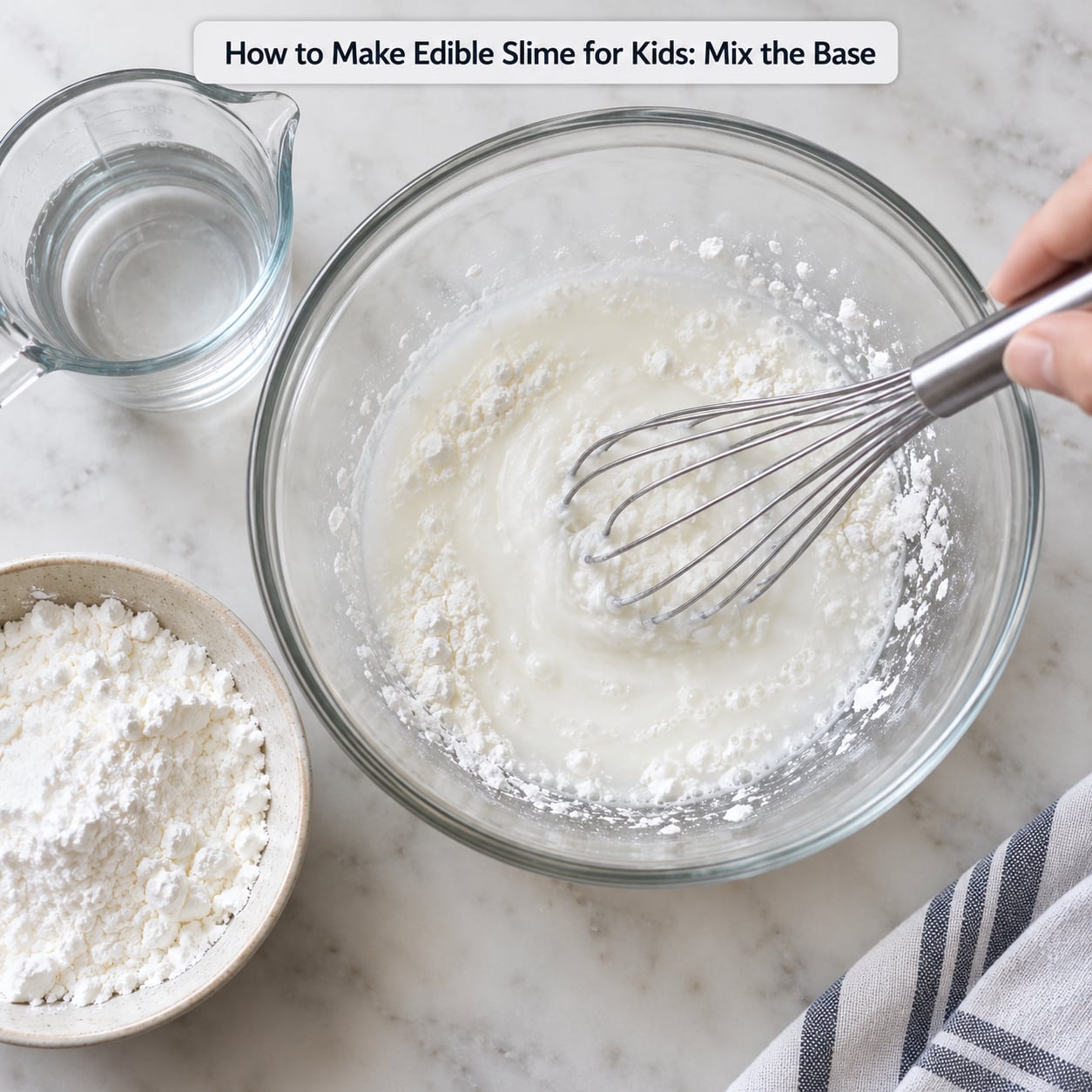
Put the cornstarch in the bowl first and whisk it until there are no lumps hiding in the powder. Then pour the water in a thin, steady stream while you keep stirring. Add all the water at once and you will spend the next five minutes chasing dry pockets.
You are looking for a smooth, glossy white paste with the texture of wet paint. It should pour slowly off the spoon and hold a soft ridge for a second before flattening. If it looks grainy or watery, keep stirring for another 30 seconds. Cornstarch takes longer to hydrate than people expect.
Add the Edible Components
Stir in the sugar a tablespoon at a time and mix until it disappears completely. Sugar does more than sweeten here. It dissolves into the paste and gives it that slightly stretchy, less crumbly pull you can feel between your fingers.
Add the vanilla now if you are using it, and stir for another half minute. Every addition to this recipe is a thickener or a binder. There is no chemical activator doing the work, which is why the base is cornstarch and why the proportions matter more than usual.
Color the Slime
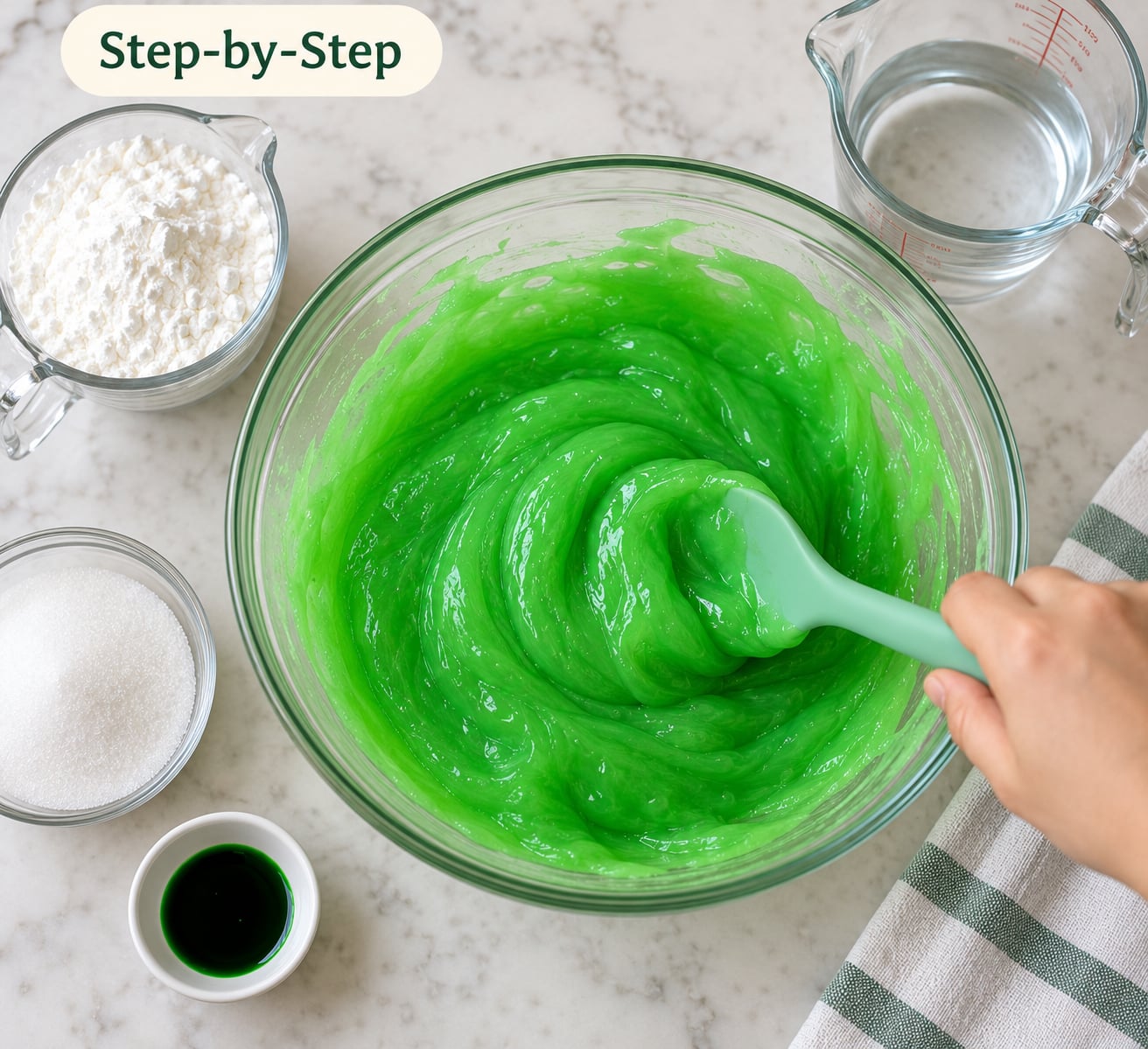
Add two or three drops of gel coloring, or four to five drops of thin liquid coloring, straight into the paste. Gel is stronger, so it takes less. Knead it through with your hands for a full minute so the color spreads evenly instead of streaking.
Check the shade before you stop. It looks paler in the bowl than it will once a child has stretched it thin on a table, so pull a small piece apart and look at it in daylight before deciding it needs more.
Adjust the Texture
The finished slime should hold a ball in your palm without slowly melting, and it should pull into a soft peak when you lift your hand. Test it before anyone plays with it, because it changes as the kids work it.
If it slumps into a puddle, mix in one more teaspoon of cornstarch. If it feels chalky and breaks into flakes when you pinch it, add water a teaspoon at a time. Sticky patches usually mean the mixture needs more kneading rather than more water. Two minutes of firm squeezing fixes more problems than any ingredient does.
One thing to expect during play: warm hands make it sticky. That is normal and it is not a sign the batch has gone bad. Set it on the tray rather than letting the whole family hold it at once, and it stays workable much longer.
Store and Serve It Safely
Scoop the slime onto a plate or into a shallow container, press plastic wrap directly onto the surface, and keep it in the fridge. It holds its texture for two to three days that way. Past that it dries out and grows a faint smell, and it should go in the bin.
Discard the batch if it has been on a floor, near a pet, or in a mouth you are unsure about. Everything in this recipe is food, so it follows food rules: fridge for leftovers, out within a couple of days, and gone when it smells off or looks dried.
Supervise younger children throughout. Children under three should not eat large amounts of anything sticky, and supervision also protects your table, which is the more common casualty.
Fun Halloween Variations
Each of these uses the same 1 cup cornstarch and half cup water base, so you can make one batch and split it before coloring, or make several small batches in ten minutes flat.
Green monster slime. Three drops of neon green gel coloring and a squeeze of lime juice. Kids notice the smell first and usually smell it before they touch it, which is half the fun.
Black and orange tiger slime. Two drops of orange in the whole batch, then a few drops of black in half of it. Knead the black half separately and let the kids marble it with a toothpick.
Purple ghost slime. A drop of violet plus a drop of red to warm it into true purple. This is the one to spoon onto a plate in small mounds so it looks like a ghost. Or go green and call it swamp ooze.
Pumpkin slime. Orange coloring, half a teaspoon of pumpkin pie spice, and one extra teaspoon of sugar. The spice is the whole effect, and kids ask for it again the next day.
Common Mistakes
The slime is too runny. It spread out the moment you poured it. Add cornstarch one teaspoon at a time and knead between additions. A teaspoon moves it a long way, and it is easy to overshoot into a stiff dough.
It stays sticky no matter what you do. Sticky slime is almost always under-kneaded rather than wrong. Squeeze a small piece hard for a full minute and let it rest. Body heat from little hands does the same thing, so texture that feels tacky to you may feel perfect to a four-year-old.
The color is patchy. You added the coloring too fast. Push the color in with a fingertip instead of stirring, working from the outside in. Two minutes of kneading fixes streaking that stirring never will.
There are dry pockets in the bowl. Water hit the cornstarch before you had stirred it. Scrape the bottom of the bowl with a spoon rather than pouring in more liquid, which only makes the problem worse.
The slime is dull and watery after days. Storage, not failure. Covered and refrigerated it lasts two to three days. Beyond that, make a fresh batch.
Food coloring went everywhere. It always does. Wash hands and surfaces with warm soapy water, and expect dye on sleeves and hair that takes two or three washes to fade. Put the tray on a towel and keep colored slime off fabric where you can.
For cleanup, the thing to know is that slime on a floor becomes slippery rather than sticky. Pick it up first, then mop.
Frequently Asked Questions
Is homemade edible slime safe for babies to taste?
A cornstarch and water slime uses only food ingredients, so an accidental taste is not dangerous. For babies under 12 months, though, no recipe containing sugar or starch is a good idea to taste at all, and babies should not be left unsupervised with anything sticky they can swallow in quantity. Keep an eye on them, use the amount they allow, and wash hands after. Above three, most children handle it fine.
What ingredients make slime edible?
Edible slime is built from food that thickens or binds: cornstarch, powdered sugar, marshmallows, coconut oil, chia seeds, gummy candies or instant pudding. Cornstarch with a little sugar is the simplest base and needs no cooking. Marshmallows melted with coconut oil and stirred into powdered sugar give the stretchiest true slime texture. There is no need for borax, glue or any chemical activator.
Can I use liquid dish soap or toothpaste in edible slime?
No. Dish soap, toothpaste and toothpaste-style slime gels are not edible, even when they are labeled non-toxic. That label means safe to touch, not safe to swallow, which is the confusion behind most store-bought slime. Keep this recipe food-only: cornstarch, water, sugar, vanilla and food coloring. Nothing else belongs in a batch the children will handle with bare hands.
Why is my edible slime watery, sticky, or powdery?
Watery slime needs cornstarch, a teaspoon at a time. Powdery or flaky slime needs water, also a teaspoon at a time. Sticky slime usually needs more kneading rather than more liquid, since warmth from hands and a good two minutes of squeezing changes the texture more than any extra ingredient. Add small amounts and test between each one, because the batch changes fast.
How long can edible slime be kept in the refrigerator?
Covered in a sealed container and refrigerated, a cornstarch slime batch keeps for two to three days. Press the wrap or lid directly onto the surface so air does not reach it, and put it on a low shelf where it cannot be knocked. Discard it after that window, or sooner if it dries out, smells sour, or has been on a floor, near a pet, or handled by a sick child.
Conclusion
Measure everything before the children get involved, whisk the cornstarch dry first, and add the water slowly in a thin stream. Add sugar and coloring a little at a time, knead it through your fingers for a full minute, and test the texture before serving. Keep an adult in the room, cover and refrigerate any uneaten slime, and throw it away after two or three days or if it ever touches the floor. That is the whole recipe, and it takes about as long as making toast.