The fastest way to hide extension cords in a Halloween display is to run them along the base of the display or behind each prop, fasten them every few feet with gaffer tape or landscaping staples, then cover the visible runs with mulch, foliage, black fabric or a cable raceway. Pick the shortest route from the outlet to the prop, and the cord stays out of sight without becoming a trip hazard.
A black cord draped across a graveyard scene is the fastest way to break the illusion. So is one stretched across your front walk on the night trick-or-treaters are out. Getting the cords out of sight takes about an hour per section of yard if you plan first and hide second, and almost nobody does it in that order.
What matters most is that hiding never comes at the expense of safety. Concealed means out of sight and still reachable, never wrapped up in the connection itself.
Table of Contents
- What You Need
- Step-by-Step
- Plan How to Hide Extension Cords in a Halloween Display
- Keep Electrical Connections Dry and Accessible
- Route Cords Behind Props and Along Fixed Structures
- Wrap Exposed Cord Lengths With Fabric or Sleeves
- Conceal Cords With Caulk, Clips, or Channels
- Anchor Cords So They Cannot Be Pulled or Tripped Over
- Test the Display Before Guests Arrive
- Common Mistakes
- Common Mistakes and Safety Tips
- Frequently Asked Questions
- Can I hide extension cords under a Halloween tablecloth?
- Should extension cords be covered with fabric or buried in fake grass?
- What is the safest way to hide an extension cord across a walkway?
- Where should I put the power strip for an outdoor Halloween display?
- How do I remove extension cords after taking down a Halloween display?
- Conclusion
What You Need
Gather this before you unroll a single cord. Most displays need five supplies and about thirty minutes of setup prep.
- The right cords. Outdoor-rated extension cords for anything outside, marked for exterior use on the jacket. Indoor cords cannot handle October moisture and temperature swings, and they are the leading cause of display electrical problems.
- The shortest cords that work. Extra length is what creates ugly slack loops. Bring several shorter runs instead of one long one.
- Fasteners. Gaffer tape for securing cord to stakes, siding and props. Landscaping staples for pinning cord into mulch beds. Outdoor-rated cable clips for siding and trim. Duct tape leaves residue and gives up in wet weather, which is why haunt builders reach for gaffer tape instead.
- Disguise materials. Black fabric or burlap for draping, a cable raceway or cord cover for hard edges, and whatever your yard already has — mulch, ornamental grasses, river rocks, hollow planter boxes.
- Basic safety gear. A flashlight, gloves, and a GFCI-protected exterior receptacle or an approved outdoor power box if you have no exterior outlet.
Step-by-Step
Plan How to Hide Extension Cords in a Halloween Display
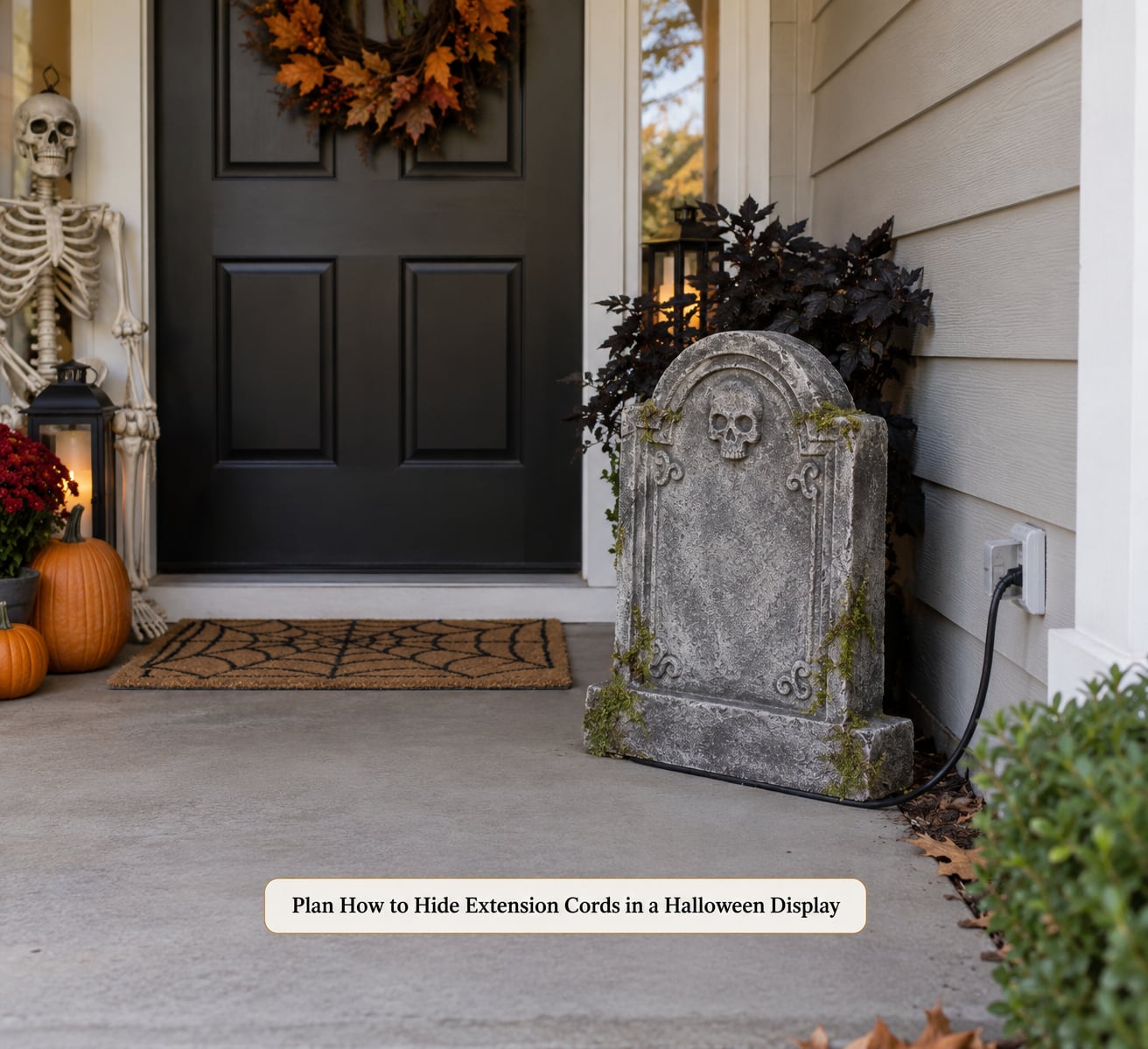
Walk the display at night, before you build it, and write down every prop that needs power. Then find the nearest safe receptacle for each one. Grouping props by outlet beats running one cord the length of the yard.
Mark the cord route on the ground with a hose or chalk before you lay anything. A route that hugs a wall, a fence line or the back of a hedge looks intentional from the street and disappears from every other angle.
Decide on one visible connection point and keep it accessible. You will want to reach it quickly when a prop stops working at 8 p.m.
Keep Electrical Connections Dry and Accessible
Plug nothing into a damp connection, and never wrap a plug or a connection point in fabric, tape or a plastic bag to hide it. Heat builds where you cover a live connection, which is exactly the situation you do not want in October.
Use a covered outdoor power box rated for exterior use when a connection has to sit outside. Mount it off the ground, keep it closed, and leave the cord entering and leaving without strain on the plug.
Every exterior receptacle should be GFCI protected. Test it before the season starts, not during it, because a tripped GFCI in the middle of a display leaves you troubleshooting in the dark.
Route Cords Behind Props and Along Fixed Structures
Powering displays from behind the prop is the single most useful habit in this whole guide. A cord that exits the back of a tombstone and runs to the wall simply does not exist from the sidewalk.
Along walls, run cord at the baseboard line or under a fence rail rather than across open ground. Under a porch, along a deck joist, or behind a planter, the same cord is invisible.
For a cauldron or an animatronic with a hollow base, feed the cord up through the bottom and leave the connection at the base where the prop meets the ground. The cord disappears inside the prop and the plug stays reachable.
Wrap Exposed Cord Lengths With Fabric or Sleeves
Where a cord has to be visible, blend it rather than hide it. A short length of black fabric tied around a cord, or a braided sleeve slid over it, reads as part of the display from ten feet away.
Use split sleeves and heat-resistant cord covers where you want a cleaner line than fabric gives you. Keep the wrap short. A long fabric run over a working connection is the mistake to avoid.
Where nothing else works, black tape or black paint on the cord blends it into mulch and night shadows. Brown and green cords are easier to disguise in a planted bed than white or bright orange ones.
Conceal Cords With Caulk, Clips, or Channels
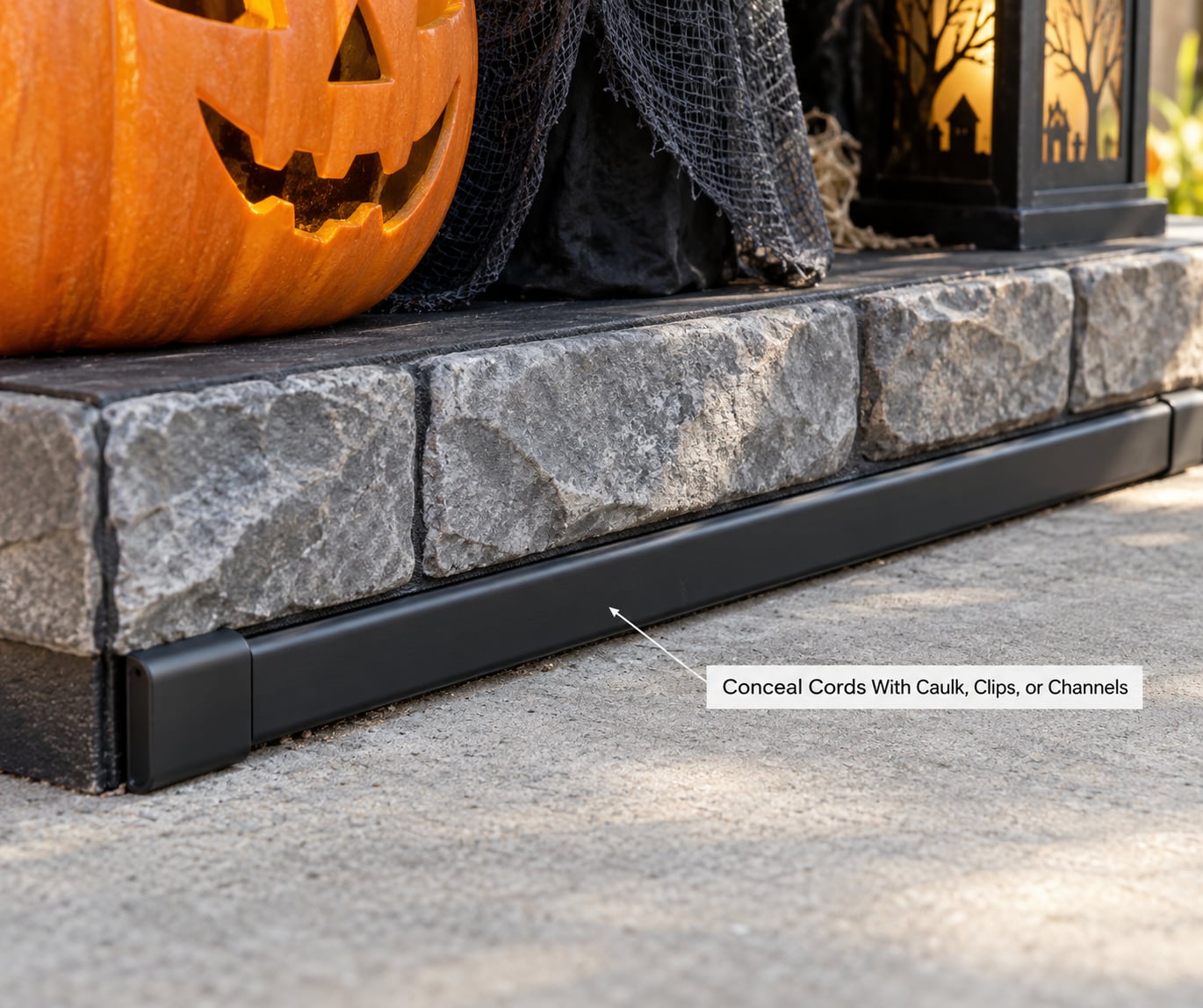
Removable cable clips hold a cord along siding, trim and the underside of a table edge with no adhesive and no damage to paint. Clips at two per cord keep the run straight instead of letting it sag between fasteners.
A surface raceway or cord cover is the cleanest answer wherever a cord crosses a hard surface like a porch step or a display base. Buy it in black, paint it to match the surface if you want it to disappear completely, and cut it to length between joints.
Flexible conduit handles runs through mulch or along a garden edge. Seal the ends with the removable end caps that come with it. Caulk belongs only on non-electrical surfaces such as a hollow trim gap, never on a cord or a connection.
Anchor Cords So They Cannot Be Pulled or Tripped Over
Secure the cord every three to four feet, tight enough to stay put but loose enough that the insulation is not pinched or cut. Wind and a curious dog find loose cords quickly.
For walkways, a floor-rated cord cover or ramp is the only acceptable solution. It keeps the cord in place and gives trick-or-treaters a flat surface, including the small ones who do not look down.
Never run a cord across a path at all if you can route around it. If you must cross, cover it, and check it again after the first windy night.
Test the Display Before Guests Arrive
Turn on every prop and let the display run for at least thirty minutes. Feel the cords and connections with your hand. Anything warm to the touch is a problem, not a normal condition.
Watch for flicker, buzzing, or a light that dims when a neighbor’s inflatables kick in. Look for damaged insulation, crushed cord under a base, or a covering that has shifted loose.
Walk the display the way a guest will, from the sidewalk. If you can see a cord from that angle, so can everyone else. Then check it again after the first rain.
Common Mistakes
The most expensive mistake is daisy-chaining, plugging one extension cord into another to reach further. It is also the most common. Never do it.
The next most common error is hiding a connection under fabric or behind a prop. The cord can hide. The plug cannot.
Coiled leftover cord is the quiet one. A coil wrapped around a hot prop or carrying a heavy load generates heat it was never designed to shed. Cut the excess off and cap the ends with wire and a vampire plug, or coil the slack at the source where it can breathe.
Using an indoor cord outside, pinning a cord under a rug, and running power out a window instead of adding a proper receptacle all cause the same kinds of failures.
Common Mistakes and Safety Tips
Here is the fix for each mistake that shows up most often in outdoor displays.
- Daisy-chaining cords. Run a single cord from the outlet and distribute power with a properly rated outdoor power strip or an outdoor power box instead.
- Hiding a connection under fabric or tape. Move the connection to a covered, ventilated box and let the fabric cover the cord only.
- Pinning cords under carpets or rugs. Heat builds with no way to escape. Route along the wall or under the display base.
- Using indoor cords outside. Replace them. Look for the exterior-use marking on the jacket.
- Leaving slack loops in view. Cut the unused length off and cap the ends, or move the coil to the source.
- Leaving connections exposed to rain. Use a covered outdoor power box, and form a drip loop in every cord that enters one.
- Adding outlets yourself. New circuits and exterior receptacles are licensed electrical work. Hire an electrician.
A few habits keep the display safe all season. Label both ends of each cord so you know what it feeds before you unplug anything. Check the display after every storm and after heavy wind, since fasteners loosen and coverings shift.
Unplug everything when the display is unattended, and always unplug before you adjust a prop or climb a ladder near a cord. Keep a flashlight or headlamp by the door so you are not carrying cords in the dark.
Frequently Asked Questions
Can I hide extension cords under a Halloween tablecloth?
Yes, for the cord itself. Run the cord along the frame or leg nearest the wall, fasten it with clips every few feet, and let the tablecloth fall over the run. Leave the plug and any connection point outside the fabric and uncovered so heat can escape. Never wrap a connection in the tablecloth, and keep the cord off the floor where guests walk behind the table.
Should extension cords be covered with fabric or buried in fake grass?
Fabric for anything near a connection, grass for the run between props. A short fabric wrap or braided sleeve blends a visible cord without trapping heat, as long as it covers the cable and never the plug. Burying a cord in mulch or under fake grass works well for ground runs between props, but only if the cord is outdoor-rated and the covering stays clear of connections.
What is the safest way to hide an extension cord across a walkway?
Use a floor-rated cord cover or cable ramp rated for pedestrian traffic, secured at both ends so it cannot lift. Route the cord underneath, never on top. A black ramp on a dark path is nearly invisible. Check the cover after the first windy night, and route around the walk entirely if your layout allows it.
Where should I put the power strip for an outdoor Halloween display?
In a covered, ventilated outdoor power box mounted above ground, or on an interior wall near an exterior receptacle where it stays dry. Choose a strip rated for outdoor use with GFCI protection, and leave slack so the plug is not strained. Never enclose a power strip under fabric, in a sealed bin, or beneath a prop that heats up.
How do I remove extension cords after taking down a Halloween display?
Walk the display with a notepad and label each cord as you unplug it, both at the prop and at the source. Coil cords loosely rather than in tight loops, and inspect each one for crushed or cracked insulation before storing. Dry connectors fully before they go in a bin, and pull any landscaping staples or clips out of the mulch bed.
Conclusion
Map the power needs first, run each cord the shortest safe route from the nearest outlet, and choose a concealment method based on the surface rather than convenience. Gaffer tape and landscaping staples hold ground runs, raceways handle hard edges, fabric and foliage finish the job. Whatever you pick, keep every connection dry, ventilated and reachable, and check the whole display once in the dark before the first guests arrive.